Logo Automobile Information Add Site to Favorites  
Auto Repair
Auto Repair Home
Auto Repair Ask a Car Repair Question
Auto Repair Car Repair Question Archive
Auto Repair Repair Troubleshooting
Auto Repair How to Repair or Service
Auto Repair Car Repair Forum
Auto Repair Auto Repair Manual
Auto Repair How to use Diagnostic Tools
Auto Repair Auto Term Abbreviations
Auto Repair Brake Replacement Guides
Auto Repair Service Engine Soon Light
 
Popular Site Links


Auto Repair Maintenance Schedule
Auto Repair How Does it Work?
Auto Repair Car Repair Video Series
Auto Repair Car Safety Inspection
Auto Repair Timing Belt Marks
Auto Repair Drive Belt Routing Diagrams
Auto Repair Trouble Code Table
Auto Repair Avoid Car Repair Rip Offs
Auto Repair Smog Test Preparation
Auto Repair Car Replacement Parts
Auto Repair Test Equipment Store
 
Search Website
 
 
Recent Repair Topics


Auto Repair1983 Chevy Truck Cranking
Auto Repair2000 Other Nissan Models
Auto Repair1999 Dodge Caravan Fuel...
Auto Repair2000 Honda Accord
Auto Repair1996 Ford Fiesta Heater...
Auto Repair1998 Jeep Cherokee Engi...
Auto Repair2000 Mitsubishi Eclipse ...
Auto Repair More Repair Topics...
 
Site Advertising


Free Car Repair Advice by Certified ASE Technicians.


Car Maintenance / Checking Fluid Levels

Checking Fluid Levels

Introduction

A car operates using a variety of fluids, engine oil, transmission fluid, either standard or automatic transmission fluid, power steering fluid, brake fluid, front and rear differential fluids on some models. All fluids must be maintained at a proper level, while some are easily checked others will require a lift. First, start with the vehicle in park on level ground, in cool condition with the engine off. Next, release the hood latch and lift the hood, the hood will only open slightly because all hoods have been designed with a secondary safety latch that must be activated before the hood will open completely.

  • Checking Engine Oil Level - First check the engine oil level (if you are changing the engine oil, check the oil level after the oil change has been performed) This engine oil level dip stick is usually indicated by a yellow handle. There are two level indicator marks on the dip stick, upper level and lower level. The distance in between these marks represents one quart, if the oil is in between the marks the level is ok. If the oil level is below the lower level mark or not on the dip stick at all engine oil must be added until oil is between the inductor lines. Use a shop towel is wipe the excess oil from the dip stick and random drips.

    Checking Engine Oil
    Engine Oil Dip Stick Level Checker
    Engine Oil Dip Stick Level Checker


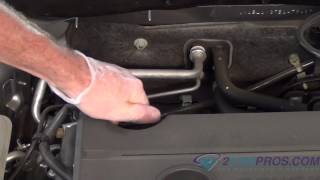
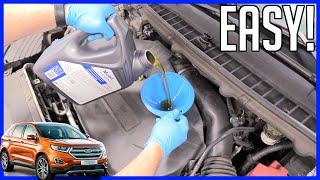
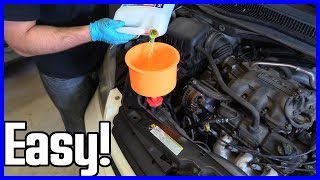
     Engine Oil Fill
    Engine Oil Fill Port
     
  • Checking Engine Coolant Level - Engine coolant is used to transfer heat from the engine to the radiator by the cooling system.  The radiator removes heat from the coolant by forcing air through the radiator cooling fins. Without coolant your engine will over heat and if left unattended severe engine damage will occur.  Engine coolant colors can vary from green, orange, blue and yellow each having there own unique protective and environmental properties. Coolant leaks are a common car problem that can lead to overheating. The engine must be cold before you can check the engine coolant level, the cooling system when hot can hold up to 18 P.S.I. and when released can cause personal injury. Allow the engine to cool preferably over night. Inspect the engine coolant level in the coolant reservoir tank, coolant level should be between the hot and cold marks. If the coolant level is below the low limit line add engine coolant, if the engine coolant is extremely low or the reservoir is empty the cooling system may have a leak. - Engine Coolant Leaks

    Radiator Cap and Coolant Reservoir
    Radiator Cap and Coolant Reservoir
     
  • Checking Transmission Fluid Level - The automatic transmission consists of: a transmission case, planetary gear-sets, valve body, fluid cooler (in radiator) and a torque converter or fluid coupler. A torque converter utilizes transmission fluid as a coupling agent allowing the engine to run while the car is stopped without stalling the engine. And then re-engaging to make the car move again once the RPM of the engine has increased. A series of clutch and band controlled planetary gear sets provide multiple forward gear ratios with a set reverse gear. The valve body is the hydraulic control center which receives pressurized fluid via the main transmission pump. This system relies on proper transmission fluid levels to operate correctly. To check transmission fluid levels, start the engine in the park position and allow the engine to idle. Next remove the transmission level dip stick is it usually located with a red handle on it. There are two level indicator marks, upper level and lower level on the dip stick. The distance in between these marks represent a pint, if the fluid is in between the marks the level is ok. If the fluid level is below the lower level mark or not on the dip stick at all transmission fluid must be added until the fluid level is between the inductor lines. Transmission fluid is added through the dip stick tube using a transmission fluid funnel or similar funnel. Use a shop towel is wipe the excess fluid from the dip stick and random fluid drips. (note: some cars do not have an transmission dip stick, fluid level inductor and can not be checked without proper equipment, consult your owners manual or get an online repair manual for specific information on your car).

    Transmission Dip Stick
    Locate and Remove the Transmission Fluid Level Indicator


  • Checking the Brake Master Cylinder Fluid Level - To check the level of fluid in the brake master cylinder, inspect the plastic reservoir, an indicator on the side of the reservoir will display the fluid level. If you can not see the fluid level remove the master cylinder top to inspect the fluid level. Only add manufacturer recommended brake fluid from a clean container. It is natural for fluid to be a low if the front or rear brake pads have worn down, but if the pads are in good condition you might have a brake fluid leak. If the brake master cylinder reservoir is empty or is very low you have a leak somewhere in the system. Inspect the front brake calipers, rear wheel cylinders (drums) or rear brake calipers and flex hoses front and rear of vehicle and look for any sign of fluid leakage. Also check the rear of the brake master cylinder for fluid leaks, if brake fluid is present the master cylinder seals have failed and the master cylinder needs to be replaced. Replace any parts that are leaking or show signs of previous leakage. Refill and bleed the brake system as needed. (note: if brake fluid has contacted the brake components i.e. brake pads or brake shoes the brake lining material is contaminated and must be replaced)

    Brake Master Cylinder
    Brake Master Cylinder

  • Checking Windshield Washer Fluid Level - Windshield washer fluid is used to remove dirt and road grime from your vehicles windshield. This fluid is held in a plastic reservoir and is delivered to the nozzles and squirted via the pump located in the bottom of the reservoir. From the pump, fluid travels trough tubes to the nozzles and then squirted onto the windshield. To check the level of the washer fluid inspect the reservoir, most reservoirs are transparent so you can see the fluid level, others are remote and a built in float indicator is used to check the level. Add washer fluid as needed from a clean container, most reservoirs have a built it filter at the opening of the container.

    Washer Fluid Reservoir Fill Port
    Washer Fluid Reservoir Fill Port

  • Checking Power Steering System Fluid Level - The power steering system utilizes hydraulic fluid to transfer force from the power steering pump to the rack and pinion or steering box, without fluid the system can not function. Check power steering fluid level by locating the power steering fluid reservoir and remove the cap (twist counter clockwise). Most systems have a fluid level dip stick mounted inside the cap. If the fluid level is down or there is no fluid in the reservoir the system has a leak. Inspect the entire power steering system: pump, hoses and rack and pinion or box assembly, replace worn or broken components as needed. Refill system with manufacturers recommended fluids then start engine (hands away from engine) and turn steering from lock to lock several times. Shut the engine off and recheck fluid level, allow system stand for a period of time to allow air in the fluid (aeration) to dissipate. Check fluid level and re-top as needed.

    Power Steering Cap
    Power Steering Cap

  • Checking Differential Fluid Levels - The differential system of a vehicle is something that sounds foreign to many, yet is one of the most important parts of a vehicle. Without a differential system, a vehicle is unable to handle properly when traveling around corners, curves or turning at all. All vehicles except for motorcycles must include a differential system. The primary purpose of the differential system is to evenly distribute force to one wheel or the other depending on the drag. Both wheels will have the same force when the drag is equal. When a vehicle is in a corner the outside wheels travel further than the inside wheels, creating a problem. If the all four wheels are forced to travel the same distance the vehicle will jump and skid, the differential corrects this problem. The differential uses fluid that is heavier weight (thicker) to help handle the extreme load differentials handle. To check the fluid level in the differential you must remove the oil fill/level inductor plug located on the differential. In most cases a lift is required to access the plug.

    Rear Differential
    Rear Differential Fluid Level Inspection Port with Socket Wrench Inserted

Car Maintenance / Checking Fluid Levels

Additional "How to" Car Repair or Services

1.How to Replace Air Filter
2.How to Change a Cabin filter
3.How to Change Oil and Filter
4.How to Tune Up with Throttle Bore Service
5.How to Replace a Radiator
6.How to Replace Fuel Filter
7.How to Read Trouble Codes
8.How Filters Work
9.How to Replace Front Brake Pads
10.How to Replace Rear Brake Pads

ASK A CAR REPAIR QUESTION

GET AN ONLINE REPAIR MANUAL FOR YOUR CAR - Get instant access to your vehicles drive belt routing, wiring diagrams, trouble code information and other available updates and factory bulletins.


Popular Service Repairs
Test Fuses
Front Brake Pads
Tune Up
Transmission Service
Rear Brake Pads
Rear Brake Shoes
Replace Window Motor
Test Alternator
Test Battery

Replace Air Filter

Check Engine Light

More Service Repairs...
Advertisement

Car Repair Home l Help l Privacy Policy l User Agreement l About Us l Contact Us l Link to Us l Computer Questions l Affiliate Program
  Copyright © 1998 - 2008 2CarPros.com - Professional Mechanics Online