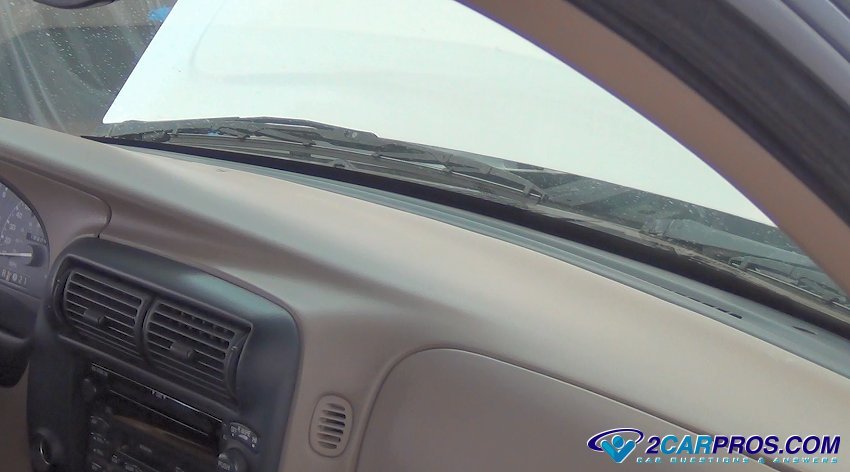
Your car's defroster is designed to remove moisture (fog) from the inside of the windshield in cold weather. It can be a safety problem if the defroster is not working, or quite uncomfortable if the vents are stuck in the defrost position.
The defroster is part of the heater and air conditioner system which is housed inside of the HVAC plenum and uses forced air provided by the blower motor.
SPONSORED LINKS
The air vent direction and temperature controls are operated by a series of 3 or 4 electrical actuator motors which are adjusted by the climate control module. Some car's use control cables, and on older cars vent and temperature controls are operated by vacuum servos.
What Goes Wrong?
When the defroster position is stuck, it unusually means the mode actuator motor has burn out, or the gears inside the actuator have broken which causes the defrost blend door flap to get stuck.
Also, climate control systems can stop working after a battery replacement, this is because the control prompt of the HVAC system is lost and needs to be rebooted. This can be done by removing the defroster/heater fuse for about 5 minutes and then reinserting it.
On older cars, the engine vacuum supply line can crack or break rendering the vacuum vent control servos non-operative. Additionally, the control switch on the dash can fall apart allowing the vacuum to escape and not reach the servos. A defroster can also fade when traveling up a hill, but then returns once the grade is overcome, this is a signal the vacuum check-valve has failed.
Let's Get Started
1. Actuator Replacement: Depending on the type of car you are working on there will be a Mode or Defrost blend door actuator which can fail and hold the system is the defrost mode. This is the most popular reason for this kind of situation. Each car design is a little different, but this guide on how to replace the defrost actuator will show you what you are in for when doing the job. If you need to know the location of the defrost or mode actuator in your car, please ask one of our online mechanics and they will get it for you for free.
SPONSORED LINKS
2. Reset Climate Control: This step is easy to do and doesn't cost you anything. When the logic of the climate control HVAC system gets confused it can lock up, much like a laptop computer. This can happen due to a surge or spike in the cars electrical system when changing the 12 volt car battery. In this case locate the climate control or defroster fuse by using the owner's manual and remove it for five minutes. When the fuse is reinserted it will allow the system to reset and regain its logic to start working correctly again.
3. Replace Climate Controller: The climate control computer is located in the HVAC panel itself and is subjected to moisture and vibration which can cause it to go out, it is best to confirm the failure by doing a CAN scan. Older car models will have the sub-controller somewhere under the dash which uses the control panel as a switching station. These systems must be tested separately using a wiring or vacuum diagram.
4. Check Vacuum Feed Line: If you have an older car, then the defroster system is controlled by using vacuum supplied by the engine. Lift the hood and inspect the vacuum hoses or tubes that feed vacuum from the intake manifold to the passenger's side firewall area. The image below shows a typical line break which causes the vents to stay in the defrost position.
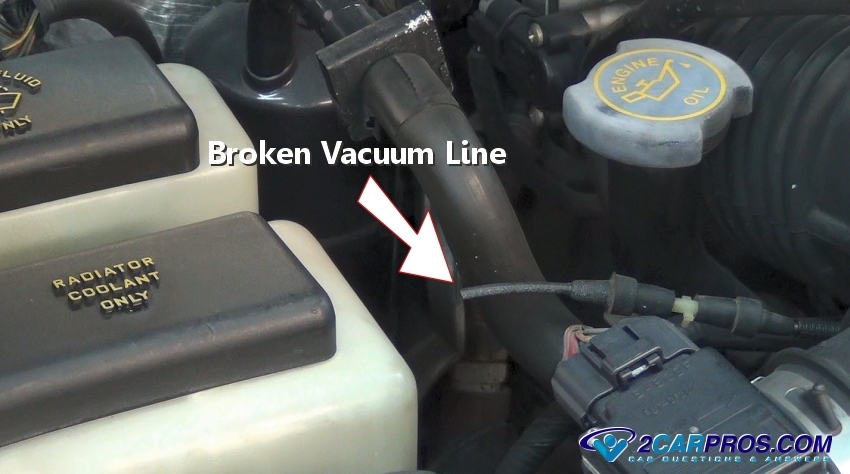
If a broken line is found, use the rubber vacuum tube to insert it over the broken part of the plastic tube.
SPONSORED LINKS
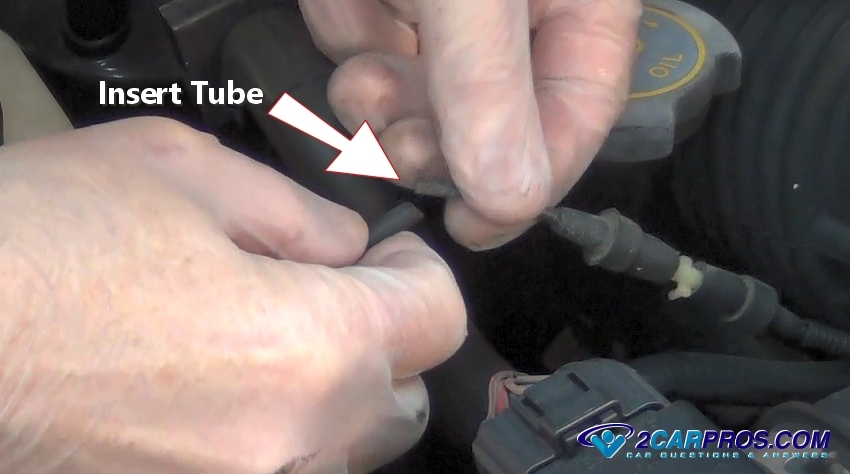
Locate the other end of the broken vacuum tube and insert in into the rubber vacuum line.
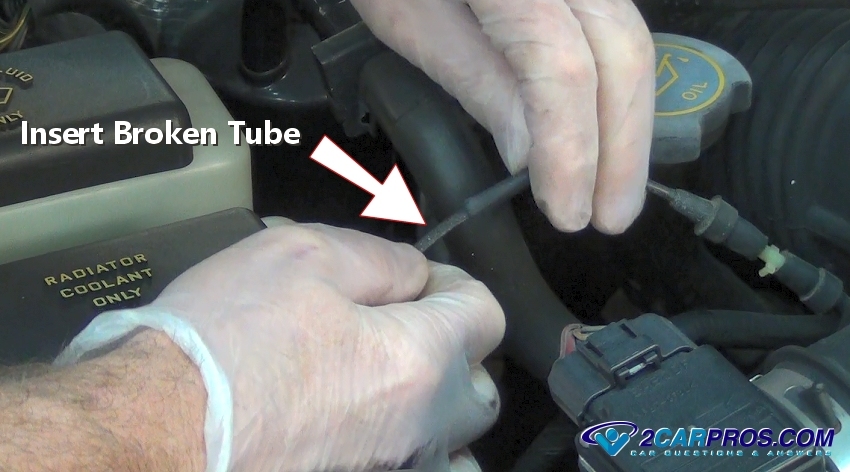
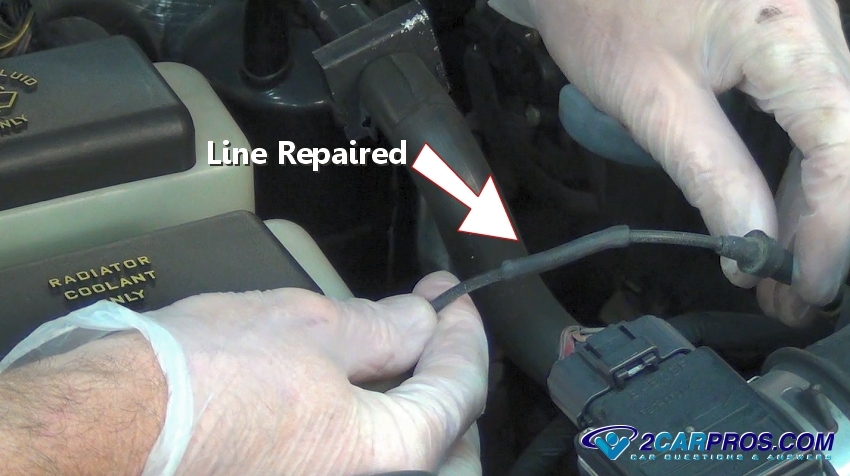
After both ends have been inserted into the rubber line, double check for other line breaks, this is a common problem with defroster issues.
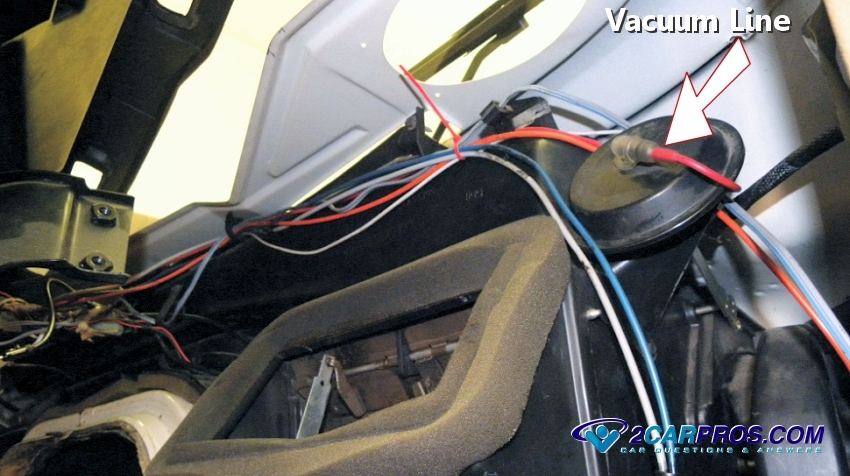
Vacuum lines travel from the vacuum control switch on the dash to vacuum servos under the dash. If you can hear an air hissing sound from under the dash then vacuum is escaping. This kind of system also uses a check valve which stores vacuum to help hold the defroster mode when travelling up a hill and engine vacuum is low.
SPONSORED LINKS
Watch the Video!
Please watch this video of the HVAC system reset to glean additional helpful information.
Credits
This guide knowledge base was created by the 2CarPros Team, and by Ken Lavacot: Automobile repair shop owner and certified master automobile technician of over 30 years. If you have question or need help please ask one of our experts we are happy to help. Please visit our 2CarPros YouTube Channel.
Article published 2024-04-15
SPONSORED LINKS

AC Compressor Replacement Video