How a Starter and Solenoid Works
An engine
starter is designed to utilize
a 12 volt, high amperage electrical
system made to turn an engine over for starting purposes via a
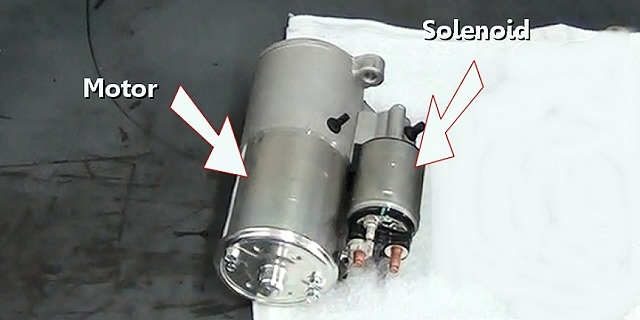
flywheel. Basically a starter
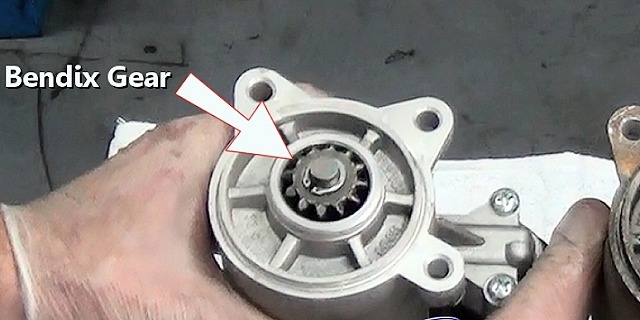
is an electric motor with a small pinion gear and bendix assembly. This starter
bendix drive is designed to extend and mesh with the flywheel teeth when the
ignition key is turned to the
"crank" position and then retract when the ignition key is released after the engine
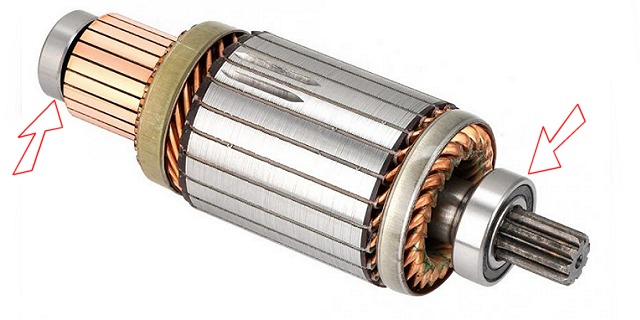
has started. A starter motor is constructed with a main outer housing that contains
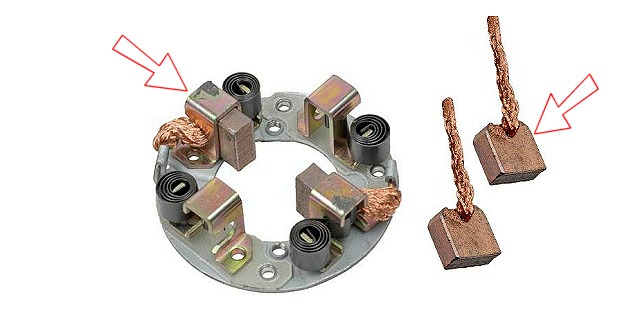
the armature magnets, the armature contains the starter windings, a brush set that
is used to contact the armature to transfer the electrical energy.
The starter bendix is directly connected to the starter pinion gear. A starter
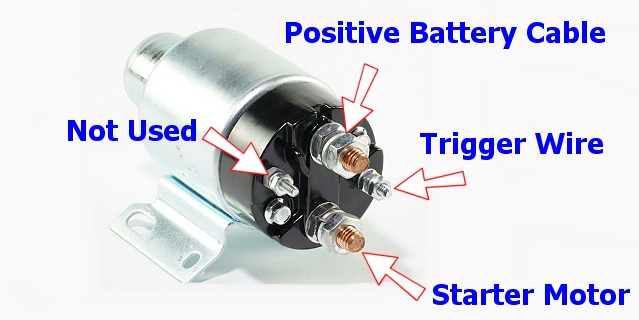
solenoid acts as the main power switch to begin the starter operation. Because the
starter motor draws such high amperage a conventional switch would short circuit
very quickly. Most starter solenoids are located on the starter motor itself. Some
Ford models have located the starter solenoid on the inner fender panel near the
battery. The electrical system that
controls the starter motor is comprised of an ignition switch,
neutral safety switch
(automatic transmissions
only) a clutch engagement switch (manual
transmissions only) a battery,
battery cables, anti theft system,
key fob and the starter
itself.

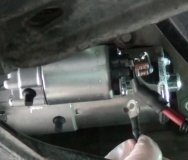
Typical Starter Motor Most starter motors are mounted underneath the car near the flywheel on either the left or right side. The flywheel is located between the engine and transmission. Some models have located the starter under the intake manifold, which makes replacement difficult. When the ignition key is turned to the "engine crank" position a 12 volt low amperage electrical signal is sent to the anti-theft system which in turn can monitor the gear selection or clutch safety switch position. Only then will the signal continue to the starter solenoid that activates the high amperage side of the electrical system to engage the starter motor.

Starter Solenoid (appearance will vary) Once the starter motor has been engaged the starter bendix senses the armature momentum and is forced to extend into the flywheel. Once the engine has started and the ignition key released the bendix loses momentum and the bendix is forced to return to idle position. If the flywheel is worn it can cause a grinding noise when the starter bendix/pinion gear is engaged. The objective of the starter motor is to rotate the engine between 85 and 150 rpm's necessary for engine ignition process. A starter will typical last between 60,000 and 100,000 miles and is a normal replacement item.
Starter Bendix (appearance will vary)
Typical Starter Wiring Circuit Related Replacement Components:
The starter will not operate properly without the correct voltage needed. To test the electrical system voltage use a voltage meter (voltmeter). Attach the voltmeter leads to the positive and negative terminals of the battery. To check a battery surface voltage, remove the positive terminal protective cover and connect the +positive side meter lead (red) to the positive side battery terminal then connect the - negative (black) side meter lead to the negative battery terminal. With the vehicle not running and sitting over night the battery voltage should be between 12.4 and 12.6 volts. To test the system without a volt meter activate the headlights, if they illuminate brightly the electrical system probably has sufficient voltage. If the headlights are dim or not working the battery charge is either low or the battery has failed and needs replacing. Common Problems

Typical Starter Motor Most starter motors are mounted underneath the car near the flywheel on either the left or right side. The flywheel is located between the engine and transmission. Some models have located the starter under the intake manifold, which makes replacement difficult. When the ignition key is turned to the "engine crank" position a 12 volt low amperage electrical signal is sent to the anti-theft system which in turn can monitor the gear selection or clutch safety switch position. Only then will the signal continue to the starter solenoid that activates the high amperage side of the electrical system to engage the starter motor.

Starter Solenoid (appearance will vary) Once the starter motor has been engaged the starter bendix senses the armature momentum and is forced to extend into the flywheel. Once the engine has started and the ignition key released the bendix loses momentum and the bendix is forced to return to idle position. If the flywheel is worn it can cause a grinding noise when the starter bendix/pinion gear is engaged. The objective of the starter motor is to rotate the engine between 85 and 150 rpm's necessary for engine ignition process. A starter will typical last between 60,000 and 100,000 miles and is a normal replacement item.

Starter Bendix (appearance will vary)

Typical Starter Wiring Circuit Related Replacement Components:
- Battery
- Alternator
The starter will not operate properly without the correct voltage needed. To test the electrical system voltage use a voltage meter (voltmeter). Attach the voltmeter leads to the positive and negative terminals of the battery. To check a battery surface voltage, remove the positive terminal protective cover and connect the +positive side meter lead (red) to the positive side battery terminal then connect the - negative (black) side meter lead to the negative battery terminal. With the vehicle not running and sitting over night the battery voltage should be between 12.4 and 12.6 volts. To test the system without a volt meter activate the headlights, if they illuminate brightly the electrical system probably has sufficient voltage. If the headlights are dim or not working the battery charge is either low or the battery has failed and needs replacing. Common Problems
- Starter Drag: This condition exists when the start motor rolling bearing has failed allowing the armature to contact the outer starter motor case creating a scraping noise.
- Starter Motor Rapid Clicking Sound: When the starter motor makes a rapid clicking noise it can mean the battery is too low on charge.
- Starter Motor Grinds When Cranking: This condition exists when the starter bendix or flywheel has worn and is causing the gear mesh to fail creating a grinding noise.
- Starter Makes a Ticking Noise: This condition is created when the starter solenoid connection plate has shorted not allowing the electrical flow to continue through to the starter motor itself. Or the starter brushes have failed also not allowing the electricity through to the starter armature.
- Starter Clunk/Bang Noise: A clunking-banging noise when the starter is engaged could mean the starter is working ok but the engine is not turning over. Manually try to turn the engine over to confirm engine failure. Engine failures can include blown head gasket, crankshaft failure, intake-exhaust valve failure, connecting rod failure or piston failure.