
Introduction to the Automotive Differential
An automotive differential or sometimes called a "rear driver" was designed to allow the drive wheels of a car to work independently of each other and to reduce stress on the drivetrain. A front wheel drive car has a differential as well, as it is incorporated into the transaxle, (a transaxle is a version of FWD transmission). Because a corner is an arch of different lengths, the distances each wheel travels is not the same, without this device one wheel would skid which would cause handling problems.
Gears and Raito
Inside the differential is a main set of gears called a "ring and pinion" which are helical cut for smooth operation, and together are responsible for creating the final drive gear ratio which is usually about 3 to 1 (3 three turns of the driveshaft to one rotation of the wheels) and is used to multiply engine torque.

(Pinion gear in front of the ring gear)
Spider Gears
Spider gears is where the "magic" happens, both the right and left side axles are plugged into a spider gear on each side, and is held in place by a pinion shaft within the differential carrier.

Axle Bearing and Seals
At each end of the differential housing, a axle bearing and seal is used to help support the axle which supports the weight of the car, and a seal to control gear oil from leaking outward and onto the rear brakes.

Drive Input
The pinion gear sits at the front of the differential, and is where the driveshaft or final drive of the transmission is connected using a pinion yoke. A crush sleeve is uses to set the bearing pre-load of the pinion gear which is determined by tightening the pinion yoke nut. The pinion yoke can be designed to hold a U joint or CV style of driveshaft end joint.

Lubrication
Gear oil is used to lubricate the gears, bearings and seals inside the differential. A magnet is featured inside the differential housing or gear cover which is used to remove small metal particulates from the gear oil which will be produced under normal operation conditions. The differential's gear oil level should be checked and serviced according manufacturer's recommendations. Here is a list of common gear oil types.
- SAE 75W-90 – Common in manual transmissions and differentials, providing good performance in a wide temperature range.
- SAE 80W-90 – Standard for many differentials and some manual transmissions; thicker than 75W-90.
- SAE 85W-140 – Used in heavy-duty applications like trucks, towing vehicles, and off-road gearboxes.
Traction Control
Modern differentials are equipped with a clutch pack on each axle, which can be actuated by the traction control computer to slow down or stop a wheel from slipping. This is because if one drive wheel looses traction, neither of the drives wheels will transfer power to the ground and can be hazardous in snow and icy conditions. The computer uses the ABS wheel speed sensor to detect such a condition. As one wheel spins the other wheel remains stationary, this is referred to as a "dogleg" which is prevented with such an application.
Limited-Slip Differential
Another and more antiquated traction system is called a "limited Slip Differential" which has no computer controls and relies on a pressure clutch pack at the center carrier incorporated into the spider gears. This system works better then an "open diff" but can cause the car to become unstable in some cornering events. Other styles of traction devices included a weighted centrifuge that apply pressure to the clutch assembly which engages the locking action by connecting the spider gears together.
Conclusion
Understanding its function and different types can help vehicle owners make informed decisions regarding maintenance and upgrades.
Credits
This guide knowledge base was created by the 2CarPros Team, and by Ken Lavacot: Automobile repair shop owner and certified master automobile technician of over 30 years. If you have question or need help please ask one of our experts we are happy to help. Please visit our 2CarPros YouTube Channel.
Article published 2025-03-18
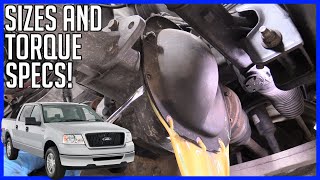
Replace Front Differential Fluid Ford F-150
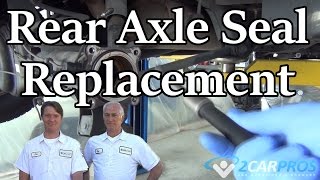
Rear Axle Seal Replacement

Differential Fluid Service Ford