
Introduction
Experiencing clutch failure can be a frustrating issue for any driver. A non-working clutch in a standard (manual) transmission can stem from a variety of issues. We created this guide to show you what to look for when your car's clutch stops working. It should be noted that a clutch can start to fail and still work which is usually inducted by abnormal noises.
Before we begin it's a good idea to know how a clutch works so you can visualize what is happening when driving your car.
Clutch Pedal On Floor
If the clutch pedal is on the floor, and will not return unless you pull it back into position manually the problem will be:
- Bad Clutch Master Cylinder: Fluid internally bypassing
- Failed Secondary Cylinder: Fluid internally bypassing
- Broken Clutch Cable: Older cars
- Low Clutch Fluid: Usually because there is a leak.
Use a flashlight to inspect for fluid leaks which will help indicate which part has failed. Check the rear of the clutch master cylinder from under the dash, where the clutch pedal rod connects to the master. Also, check for leaks at the bottom of the transmission bell housing, indicating a secondary cylinder leak.
Clutch Pedal Works Normally - Wont Go Into Gear
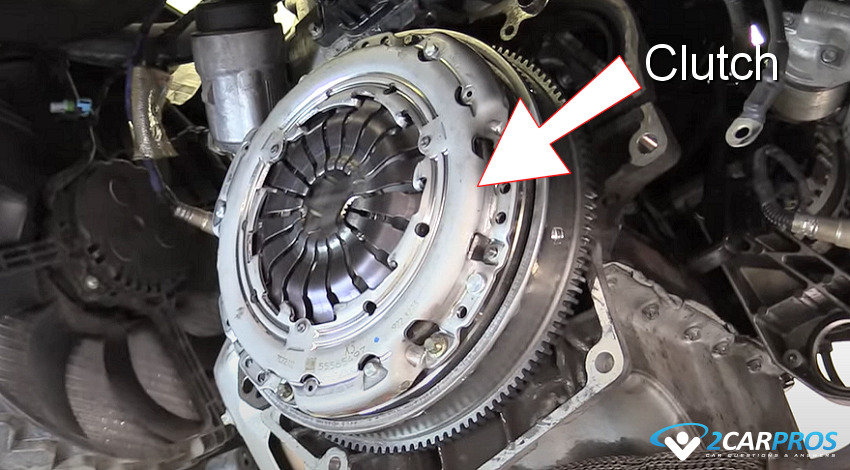
There are two parts to the clutch assembly, the disengagement system: Pedal, clutch master, secondary cylinder, and throwout bearing, and the actual clutch assembly on the rear of the engine. Even though the clutch pedal is working as intended, the clutch may still not operate correctly.
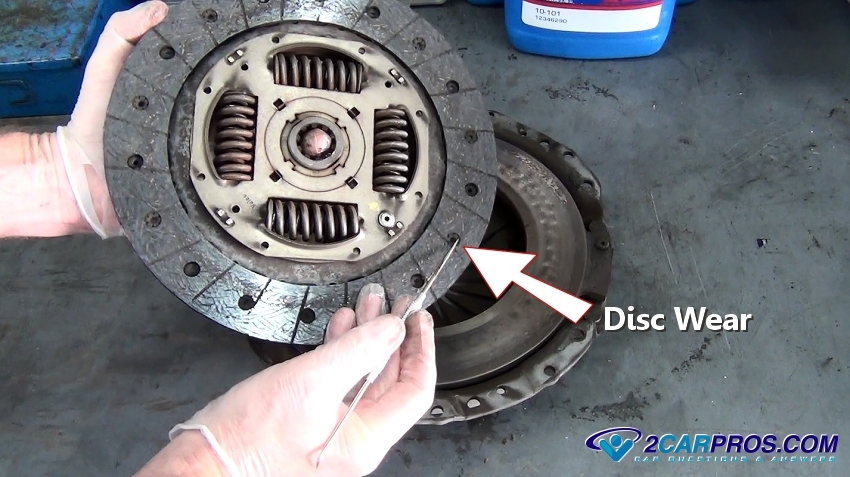
- Clutch Disc Failure: Clutch material has come off of the disc.
- Pilot bearing failure: Will not allow the input shaft to stop turning, (RWD only)
- Broken Pressure Plate: Will not release the disc.
Clutch is Making Noise
There are two scenarios that will make strange noises when there is a problem:
- Clutch Pedal Released: If there is a rumble noise the problem will be input bearing of the transmission
- Clutch Pedal Depressed: A grinding or squeaking noise will happen when the throwout bearing has failed.
Slipping Clutch
The clutch disc and pressure plate are subject to wear over time due to friction during engagement and disengagement. A clutch is a normal wear item and should be replaced between 90k and 140k in most cases. When a clutch disc fails, the disc lining can become worn which will make the clutch slip, while not allowing the power of the engine to transfer through to the transmission. In this case, the clutch must be replaced.
Conclusion
Most clutch systems are self bleeding so doing a manual bleed will not help, (most cases), the clutch also self aligns so once it is installed there are no worries. For all clutch disc, pressure plate and throw out bearing services the transmission must be removed. If after the clutch has been replaced, and is not working correctly, chances are the clutch disc was installed backwards, or bent during installation (common problem). Always ensure that clutch repairs and replacements are performed using quality parts and proper procedures to maintain long-term reliability.
Watch the Video!
Please watch this video of the job being done to glean additional helpful information.
Credits
This guide knowledge base was created by the 2CarPros Team. If you have a car repair question, you can ask the 2CarPros community for help. Please visit our 2CarPros YouTube Channel for more helpful repair videos.