Clunking Noise
When a clunking noise is detected first locate the area of the car it is being
generated from. If the noise is being generated while you drive and you are having
a hard time detecting the location of the clunking, have a helper ride along in
the rear seat to give a new perspective on the origin of the clunking noise. A clunking
noise can be generated by many things from lose
strut or shock mounts to worn
out sway bar frame mounts. Once a clunking sound has been detected action must be
prompt. Clunking in most cases is telling you something has failed or is failing.
We have listed the most common malfunctions for a clunking noise below:

Clunking Noise Car Clunking Repair Guide: Loose Wheel Lug Nuts - The lug nuts on your car are used to fasten the rim and tire to the axle. It is recommended that the lug nuts are tightened to a specific manufacturer specification. If these lug nuts become or are left loose they can make a clunking noise while the car is in motion. To check for this condition use a lug wrench equipped with the correct size for your particular lug nut size. If the lug nuts are loose re-tighten as needed. (Note: if the lug nuts have been loose for an extended amount of time it can damage the wheel stud and/or rim. Check for damage and replace or repair as needed).
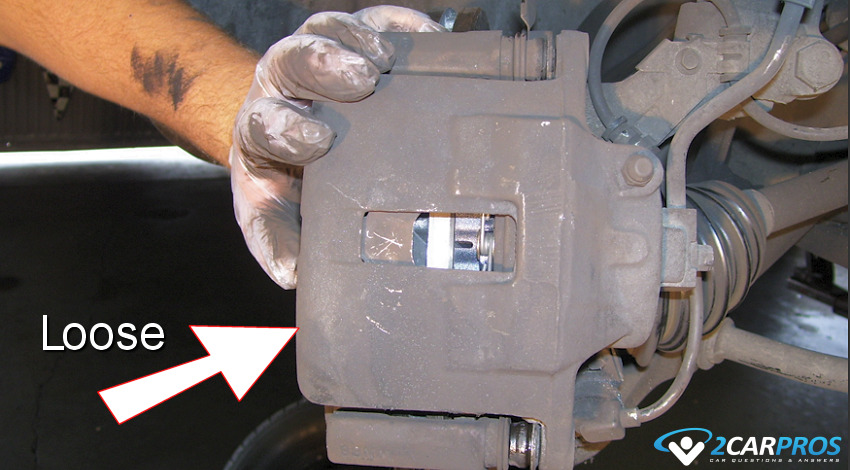
Loose Brake Caliper or Brake Pads - The brake pads and calipers are designed to slow the vehicle when applied. The brake caliper holds these brake pads that are applied to the brake rotor. If the caliper is loose or if the brake pads are not fitted properly they will make a clunking noise when the brakes are applied. To check for this condition inspect the brake caliper mounting bolts and brake pad mounting. The brake pads should not move vertically. If so the brake pad shims could have fallen out or the wrong brake pads are installed. Check Sway Bar Links - Connectors - Bushings - The sway bar on your car is designed to stop the car from rolling when driven into a corner. This bar is attached to the frame on each side and connected to each suspension control arm on both sides. To inspect sway bar bushings for wear look for cracked bushings or missing link insulators. If damage is observed replace the sway bar links with new and recheck system replace as needed.
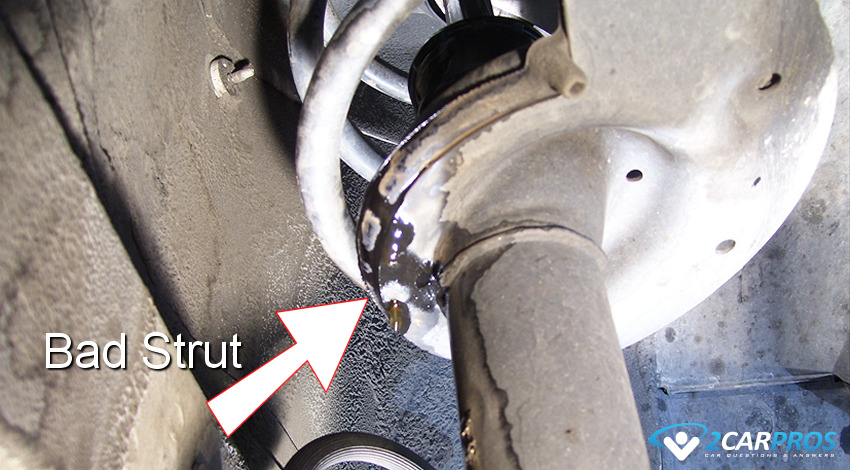
Sway Bar and Link Checking Engine and Transmission Mounts - The engine mounts in your car are designed to hold the engine and transmission in place. When these mounts fail it will allow the engine to rise up when accelerating, and then falling back down when not accelerating. This falling back down action makes a clunking sound. To inspect for this condition the car will need to be lifted and the engine mounts inspected. Look for separation of the rubber and metal mounts that hold the mount together. If separation is detected the mount must be replaced. Checking Strut Failure - Struts are created with hydraulic dampening valves that can fail causing a clunking or popping noise. If strut oil is leaking the shaft seal has failed and will cause a rattle or clunking noise. To test for this condition disassemble strut assembly and check for excessive strut movement, if strut is easily moved (low resistance) replacement is needed. A spring compressor is required for disassembly.
Strut Leakage
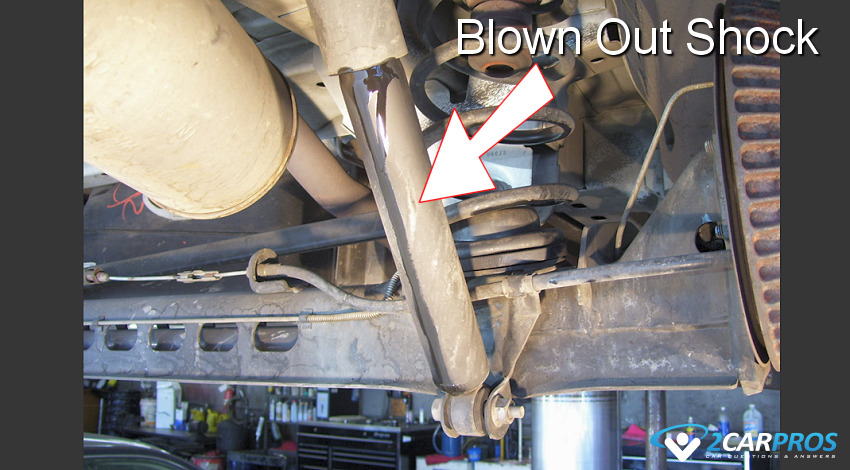
Checking Shock Failure - Shocks are created with hydraulic dampening valves much like struts and can fail causing a clunking or popping noise. If shock oil is leaking the shaft seal has failed and will cause a rattle or clunking noise. To test for this condition inspect shock assembly and check for leakage, if shock is easily moved (low resistance) replacement is needed.
Shock Leaking Drive Shaft U Joints - A driveshaft U joint is designed to act as a rotating junction that can be flexible while still transferring energy from the engine to the rear differential. A universal joint or U joint is constructed of four bearing caps that house multiple needle bearings. The universal joint is lubricated by adding grease through a zirk fitting on the U joint. Some u joints are manufactured with a proper amount of grease and do not need service and therefore do not have a service fitting. If a universal joint fails it can make a clunking noise that occurs when the car is changed from drive to reverse gears. To check for this condition inspect the U joint and look for a light rust powder around the bearing cups. This rust colored powder is caused by metal disintegrating and is a sign of universal joint failure. When a universal joint has failed it must be replaced and cannot be repaired.
Universal or "U" Joint Checking Axle Bearing Failure - An axle bearing is designed to support the weight of the vehicle by allowing the wheels to rotate. These bearings are manufactured with high grade steel that resists wear under extreme conditions. When an axle bearing fails it allows metal to contact metal under pressure with a linear motion creating a clunking noise. Remove axle bearing and replace with new and recheck. Some vehicles are equipped with a bearing hub assembly. This style of bearing is replaced by un-bolting the bearing hub assembly and replacing it with new.
Axle Bearing Hub
If further assistance is needed, our certified car repair technicians are ready to answer your car questions. Related Car Repair Information

Clunking Noise Car Clunking Repair Guide: Loose Wheel Lug Nuts - The lug nuts on your car are used to fasten the rim and tire to the axle. It is recommended that the lug nuts are tightened to a specific manufacturer specification. If these lug nuts become or are left loose they can make a clunking noise while the car is in motion. To check for this condition use a lug wrench equipped with the correct size for your particular lug nut size. If the lug nuts are loose re-tighten as needed. (Note: if the lug nuts have been loose for an extended amount of time it can damage the wheel stud and/or rim. Check for damage and replace or repair as needed).
Loose Brake Caliper or Brake Pads - The brake pads and calipers are designed to slow the vehicle when applied. The brake caliper holds these brake pads that are applied to the brake rotor. If the caliper is loose or if the brake pads are not fitted properly they will make a clunking noise when the brakes are applied. To check for this condition inspect the brake caliper mounting bolts and brake pad mounting. The brake pads should not move vertically. If so the brake pad shims could have fallen out or the wrong brake pads are installed. Check Sway Bar Links - Connectors - Bushings - The sway bar on your car is designed to stop the car from rolling when driven into a corner. This bar is attached to the frame on each side and connected to each suspension control arm on both sides. To inspect sway bar bushings for wear look for cracked bushings or missing link insulators. If damage is observed replace the sway bar links with new and recheck system replace as needed.

Sway Bar and Link Checking Engine and Transmission Mounts - The engine mounts in your car are designed to hold the engine and transmission in place. When these mounts fail it will allow the engine to rise up when accelerating, and then falling back down when not accelerating. This falling back down action makes a clunking sound. To inspect for this condition the car will need to be lifted and the engine mounts inspected. Look for separation of the rubber and metal mounts that hold the mount together. If separation is detected the mount must be replaced. Checking Strut Failure - Struts are created with hydraulic dampening valves that can fail causing a clunking or popping noise. If strut oil is leaking the shaft seal has failed and will cause a rattle or clunking noise. To test for this condition disassemble strut assembly and check for excessive strut movement, if strut is easily moved (low resistance) replacement is needed. A spring compressor is required for disassembly.

Strut Leakage
Checking Shock Failure - Shocks are created with hydraulic dampening valves much like struts and can fail causing a clunking or popping noise. If shock oil is leaking the shaft seal has failed and will cause a rattle or clunking noise. To test for this condition inspect shock assembly and check for leakage, if shock is easily moved (low resistance) replacement is needed.

Shock Leaking Drive Shaft U Joints - A driveshaft U joint is designed to act as a rotating junction that can be flexible while still transferring energy from the engine to the rear differential. A universal joint or U joint is constructed of four bearing caps that house multiple needle bearings. The universal joint is lubricated by adding grease through a zirk fitting on the U joint. Some u joints are manufactured with a proper amount of grease and do not need service and therefore do not have a service fitting. If a universal joint fails it can make a clunking noise that occurs when the car is changed from drive to reverse gears. To check for this condition inspect the U joint and look for a light rust powder around the bearing cups. This rust colored powder is caused by metal disintegrating and is a sign of universal joint failure. When a universal joint has failed it must be replaced and cannot be repaired.

Universal or "U" Joint Checking Axle Bearing Failure - An axle bearing is designed to support the weight of the vehicle by allowing the wheels to rotate. These bearings are manufactured with high grade steel that resists wear under extreme conditions. When an axle bearing fails it allows metal to contact metal under pressure with a linear motion creating a clunking noise. Remove axle bearing and replace with new and recheck. Some vehicles are equipped with a bearing hub assembly. This style of bearing is replaced by un-bolting the bearing hub assembly and replacing it with new.

Axle Bearing Hub
If further assistance is needed, our certified car repair technicians are ready to answer your car questions. Related Car Repair Information