Knock Sensor
Knock Sensor
The
engine management
system in your vehicle uses information gathered from a wide variety of different
sensors that monitor what is going on with the
engine, one of these sensors is called
the "knock sensor". This particular sensor is used in for the adjustment of
ignition timing while the vehicle
is being driven, to keep it at maximum efficiency and performance.
Older vehicles had distributors with centrifugal weights and vacuum advance cans
that adjusted timing depending on rpm and how much throttle the engine has being
given. Today’s vehicles use a computer (PCM) to adjust timing based on pre-programmed
parameters within the computer as well as real-time info such as load, throttle
position, engine rpm and vehicle speed that is being constantly gathered by the
computer. The knock sensor enables the PCM to give the engine maximum timing to
optimize performance while keeping it from pinging (detonation) which causes internal
engine damage.
Detonation (Pinging) occurs when the air/fuel mixture ignites before the piston
is in the correct position in its stroke; this is why it is also called “Pre-ignition”.
When this occurs it causes the piston and rod assembly to force its way up through
the combustion, which stresses the connecting rod, and can actually burn holes through
the piston or cause it to break and can also cause premature engine bearing failure.
Higher engine compression ratios require the use of higher octane fuels to help
eliminate detonation, these vehicles usually will have a label near the fuel filler
or in the manual letting you know what octane fuel is recommended for the vehicle.
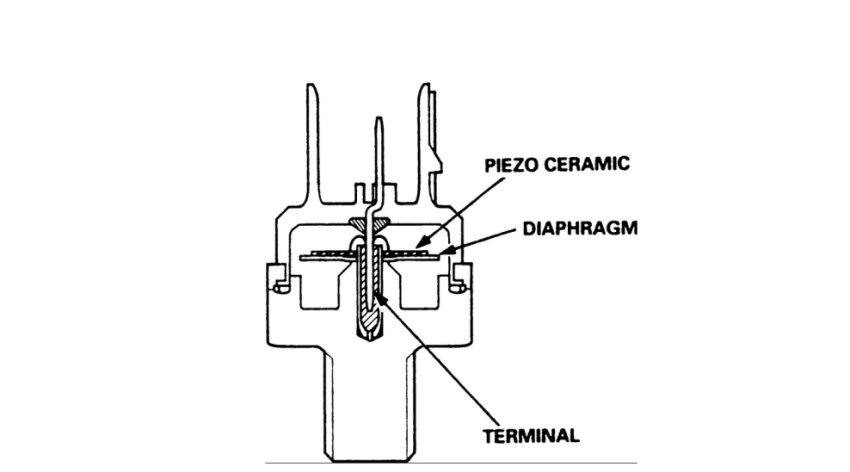
The knock senor itself is basically a small microphone that the PCM uses to listen
to the engine. It is designed to pick up sounds in the frequency range that detonation
occurs, letting the PCM know that it needs to retard the
ignition timing system. Different
manufacturers will install this sensor in a wide variety of places, Some will only
use 1 sensor for both sides of a V-8 or V-6 engine, others are centrally located
in the valley under the intake manifold. Not all vehicles have a knock sensor in
the system, so you should consult an
automotive repair manual
for the exact location of the knock sensor on your particular vehicle.
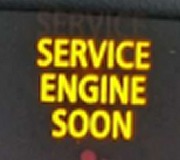
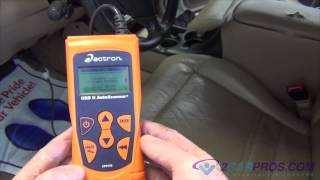
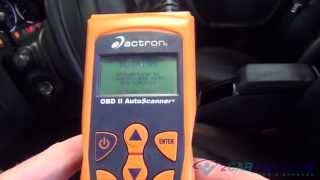
If your
check engine light comes on, and the code pertains to the knock sensor, you
should first try using a higher grade of gasoline, some less expensive brands can
cause detonation and set a code for the knock sensor, this may occur if the PCM
has backed the timing down (retarded) as far as allowed, yet the knock sensor is
still picking up detonation. Other internal engine issues can also set false
knock sensor codes, depending on the noise they
make.
When replacing the knock sensor in your vehicle always use a high quality OEM
(Original equipment manufacturer) or equivalent replacement part. Less expensive
parts tend to be made of inferior material and may not perform as well, fit correctly,
or last as long as the high quality part will.
If further assistance is needed, our certified car repair technicians are ready
to
answer your car questions.
Related Car Repair Information