We are a team of ASE certified mechanics that have created this ABS brake bleed service guide to help you save money or at least see what you are paying for when having the job done.
What Goes Wrong?
When doing brake service work air can get trapped inside the system causing the brake pedal to go to the floor or be spongy. ABS brake systems can be especially tricky because air can become trapped inside the ABS controller valves which under normal bleeding procedures will not remove. Moisture also plays a part in the requirement of a brake bleed or flush. In the normal operation of the brake system moisture is created in the form of condensation when the brakes are heated and then cooled. Rust will then form which will create pits in the caliper/wheel cylinder piston or cylinder bore which will cause leaks and bypass the rubber seal eventually causing a leak.
How Much Does It Cost?
When having a simple brake bleed done at a repair garage or the dealer it will cost about 1.2 to 2.0 hours of shop time. If you are doing a brake bleed yourself the cost will be a small amount of brake fluid or about $5.00 dollars (US).
SPONSORED LINKS
Let's Jump in!
Most of the time a normal brake bleed will be sufficient to return the brake
pedal to normal operating conditions, but occasionally air will get trapped inside
the ABS module control valves. We will cover the normal bleed and further down (bottom)
in this guide the ABS version which includes opening the ABS control valves which
will purge the remainder of the air. Start with the vehicle on level ground. Engine
off and the car lifted safely
using jack stands. Before we begin fill the
brake master cylinder
completely while avoiding spillage, if you do accidentally have a spill quickly
use soap and water to rinse the area clean, add only manufacturer recommended fluid.
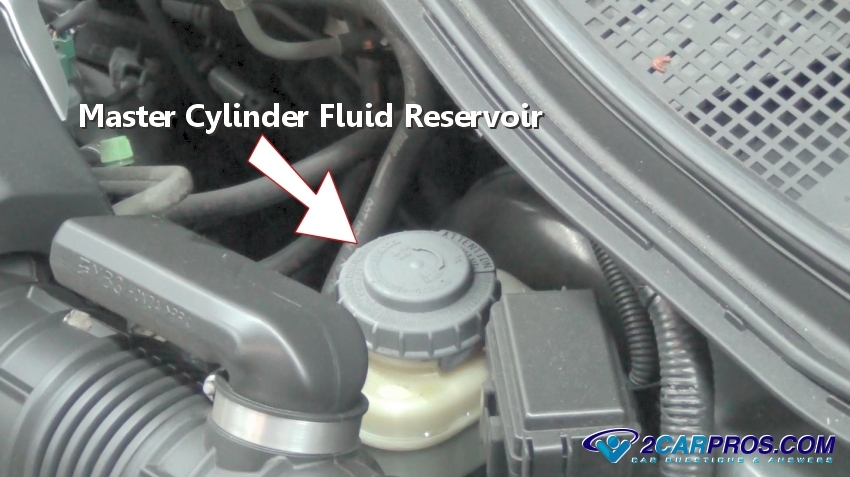
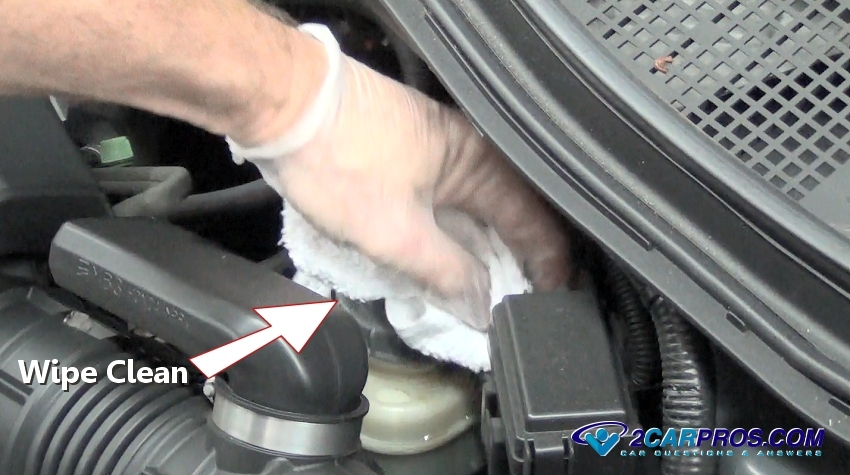
Before opening the master cylinder use a shop towel to wipe it clean. This will
help keep dirt out of the reservoir which can cause seal failure by contaminating
the fluid.
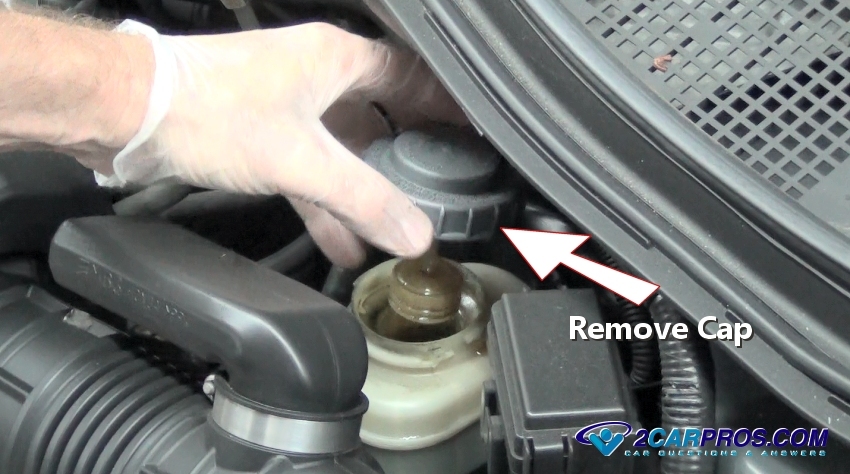
Grasp the lid and twist counterclockwise to remove it. Some lids have a fluid
level sensor that has wires attached which you can pull directly upward. Once removed,
wipe off any excess fluid and set it off to the side.
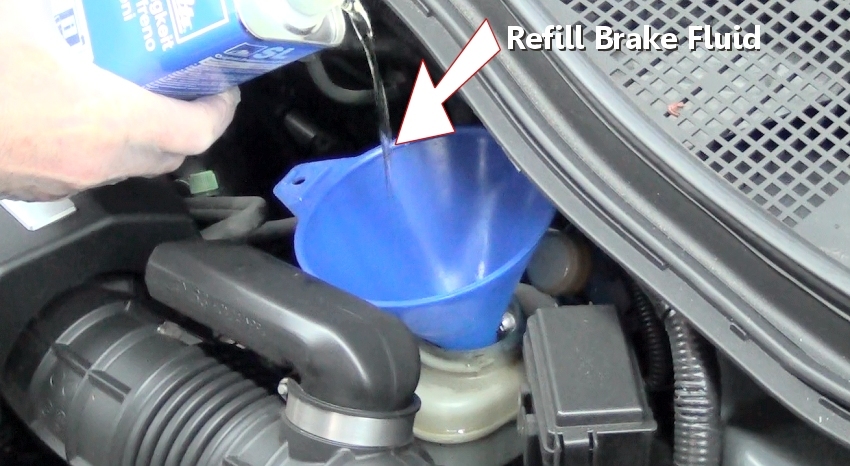
When adding brake fluid you may need to use a funnel to aid in the process, continue
adding until the fluid reaches the full line and then remove the funnel. Most brake
systems use a DOT 3 or DOT 4 fluid but if you are not sure consult your vehicle's
owner's manual or it will mention the fluid type on the lid of the master cylinder.
Reinstall the reservoir cap and wipe off an access fluid. You are ready to bleed
the brake system.
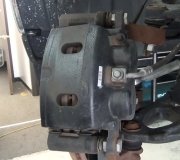
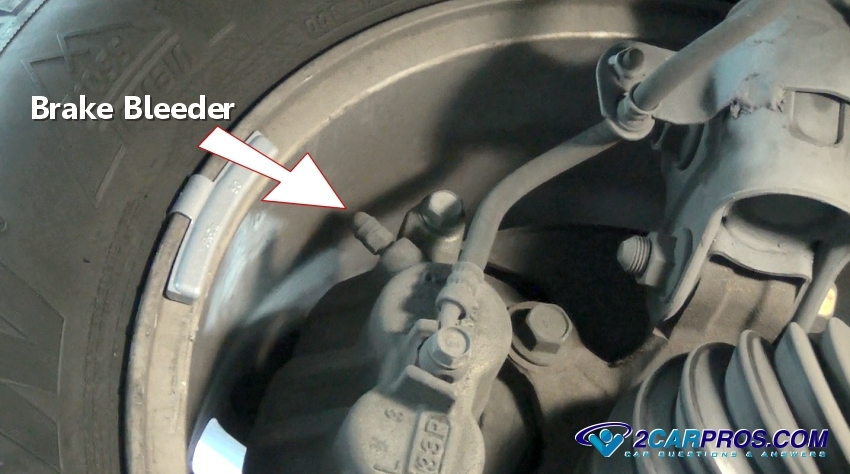
Locate all four brake fluid bleeder fittings located near the top of each brake
caliper or wheel cylinder on each wheel which may have a dust cap over them.
SPONSORED LINKS
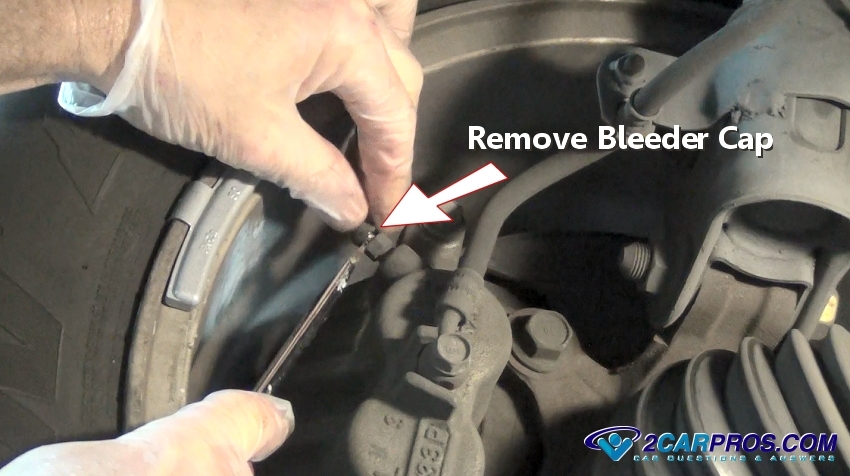
Using a small screwdriver or pick remove the bleeder dust cap and place it to
the side to be reinstalled once the job is done.
Watch the Video!
This video features a brake bleed and flush, when finished read through the remainder of the guide to glean additional information, the ABS bleed video is further down.
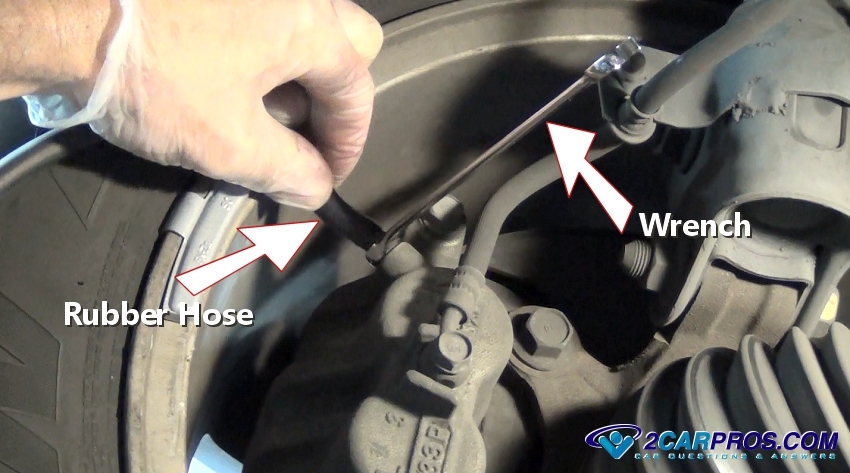
Bleeder screws can be fairly tight, apply WD40 or equivalent to aid in rust removal
if needed and use a 6 point socket which is best to avoid stripping. Once broken
loose, place a boxed end wrench over the bleeder and connect a rubber hose onto
the bleeder and over the wrench. This hose is helpful to avoid fluid from getting
onto the pads etc, access fluid should be hosed off with water once the job is completed.
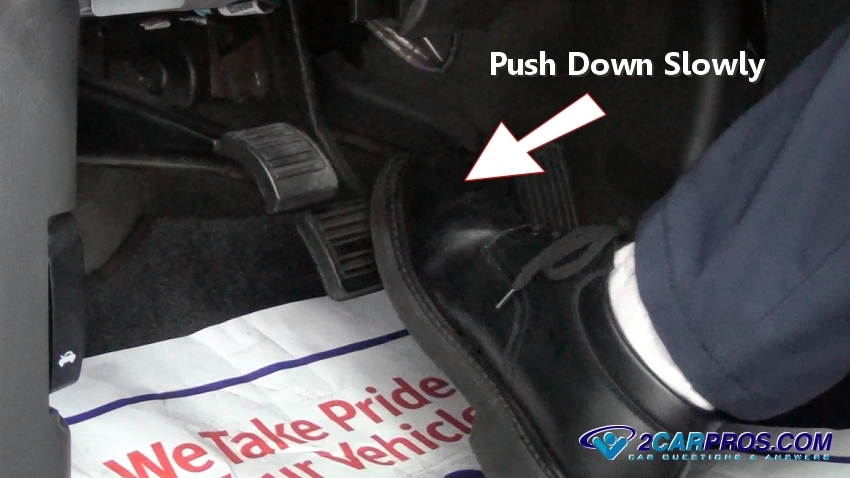
Now it's time to start the bleeding process. Have a helper push down on the brake
pedal slowly and hold even pressure downward. Do not let up on the pedal. When bleeding,
never pump the brake pedal as this will cause additional air to get into the system.
(There is a very small orifice inside of the master cylinder that allows new fluid
down into the master cylinder chamber. If you pump the brake pedal can cause air
to be drawn backwards in through the seals of the master cylinder).
SPONSORED LINKS
Start with the left front and open the bleeder valve while the opposite end of
the rubber tube is in a fluid catch container.
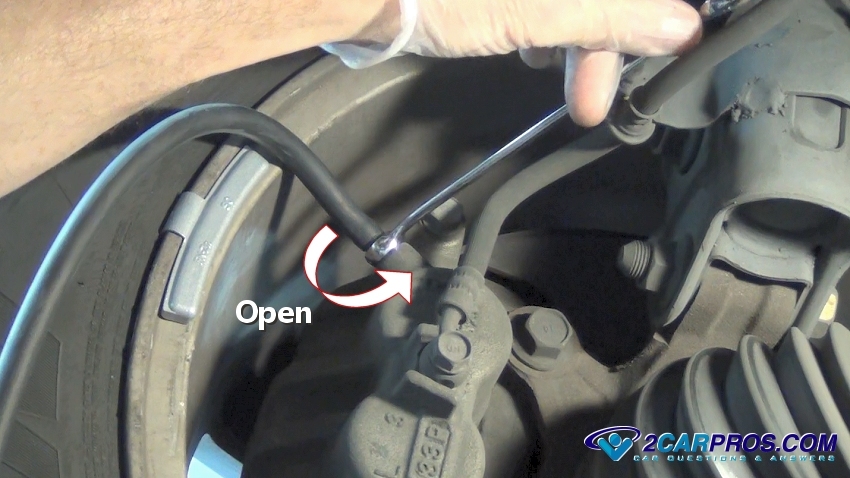
Fluid will start to flow out of the bleeder and tube, bubbles will stream out
with the fluid if air is present in the system.
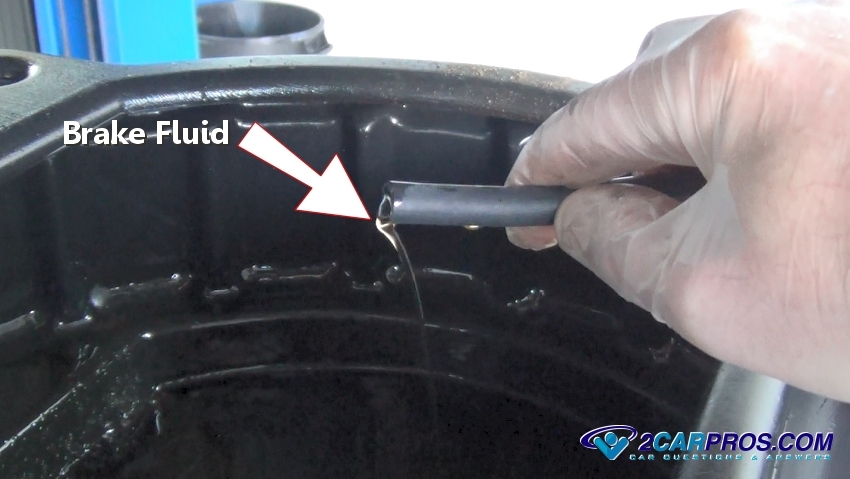
The brake pedal may travel downward, if the pedal goes to the floor initially
this means there is a bunch of air in the system, (the pedal will return to normal
height once the bleeding process is complete). Hold pressure on the pedal, as the
flow starts to slow down tighten the bleeder valve, (Do not let up on the brake
pedal while the valve is open or it will such air back into the system and you will
need to start over).
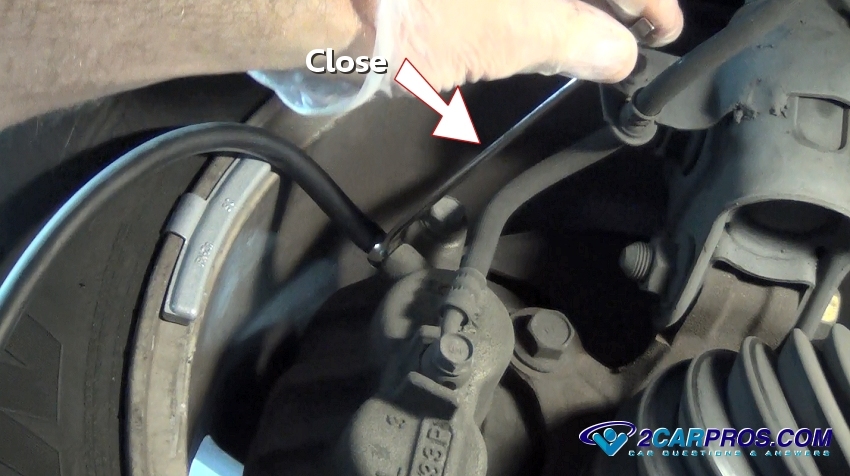
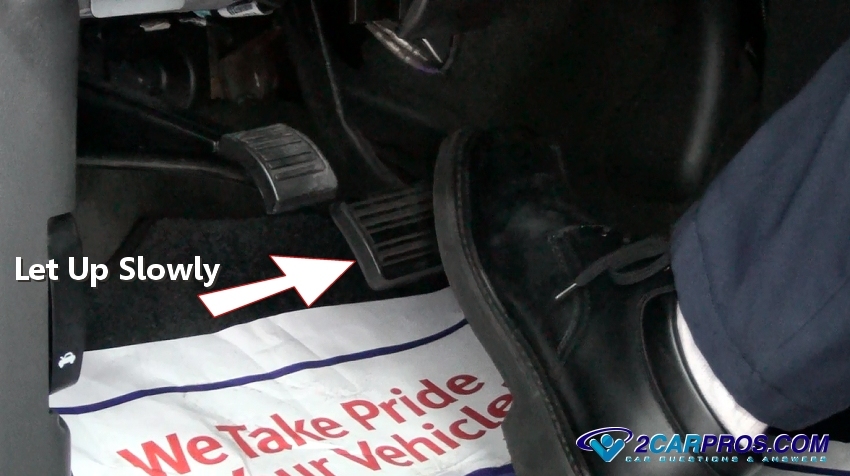
Once the bleeder valve is closed, lift up on the brake pedal (slowly) until your
foot comes off of the brake pedal pad. Continue this process at each wheel until
fluid is present with no air bubbles being expelled from the bleeder valve or hose,
this can take two or three times. Now one corner of the system is bled, continue
this operation on the right front, left rear, then and then finish with the right
rear.
While bleeding the system, observe brake fluid level in the reservoir and refill
as needed to keep the master cylinder full. Do not allow the master to become empty
or air will be pumped into the system and the
master will need to be
removed and bleed unless a power bleeder is used.
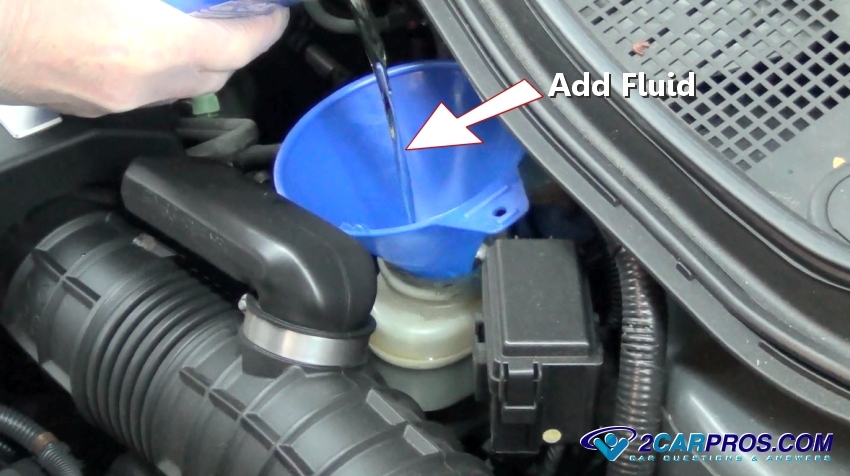
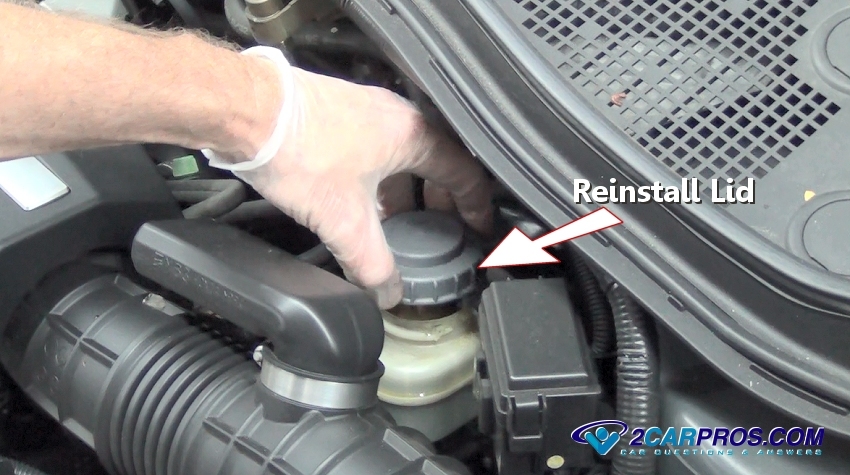
Once the job is done refill the brake fluid to the full line of the reservoir
and reinstall the lid.
SPONSORED LINKS
Use a shop towel to wipe off any spilled fluid and rinse the area with water
if needed. Then start the engine and check brake pedal operation which should be
firm and at the top of its travel. If the
brake pedal is on the floor
or spongy there is air still in the system or another problem. This could mean the
brake shoes are out of adjustment or the master cylinder is bypassing internally
or the system has a leak.
ABS Brake System Bleed
To open the ABS control valves you will need a scanner capable of doing so, we
have a link in the description of the video for the one we use. Plug the scanner
into the ALDL port.
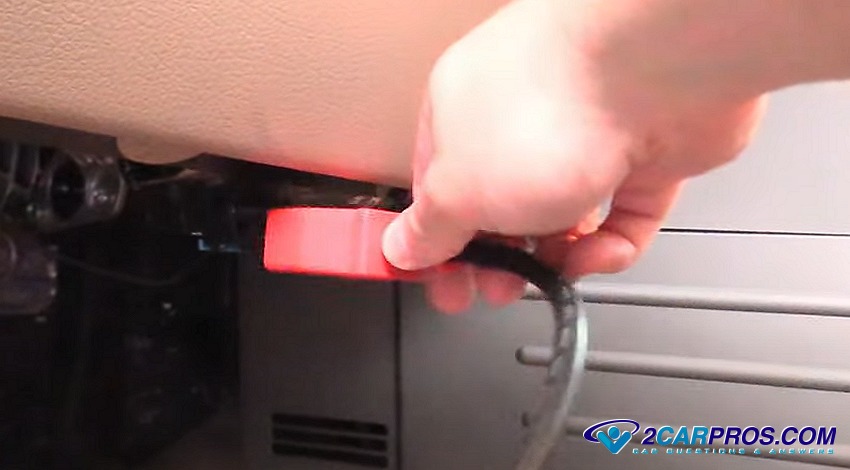
The scanner will light up letting you know it is ready to be used. Follow the
prompts to navigate to the ABS bleed instructions which will show you which wheel
to bleed first and the procedure for doing so and the remainder of the wheels as
well.
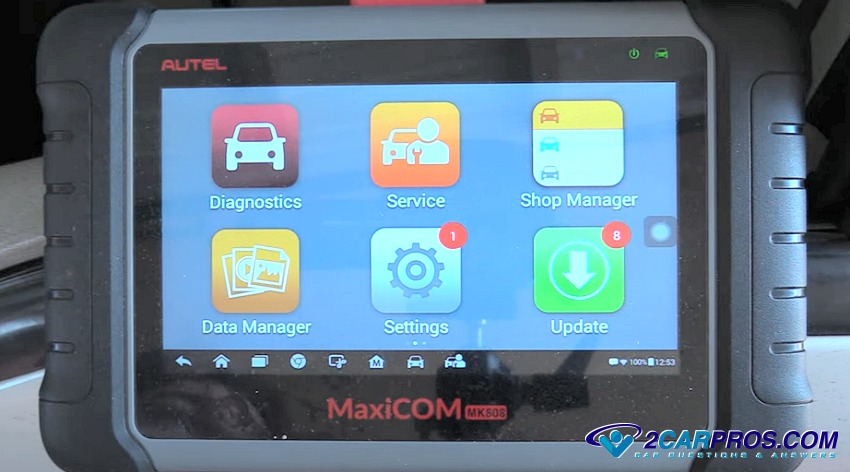
Watch the ABS bleed video to see how to do the job correctly.
Some brake fluids are not compatible with each other. Distinctive ratings define the chemicals in which the fluids are produced such as mineral oil, ester glycol and synthetic oils. Always add fluid from a sealed container to avoid dirt and moisture contamination.
Questions?
If you have any questions about brake bleeding please ask our experts who are happy to help, our service is always 100% free. Please subscribe to our 2CarPros YouTube channel.
Article published 2022-03-12
SPONSORED LINKS