Engine Stalls
When your car is in use, many
electronic components
are used simultaneously creating electrical contacts to operate the various systems.
Due to the many electrical components that make up these systems, diagnosing a particular
one can sometimes be difficult. The malfunction could be from your
ignition switch to the
fuel pump, but only a certain number
of things can cause this condition. An electrical circuit that is starting to fail
will do so more when the circuit is warm or hot. Anytime you find signs of
heated or melted connections
high resistance is present and could cause a shorted connection. Mechanical systems
failure can also cause your engine to stall, but the majority of the engine stalling
problems will be electronic based.
At idle your engine produces the least amount of
emissions than in any
other time when it is operating. Engine idle is necessary for proper vehicle operation;
it allows the engine to operate at the lowest RPM level possible without your foot
on the gas pedal. Before we start we need to know one of two things is the
engine running poorly causing the engine to stall at idle or is the engine running
fine and it's just the idle condition that is the problem. If your engine is running
rough please visit, engine misfires
before proceeding. If your engine cranks over but won't start visit
engine wont start. If your engine
won't crank over visit engine
wont crank over. If your engine is running ok but it stalls at idle or while
you drive you are in the right place. Below we have created a guide to aid the diagnoses
and repair procedure for the most common engine stalling at idle stalling while
driving problems.
Car Repair Guide Troubleshooting Procedure
Engine Stalls at Idle
Step 1 - Check for broken or dilapidated vacuum hoses or air intake boot on and around the engine, your car's engine is designed to run on a system that can hold vacuum. Vacuum hoses are typically connected to the engine intake manifold and will supply engine vacuum to various accessories like power brake booster. Some cars are designed with a larger vacuum transfer hose that connects the intake manifold to the IAC (idle air control) motor. If broken or dilapidated these vacuum lines can cause the engine to lose vacuum which will allow the engine to run rough and stall. Inspect all engine and accessory vacuum lines look for missing, torn or dilapidated lines and replace as needed. Also have a helper rest their foot on the gas pedal just enough to keep the engine running and double check the engine when it is running to listen for any whistling noise coming from the engine that is not usually present. Follow the noise and inspect vacuum lines in that area, also when the engine is running it will pull inward a broken or weak piece of the hose to create a larger vacuum leak. Check the integrity of all vacuum hoses at each end of the hose, typically this is where a vacuum hose fails. If all vacuum hoses check "okay" proceed to the next step. Step 2 - The engine throttle body is designed to control the air intake into the engine; along with the throttle body there is an IAC motor which controls engine speed by regulating idle air volume. When your foot is off the gas pedal the car's computer adjusts this motor to allow more or less air to the engine to control engine idle speed. When this system develops coking (a light tar condition from mass amounts of air being processed) it will cause a poor engine idle quality and cause stalling. A throttle body and IAC motor service is required. (Note any car that is designed with a magnetic non-motor operated IAC like Lexus is subject to carbon and should be cleaned about every 40,000 miles to avoid stalling.)

Failed Air Intake Boot Step 3 - Most cars are designed with an EGR valve (exhaust gas recirculation) that allows exhaust gas to enter the engine intake manifold at cruising sped. This EGR valve is used to help control the engine's production of poisonous NOX (NO2) gasses by lowering the engine's combustion chamber temperature. The EGR valve is designed to only open when the engine is under power and not at idle. This valve is subject to carbon from the exhaust system and can cause the valve to stick open and allow the exhaust gasses into the engine simulating a vacuum leak. To check for this condition, remove the EGR valve, at the mounting flange of the valve there will be 2 main ports an intake and an outlet port. Air should not be able to flow from the inlet to the outlet, if air does flow though the valve it is stuck or jammed with carbon, clean or replace as needed. Step 4 - If your car is equipped with an automatic transmission the torque converter can cause the engine to stall. The fluid coupler known as the torque converter is constructed with clutch shoes that lock up to connect the engine at cruising speeds. If the torque converter malfunctions it can cause the clutch shoes not to release. This will cause the engine to stall at idle because the torque converter will not release, forcing the engine to stall. This condition will usually start to occur after long a drive on the freeway and get worse from there. If your car shutters as it is coming to a stop and then stalls you could have this problem.
If you are coming to a stop and you think this is your problem try putting the car into neutral gear and see if it still stalls. If the engine does not stall when in neutral the torque converter has failed and needs replacing. Unfortunately the only way to replace the torque converter is to remove the transmission. (Always flush the transmission fluid and replace the filter anytime major work is performed) Engine Stalls While Driving Step 1 - Testing Fuses and Fuse Holders - Anytime you have a problem with electronically controlled components such as an engine, transmission, ABS brake, or SRS (safety restraint system, Air Bag) inspect all fuses using a test light and check the under hood power distribution center and under dash fuse panels. If any signs of heated or melted fuses or fuse holders exist repair or replace as needed. If the fuses test okay continue to the next step. Step 2 - Scan For Trouble Codes - To check for problems with electronically controlled components such as an engine, transmission, ABS brake, or SRS (safety restraint system, Air Bag) and the fuses test okay a trouble code scan is needed to identify any system trouble. Use a simple scanner tool to retrieve trouble codes and see if any trouble codes gathered relate to the specific problem, like a fuel pump circuit failure code. If a trouble code is present but does not pertain to the immediate problem like an EVAP code ignore it until a later time, after the car is running properly. The reason we repair non-related codes after the engine is running properly is because sometime false codes can be triggered by the engine stalling. Once the engine is running again the code present might cycle and turn itself off. You might say "if the engine stalls shouldn't it have a trouble code?" Sometimes conditions occur that will not be detected by the computer, example: if the air intake boot fails the computer cannot detect the failure, so the engine doesn't idle and the computer thinks everything is ok with no codes. If no trouble codes are present proceed to the next step.
Step 3 - Checking Fuel System Pressure -
Test for proper
fuel pressure with a test gauge on the fuel rail or in line somewhere in the
system, most throttle body injection cars (TBI) are between 13 psi and 17 psi. and
most (DPI) direct port inject systems are between 40 psi and 55 psi. If no or little
fuel pressure is present check the fuel
pump fuse and fuel pump
control relay located in the fuse panel, you can find this fuse and relay by
checking your owner's manual, back of the fuse panel cover diagram, or an
online auto repair manual,
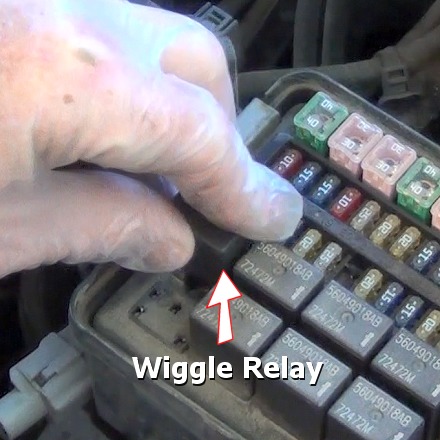
if the fuse or relay has failed, replace it with a new unit and re-test. Have a
helper crank over the engine while you place your fingers over the relay, does the
relay click under your fingers? If so the relay could be working, there is a chance
the relay has burned contacts inside the relay causing the problem but we will get
back to that.
Next, access the fuel pump power feed wire, there are a few ways to do this. First you need a wiring schematic to find the color wire needed for testing, every manufacturer has a different color wire so the best way to do this is with an service repair manual. Once you have found the color wire it should be located in the wiring harness near the fuel tank which is where the pump is located. Ground the test light and probe (pierce the wire's outer coating with the test light probe point) the wire, have a helper crank the engine over. If the test light illuminates and you have no fuel pressure the fuel pump had failed and needs to be replaced. If the test light doesn't illuminate the fuel pump control relay has probably failed, replace it with a new unit and re-test, in most cases this relay is under thirty dollars. There is an outside chance the power feed to the relay has failed but it doesn't happen very often. If this is the case use an online auto repair manual to trace the power source to the relay. If good fuel pressure is present continue to next step.
Step 4 - Testing Ignition System Output - The
ignition system in your car
ignites the fuel inside the engine's combustion chamber at the optimal time in the
piston stroke to produce the most power while emitting the
least amount of emissions
as possible. There are many configurations of ignition systems but all operate on
the same principle, create a low energy field and collapse it onto a high energy
coil that transfers the electrical energy into the secondary ignition system, which
consists of the coil wire, distributor cap and rotor (if equipped) plug wires and
finally the spark plug.
This system is triggered by the primary ignition system, this system varies depending
on manufacturer but all operate on the same principle by using some kind of low
voltage trigger system such as a
crankshaft position sensor
(CKP) or camshaft position sensor (CAS). This low voltage system (1.5 to 3.0
volts) is amplified to 12 volts by using an ignition module (amplifier) and then
transferred to the primary side of the ignition coil. The PCM (powertrain control
module) controls the engine ignition timing by advancing and retarding the primary
trigger signal. In older cars, points and condenser with a vacuum advance unit performed
this job.
Step 5 - Checking the PCM Relay - The main
PCM power relay carries high amperage and is prone to failure, especially when
it is in use for a while and gets hot. If the PCM relay fails it will shut down
the engine management system and stall the engine. If you suspect the relay could
be failing remove the relay cover and inspect the relay contacts. If the relay contacts
look burned and have an ash look to them the relay needs to be replaced. If the
relay checks okay proceed to next step.
Step 6 - Inspecting Battery Cable Connections - The
battery cable connection in your
car can be loose and vibrating when the car running. This vibration causes the battery
terminal to short very rapidly creating an electrical system surge that can cause
the engine to stall. The battery cable connection must be clean (free from corrosion)
and tightly fastened to allow the flow of electricity from the
battery to the
starter. With the key in
the off position located battery to inspect the battery cable connections. Battery
cable connections must be tight and not wiggle on the battery terminal. If the cable
is lose remove it and clean, then tighten the cable with a wrench or socket wrench.
Use baking soda to neutralize any suspected acid residue before work begins.
Step 7 - Plugged Catalytic Converter - The
exhaust system on your car is designed
to move exhaust gasses created by the engine to the rear of the car. In this exhaust
system is comprised of many parts, among these parts are a muffler and
catalytic converter. Either
of these parts can break apart internally and cause a temporary blockage of the
exhaust system causing the engine to stall. To check for this condition start with
the engine cold, then take a rubber mallet and hit the muffler and catalytic converter.
There should be very little rattling sound
when struck with the hammer. If you can hear what sound like rocks inside your exhaust
system, remove it and inspect it for internal damage.

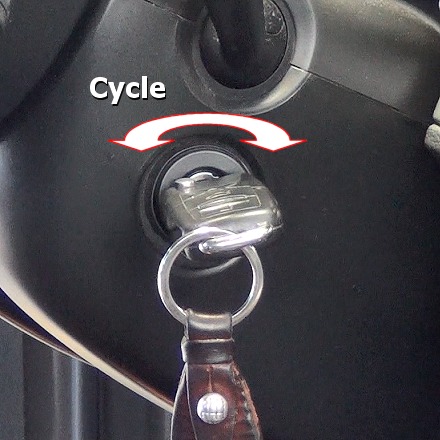
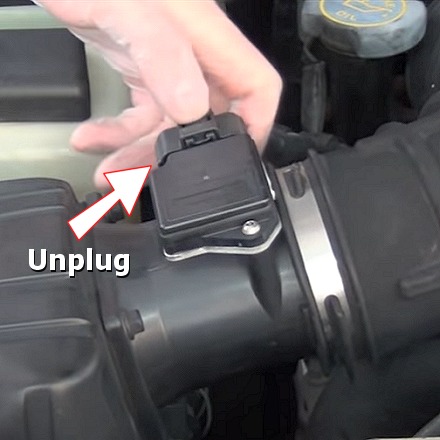
Plugged Catalytic Converter from Broken Catalyst Material Step 8 - Faulty Ignition Switch - The ignition switch or control relay in your car is the main electrical system connection for the starter, ignition, computer and accessory systems. This switch is constructed with metal connects that transfer electrical power when the switch is engaged. If these contacts become corroded or overheated they can short circuit causing these systems to fail and the engine to stall. To check for this condition you will need a wiring diagram to identify the ignition power wires. To gain access to your ignition switch power feed wires locate the ignition switch, some cars it is about half way down and on top of the column and others the ignition switch is under the plastic cover around at the top half of the column. Ground a test light and insert the probe into the main power output wire. Next, securely mount the test light (tape works best) while the test light probe is inserted into the main power output wire in a position where it can be observed easily while driving. When the car is in operation the test light will be illuminated, if the light goes out while driving the ignition switch is bad and needs to be replaced. There is a slim chance the power feed wire is failing but it doesn't happen very often. If you have replaced the ignition switch and the test light still goes out the main power feed wire to the ignition switch is shorting. Use a repair manual to trace to power feed wires and repair as needed and then recheck the system. Step 9 - Feedback Sensor Short Circuit - There are a variety of sensors that help the engine management computer control the fuel, ignition and emission systems. If any one of these sensors short circuits it can cause the computer to shut down, the sensors most prone to failure deal with extreme heat like the oxygen and coolant sensor. You might say "if the sensor is shorted wouldn't it cause the service engine soon light to illuminate?" and the answer is not always yes. The problem is if the sensor shorts in extreme heat conditions it can causes the computer to shut down, stalling the engine. The computer is programmed to trigger a "service engine soon light" when the sensor fails for a prescribed amount of time, say three minutes, it only takes a sensor one second to stop the computer system. When the sensor cools it stops allowing the engine to restart. If you think this problem is happening to you, temporally disconnect major sensors one at a time and retest. (This will cause a service engine soon light so the engine codes will need to be cleared after testing is complete). Step 10 - Main Computer Failure - The main computer system or PCM (Powertrain control module) in your car operates the engine, fuel, ignition, transmission and emission systems. The PCM consists of electronics which are mounted on multi-layer circuit board which monitors and adjusts the air/fuel mixture and utilizes a catalytic converter to minimize amount of pollution produced from the engine. The PCM operations in two separate modes, closed loop, which means the computer has completely taking over the operation system. And open loop which is used when the engine is cold and operates on a preset program. The engine must be at operating temperature before it can go into closed loop. Think of the PCM as a small designated computer with a programmed operating system much like an XBox game console. As the PCM heats up it can cause electrical connection inside to short and stop the PCM from working causing the engine to stall. There is no easy way to determine if the PCM is failing, if you suspect the PCM replace it with a new or used unit and recheck. (NOTE: Some system computers have to be re-programmed before installing). Step 11 - Non-Adjusting Cam Lifters - The camshaft lifter or sometimes referred to a cam follower adjusts the valve lash or clearance between the camshaft and the intake or exhaust valve. When the engine is under extreme conditions the exhaust valve will expand. If the valve lifter does not adjust properly (due to improper maintenance) the lifter will hold the exhaust valve open causing the engine to lose compression and stall. Once the exhaust valve cools it contracts the valve size allowing the cylinder to regain compression. To repair this problem you must replace the camshaft lifters. If further assistance is needed, our certified car repair technicians are ready to answer your car questions. Related Car Repair Information
Step 1 - Check for broken or dilapidated vacuum hoses or air intake boot on and around the engine, your car's engine is designed to run on a system that can hold vacuum. Vacuum hoses are typically connected to the engine intake manifold and will supply engine vacuum to various accessories like power brake booster. Some cars are designed with a larger vacuum transfer hose that connects the intake manifold to the IAC (idle air control) motor. If broken or dilapidated these vacuum lines can cause the engine to lose vacuum which will allow the engine to run rough and stall. Inspect all engine and accessory vacuum lines look for missing, torn or dilapidated lines and replace as needed. Also have a helper rest their foot on the gas pedal just enough to keep the engine running and double check the engine when it is running to listen for any whistling noise coming from the engine that is not usually present. Follow the noise and inspect vacuum lines in that area, also when the engine is running it will pull inward a broken or weak piece of the hose to create a larger vacuum leak. Check the integrity of all vacuum hoses at each end of the hose, typically this is where a vacuum hose fails. If all vacuum hoses check "okay" proceed to the next step. Step 2 - The engine throttle body is designed to control the air intake into the engine; along with the throttle body there is an IAC motor which controls engine speed by regulating idle air volume. When your foot is off the gas pedal the car's computer adjusts this motor to allow more or less air to the engine to control engine idle speed. When this system develops coking (a light tar condition from mass amounts of air being processed) it will cause a poor engine idle quality and cause stalling. A throttle body and IAC motor service is required. (Note any car that is designed with a magnetic non-motor operated IAC like Lexus is subject to carbon and should be cleaned about every 40,000 miles to avoid stalling.)

Failed Air Intake Boot Step 3 - Most cars are designed with an EGR valve (exhaust gas recirculation) that allows exhaust gas to enter the engine intake manifold at cruising sped. This EGR valve is used to help control the engine's production of poisonous NOX (NO2) gasses by lowering the engine's combustion chamber temperature. The EGR valve is designed to only open when the engine is under power and not at idle. This valve is subject to carbon from the exhaust system and can cause the valve to stick open and allow the exhaust gasses into the engine simulating a vacuum leak. To check for this condition, remove the EGR valve, at the mounting flange of the valve there will be 2 main ports an intake and an outlet port. Air should not be able to flow from the inlet to the outlet, if air does flow though the valve it is stuck or jammed with carbon, clean or replace as needed. Step 4 - If your car is equipped with an automatic transmission the torque converter can cause the engine to stall. The fluid coupler known as the torque converter is constructed with clutch shoes that lock up to connect the engine at cruising speeds. If the torque converter malfunctions it can cause the clutch shoes not to release. This will cause the engine to stall at idle because the torque converter will not release, forcing the engine to stall. This condition will usually start to occur after long a drive on the freeway and get worse from there. If your car shutters as it is coming to a stop and then stalls you could have this problem.
If you are coming to a stop and you think this is your problem try putting the car into neutral gear and see if it still stalls. If the engine does not stall when in neutral the torque converter has failed and needs replacing. Unfortunately the only way to replace the torque converter is to remove the transmission. (Always flush the transmission fluid and replace the filter anytime major work is performed) Engine Stalls While Driving Step 1 - Testing Fuses and Fuse Holders - Anytime you have a problem with electronically controlled components such as an engine, transmission, ABS brake, or SRS (safety restraint system, Air Bag) inspect all fuses using a test light and check the under hood power distribution center and under dash fuse panels. If any signs of heated or melted fuses or fuse holders exist repair or replace as needed. If the fuses test okay continue to the next step. Step 2 - Scan For Trouble Codes - To check for problems with electronically controlled components such as an engine, transmission, ABS brake, or SRS (safety restraint system, Air Bag) and the fuses test okay a trouble code scan is needed to identify any system trouble. Use a simple scanner tool to retrieve trouble codes and see if any trouble codes gathered relate to the specific problem, like a fuel pump circuit failure code. If a trouble code is present but does not pertain to the immediate problem like an EVAP code ignore it until a later time, after the car is running properly. The reason we repair non-related codes after the engine is running properly is because sometime false codes can be triggered by the engine stalling. Once the engine is running again the code present might cycle and turn itself off. You might say "if the engine stalls shouldn't it have a trouble code?" Sometimes conditions occur that will not be detected by the computer, example: if the air intake boot fails the computer cannot detect the failure, so the engine doesn't idle and the computer thinks everything is ok with no codes. If no trouble codes are present proceed to the next step.

How to Check for Trouble Codes Video
Next, access the fuel pump power feed wire, there are a few ways to do this. First you need a wiring schematic to find the color wire needed for testing, every manufacturer has a different color wire so the best way to do this is with an service repair manual. Once you have found the color wire it should be located in the wiring harness near the fuel tank which is where the pump is located. Ground the test light and probe (pierce the wire's outer coating with the test light probe point) the wire, have a helper crank the engine over. If the test light illuminates and you have no fuel pressure the fuel pump had failed and needs to be replaced. If the test light doesn't illuminate the fuel pump control relay has probably failed, replace it with a new unit and re-test, in most cases this relay is under thirty dollars. There is an outside chance the power feed to the relay has failed but it doesn't happen very often. If this is the case use an online auto repair manual to trace the power source to the relay. If good fuel pressure is present continue to next step.

Testing Fuel System Pressure Video

How to Test an Ignition System Video

Plugged Catalytic Converter from Broken Catalyst Material Step 8 - Faulty Ignition Switch - The ignition switch or control relay in your car is the main electrical system connection for the starter, ignition, computer and accessory systems. This switch is constructed with metal connects that transfer electrical power when the switch is engaged. If these contacts become corroded or overheated they can short circuit causing these systems to fail and the engine to stall. To check for this condition you will need a wiring diagram to identify the ignition power wires. To gain access to your ignition switch power feed wires locate the ignition switch, some cars it is about half way down and on top of the column and others the ignition switch is under the plastic cover around at the top half of the column. Ground a test light and insert the probe into the main power output wire. Next, securely mount the test light (tape works best) while the test light probe is inserted into the main power output wire in a position where it can be observed easily while driving. When the car is in operation the test light will be illuminated, if the light goes out while driving the ignition switch is bad and needs to be replaced. There is a slim chance the power feed wire is failing but it doesn't happen very often. If you have replaced the ignition switch and the test light still goes out the main power feed wire to the ignition switch is shorting. Use a repair manual to trace to power feed wires and repair as needed and then recheck the system. Step 9 - Feedback Sensor Short Circuit - There are a variety of sensors that help the engine management computer control the fuel, ignition and emission systems. If any one of these sensors short circuits it can cause the computer to shut down, the sensors most prone to failure deal with extreme heat like the oxygen and coolant sensor. You might say "if the sensor is shorted wouldn't it cause the service engine soon light to illuminate?" and the answer is not always yes. The problem is if the sensor shorts in extreme heat conditions it can causes the computer to shut down, stalling the engine. The computer is programmed to trigger a "service engine soon light" when the sensor fails for a prescribed amount of time, say three minutes, it only takes a sensor one second to stop the computer system. When the sensor cools it stops allowing the engine to restart. If you think this problem is happening to you, temporally disconnect major sensors one at a time and retest. (This will cause a service engine soon light so the engine codes will need to be cleared after testing is complete). Step 10 - Main Computer Failure - The main computer system or PCM (Powertrain control module) in your car operates the engine, fuel, ignition, transmission and emission systems. The PCM consists of electronics which are mounted on multi-layer circuit board which monitors and adjusts the air/fuel mixture and utilizes a catalytic converter to minimize amount of pollution produced from the engine. The PCM operations in two separate modes, closed loop, which means the computer has completely taking over the operation system. And open loop which is used when the engine is cold and operates on a preset program. The engine must be at operating temperature before it can go into closed loop. Think of the PCM as a small designated computer with a programmed operating system much like an XBox game console. As the PCM heats up it can cause electrical connection inside to short and stop the PCM from working causing the engine to stall. There is no easy way to determine if the PCM is failing, if you suspect the PCM replace it with a new or used unit and recheck. (NOTE: Some system computers have to be re-programmed before installing). Step 11 - Non-Adjusting Cam Lifters - The camshaft lifter or sometimes referred to a cam follower adjusts the valve lash or clearance between the camshaft and the intake or exhaust valve. When the engine is under extreme conditions the exhaust valve will expand. If the valve lifter does not adjust properly (due to improper maintenance) the lifter will hold the exhaust valve open causing the engine to lose compression and stall. Once the exhaust valve cools it contracts the valve size allowing the cylinder to regain compression. To repair this problem you must replace the camshaft lifters. If further assistance is needed, our certified car repair technicians are ready to answer your car questions. Related Car Repair Information