2CarPros - Car Questions & Answers

Howling Noise

Howling noises are funny because the sound can be related to a minor problem to a very major problem. The ability to differentiate between the two variables means the difference between a minor repair or service cost to a major replacement item such as a transmission. Howling noise can be one of the hardest noises to detect the point of generation. If you are having a hard time detecting the location of the howling sound, have a helper ride along in the rear seat to give a new perspective on the origin of the howling noise. Most noises will be being generated while driving but sometimes the noise can be heard without the car moving. Like other particular noises some howling sounds are common among a specific manufacturer.

Most howling noises are created by a roller bearing that has failed or an air management system that has failed or is malfunctioning. The intensity and duration can greatly vary depending on the system malfunctioning, for example: If the howling noise is being generated by the air injection for the exhaust system it will only make the noise for a short time. This air injection system can create a howling sound that is audible even though there is no malfunction, just an undesirable noise. Some howling noises are less audible but can be creating a large problem. Some howling noises can be progressive by starting quietly and slowly or quickly become very loud while other systems malfunctions can become apparent immediately. We have listed the most common problems below:

Howling Sounds
Howling Sounds

Car Howling Noise Repair Guide:


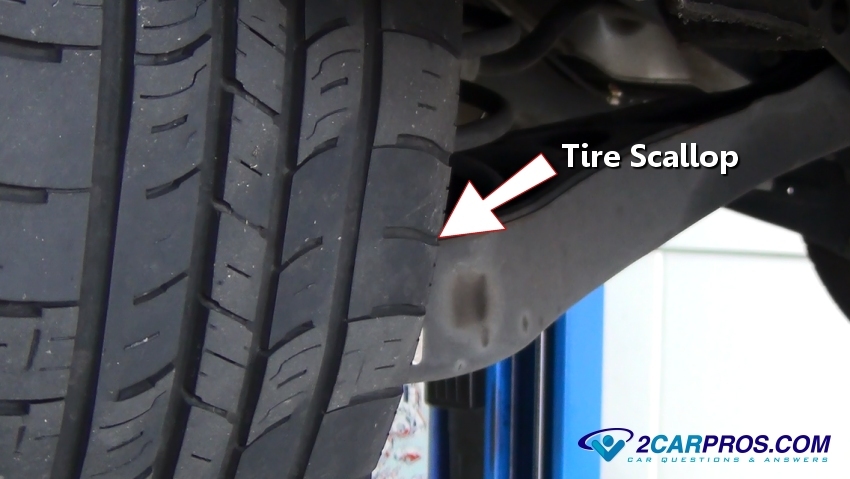
Checking the Tire Wear Pattern - A tire with a scalloped pattern on the tire will cause a howling sound at speeds over about 45 MPH. This tire condition is caused by a combination of worn struts or shocks and or tire imbalance. If a tire is not being controlled evenly the tire will vibrate causing the tread to contact the ground inconsistently. This inconsistent contact with the road causes the tires tread to wear unevenly. (Cupping, tire example on the right). To check for this condition, take your hand and pass it over the tire tread, it should be smooth. If high and low points exist the tire is cupped and needs to be rotated or replaced depending on the severity of the cupping condition, and the suspension repair accordingly.

Tire Wear Patterns
Tire Wear Patterns

Checking the IAC motor (Ford Only) - IAC is an abbreviation for idle air controller. A problem that is specialized to Ford cars and trucks is the IAC motor with fail causing a howling noise when the engine is running. This noise can vary slightly as the engine is subject to load. The IAC can still control the engine idle or not. To check for this condition can be difficult, first remove the IAC and inspect the plunger inside the valve. If any of the plastic coils are broken or missing replace the IAC, that's an easy find but sometimes broken pieces are tough to see but replacement is still required.

Ford Idle Air Controller

Checking the Air Injection Pump and System - An air injection pump is used to pump air into the exhaust system to help complete the combustion process after the exhaust charge as left the combustion chamber. The added air promotes the charge to continue burning to expend any additional fuel that was not burned. The air pump also helps the catalytic converter arrive at operating temperature by adding air which in turn creates heat to the catalyst material. Much like a fire, and what happens to it when the fire is fanned with addition air, the fire gets hotter. On vehicles equipped with an air injection system the air pump can create a howling sound that will start and stop during engine operation. The air injection system is equipped with one or two check valves that allow air to transfer into the exhaust system. If one or both of these valves fails it can cause the air pump to labor creating the howling noise. To check for this condition remove the check valves also called diverter valves and blow through them both ways, the valve should only allow the air to pass through in one direction. If the valve allows air to pass in two directions the valve has failed and needs replacement.

Electric Air Pump
Electric Air Pump


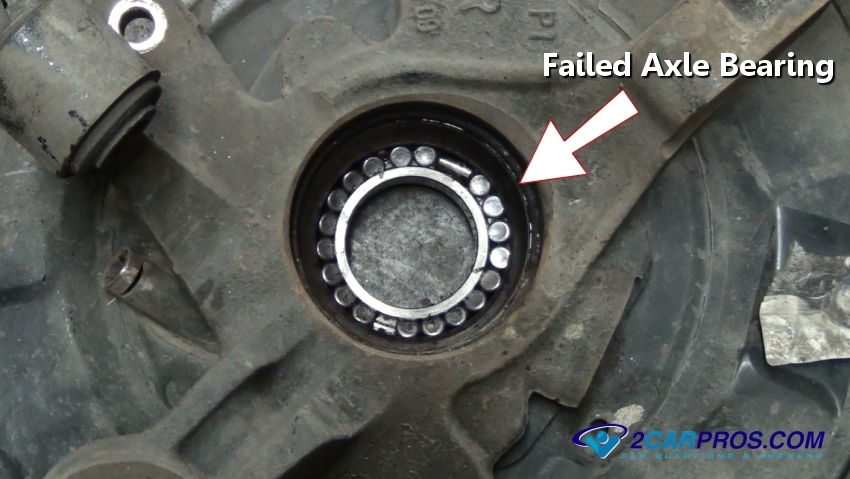
Checking Axle Bearing Failure - An axle bearing is designed to support the weight of the vehicle while allowing the wheels to rotate. These bearings are manufactured with high grade steel that resists wear under extreme conditions. When an axle bearing fails it allows metal to contact metal under pressure with a linear motion creating a howling noise. Once an axle bearing fails it cannot be repair, replacement is required. Remove axle bearing and replace with new and recheck. Some vehicles are equipped with a bearing hub assembly. The bearing below is the style of bearing is replaced by un-bolting the bearing hub assembly and replacing it with new.

Axle Bearing Hub
Axle Bearing Hub

Other bearing designs include separated bearings that include inner and outer bearings with bearing races, a four piece set. Separated bearings require an inboard seal attached to the bearing hub. This seal rides on the spindle to hold grease inside of the bearing hub, keeping lubricating inside of the bearings.

Axle Bearing/Race Set with Seals

Check Main Differential Gears - The main differential gears transfer power that is delivered from the transmission to the wheels. These differential gears can become misaligned because of a failed carrier or pinion bearing and they will disintegrate and fail. While this condition is occurring it will make a howling or grumbling sound. The only way to confirm this condition is to disassemble and inspect the bearings and bearing races. If you remove the oil fill drain plug and remove a small sample of oil from the carrier, hold it up to the light and inspect for small metal particles. If metal partials are detected further repair is required.

Failed Ring Gear Pattern


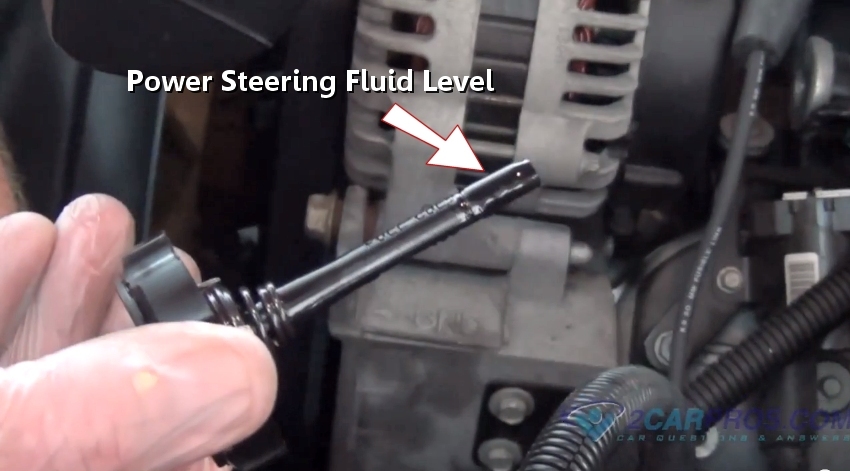
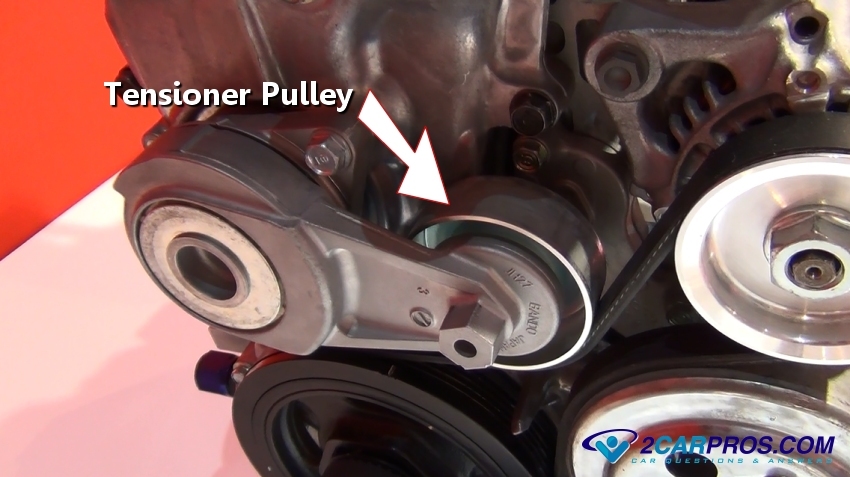
Checking Power Steering - A power steering system is designed to utilize power from the engine to assist in the force needed to steer the vehicle. When the engine is running, a multi ribbed serpentine belt is used to transfer engine power to a hydraulic fluid pump. This pump pressurizes fluid and then transfers this fluid using power steering hoses that are connected to a power steering box or rack and pinion depending on how the car is designed. When the power steering system has run low on fluid it can create a howling sound. This noise is more apparent when steering the car. When the power steering is malfunctioning the vehicle will be very difficult to steer. It is advised not to move a vehicle with the power steering system not operating. Any steering component malfunction can cause the vehicle to be uncontrollable. When a malfunction occurs check the system fluid level and add as needed. When this condition occurs the power steering system has a leak and needs to be inspected and repaired.

Power Steering Cap
Power Steering Cap

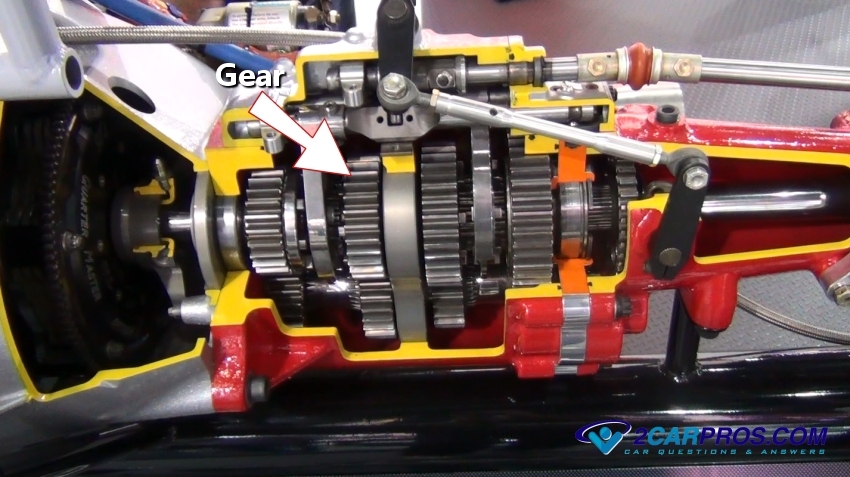
Checking a Standard/Manual Transmission - A standard transmission or manual transmission is the traditional type of transmission used in automobiles. The manual or standard transmission consists of a series of heliacal gears, syncros, roller bearings, counter shafts and gear selectors. The main clutch assembly is used to engage and disengage the engine from the transmission. Heliacal cut gears are used to select the ratio desired the sector fork move gears from one to another by using the gearshift knob. Syncros are used to slow the gear to a stop before it is engaged to avoid gear grinding, the counter shaft hold the gears in place and against the main input and output shaft. When this transmission starts to fail it can produce a howling noise. In the reverse gear a slight howling in normal because of the way the gears are configured. All forward gears should produce no to very little noise. If the transmission makes noise in one or two forward gears and not other gears the noise producing gears have failed.

Typical Standard Transmission Gear Configuration