The engine in your car is designed
to run smoothly with maximum power output and produce as minimal emissions as possible.
When your car's engine is not performing properly it can cause, low gas mileage,
low power output, increased emissions and possible internal engine damage if left
untreated. This troubleshooting guide
is designed to isolate the malfunctioning cylinder and troubleshoot to repair the
problem. Before we start we need to know one of two things; is the engine running
poorly at idle only and seems to be ok under power?
Or does the engine run fine
and it's just the engine idle condition that is the problem. If your engine is vibrating
at idling please visit, engine vibrates
at idle. If your engine cranks over but won't start visit
engine wont start. If your engine
won't crank over visit engine
wont crank over. If your engine is running rough all of the time or intermittently
you are in the right place. Below we have created a guide to aid diagnoses and repair
procedure for most common rough engine running problems.
Car Repair Guide
Step 1 - Anytime you have a problem with electronically controlled
components such as an engine, transmission, ABS brake, or SRS (supplemental restraint
system, air bag) inspect all fuses
in the under hood power distribution center and under dash fuse panels using a
test light. If all
fuses test okay continue to the next step.
Step 2 - To check for problems with electronically controlled
components such as an engine, transmission, ABS brake, or SRS (supplemental restraint
system) and the fuses test ok a trouble code scan is needed to identify any system
trouble. Use a simple
scanner tool to retrieve trouble codes and
check if they relate to the specific problem, like an ignition coil failure code.
If a trouble code is present but does not pertain to the immediate problem like
an EVAP code ignore it until a later time, after the engine is running properly.
The reason we repair non-related codes after the engine is running properly is because
sometime false codes can be triggered by a rough running engine. Once the engine
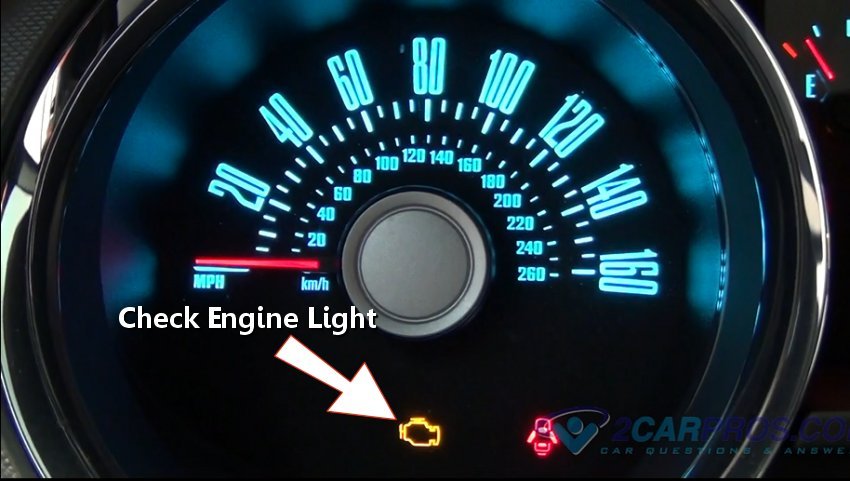
is running properly the code present might cycle and turn itself off. You might say "if the engine isn't running right shouldn't it have a check engine
light and a trouble code?"
Sometimes conditions occur that will not be detected
by the computer, example: if the intake or exhaust valve operation fails the computer
cannot detect the failure because the problem is not sensor related, so the engine
doesn't run smooth and the computer thinks everything is okay with no codes. If the
trouble code retrieved relates to a cylinder misfire like an injector driver or
ignition coil failure first repair these problems then re-test system. If no trouble
codes are present proceed to the next step.
How to Check for Trouble Codes with a Scan Tool
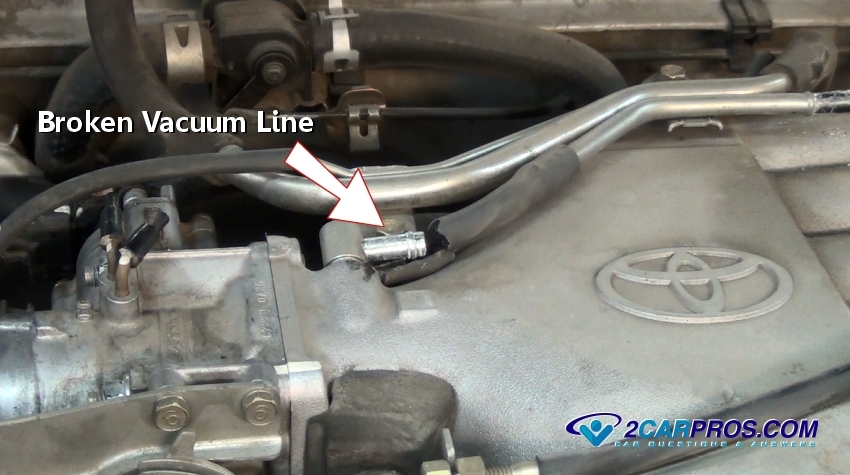
Step 3 - Check for broken or dilapidated vacuum hoses on and
around the engine, your car's engine is designed to run on a system that can hold
vacuum. Vacuum hoses are typically connected to the engine intake manifold and will
supply engine vacuum to various accessories like the brake system. Some cars are
designed with a larger vacuum transfer hose like Ford that connects the intake manifold
to the IAC (idle air control) motor. A broken or dilapidated vacuum line or air
intake boot can cause the engine to lose vacuum which will allow the engine to run
rough and die. Inspect all engine and accessory vacuum lines to look for missing,
torn or dilapidated lines and replace as needed.
Also have a helper rest their foot on the gas pedal just enough to keep the engine
running. Check the engine when it is running to listen for any whistling noise coming
from the engine that is not usually present. Follow the noise and inspect vacuum
lines in that area. Also, when the engine is running it will pull inward a broken
or weak piece of the hose to create a larger vacuum leak. Check the integrity of
all vacuum hoses at each end of the hose. Typically this is where a vacuum hose
fails. If all vacuum hoses check "okay" proceed to the next step.

Failed Air Intake Boot
Step 4 - A pocket
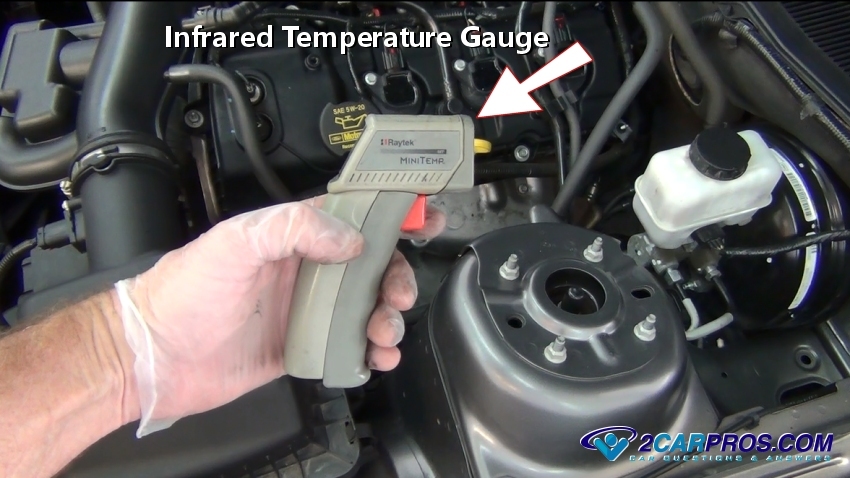
IR thermometer
laser temperature reader is handy for detecting a cylinder misfire. If you have
visual access to all cylinder exhaust
manifold ports you can use a pocket IR thermometer temperature detector to detect
a cylinder misfire. Start with the engine cold, then start the engine, take temperature
reading on all cylinders, if one cylinder is considerably lower temperature then
the other cylinders you have found the cylinder that is malfunctioning. Example:
on a four cylinder three of the exhaust ports test at 190 degrees and one is at
81 degrees. The cylinder at 81 degrees is misfiring. Once you have found the cylinder
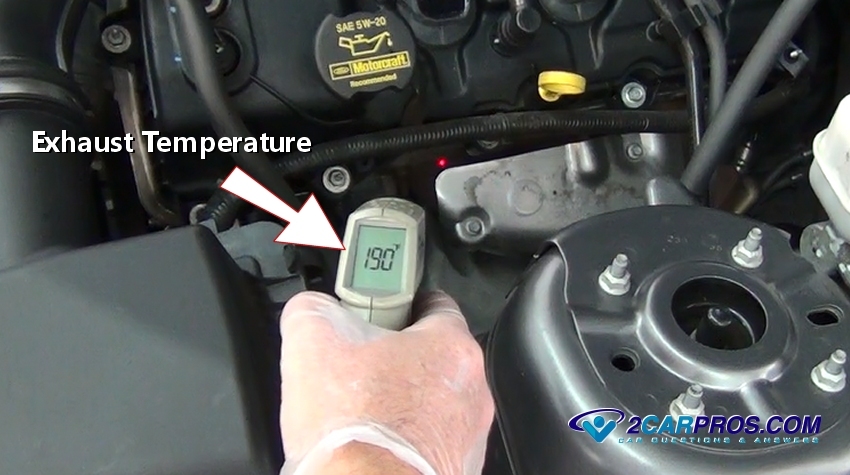
that is misfiring use the following tests to find out why it is misfiring, if haven't
found the misfiring cylinder continue: (the next step can be combined with step
6 and 7)

Pocket IR Thermometer Laser Temperature Reader
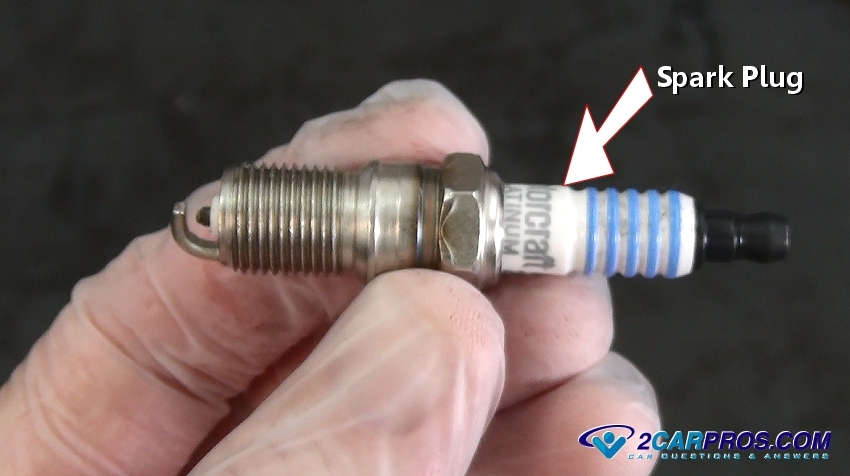
Step 5 - The spark
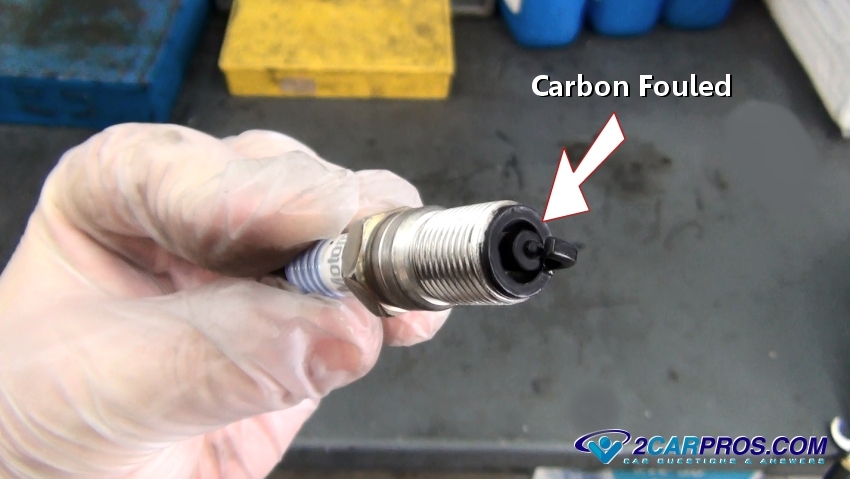
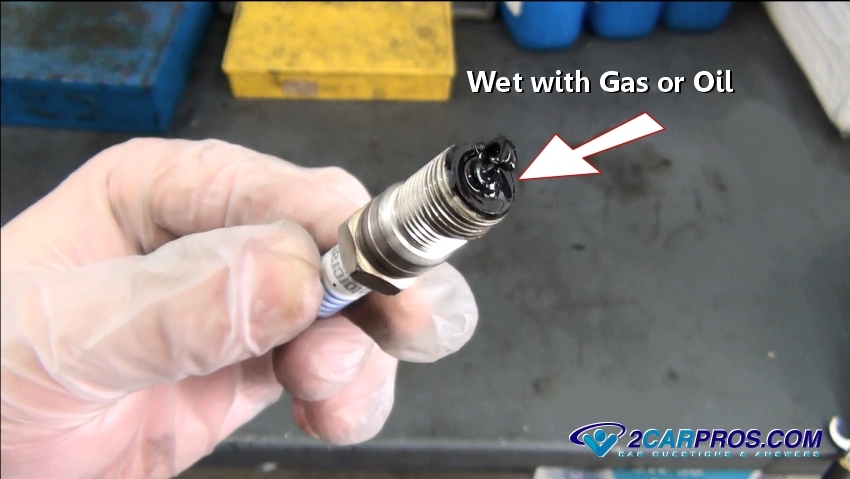
plugs in your engine can give you valuable information about how the engine
is running. The chemical reaction inside the combustion camber will leave deposits
on the spark plug that can tell you the condition inside the engine's combustion
chambers. For example: if the engine is running rich all of the spark plugs will
have a black or grey soot covering the spark plug electrode. If the engine is running
lean all of the spark plugs will be clean and white (check your spark plug condition).
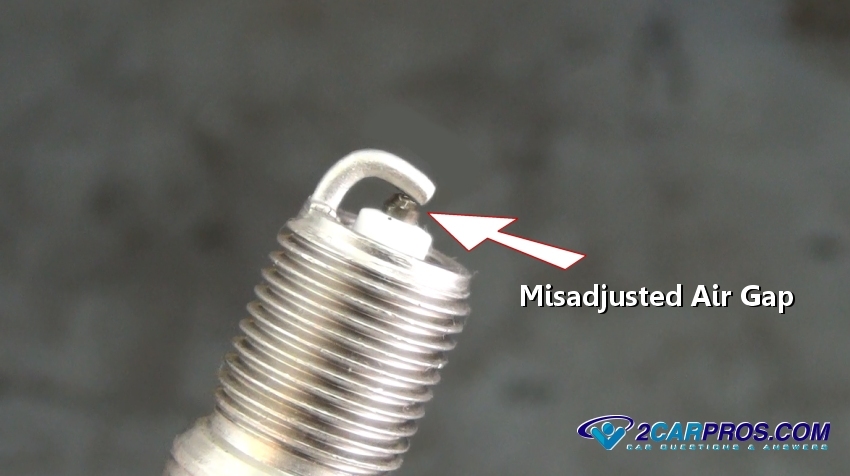
If one of the spark plugs looks considerably different from the remaining spark
plugs that cylinder might be having a problem.
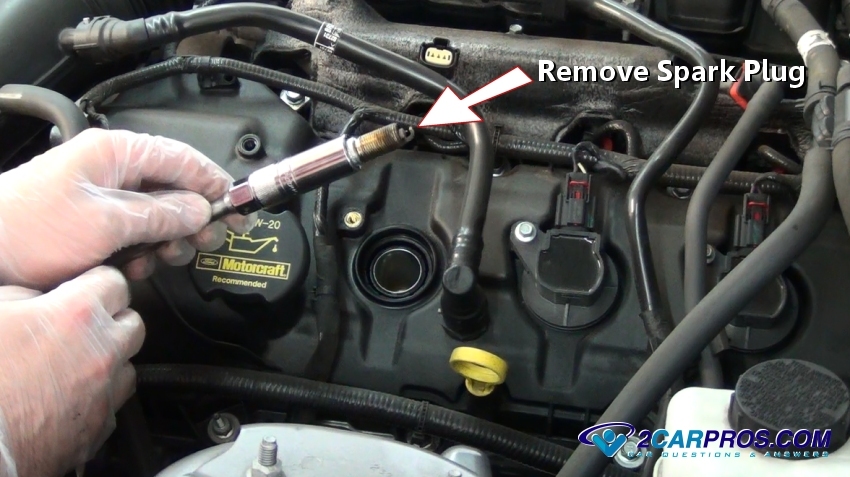
Before you remove the spark plugs, mark the plug wires to identify their positions
in the firing order, this will help to make sure they do not get mixed up. Next,
use a spark plug socket to remove the spark plugs, we use a spark plug socket because
the inside of the spark plug socket is lined with rubber to help cushion the spark
plug insulator, which is made of porcelain and is easily cracked or broken. If a
spark plug insulator is cracked or broken the engine will misfire because the
ignition spark will travel
to the engine block (ground) instead of the spark plug gap (between the electrodes)
Step 6 -
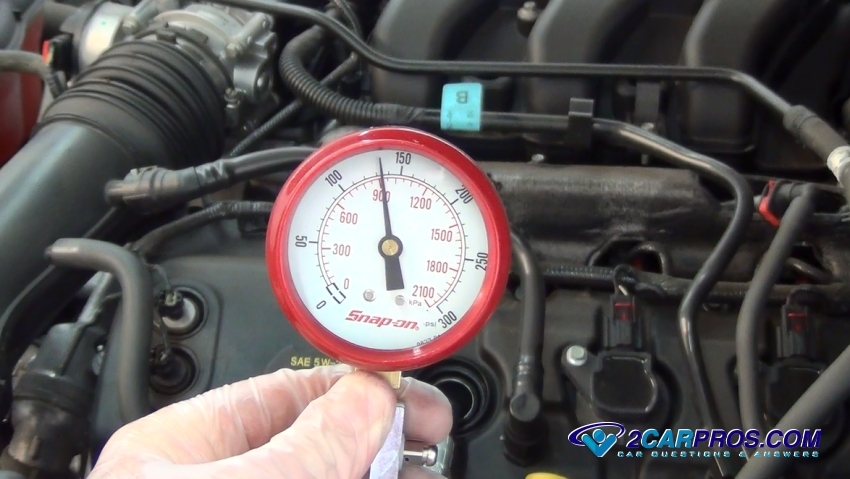
Engine compression is very important for a smooth running engine. An engine
depends on an equal compression reading in each cylinder to run smoothly. If poor
compression exists in one or more cylinders it can cause a rough idle condition
and low engine power output. A compression test of all cylinders is needed to check
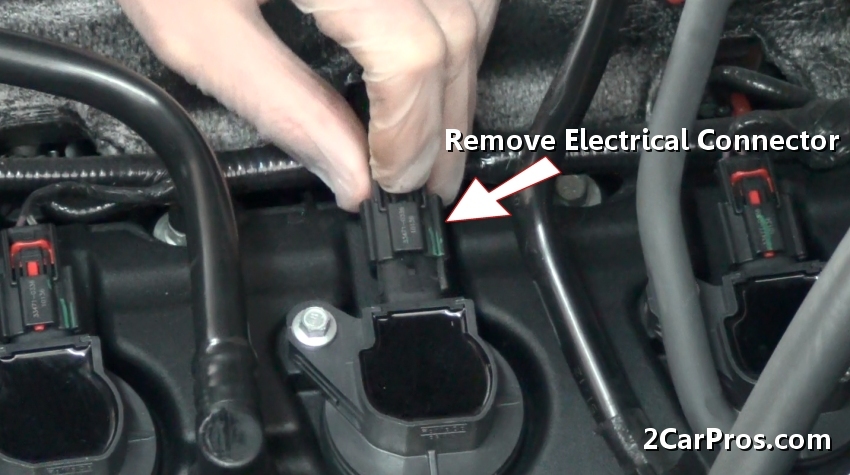
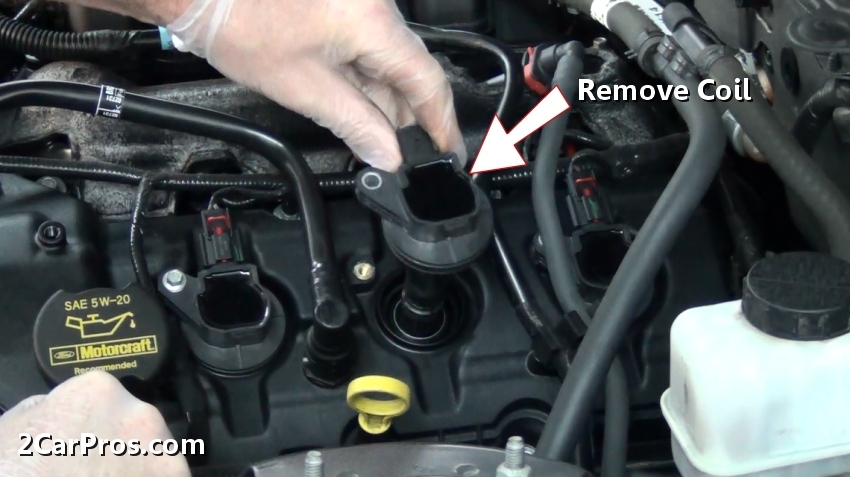
for engine wear and internal damage. Remove ignition coil connector or ignition
system or fuel pump fuse to disable
power to the ignition or fuel system to avoid fire.
Compare cylinders compression
reading, typical compression readings are between 125 p.s.i. and 160 p.s.i. all
cylinder readings should be within about 5% of each other. If low compression exists
a cylinder malfunction exits and further troubleshooting is required. Possible causes
for a low compression condition are: burned intake or exhaust valve, broken piston
or piston ring, broken valve spring or a blown head gasket. If engine compression
tests "okay" proceed to the next step.
Step 7 - The
ignition system in your car
ignites the fuel inside the engine's combustion chamber at the optimal time in the
piston stroke to produce the most power while emitting the least amount of emissions
as possible. There are many configurations of ignition systems but all operate on
the same principle, create a low energy field and collapse it onto a high energy
coil and that transfers the electrical energy into the secondary ignition system,
i.e. coil wire, distributor cap and rotor (if equipped)
plug wires and finally the spark
plug.
Testing the Ignition System Video
This system is triggered by the primary ignition system, this system varies depending
on manufacturer but all operate on the same principle, use some kind of low voltage
trigger system i.e. crankshaft
position sensor (CKP), camshaft position sensor (CAS). This low voltage system
(1.5 to 3.0 volts) is amplified to 12 volts by using an ignition module (amplifier)
and then transferred to the primary side of the ignition coil. The PCM (Powertrain
Control Module) controls the engine ignition timing by advancing and retarding
the primary trigger signal. In older cars points and condenser with a vacuum advance
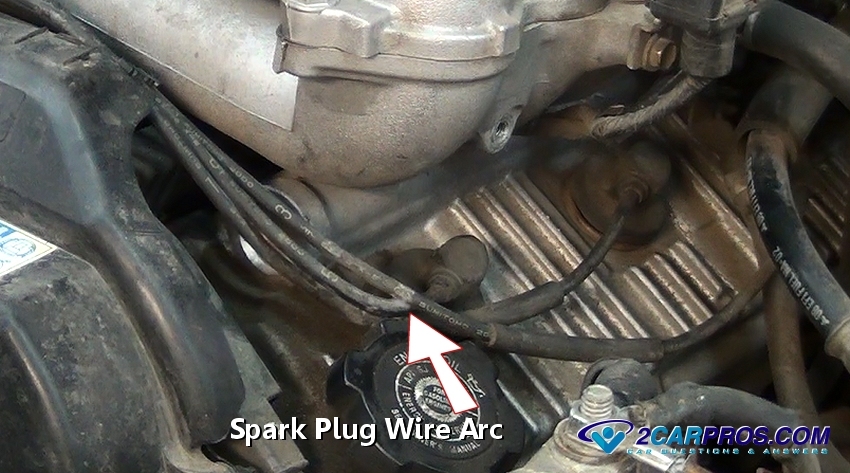
unit performed this job. We have listed the most common causes for an
ignition system to fail or
misfire.
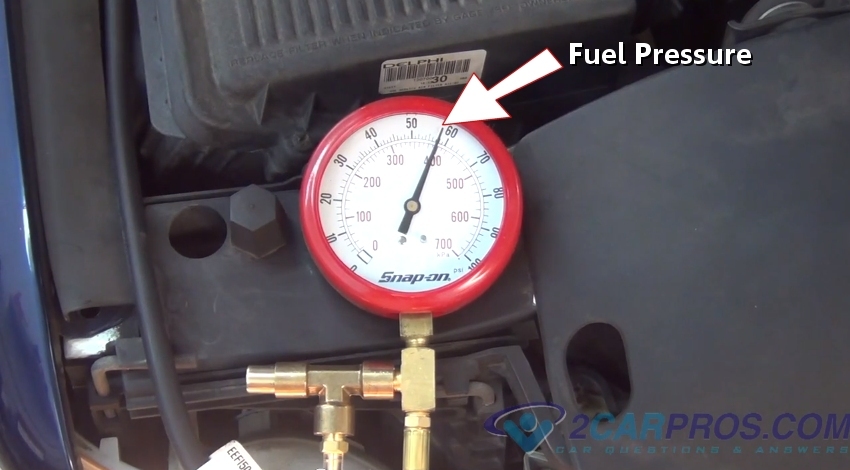
Step 8 - Test for proper
fuel pressure with a test gauge on the fuel rail or in line somewhere in the
system, most throttle body injection
cars (TBI) are between 13 psi and 17 psi. and most (DPI) direct port inject systems
are between 40 psi and 55 psi. If good fuel pressure is present continue to next
step. If no or little fuel pressure is present check the fuel pump fuse and fuel
pump control relay located in the fuse panel, you can find this fuse and relay by
checking your owners manual, back of the fuse panel cover diagram, or an
online auto repair manual,
if the fuse or relay has failed replace it a new unit and re-test. Have a helper
crank over the engine while you place your fingers over the relay, does the relay
click under your fingers? If so the relay could be working, there is a chance the
relay has burned contacts inside causing the problem but we will get back to
that.
Next, access the fuel pump power
feed wire, there are a few ways to do this, first you need a wiring schematic to
find the color wire needed for testing, the best way to do this is with a
service manual.
Once you have found the color wire it should be located in the wiring harness near
the fuel tank were the pump is located. Ground the
test light and probe
(pierce the wire's outer coating with the test light point) the wire, have a helper
crank the engine over. If the test light illuminates and you have no fuel pressure
the fuel pump had failed and needs to be replaced. If the test light doesn't
illuminate the fuel pump control relay has probably failed, replace it with a new
unit and re-test, in most cases this relay is under thirty dollars. There is an
outside chance the power feed to the relay has failed but it doesn't happen very
often. If this is the case trace the power source to the relay.
How to Test Fuel Pressure Video
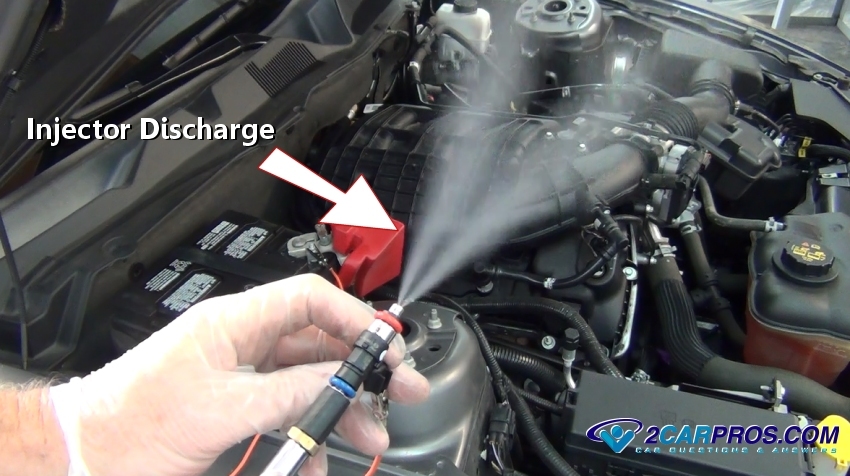
Step 9 - While an engine is running you should be able
to hear the injectors clicking as the electronic
valve opens and closes. To aid in this inspection use a stethoscope and touch it
against each injector. If no audible sound is heard test fuel injector pulse and
supply voltage output (this test is used for most cars). This test will tell
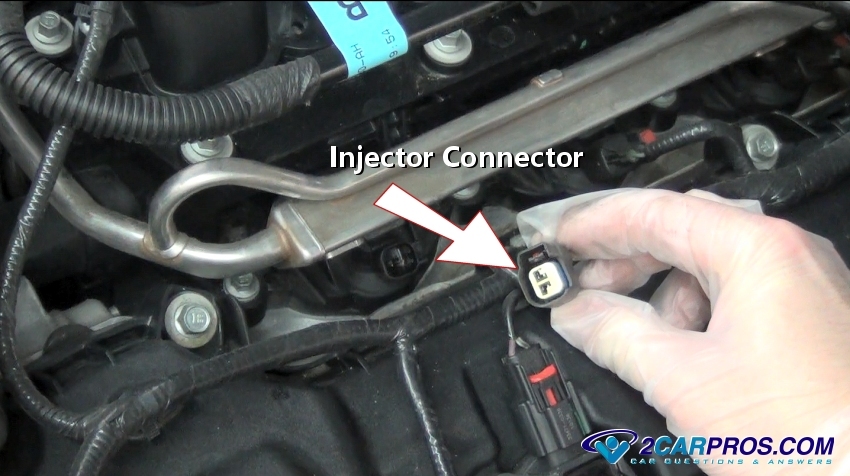
you if the computer system has operating voltage and injector trigger signal. Remove
an electrical connector from a fuel injector (all injectors need to be tested) probe
both sides of the connector with a grounded test light or
multimeter (voltmeter) (black lead)
switched to DC voltage (there are only two terminals).
Have a helper turn the key to the "on" position without cranking the engine
and observe the test light. The test light should illuminate one side of the connector
only and the multimeter should be at about 12 volts. Next, switch the test light
or multimeter (voltmeter) lead (black) or to the positive side of the battery to
test the system ground injector trigger, probe the side of the connector that did
not light up, have a helper crank the engine over and observe the test light, it
should blink on and off or the multimeter (voltmeter) should bounce from 0 to 12
volts. (Note: if no injector pulse is present try disconnecting the remainder of
injectors and re-test, if a fuel injector is shorted it can shut down the injector
driver causing no injector pulse.
If injector pulse returns plug the injectors electrical connectors in one at
a time until the pulse fails and then replace that injector). If this test revealed
that there was no pulse but system has power, the PCM is not generating a fuel injector
trigger. If there is no trigger to the fuel injector it will not allow fuel to enter
into the engine. Some of the most common reasons that can cause this condition include
a shorted fuel injector,
injector wiring damage or shorted PCM. While the injector trigger wire is off, test
the fuel injector windings by setting the multimeter (voltmeter) to ohms and attach
the leads to either side of the injector.
Your reading should be between 11 and 18 ohms. Test all of your injectors; if
one injector reading is considerably different from the others replace that injector.
Check the fuel pressure regulator, remove the vacuum line feeding the fuel pressure
regulator, check for the presence of fuel, if fuel is present the diaphragm inside
the regulator has ruptured and is feeding raw fuel into the engine causing it to
run rough.
Step 10 - A
camshaft is commonly
used to operate poppet valves in a piston engine. A cylindrical rod is situated
in the cylinder block or cylinder head which has oblong lobes or cams which push
the intake and exhaust valves. This force is applied on the valve directly or through
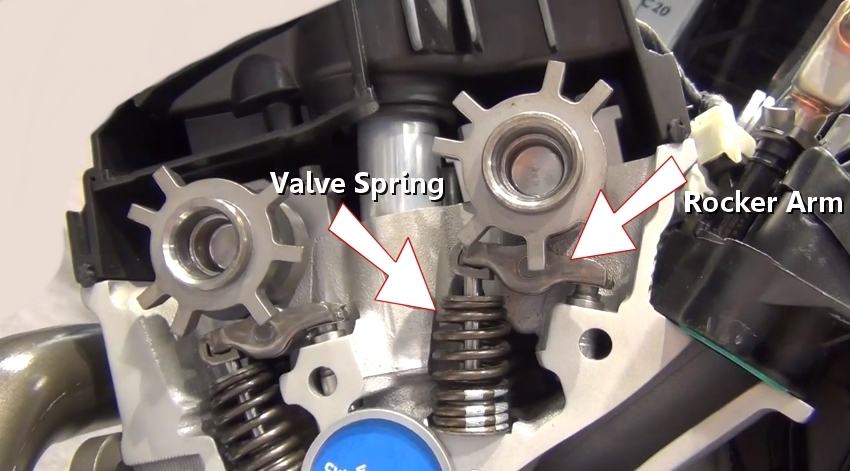
an intermediate mechanism such as a rocker arm, lifter (cam follower) and push rods
are used to press against the valve for movement. Each valve utilizes a spring which
will return the valve to its original position (closed) after the force is removed.
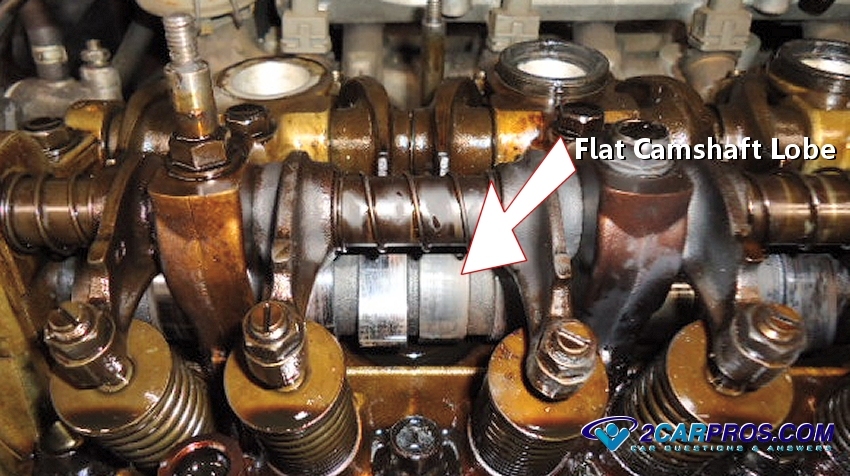
If a valve spring has broken or a cam lobe has worn down it will cause the engine
to misfire and run rough because it causes the engine to lose compression. You might
say" wouldn't either of these conditions show up in a
compression test?" and the
answer is not always. The problem with a compression test is that it is performed
at engine cranking speed. If you have a worn camshaft it will show up only when
the engine is running.
In some conditions a broken valve spring can effect different aspects for example:
If just one coil of spring breaks off, the spring can still close the valve but
only at low RPM's, causing a high RPM engine misfire if the spring breaks somewhere
in the middle it will affect both idle and power conditions. To test for this condition,
remove ignition coil connector or ignition system or fuel pump fuse to disable power
to the ignition or fuel system. Remove the valve covers to gain access to visually
inspect the valve train.
Have a helper crank the engine over while you watch the rocker arms or cam lobes,
make sure they are all going up and down the same amount, if one or more lobes are
traveling less than the others you have a flattened cam lob and the camshaft needs
to be replaced. Inspect the condition of the valve springs, use a flashlight and
small mirror too aid in the inspection. If a broken valve spring is discovered it
will need to be replaced to correct the problem.

Typical Camshaft Configuration
Step 11 - The head gasket in your engine is used to seal the
cylinder head to the engine block. The cylinder head is fastened to the engine block
using head bolts that are tightened to a specific torque. When a head gasket wears
it can allow coolant or exhaust to enter the combustion chamber causing a cylinder
misfire. To test for a blown head gasket, have the engine cold, then remove about
a half a gallon of coolant from the radiator. Next attach a chemical tester to the
top of the radiator were the radiator cap attaches and fill the tester with testing
solution.
Start the engine and watch the chemical tester it will start to bubble as the
engine warms up, if the chemical turns blue to yellow the engine has a blown head
gasket. If the head gasket is blown between two cylinders it will allow exhaust
to enter the cylinder that is not in the power stroke causing a cylinder misfire.
To check for this condition perform a compression test of all cylinders. If the
head gasket is blown between to cylinders the compression reading will be a little
low in two cylinders that are next to each other and compression reading will be
close to the same in both cylinders.
If further assistance is needed, our certified car repair technicians are ready
to answer your car questions.
Related Car Repair Information