Replace Spark Plugs
The spark plugs in your engine
can give you valuable information about how the engine is running. The chemical
reaction inside the combustion chamber will leave deposits on the spark plugs that
can tell you the condition inside the engine's combustion chambers. For example:
if the engine is running rich all of
the spark plugs will have a black or grey shoot covering the spark plug electrode.
If the engine is running lean
all of the spark plugs will be clean and white. If one of the spark plugs looks
way different than the remaining spark plugs the cylinder with the different looking
plug might be having a problem.
Before You Start

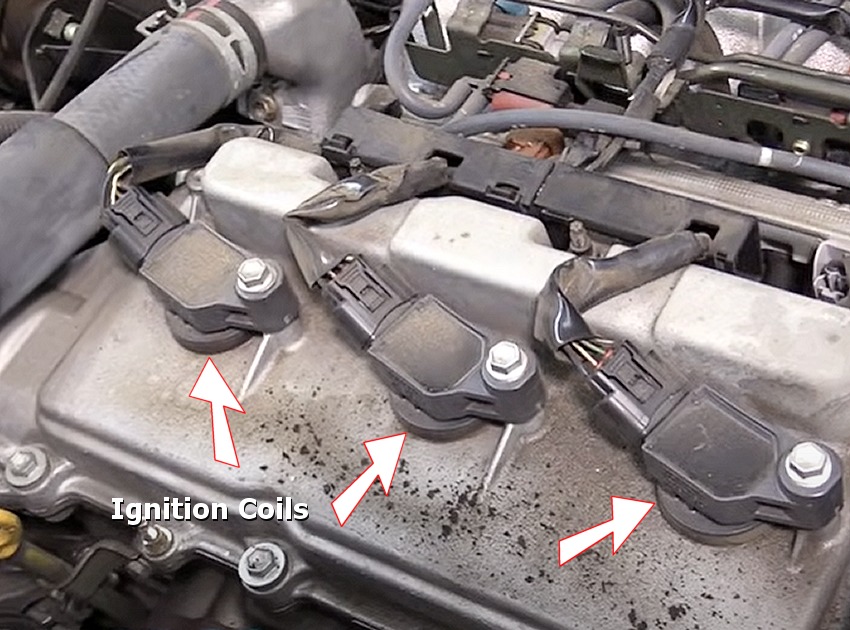
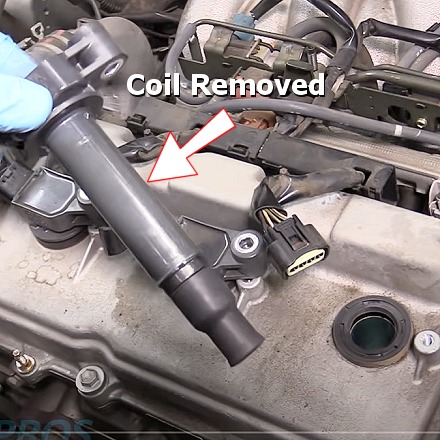
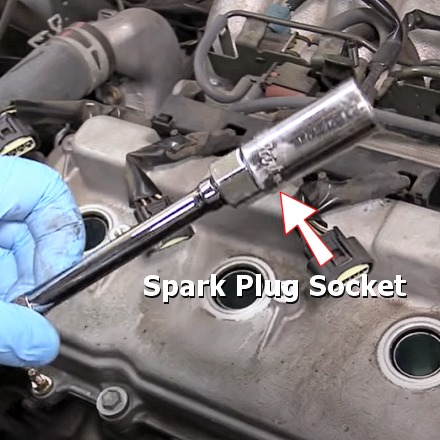
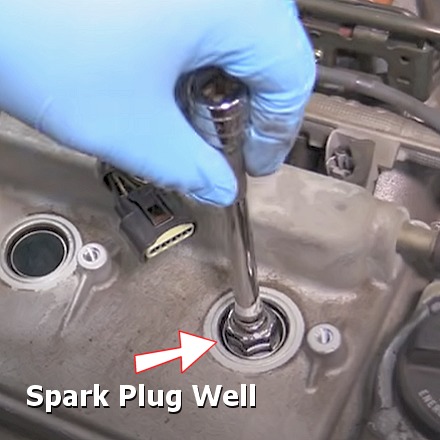
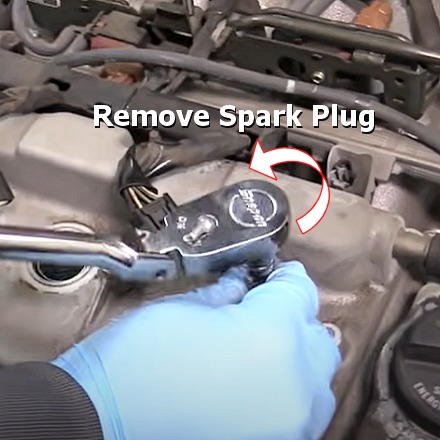
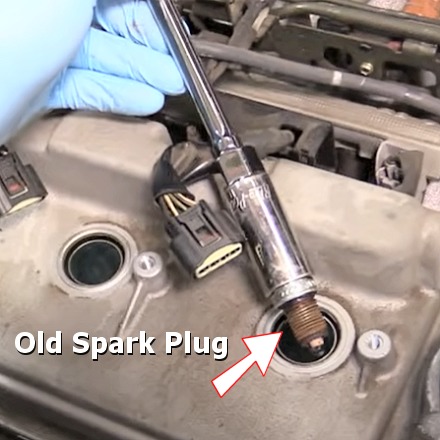
Removing the Spark Plug Wire Step 2 - Remove debris from the spark plug hole, (canned air works best) then use a socket wrench and spark plug socket to loosen and remove the spark plug (counter clockwise). Before you remove the spark plugs, mark the plug wires to identify their positions in the firing order, this will help to make sure they do not get mixed up. Always use a spark plug socket to remove the spark plugs. We use a spark plug socket because the inside of the socket is lined with rubber to help cushion the spark plug insulator, which is made of porcelain and can be easily cracked or broken removing or installing. If a spark plug insulator is cracked or broken the engine will misfire as the ignition spark will travel to the engine block (ground) instead of the spark plug gap (between the electrodes).Before installing spark plugs always inspect the spark plug mounting hole threads, check for rust and debris, clean and lubricate as needed. If spark plug threads are damaged use a thread cleaner or tap loaded with grease to catch the metal chips that would go into the combustion chamber. Also use a can of compressed air with the long plastic extension the can comes with the can and insert into the spark plug hole down into the cylinder and blow excess partials out (cover your eyes from air-born debris) to help the removal of additional particles. When removing the spark plugs organize them according to their related cylinder. Next compare your spark plugs to those on the chart below for potential or present problems. Inspect spark plug condition (chart below).
Removing Spark Plugs
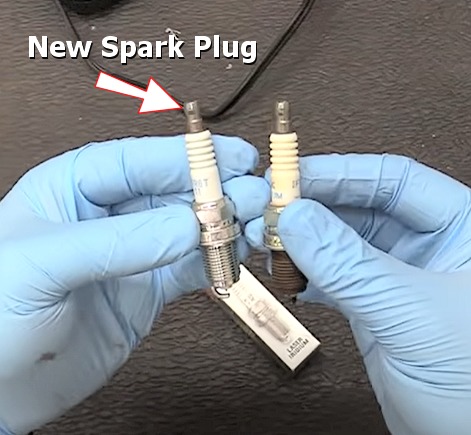
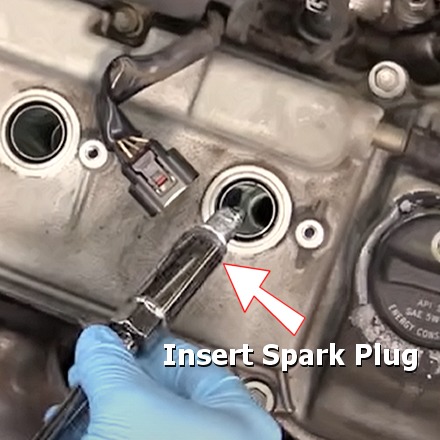
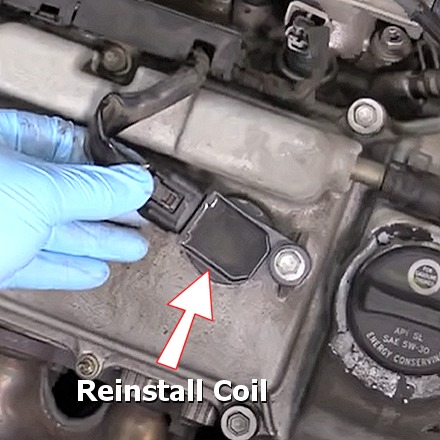
Step 3 - When reinstalling new plugs be sure the spark plugs you are installing are made for your car and engine size. Do not install spark plugs just because they fit, design issues can cause internal engine damage, example: if the spark plug electrode is to long it can damage the piston. Use a spark plug gapping tool to check the measurement between the electrodes, most spark plug gaps are between .035 and .045. This gap is important because it determines the amount of resistance used to "time" the ignition system. An incorrect spark plug gap will result in low power, poor mileage and possibly a check engine light notice. For the exact measurement for your car consult a car repair manual. Remove the spark plug from the box or container and inspect the new plug for damage that could have occurred in shipping. A spark plug has a porcelain isolator that is fragile and can crack easily. Reinstall the spark plug and install the new spark plug wire. Most of the time a spark plug will come "pre-set" and ready to install. Continue the process until all spark plugs and spark plug wires have been replaced. Be sure to use OE (original equipment) parts for your car or truck to insure the proper performance from your vehicle.

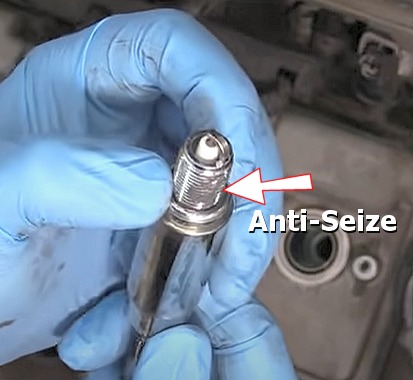
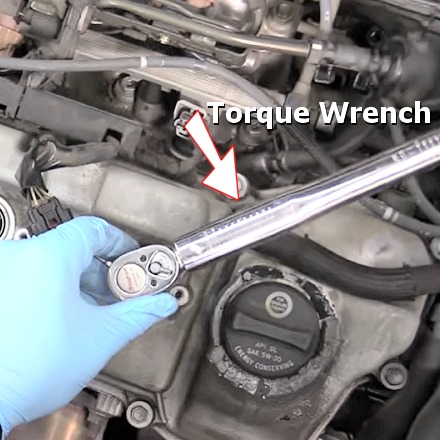
Measuring the Spark Plug Gap Step 4 - When reinstalling the new spark plug make sure the sealing gasket is located on the threaded part of the spark plug, some spark plugs do not have a sealing ring, this is normal. Only tighten the spark plugs to "snug" and install a small portion of anti-seize grease to ensure proper installation. Save the old spark plug in the new spark plug boxes, store them for future reference. Once you have completed the spark plug change start the engine and inspect the running condition, it should be smooth with no extra noises. If your engine is running rough double check the spark plug wires to make sure one has not popped off or that the plug wires are in the right order. If you have double checked your work and the engine still runs rough please visit - engine runs rough Various Spark Plug Conditions: These spark plug images depict various conditions inside a particular cylinder or all cylinders and will help troubleshoot the problem.
Normal Condition: An engine's condition can be judged by the
appearance of the spark plugs firing end. If the firing end of a spark plug is brown
or light gray, the condition can be judged to be good and the spark plug is functioning
optimally.
Dry and Wet Fouling: Although there are many different cases,
if the insulation resistance between the center electrode and the shell is over
10 ohms, the engine can be started normally. If the insulation resistance drops
to 0 ohms, the firing end is fouled by either wet or dry carbon.
Overheating: When a spark plug overheats, deposits that have
accumulated on the insulator tip melt and give the insulator tip a glazed or glossy
appearance.
Deposits: The accumulation of deposits on the firing end is
influenced by oil leakage, fuel quality
and the engine's operating duration.
Lead Fouling: Lead fouling usually appears as yellowish brown
deposits on the insulator nose. This cannot be detected by a resistance tester at
room temperature. Lead compounds combine at different temperatures. Those formed
at 370-470C (700-790F) having the greatest influence on lead resistance.
Breakage: Breakage is usually caused by thermal expansion and
thermal shock due to sudden
heating or
cooling.
Abnormal Erosion: Abnormal electrode erosion is caused by the
effects of corrosion, oxidation and reaction with lead - all resulting in abnormal
gap growth.
Melting: Melting is caused by overheating. Mostly, the electrode
surface is rather lustrous and uneven. The melting point of nickel alloy is 1,200~1,300C
(2,200~2,400F).
Erosion, Corrosion and Oxidation: The material of the electrodes
has oxidized, and when the oxidation is heavy it will be green on the surface. The
surface of the electrodes is also pitted and rough.
Lead Erosion: Lead erosion is caused by lead compounds in the
gasoline which react chemically with the material of the electrodes (nickel alloy)
as high temperatures; crystal of nickel alloy fall off because of the lead compounds
permeating and separating the grain boundary of the nickel alloy. Typical lead erosion
causes the surface of the ground electrode to become thinner, and the tip of the
electrode looks as if it has been chipped.
If further assistance is needed, our certified car repair technicians are ready
to answer your car questions. Also, gain manufacturer
specific instructions and information by clicking -
Auto Repair Manual
Related Car Repair Information
- Park the car on a flat dry surface, engine off, in park with the emergency brake set
- Gather the proper tools needed to complete the job: Socket wrench (ratchet), various socket extensions, spark plug socket, spark plug gapping tool, spark plug thread lubrication (anti-seize, grease), safety eye wear, latex gloves, hand cleaner and shop towels.
- Allow the engine to cool before spark plugs are removed
- Mark the plug wires with a small piece of tape to identify their positions in the firing order or cylinder order.
- Confirm your vehicles spark plugs; do not install spark plugs that are not meant for your car. Your car is designed with a predetermined resistance in the secondary ignition system that if is changed will hinder performance and mileage. To determine the spark plugs needed consult your owner's manual or a service manual.

Removing the Spark Plug Wire Step 2 - Remove debris from the spark plug hole, (canned air works best) then use a socket wrench and spark plug socket to loosen and remove the spark plug (counter clockwise). Before you remove the spark plugs, mark the plug wires to identify their positions in the firing order, this will help to make sure they do not get mixed up. Always use a spark plug socket to remove the spark plugs. We use a spark plug socket because the inside of the socket is lined with rubber to help cushion the spark plug insulator, which is made of porcelain and can be easily cracked or broken removing or installing. If a spark plug insulator is cracked or broken the engine will misfire as the ignition spark will travel to the engine block (ground) instead of the spark plug gap (between the electrodes).Before installing spark plugs always inspect the spark plug mounting hole threads, check for rust and debris, clean and lubricate as needed. If spark plug threads are damaged use a thread cleaner or tap loaded with grease to catch the metal chips that would go into the combustion chamber. Also use a can of compressed air with the long plastic extension the can comes with the can and insert into the spark plug hole down into the cylinder and blow excess partials out (cover your eyes from air-born debris) to help the removal of additional particles. When removing the spark plugs organize them according to their related cylinder. Next compare your spark plugs to those on the chart below for potential or present problems. Inspect spark plug condition (chart below).

Removing Spark Plugs
Step 3 - When reinstalling new plugs be sure the spark plugs you are installing are made for your car and engine size. Do not install spark plugs just because they fit, design issues can cause internal engine damage, example: if the spark plug electrode is to long it can damage the piston. Use a spark plug gapping tool to check the measurement between the electrodes, most spark plug gaps are between .035 and .045. This gap is important because it determines the amount of resistance used to "time" the ignition system. An incorrect spark plug gap will result in low power, poor mileage and possibly a check engine light notice. For the exact measurement for your car consult a car repair manual. Remove the spark plug from the box or container and inspect the new plug for damage that could have occurred in shipping. A spark plug has a porcelain isolator that is fragile and can crack easily. Reinstall the spark plug and install the new spark plug wire. Most of the time a spark plug will come "pre-set" and ready to install. Continue the process until all spark plugs and spark plug wires have been replaced. Be sure to use OE (original equipment) parts for your car or truck to insure the proper performance from your vehicle.

Measuring the Spark Plug Gap Step 4 - When reinstalling the new spark plug make sure the sealing gasket is located on the threaded part of the spark plug, some spark plugs do not have a sealing ring, this is normal. Only tighten the spark plugs to "snug" and install a small portion of anti-seize grease to ensure proper installation. Save the old spark plug in the new spark plug boxes, store them for future reference. Once you have completed the spark plug change start the engine and inspect the running condition, it should be smooth with no extra noises. If your engine is running rough double check the spark plug wires to make sure one has not popped off or that the plug wires are in the right order. If you have double checked your work and the engine still runs rough please visit - engine runs rough Various Spark Plug Conditions: These spark plug images depict various conditions inside a particular cylinder or all cylinders and will help troubleshoot the problem.
Normal Condition: An engine's condition can be judged by the
appearance of the spark plugs firing end. If the firing end of a spark plug is brown
or light gray, the condition can be judged to be good and the spark plug is functioning
optimally.
Dry and Wet Fouling: Although there are many different cases,
if the insulation resistance between the center electrode and the shell is over
10 ohms, the engine can be started normally. If the insulation resistance drops
to 0 ohms, the firing end is fouled by either wet or dry carbon.
Overheating: When a spark plug overheats, deposits that have
accumulated on the insulator tip melt and give the insulator tip a glazed or glossy
appearance.
Deposits: The accumulation of deposits on the firing end is
influenced by oil leakage, fuel quality
and the engine's operating duration.
Lead Fouling: Lead fouling usually appears as yellowish brown
deposits on the insulator nose. This cannot be detected by a resistance tester at
room temperature. Lead compounds combine at different temperatures. Those formed
at 370-470C (700-790F) having the greatest influence on lead resistance.
Breakage: Breakage is usually caused by thermal expansion and
thermal shock due to sudden
heating or
cooling.
Abnormal Erosion: Abnormal electrode erosion is caused by the
effects of corrosion, oxidation and reaction with lead - all resulting in abnormal
gap growth.
Melting: Melting is caused by overheating. Mostly, the electrode
surface is rather lustrous and uneven. The melting point of nickel alloy is 1,200~1,300C
(2,200~2,400F).
Erosion, Corrosion and Oxidation: The material of the electrodes
has oxidized, and when the oxidation is heavy it will be green on the surface. The
surface of the electrodes is also pitted and rough.
Lead Erosion: Lead erosion is caused by lead compounds in the
gasoline which react chemically with the material of the electrodes (nickel alloy)
as high temperatures; crystal of nickel alloy fall off because of the lead compounds
permeating and separating the grain boundary of the nickel alloy. Typical lead erosion
causes the surface of the ground electrode to become thinner, and the tip of the
electrode looks as if it has been chipped.
If further assistance is needed, our certified car repair technicians are ready
to answer your car questions. Also, gain manufacturer
specific instructions and information by clicking -
Auto Repair Manual
Related Car Repair Information