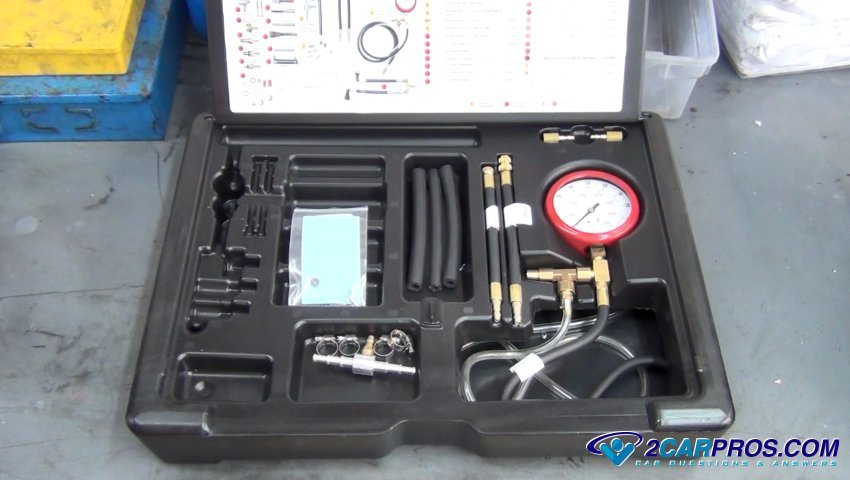
Explanation
Your car's fuel pump is used to supply gas to the engine's fuel injectors weather it be gasoline or diesel fuels. Depending on the fuel system design you can have one or more styles of pumps in various locations both mechanical and electric models. Direct injection fuel systems can be both diesel and regular gasoline which is comprised of a primary pump in the fuel tank and a secondary "high pressure" pump which mounts and is driven by the engine. Regular pressure fuel injection system have just one main pump in the fuel tank. A fuel pump test will show the performance condition of the pump.
What goes wrong?
As a car ages the internal parts of the fuel pump can wear causing a loss in pressure to the fuel injection rail and the injectors resulting in hard starting, hesitation and low engine power and when the internals of the pump fail completely the engine will not start.
SPONSORED LINKS
What's the cost?
Most people do not have a fuel pump test kit but fear not, auto parts stores will lend you one for free in most cases. If you suspect the fuel pump is getting weak in your car and you take your car to a shop to have the test done you can expect to pay between $90.00 and $150.00 US.
Let's Get Started
Begin with the vehicle on flat ground in park with the emergency brake set, engine off (no smoking or open flame). This test is for in-tank fuel pumps only.
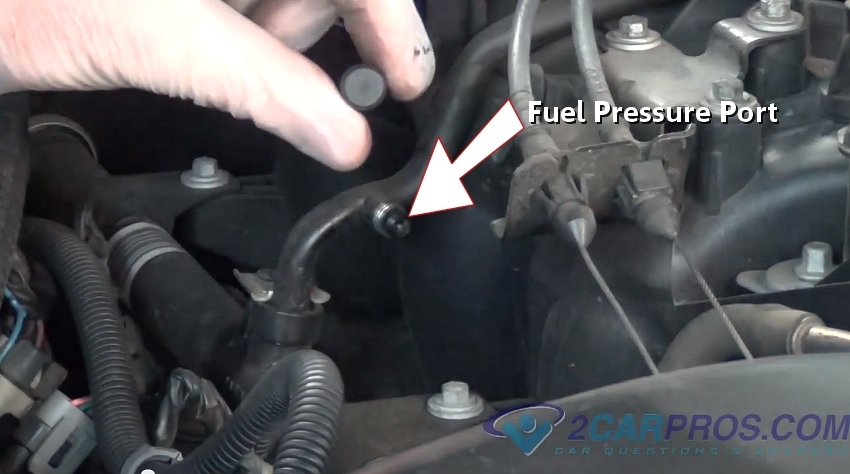
Pressure Port: Some cars are designed with a convenient pressure port on the
engine fuel rail (remove cap) to attach the gauge to while other designs will need
an adapter from the test kit which can be attached at the fuel filter or fuel pressure
feed line headed to the engine's fuel rail.
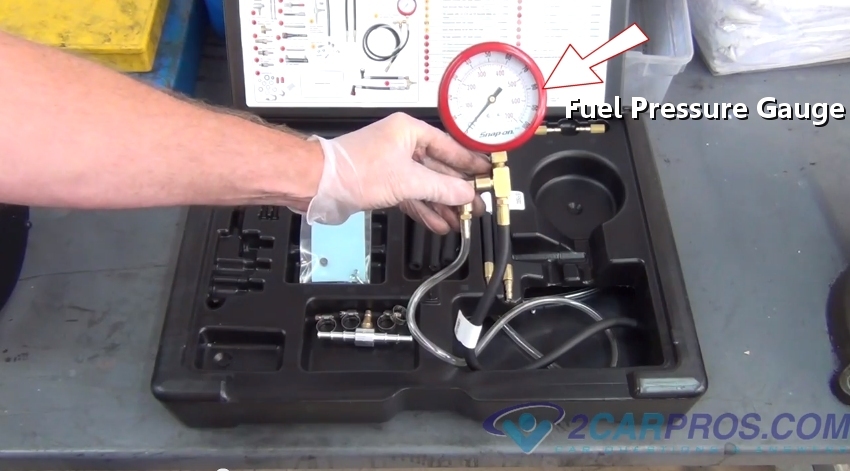
Remove the fuel pressure test gauge from the kit. Most gauges have a quick disconnect
coupler that will allow several different adaptors for various manufacturers. The
kit should have them labeled but if not look for the hose connector or fitting that
will work for your car.
When attaching the pressure gauge (engine off) a small amount of fuel may be
present so don't be alarmed have a shop towel ready.

SPONSORED LINKS
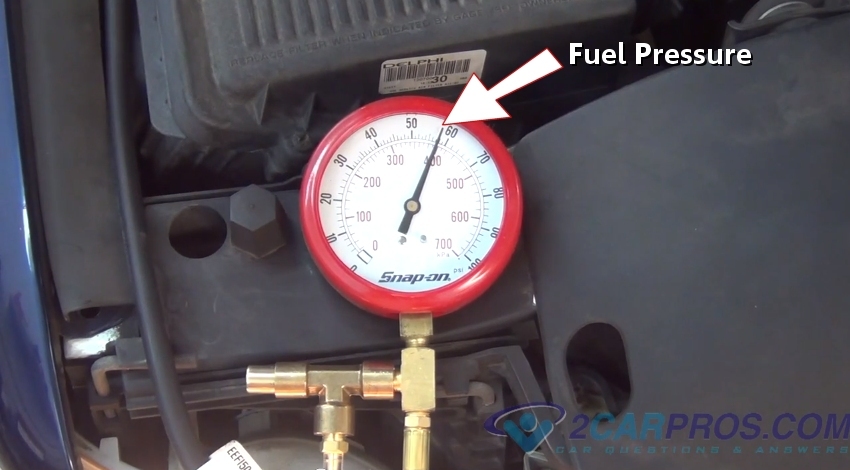
Without starting the engine turn the ignition key to the on position the gauge
should jump up to between 45 psi and 58 psi (DPI) direct port injection systems,
throttle body injection (TBI) should be between 13 and 17 psi in most cases as the
system primes. If no pressure is present recheck the hose or adapter connection
to avoid any false negatives, re-cycle the ignition switch to recheck. Still no
pressure? suspect a bad fuel pump, fuel pump relay or fuse.
Watch the Video!
Please watch this video of the job being done, then continue down the guide to glean additional helpful information.
Now start the engine so we can test the performance of the pump. While the engine
is running, the fuel pressure should drop about 5 psi, from the static prime pressure
(DPI) then snap the throttle, the fuel system pressure should jump up about 5 psi.
this means the fuel pump and pressure regulator is working correctly. If the system
fuel pressure does not respond inspect the regulator vacuum feed line and if okay
the fuel pressure regulator has failed (if equipped).
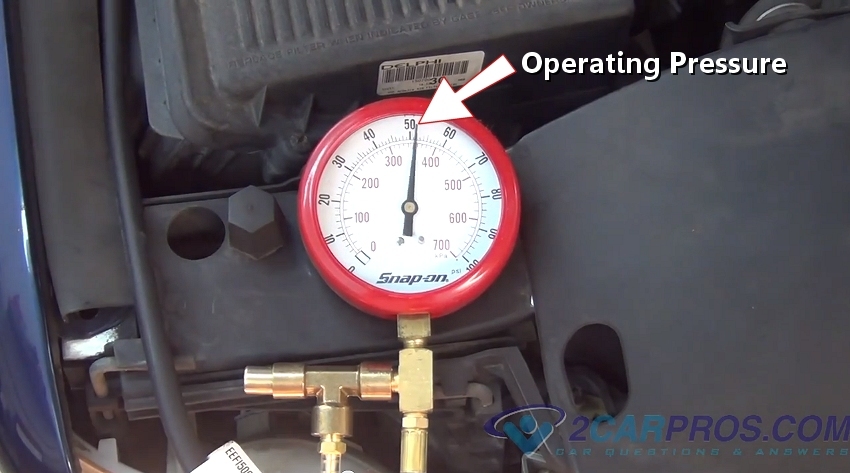
The final check will be the load test. This test will determine how the pump
performs under load of use. This can be achieved by one of two ways, first you can
load the engine by having the transmission in reverse (automatic) and hold the brake
while gently giving the engine a slight amount of throttle. This will load the engine
while not allowing the car to move effectively loading the engine and fuel pump.
The second way is to close the hood to the first safety catch and drive the car
(not at highway speeds) while the gauge rests outside being visible to the driver.
The hose will route from the side of the hood while using masking tape to secure
the gauge. The pressure should hold continuously throughout the test. If the fuel
pressure is low under load or while idling the
fuel filter (if equipped) could
be clogged, or the fuel
pump has failed and needs replacement.

Remove the fuel pressure gauge and reinstall the dust cap or remove the fuel line adaptor clean up any excess fuel.
SPONSORED LINKS
Questions?
Our certified technicians are ready to answer fuel pump pressure test questions for free. We hope you saved money and learned from this guide. We are creating a full set of car repair guides. Please subscribe to our 2CarPros YouTube channel and check back often for new videos which are uploaded regularly.
Article published 2023-06-14
SPONSORED LINKS
How to fix an engine that wont start