Introduction
Testing a catalytic converter is a straightforward task, if the converter malfunctions,
it can lead to performance problems and may cause your vehicle to fail emissions
tests. Keep in mind that the catalytic converter can become extremely hot, so
exercise caution when working around it.
Tools and Equipment Needed
- OBD-II scanner
- Infrared thermometer or pyrometer
- Vacuum gauge
- Back pressure gauge
- Socket set and wrench
- Protective gloves and safety goggles
Guide for Testing a Catalytic Converter
1. Check Engine Light: The most popular, and easiest way to tell if the catalytic converter is bad is a check engine light warning with the trouble codes P0420 or P0430. This means the cat is weak and needs replacement, (replacing oxygen sensors will not help this issue).
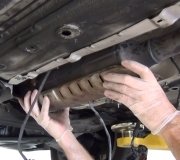
2. Infrared Temperature Meter: For this test you may need to raise the car in the air to get access to the catalytic converter. So, start with the car on level ground after you have driven your car around the block a few times to heat up the exhaust system. This will make the testing more accurate, when the catalytic converter is cold the chemical reaction is diminished, wear protective gloves, clothing and eyewear.
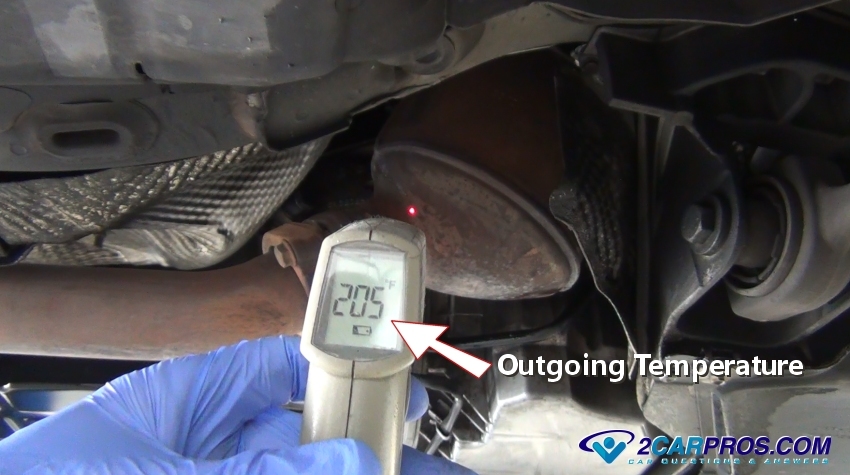
Point an infrared temperature meter at the inlet pipe as it enters the catalytic converter. If the cat is made directly into the exhaust manifold, measure the top of the canister or the upper portion while avoiding the manifold itself and take a temperature reading.

Next, do the same test at the outlet tube of the catalytic converter, the temperature should be hotter by about 20% showing the chemical reaction is working, if the temperature is colder, (as in this example) the cat is bad, (For best results have the engine running).
3. Remove Primary Oxygen Sensor: Excessive back pressure in the exhaust system will restrict the airflow which can reduce engine power due to the exhaust gases not escaping. Remove the primary oxygen sensor to allow the pressure to be released through the threaded hole. This doesn't work as well as loosening the head pipe, but there will be a difference in performance if there is blockage.
4. Wiggle Test: Wiggle the exhaust system (cold) in its rubber mounts while listening for rattling noises which is a clear indication of catalytic converter failure, you are hearing the broken catalyst material inside the exhaust pipe.
5. Back Pressure Gauge: A backpressure gauge can be used by inserting it into the primary oxygen sensor port. Have a helper start the engine and rev it while watching the gauge, the gauge should not exceed 3 PSI, anything higher signals a catalytic converter failure.
6. Vacuum Gauge Rebound Test: Attach a vacuum gauge to a vacuum port on the intake manifold system. You may need to remove the vacuum feed line to the EVAP system or another component temporarily. Start the engine and allow it to idle as you observe the intake vacuum reading which should be between 18 to 22 inches of mercury (inHg). Have a helper snap the throttle, (push down and quickly release), there should be a brief drop in vacuum as the throttle is opened, but it should return to baseline pressure almost instantly, if this reading takes longer than a few seconds to recover the cat is plugged.
7. Partial Clog: Keep the engine at about 2,500 RPM and watch the vacuum gauge, if the reading is low, or continues to drop this is a good indication there is blockage in the converter and replacement is required.
Also See: Symptoms of a Bad Catalytic Converter
False Testing Assumptions
- Unusual Smells: If the exhaust smells like rotten eggs it means the catalytic converter is overworking due to extended heavy engine load.
- Excessive Heat: Check if the exhaust area near the catalytic converter is extremely hot, this is a sign the engine is running rich.
Conclusion
Some vehicles have a primary and secondary catalytic converters to help clean engine exhaust gases. Their locations can vary in the exhaust system depending on the manufacturer. This guide will work for both primary and secondary cats, but the difference in temperature will be more apparent in the primary unit which is closest to the exhaust manifold and more receptive to the chemical reaction due to the additional heat.
Watch the Video!
Please watch this video of the job being done to glean additional helpful information.
Credits
This guide knowledge base was created by the 2CarPros Team, and by Ken Lavacot: Automobile repair shop owner and certified master automobile technician of over 30 years. If you have question or need help please ask one of our experts we are happy to help. Please visit our 2CarPros YouTube Channel for additional car repairs.
Article published 2024-10-15