Referencing JUSTPLAINWAYNE:
I have a similar story that supports JUSTPLAINWAYNE’s description.
A quick description, then details following if you want to read them.
1. Reduced engine power, OBD Code P2135 and P2176, no date or mileage
2. Throttle Body replaced by Dealer, OBD Code P2135 and P2176, no date or mileage
3. Throttle Body replaced under warranty by Dealer, OBD Code P2135 and P2176, no date or mileage
4. 05/12/2021, 207824 miles, Throttle Body replaced by local repair shop
5. OBD Code P2135 and P2176, no date or mileage, local repair shop offered to replace Throttle Body under warranty
That’s 4 Throttle Bodies including the original, and a fifth one offered.
6. 10/12/2022, 230760 miles, repaired Throttle Body wiring
7. 09/01/2025, 265500 miles †no low power events in last 3 years and last 35,000 miles
That’s the summary of my low power events and the final solution. In my case, finding a wiring fault and fixing it resolved my problems. Seems simple but it took a couple of years and dozens of hours to find the fault. Read on if you’re interested in the details.
Symptoms:
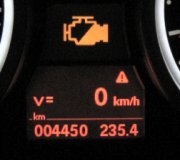
During heavy downpours while driving, my 2011 Suburban 5.3L vehicle would randomly go into low power mode. This included messages about Check Engine Light, StabilTrack warnings, and Service Traction Control. Stopping beside the road and using my cheap code reader, I found mostly error codes about DTC P2135, “Throttle Position Sensor/Switch A/B Voltage Correlation”, and sometimes P2176 “Throttle Control System †Idle Position Not Learned” (DTC descriptions according to my code reader). My problems, as opposed to some other complaints, only occurred during wet road conditions, or occasionally when running through a car wash. I could delete the codes and resume driving, although sometimes the P2135 code would be “permanent” and not delete-able.
Investigative Efforts
Over the course of several months, I tried several “fixes”, such as re-grounding all accessible ground points, adding ground straps when engine ground straps were not accessible, isolating many wire bundles from rub points, etc. Nothing worked. I had previously read about the specific wire bundle from the Throttle Body Control Valve possibly rubbing the transmission dipstick tube, due to displacement by the Vortex engine cover, and causing insulation issues, and had zip tied the old brittle wire bundle covering (wire loom) and positioned the wire bundle out of contact with the dip tube. My dip tube had foam insulation around it so I did not think that this was an issue, but I isolated it anyway. I revisited all these issues multiple times, using a garden hose to spray water underneath the engine, through the hood crack, onto connections and wiring between the Throttle Body Control valve and the under-hood computer, all to no avail. My failures still randomly occurred during driving in wet road conditions. Every attempt to recreate water infiltration under the hood, using a water hose, simulating as best as possible driving in heavy rain, were fruitless.
Reading this trail of emails caused me to again concentrate on the zone of wiring where the engine cover displaces the Throttle Body Control valve wiring bundle. I inspected the wiring in this area as best as a fat old guy could, but could not see any missing insulation. I then sprayed tap water from a spray bottle onto the individual wires in the bundles in this area (starting at the Throttle Body and following around the back of the engine and then forward to the computer) that were exposed by the crumbling protective wire loom. I did this repeatedly (three or four times), and my engine suddenly went into low power mode while spraying a particular zone. I repeated this several times and I could cause the engine to go into low power mode †AT WILL. Once I caused low power mode the first time, I only had to wet the zone again with the spray bottle and it would quickly go into low power mode. The last time it threw 6 codes, three for P2135 and three for P2176. One P2135 and one P2176 were “permanent” and I could not clear them but the engine cranked and ran O.K.
I thought that flooding the suspected areas with water from a garden hose would be the ultimate insulation test, but prolonged spraying from a bottle of tap water turned out to be a better test. I can only speculate that - at least in my case - the water had to have time to soak through the wire loom and insulation and thoroughly wet the area, so that any additional water quickly penetrated the wiring bundles and contacted the exposed conductors. I would advise anyone trying to reproduce failures by using water spray to be patient. Spray the selected conductors or components, let it soak, spray it, let it soak. Repeat. Repeat. Repeat. Spraying an alcohol solution might also be a good option since alcohol wets surfaces quickly. Just tap water only worked for me. I would not use any saline solution.
My events of low power were caused by damaged insulation on conductors “connected to the wiring harness circuit”, but not directly connected to the Throttle Body Control valve. This failure zone was “in the vicinity of” the transmission dip tube, DESPITE the dip tube being insulated with a foam rubber sleeve. I did not spray “conductive”/salt water onto the wire bundle †just mildly conductive tap water. The lengthy, torturous wiring assembly is pressed against other solid components in this zone, so the dip tube may not in fact have been at fault for the damaged conductor insulation on my vehicle.
Another wire bundle, connected to the Throttle Body Control valve wiring bundle through a shared “Y” in the wiring harness (on the top back of the engine), was in front of and interfered with spraying only the target wire bundle directly connected to the Throttle Body Control, and lots of the water spray hit the front (interference) wire bundle as well. I was never able to completely separate these two wire bundles so that I could wet only one at a time, when I was causing low power mode. Wetting both wire bundles at the same time definitely caused low power mode every time, and I assumed that there was unobservable damage to the “back” wire bundle, the one connected directly to the Throttle Body Control valve, that was causing the failures. Surprisingly, there was no damage found by the repair shop to the back wire bundle connected directly to the Throttle Body Control, the damage was to the “front” bundle, which was connected through a “Y” connection to the Throttle Body Control valve wire bundle. There were “slits” in two wires in this bundle that when wetted caused the low power mode. Although neither conductor was contacting ground, they were close enough to each other to conduct between them I suppose.
As JUSTPLAINWAYNE surmised, missing (or damaged) insulation could make the circuit susceptible to humid conditions/water spray from wet roads causing low power mode problems. I will go further, and as supported by JUSTPLAINWAYNE’s description, 1. Damaged insulation allowing intermittent signal grounding would cause the low power mode with or without moisture/water just due to intermittent physical signal grounding to metal, and 2. Damaged insulation could allow intermittent signal grounding during wet conditions without physical grounding/touching metal. These two different failure modes could lead to searching for different problems when in fact they are caused by the same thing †damaged insulation and not necessarily grounded conductors. Such a scenario could account for multiple low power failures during a single drive in dry weather, or sudden power loss when encountering a rainstorm, etc.
After finally being able to force failures †repeatedly - I had the wiring repaired and tested by a local shop. I am in week 155 and 35,000 miles into my fix, having driven through multiple monsoons since with no failures, and I am confident that this is my answer.
I made the repair shop remove the electricians tape initially used to "insulate" the wiring damage, cut the conductors, slide heat shrink tubing over the wires, make an in-line solder repair, and then shrink the tubing over the repair. Electricians tape will not survive the under hood temperatures.
As a side note, very similar low power episodes happened to me with a 2003 Tahoe †wet or dry. Multiple trips to a dealership and two Throttle Bodies later (three total), damaged wiring was discovered and repaired and this solved that issue. Damaged wiring seems to be a recurring theme in these failures.
Thanks JUSTPLAINWAYNE for causing me to refocus on the Throttle Body Control valve wiring where it is displaced by the engine cover.
Sunday, August 31st, 2025 AT 6:57 PM