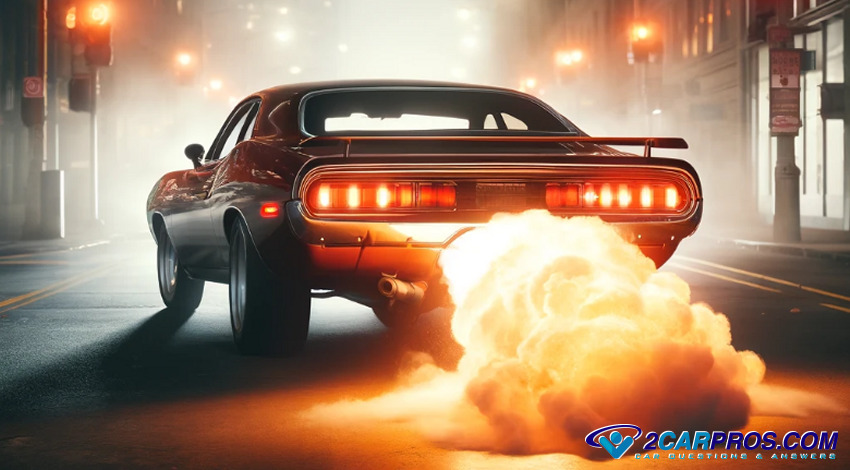
When your engine backfires it can do so in one of two ways. First and the most common way is when the engine is running a small explosion of unburnt fuel is ignited inside of the intake manifold creating a loud bang, this is called a lean mixture backfire. This explosion can bend the throttle actuator plate, push intake gaskets outward creating a vacuum leak, and even blown apart a plastic intake manifold. This occurrence can happen once, or a few times when the engine is under load, or it can happen continuously signaling a mechanical failure which we will go over in the following repair.
The second kind of problem will occur from the rear of the vehicle's tailpipe(s) which is a rich fuel mixture problem that can happen when fuel delivery is "too rich" and can ignition the fuel after passing through the engine and out the exhaust system. A backfire condition can also occur in race cars using a turbo charger which is normal because they push the fuel through the engine which is then ignited in the exhaust system.
SPONSORED LINKS
We will cover the primary occurrence of the "engine under load" first. This problem must be corrected and can not be neglected because serious engine damage can occur, which can be as simple vacuum hose failure.
Engine Under Load
1. Anytime you have an engine that is backfiring the first thing to look for is a check engine light which can indicate a bad fuel pressure sensor or a high pressure fuel pump failure. If the check engine, or service engine soon light in on scan the computer for trouble codes. This will help locate the system that is having a problem and needs repair.

2. The #1 reason for an engine backfire through the intake manifold will happen under load or acceleration. The engine needs fuel to burn along with the air the engine is processing. Internal combustion engines run on a mixture of 14 to 1 which is fourteen parts air to one part fuel and when this is not correct (not enough fuel) the result will be a backfire. The most common cause for this problem is a weak fuel pump or clogged fuel filters which will cause a lack of fuel being delivered to the engine.
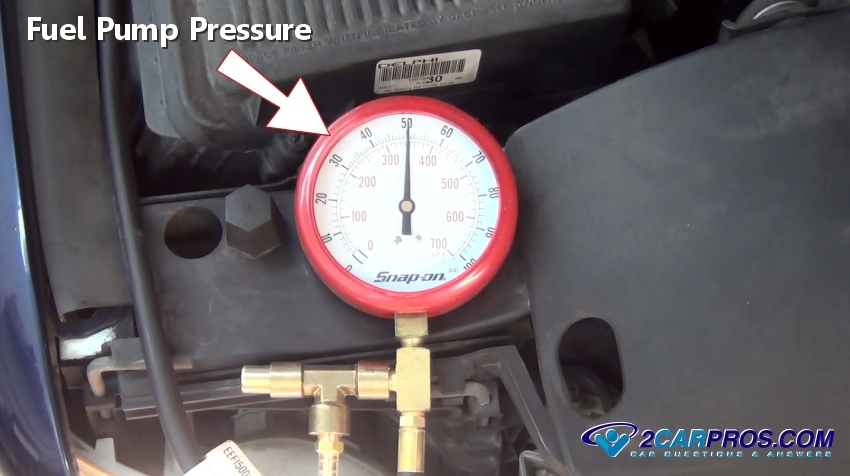
If you suspect this might be the problem test the fuel pump pressure which you can rent a gauge from the auto parts store for cheap. Also, if your car has a fuel filter change it out first.
SPONSORED LINKS
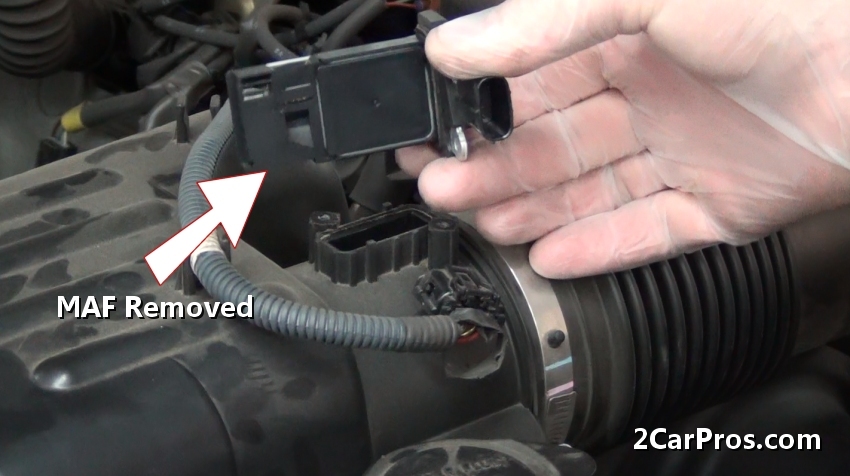
3. The #2 reason for an engine backfire is the MAF sensor that is muted due to the internal "hotwire" being contaminated. When this happens it will alter the reading to the computer which will create a lean mixture may not trigger a check engine light. This lean condition is because the computer thinks there is less air entering the engine than there actually is so it cuts down the fuel volume.
The first step is to remove the MAF sensor and clean it using carburetor cleaner, we have had better luck by replacing the sensor because once this condition happens the hot wire can become unresponsive in which case the sensor needs to be replaced.
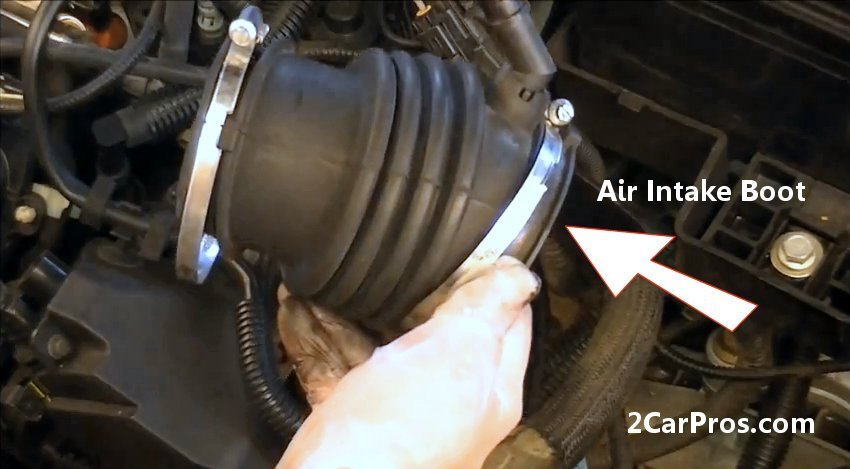
4. The air intake boot or tube, transfers air from the air filter to the mass air flow sensor into the throttle actuator and then into the engine intake manifold. If there is a problem with these parts such as a tear or rip it will allow un-metered air into the engine which the computer will see via the oxygen sensor and will try to richen the mixture but only to a certain extent, which may not be enough to compensate for the problem creating a lean condition. Remove the air intake tube or boot an check for tears or breaks in the integrity of the parts
SPONSORED LINKS
Repetitive Engine Backfire
This portion of the guide to for when a backfire is repetitive and generated when the engine is simply running at idle, or at cruising speed and can be inline with the engine RPM. A rhythmic popping sound through the intake manifold which is not as prominent as lean, under power backfires. The problem list below will give you an idea of what causes this condition.
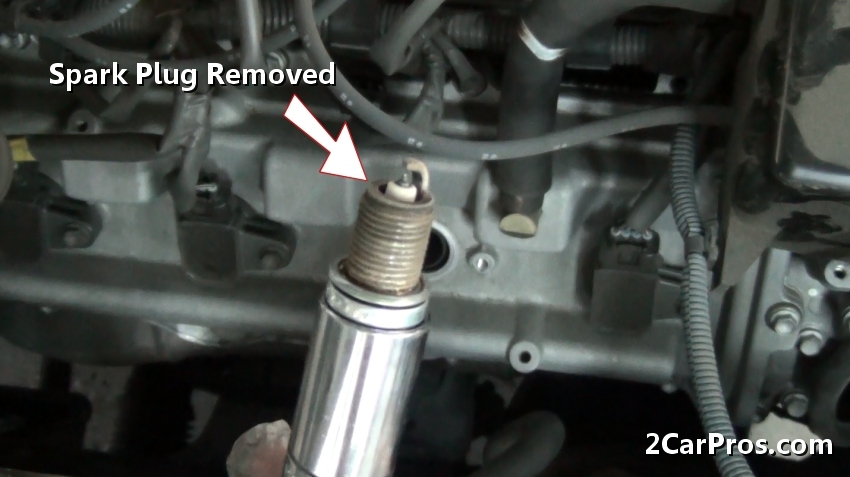
1. The engine's ignition system is triggered by an electronic driver inside the PCM which signals the ignition coil when to fire. By design, the resistance it takes to fire the coil via the spark plug is figured into the system. When this resistance becomes excessive due to severely worn spark plugs or a bad ignition coil it can cause these drivers to malfunction, at which point they can crossfire into an opposing cylinder either under power or at idle. Spark plugs should be changed at regular intervals, platinum plugs at about 60,000 miles which will correct this problem.
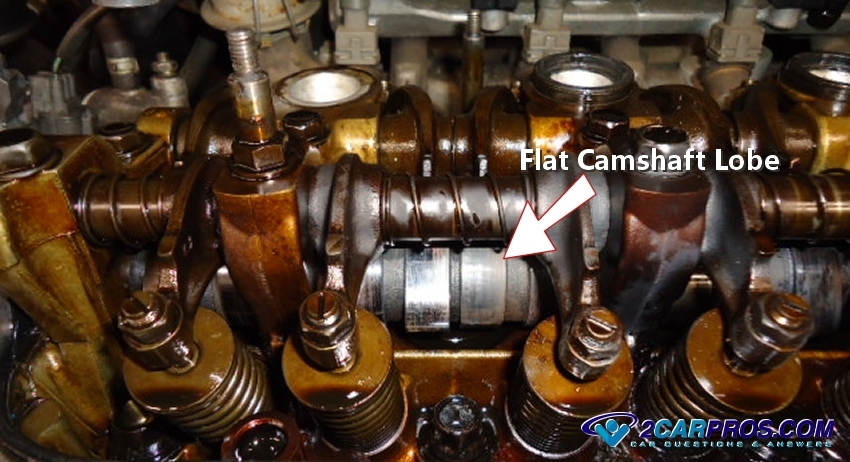
2. A camshaft is used to open the intake and exhaust valves of the combustion chamber to allow intake air in and the spent exhaust gases out. If the exhaust valve lobe becomes worn and loses its lift, the fire from the exhaust gases are still left inside the cylinder which is then released into the intake manifold once the intake valve reopens. To check for this condition you must first remove the valve cover(s).
After the valve covers have been removed, and with the ignition disabled (coils off) crank the engine over and observe the intake and exhaust valve operation, opening and closing. Also, if the intake or exhaust valves are not closing completely due to a broken valve spring it will allow the combustion gases to enter the intake manifold much like a flat camshaft lobe. Use a flashlight in carefully check the valve spring windings, these springs can break either at the top middle or bottom of the spring which can be sometimes be difficult to see.
SPONSORED LINKS
A bent push rod can also cause the valve not to work properly by restricting the movement of the valve. While the valve cover is still removed look at each of the pushrods to see if there is an obvious bend to them. This also can be done by detecting poor rocker arm movement while the engine is being cranked over.
Exhaust Tail Pipe Backfire
An exhaust tail pipe backfire is caused by an excessive amount of unburnt fuel remaining in the exhaust system or fresh air being allowed to enter the system which ignites a small amount of unburnt fuel.
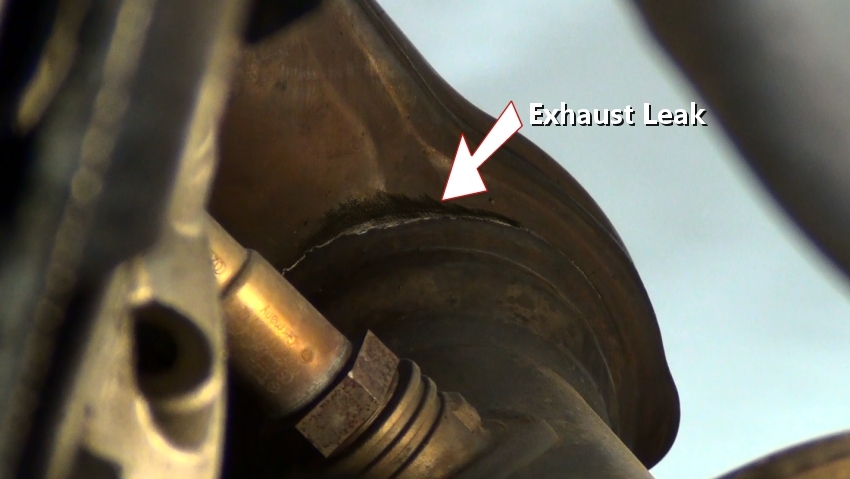
1. If fresh air is allowed to leak into the exhaust system it will ignite the unburnt fuel inside the system creating a popping noise. It is difficult to think of because most people think of a exhaust system to be under constant pressure but this is not true. The system is fed with a series of pressure and vacuum pulses which are created by the exhaust valve opening while the combustion charge being expelled into the system, and then the exhaust valve closing.
This is where the vacuum event is created by the pulse velocity and the fresh air let into the system. This is why you can get a lean mixture trouble code when there is an exhaust system leak. Inspect the system and repair any exhaust leaks present. This detection is done by looking for a flat back shoot which is evidence of a leak.
1. Some engines are equipped with a air injection system that is fed into the exhaust system when the engine is under load, this is to burn unspent fuel which helps the emission system work better. This systems is fitted with an air gulp valve that acts like a one way check valve to allow air into the system. This gulp valve is fitted to the exhaust manifold via a large pipe or an individual port tubing configuration with a rubber tube that connects to an air pump.
When the valve goes bad air is released into the system at all times even during deceleration which then created a backfire kind of popping due to the fresh air igniting the unspent fuel. Most engines have one or two of these valves one for each exhaust manifold. To check these valves you must remove them and then try to blow through them each way, only one direction is all that should be allowed. If air is allowed in both directions the valve is bad and should be replaced.
SPONSORED LINKS
Additional Information
When high performance turbo engines are under load they use an excessive amount of fuel which then is transferred into the exhaust system once the throttle is let up on and the engine is de-accelerating. This is a normal event and there is no problem with this condition.
On older engine's ignition timing is set at a specific degree in relationship to the crankshaft. If this timing is mis-adjusted it can cause low power, poor gas mileage, engine detonation (pinging) and backfiring through the intake or exhaust system.
Watch the Video!
Please watch this video of the job being done to glean additional helpful information.
Credits
This guide knowledge base was created by the 2CarPros Team, and by Ken Lavacot: Automobile repair shop owner and certified master automobile technician of over 30 years. If you have question or need help please ask one of our experts we are happy to help. Please visit our 2CarPros YouTube Channel.
SPONSORED LINKS
Article published 2024-04-25
SPONSORED LINKS

How to Repair an Engine Cylinder Misfire
Intermittent Misfire