Temperature sender/sensor

1999 FORD EXPLORER
120,000 MILES • 4.0L • 6 CYL • 2WD • MANUAL
Avatar
CDPSRAR
  • MEMBER
  • 16 POSTS
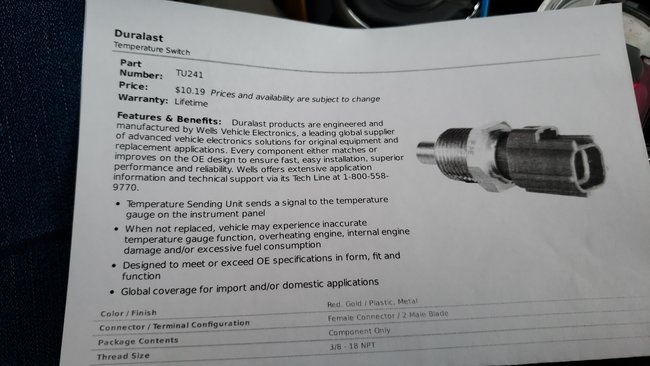
It is my understanding there are two engine temperature sensors on my motor: One for the temperature gauge and one for the computer. My gauge is not working. One sensor has two wires and the other has only one. Which is for the temperature gauge?

Thanks very much,
Richard Reed
Nov 23, 2016 at 4:32 PM
Repair Safety Notice: This information is for general instructional purposes only. Vehicle repair can be dangerous. Verify all information, follow manufacturer service procedures, use proper tools and safety equipment, and consult a qualified repair shop when needed.
Advertisement
Avatar
CARADIODOC
  • CAR REPAIR CONTRIBUTOR
  • 34,308 POSTS
You have that exactly right. All sensors for the engine computer have a ground wire, and current flow through them is monitored, so it goes back to the computer, then to ground on a different wire. For that reason its sensor has two wires, the ground and the signal wire. The dash gauge is a simpler circuit. Its sensor has just one wire. If you ground it at the engine, the gauge should jump to full "hot". If you just unplug it, the gauge should read "cold"

Be aware that for quite some time on Ford products, the instrument cluster is the most intelligent, (complicated / unreliable), computer on the vehicle. As such, there is a whole lot more involved than the simple, reliable gauge and sending unit we had in the past. As a result, you might find the gauge reading does not change simply from grounding or opening the sensor wire. You might need to start the engine, you might have to drive the vehicle, or you might have to do nothing. This can turn a really simple diagnostic procedure into a complicated or misleading one.
Aug 11, 2020 at 4:48 PM
Advertisement
Avatar
FREEMBA
  • CAR REPAIR CONTRIBUTOR
  • 1,152 POSTS
The Engine Temperature Sender, which controls the temperature gauge only has one wire connected to it. The Engine Temperature Sensor has two. If you ground the single wire, your gauge should go to high otherwise you likely have a wiring issue and not a Engine Temperature Sender issue.
Aug 11, 2020 at 4:48 PM
Avatar
CDPSRAR
  • MEMBER
  • 16 POSTS
Thank you very much for the quick replies. Much appreciated. I am going to wait until daylight tomorrow to replace the sender. Thanks again!
Aug 11, 2020 at 4:48 PM
Avatar
STRAILER
  • CAR REPAIR CONTRIBUTOR
  • 54,189 POSTS
Please use 2CarPros anytime we are here to help.

Best, Ken
Aug 11, 2020 at 4:48 PM
Avatar
CDPSRAR
  • MEMBER
  • 16 POSTS
Cardiodoc, Freemba, You were both correct when stating it could be more of a problem then just the sending unit. I replaced it and the temperature gauge still does not work. Looks like it might be a wiring issue and I have had no luck yet finding the fault. Any suggestions would be most welcome. Thanks!
Aug 11, 2020 at 4:48 PM
Avatar
CARADIODOC
  • CAR REPAIR CONTRIBUTOR
  • 34,308 POSTS
Coolant temperature sensors are notoriously reliable because they have just one part inside. That's a "thermistor", meaning temperature-dependent resistor. The one glaring exception was Ford had a huge failure rate in the early to mid 1990's, but that was with their two-wire sensors for the engine computers, not for the dash gauges. Failures of all temperature sensors is much more likely to be caused by mechanical damage and / or rough handling. Failures of the circuit are more likely to be caused by wiring problems, until we get to where the instrument cluster is a computer module, then all bets are off.

In your original post you said the gauge is not working. Does that mean it stays on "cold"? If so, unplug the wire from the sending unit, then use a jumper wire to ground that terminal. (Ground the wire, not the terminal on the sensor). That should make the gauge read full "hot". If it does, did you use Teflon tape to seal the sensor's threads against leaking. That is an insulator and will prevent the sensor from being grounded. It won't work that way.

If the gauge stays on "cold" when you ground the wire at the sensor, there is a break in that wire between the sensor and the gauge cluster, or there is a problem in the cluster. At that point you might want to visit a mechanic to have him use his scanner to run a gauge test. That will run all the gauges to 1/4, 1/2, 3/4, full, and back to 0". If only the temperature gauge does not work, the problem is on the cluster. If it does work properly, we need to look at the wire going to the sensor.
Aug 11, 2020 at 4:48 PM
Avatar
CDPSRAR
  • MEMBER
  • 16 POSTS
Yes, when I make a connection between the single wire for the sender and the engine block the gauge pegs all the way to the right. I did not use Teflon tape or any sealer. But the gauge still won't register when the motor is warmed up. I'm wondering if the parts guy gave me the sensor instead of the sender and, if so, would it cause the current symptoms? I am looking at images of each part and it seems I may have the wrong one. Thank you again for your time.
Aug 11, 2020 at 4:48 PM
Avatar
CDPSRAR
  • MEMBER
  • 16 POSTS
Please disregard. I went back to the parts store and got the correct part. The gauge works!! Thanks again for your time and knowledge.
Aug 11, 2020 at 4:48 PM
Avatar
STRAILER
  • CAR REPAIR CONTRIBUTOR
  • 54,189 POSTS
Nice work, we are here to help, please use 2CarPros anytime.

Best, Ken
Aug 11, 2020 at 4:48 PM
Avatar
CARADIODOC
  • CAR REPAIR CONTRIBUTOR
  • 34,308 POSTS
Dandy. I too am happy to hear it's solved.
Aug 11, 2020 at 4:48 PM
Avatar
CDPSRAR
  • MEMBER
  • 16 POSTS
Now that the gauge works it is indicating I have either no thermostat or it's stuck open. The gauge barely moves up to the first white line after driving it for over half an hour. The computer thinks the motor is cold so it's running very rich all the time...has a very strong gas smell and is throwing a P0175 code....too much gas and not enough air. I'm replacing the thermostat and the temperature sensor for the PCM. Seems like a logical place too start. I read an article you wrote regarding the damage and problems from having no thermostat so I think I'm headed in the right direction. However, if I'm wrong please let me know. Thank you.
Aug 11, 2020 at 4:48 PM
Avatar
STRAILER
  • CAR REPAIR CONTRIBUTOR
  • 54,189 POSTS
Hey Cdpsrar,

You are headed in the right direction, the engine must have a thermostat to operate correctly.

Please let us know what you find so it will help others.

Best, Ken
Aug 11, 2020 at 4:48 PM
Avatar
CDPSRAR
  • MEMBER
  • 16 POSTS
Here's an update: The thermostat was stuck open. Replaced it. Now the temperature gauge settles in the normal range about halfway between low and high. I promise this will be my last question regarding this matter: If everything else is working properly (other sensors, the PCM/ECM), how long or how many miles need to go by before the computer resets itself? The intense gas smell when the engine is running is gone and the idle is down to a normal level. It runs rough, but much better. I just need to know if the computer is done doing it's thing as much as it can. If that question makes any sense to you, please let me know. Thank you!
Aug 11, 2020 at 4:48 PM
Avatar
STRAILER
  • CAR REPAIR CONTRIBUTOR
  • 54,189 POSTS
It will take about 50 miles to have the computer relearn. Let us know how it goes.

Best, Ken
Aug 11, 2020 at 4:48 PM
Avatar
CDPSRAR
  • MEMBER
  • 16 POSTS
Update: Besides a slightly rough idle, the car is running great. No more miss and performance is restored. Also, gas mileage has improved. After driving around 30 miles I tried to get it inspected but it failed: Several sensors are in a "Not Ready" state. However, no trouble codes are present! I'll drive another 30 miles and try it again. Thanks again for the knowledgeable advice from everyone. While I might have gotten this far on my own, you guys made the whole experience much less stressful and allowed me to proceed with confidence and an assurance I was on the right track.

Thanks very much,
Richard
Aug 11, 2020 at 4:48 PM
Avatar
CARADIODOC
  • CAR REPAIR CONTRIBUTOR
  • 34,308 POSTS
Also, much of the relearning is almost instantaneous. For example, as soon as you turn on the ignition switch, the Engine Computer compares the intake air temperature to the coolant temperature. It knows when the engine has been off a certain amount of time, those two have to be reading the same temperature. No two coolant temperature sensors will ever read exactly the same resistance at a given temperature, so the computer has to be able to figure out the personality of each sensor by comparing it to other variables.

What brother Ken is referring to is "fuel trim" numbers. There are short-term fuel trims, (STFT) that are the result of the Engine Computer reading the mixture of unburned oxygen in the exhaust stream, then calculating a small correction to the fuel metering calculations. Those corrections occur continuously and accommodate all kinds of variables, like air temperature, direction and rate of throttle change, load, etc. The goal of the short-term numbers is to make fuel metering corrections right now.

There are "lookup tables" in the computer's memory that it uses to find the desired amount of fuel corresponding to all of the parameters, and those are the pre-programmed base values. The STFT numbers vary around those base numbers. These are the "long-term fuel trim" numbers, (LTFT). When the computer sees it is constantly making the same corrections to the short-term numbers for the same set of conditions, it will gradually move those numbers to the long-term fuel trim memory. From then on, it will start out with those modified numbers, and there will be less need to make corrections to the short-term numbers. As an example, if you suddenly start using gas with ethanol, that has extra oxygen in it, so the computer will want to make the mixture richer. It does that by commanding more fuel to go with the amount of incoming air it is measuring in the mass air flow sensor. It makes the corrections to the short-term numbers as you're driving, but since it is always making the same corrections, it moves those numbers to the long-term memory, and starts using them as the starting point. From then on the short-term numbers will go down. Modifying long-term numbers takes much longer than for short-term numbers. That occurs with normal driving, but if someone were to look at those numbers right after you started running that ethanol, they could mistakenly attribute it to a part failure on the engine.

You will never know these modifications are taking place. Also, I really should call the changes "adjustments", as "corrections" makes it sound like it's fixing a mistake. The fuel trim numbers are only useful to a mechanic when he is working on an engine running problem. If he sees numbers that are close to "0", he knows the computer is quite happy with the amount of fuel that was expected to be correct by the engineers. If he sees short-term numbers that are a little high, he might contribute it to you were just driving in cold winter weather, but the car is in the warm shop now.

The computer can only adjust the mixture up or down about ten percent. A positive number means it's adding fuel. A negative number means it's subtracting fuel from what was expected to be needed.

Newer vehicles also perform some of the emissions tests on their own when a specific set of conditions has been met during a "drive cycle". Those conditions vary between models and years, and I am not an expert on any of them other than to know they exist. In some states that require emissions testing, "passed" tests is sufficient for the vehicle to pass emissions testing. In some states, I've been told they still do some manual tests, but only when the self-tests are listed as "passed". I don't know the year that self-test capability started showing up, but I do know the drive cycle often includes some requirements such as sustained highway speed for a specific length of time with no fully-released throttle, a brief spurt of wide-open-throttle, and things like that. My understanding is those requirements are supposed to be things a typical driver would do anyway without having to memorize a list of things they have to do.
Aug 11, 2020 at 4:48 PM
Avatar
CDPSRAR
  • MEMBER
  • 16 POSTS
Thank you for that explanation. I copied and saved it because I always wondered how exactly the computer did its thing...specifically what data is used and how it determined the most efficient state. I appreciate it. Armed with that knowledge, I was able to resist doing a panic-purchase while trying to fix the latest problem. (If you're sick of hearing about my car issues, now's the time to click away). I was driving today, attempting to reset the Not Ready sensors for inspection, when the motor began missing extremely bad and I was hit with a thick cloud of gasoline odor. It almost quit running, then just as quickly, ran normally again. I put the code reader on it and it had logged misfires in cylinders 1, 3 and 4 (P0301, P0303 and P0304) and P0175...running too rich in bank 2, which makes sense if the cylinders weren't firing. Once I got home I read the codes again and no new ones were present. I sat with it running for about 5 minutes and checked again...this time I got only P0304; cylinder 4 misfire. As I am unable to test the coil properly (multi-meter got run over by a truck) here's what i'm thinking: Since it threw the P0175 along with the misfires, there was gas present in the cylinders, but with no spark, it built up and triggered the codes and the toxic gas cloud that came at me. In my mind that rules out fuel injectors and most problems related to a dirty Mass Air Flow Sensor. I think my coil is bad or weak and needs to be replaced. I've already replaced plugs and plug wires. So instead of spending money I don't have, I decided to run it by you folks first. When you get a minute please let me know what you think. And if I don't hear from anyone, that is perfectly fine as I'm getting tired of dealing with this car also. Thanks again for all your help!
Aug 11, 2020 at 4:48 PM
Avatar
CARADIODOC
  • CAR REPAIR CONTRIBUTOR
  • 34,308 POSTS
I am not exactly the best driveability expert, although I'd never admit it, but I can offer some guidance that might affect your train of thought. First of all, I am not clear on how "running too rich" fault codes are set, because that is a result of the front oxygen sensors' readings, and they measure oxygen, not fuel. My understanding is they measure lack of oxygen, but I don't know all the conditions necessary to set those codes. Under normal conditions the exhaust gas mixture switches between too rich and too lean, by design, about two times per second. My guess is the computer has to fail to see the too-lean condition for a specific period of time.

My reason for bringing this up is when you have a spark-related misfire, you get excessive unburned fuel and air in the exhaust. It's the oxygen that gets detected as a lean condition, but it's the gas you smell as a rich condition.

I have read a lot of posts where the ignition coils were the cause of the problem. That seems to affect Ford trucks more than any other vehicle. What I would do when there are individual coils, (or with injectors), is to switch the suspect coil with one from a different cylinder. Erase the fault codes, then drive it until the problem occurs again, then see if the fault code set for the cylinder you moved the suspect part to. Unfortunately you have a single coil pack that makes swapping coils impossible. Given the history of the coils, I wouldn't mind buying a new coil pack to try, and if it doesn't solve the problem, hold onto it for the future.

Be aware that each ignition coil fires a pair of spark plugs at the same time. One fires on the end of the compression stroke and the other gets the "waste spark" at the end of its exhaust stroke. If you short one spark plug wire to ground, that spark plug will be bypassed but its mate will fire very nicely. If you open the circuit anywhere, as in pulling a spark plug wire away from its spark plug, both spark plugs will not fire. If one coil arcs near one spark plug wire's tower, it will bypass just one spark plug. If the coil's wire is breaking apart inside the assembly, it will kill the spark to both spark plugs. For that reason, you can't make a diagnosis based solely on whether just one or both spark plugs stop firing. The arcing at a coil tower always involves carbon-tracking, just like we used to see inside distributor caps that got moisture inside. Once that starts, carbon is a conductor of electrical current, and the carbon tracking will get progressively worse very quickly. It will eventually lead to the tower burning away, if you can stand to drive the truck that way. Ignition coil failures are rarely intermittent for very long. They usually fail completely rather quickly.

Since you brought up the mass air flow sensor, its job is to measure the weight of the incoming air. That is the primary factor in fuel metering calculations on all brands of vehicles except for Chrysler products. No air must be allowed to sneak in that doesn't go through the mass air flow sensor. That includes loose hose clamps or cracks in fresh air tubes between the sensor and the throttle body, as well as other vacuum leaks. When air does sneak in the computer doesn't know about, it won't command the correct amount of fuel to go with it. Leaks will cause running lean fault codes, but they have to be pretty bad before it results in a misfire.

There is always a long list of conditions that must be met for a fault code to set, and one of those conditions is that certain other codes can't already be set. For example, with your original problem, if a code is set for an electrical problem related to the Engine Computer's coolant temperature sensor, the computer will never set the code for "running cold too long". In this case it's because the sensor circuit isn't working, but in general terms it is because the computer knows it can't rely on that sensor's readings, so it aborts any self-tests that use those readings. Knowing how those fault codes relate to each other in this way can provide clues when you have two and you aren't sure if they're caused by the same thing. Let me clarify that before my mind gets more 'wrapped around the axle". You have a code for running too rich on bank 2, that's the passenger side. You also have a code for a specific cylinder misfire. Each of those is not prevented from setting when the other is there. To a trained specialist, that is an important observation. Next, the side with the rich fault code is found by which O2 sensor is taking the incorrect reading, but the misfire is determined quite differently. When a misfire occurs, you can feel it, and you can feel it because there is a momentary lapse between cylinder power pulses. That lapse causes the rotational speed of the crankshaft to slow very slightly. That slowing is what is detected by the Engine Computer. Since it knows which cylinder should have fired during that lapse, it knows which one is misfiring.

Now that you know that wondrous piece of trivia, that can be related back to when you have two misfiring cylinders, and both are mates to the same ignition coil. If both misfire, you should see excessive unburned oxygen coming from each cylinder, and here's the secret. Each cylinder is on a different side of the engine. You should get lean codes for each bank. If you get a lean code on just one side, expect to find just one cylinder misfiring. That is more often caused by a spark plug or wire when you have a coil pack. It can also be caused by the ignition coil when you have six or eight individual coils.

Spark-related misfires cause the cylinder to totally miss a power pulse, and we can easily feel that, especially on six-cylinder engines, and even more so on four-cylinder engines. Fuel-related misfires often cause only reduced power. Spark initiates the burn or it doesn't. Fuel has a whole range of incorrect amounts it could have. The neat thing is a reduced-power pulse is still detected by the computer because it still sees reduced crankshaft rotational speed, but we often don't feel those misfires. This is when we are surprised to see those fault codes when we thought the engine was running fine. Low fuel volume to a cylinder can be caused by low fuel pressure or a partially-clogged injector. These are bigger problems with GM engines. GM is one of the few manufacturers that just grabs a handful of injectors from a big bin, and stuffs them into the engine as it comes down the assembly line. Most other manufacturers "flow-match" their injectors so they install a matched set into each engine. With age and mileage, fuel-related misfires become real common with GM engines. Fuel pressure that is just five pounds below specs can start to reduce flow through an injector enough to set lean codes or cause fuel-related misfires.

We can also get a misfire from an air problem, more specifically, lack of sufficient oxygen. We think of obstructed air flow more so with carburetors because plugged air filters were a common cause, but when we have a mass air flow sensor, we will still get the right amount of fuel to go with whatever air makes it into the engine. We might have reduced power, but usually not a misfire problem. The lack of oxygen comes from a malfunctioning EGR system that lets in too much inert air, (exhaust gas) that displaces fresh air. This has been a big problem for Ford, but to my knowledge, it only affects V-8 engines, not the 4.0L. To identify this, there are eight tubes for the EGR system, one running to each cylinder, and those tubes plug up with carbon. Normally a plugged tube would block EGR flow to that one cylinder, and therefore reduce the total flow by one eighth. With the Ford system, total flow is the only thing that is measured and controlled, and that is expected to divide up evenly among all eight cylinders. When a tube is blocked, that cylinder gets only fresh air, . . . and it runs just fine. It's the other seven cylinders that get too much EGR flow. Over time, more tubes become plugged with carbon, but the total EGR flow stays the same. The typical complaint shows up when seven tubes are plugged. The clinker is the only clear tube is feeding the one cylinder that is misfiring. That is the cylinder that is getting eight times the EGR flow that it should be getting. The seven cylinders with the plugged tubes are running fine.

The EGR system can still cause misfires on other engines if a piece of carbon gets stuck in the valve, preventing it from closing fully. EGR gas must never enter the cylinders at idle or low engine speeds precisely because it will cause a misfire.

These are some of the clues and observations engine performance specialists use to cut their diagnostic time. The rest of us have to fall back on what we learned years ago, and that often no longer applies to fuel injected engines.
Aug 11, 2020 at 4:48 PM

Avatar
CDPSRAR
  • MEMBER
  • 16 POSTS
I re-read all of you're replies and began educating myself on the sensor system. I have a better understanding of the closed and open loop fuel system and short and long term fuel trim. Since our last conversation I've replaced the coil, cleaned and tested the MAFS, tested the EGR valve, EGR solenoid and the DPFE sensor. They all check out electronically. I've also cleaned the IAC valve. It runs great when cold but as soon as it gets warm it idles very rough (will stall if I don't give it gas) and throws the P0175 code (too rich) and random misfires. I'm now thinking it's either an O2 sensor or a vacuum leak. My fuel trim numbers stay in the negative range...Short Term is -14.8% to -18.4% and Long Term around -22.7%. Here's my question: One of my O2 sensors (B1S1) shows 0.0 output volts. Is there supposed to be some kind of voltage there all time or is 0.0 volts OK? Thank you.
Aug 11, 2020 at 4:48 PM
Avatar
CDPSRAR
  • MEMBER
  • 16 POSTS
Please disregard that question about the O2 sensor voltage being 0.0. However, I would very much like your suggestions on what to try next to fix the rough idle issue. Thanks!
Aug 11, 2020 at 4:48 PM
Avatar
CDPSRAR
  • MEMBER
  • 16 POSTS
Update: Just now drove it enough to warm up. Shows Fuel System 1 CL-Fault. All Fuel Trims stay negative. And now I'm thinking the O2 sensor that shows 0.0 volts all the time may be an issue. It's upstream at 02S11. Please let me know what you think. Thanks again.
Aug 11, 2020 at 4:48 PM
Avatar
CARADIODOC
  • CAR REPAIR CONTRIBUTOR
  • 34,308 POSTS
It's very rare for a rough running engine to be caused by an oxygen sensor. The computer doesn't adjust mixture that much based on its readings under normal operating conditions. The numbers say it's taking away fuel in an attempt to correct the mixture. You might look at fuel pressure. If it's too high, look for a restricted return hose to the gas tank. If there's a fuel pressure regulator on the fuel rail on the engine, that should have a vacuum hose hooked to it. A missing or cracked hose will trick the regulator into thinking the vacuum is low, due to acceleration, and the need for higher fuel pressure to make up for the reduced vacuum pulling in fuel molecules from the injectors.

You might want to remove the EGR valve and reinstall it with a thin metal shim to block the ports. If that solves the rough running, that is the system to look at.
Aug 11, 2020 at 4:48 PM
Avatar
CDPSRAR
  • MEMBER
  • 16 POSTS
Update: There is a vacuum line running from the throttle body to a switch that apparently talks to a vacuum reservoir. That line was collapsed allowing no air flow. Replaced it and wow! Huge difference when driving and no codes. Still have a rough idle after it warms up but at the moment I'm just happy it's running so much better. Thanks for your hint regarding the results of a vacuum leak. Thanks very very much for all your help.
Aug 11, 2020 at 4:48 PM
Avatar
CDPSRAR
  • MEMBER
  • 16 POSTS
Hello again gentlemen. It's been quite a while since I wrote due to the fact that I've been steadily working on the vehicle in an at attempt to get it to pass inspection. I've replaced the following:
Thermostat
Vacuum control valve
IAC valve
All O2 sensors
Temperature sensor and sender
Coil pack
Plugs and plug wires
All vacuum lines (and I mean ALL of them)
Mass air flow sensor
Verified no vacuum leaks
Verified EGR valve is functioning properly and replaced vacuum lines to the EGR solenoid and control valve.

I no longer get a myriad of trouble codes....just one and it is constant: P0175:
Running rich in bank 2. No other codes show up anymore.

I can clear the code but it comes back almost immediately and will not allow the vehicle to pass inspection. It still runs smooth when cold but but gets rough as the motor warms up. It no longer dies at a stop light but still idles poorly and produces a rich gas smell...although not near as bad as it used to be.
A mechanic friend said it's my TPS, but why would that be specific to Bank 2? I'm thinking a bad fuel injector in bank 2...possibly stuck and dumping fuel all the time...if that's possible.

If you hear a scream off in the distance it's just me venting my frustration. Any suggestion would be most welcome and much appreciated.

Thank you,
Richard Reed


Aug 11, 2020 at 4:48 PM
Avatar
CDPSRAR
  • MEMBER
  • 16 POSTS
Oops. Forgot to mention one thing: My short and long term fuel trims are way out of spec all the time for bank 2 after the motor warms up: Anywhere from -16% to -25%. Bank 1 is always well within spec.

Thanks,
RR
Aug 11, 2020 at 4:48 PM
Avatar
CARADIODOC
  • CAR REPAIR CONTRIBUTOR
  • 34,308 POSTS
Forget the throttle position sensor. He has about the least effect on fuel metering calculations.

Put a fuel pressure gauge on it and watch what happens over time when the engine is off. Fuel pressure should hold for weeks, or at least a few days. If an injector is leaking, pressure will slowly bleed down over minutes. It is still unlikely that would cause the horrendous rich condition.

You might consider switching the injectors from side to side, then see if the high fuel trim number switch to the other side.

Does your engine use an EGR valve with tubes running to each cylinder? Ford had a lot of trouble with those on pickup trucks. Those tubes become plugged with carbon, then the affected cylinder runs especially fine since it's only getting fresh air. The system controls the amount of exhaust gas flow to the cylinders, and that volume is supposed to divide up evenly between all of them. As more and more tubes become plugged, all of the flow goes to the one or two cylinders that still have clear tubes. With a cylinder getting six or eight times the EGR flow it is supposed to have, there is no fresh air or oxygen to mix with the fuel. The fuel from that cylinder goes into the exhaust, unburned, and you get a misfire from the last remaining good cylinder.
Aug 11, 2020 at 4:48 PM
Avatar
CDPSRAR
  • MEMBER
  • 16 POSTS
Caradiodoc,
Thank you for replying. My EGR system does not have tubes running to each cylinder. It's a 1999 Explorer 4.0 OHV. As you suggested, I did a fuel pressure test. I attached the gauge to the valve on the fuel rail. When running it read 68 to 70 PSI...fluctuated very fast between the two numbers. I turned the motor off and the pressure held at 68 for about 2 minutes then slowly began to drop...went down 10 PSI in 15 minutes. That indicates a leak somewhere, right? I have not yet switched injectors from side to side because It's my only vehicle and I won't have that kind of down time until the weekend...Gotta pull the intake to get to the injectors. If you think of anything else please let me know. I will post my results from switching injectors Sunday or Monday. Thank you for your time.

R Reed
Aug 11, 2020 at 4:48 PM
Avatar
CARADIODOC
  • CAR REPAIR CONTRIBUTOR
  • 34,308 POSTS
There's three places fuel pressure can bleed down from. By far the most common is a leaking fuel injector. Least common is a leaking check valve in the fuel pump. For those engines that have the fuel pressure regulator on the fuel rail on the engine, that can leak too. You can identify that by using a hose pinch-off pliers to pinch the return hose.
Aug 11, 2020 at 4:48 PM
Avatar
JDUKEFAN21
  • MEMBER
  • 1 POST
the car will not heat up inside the car...I was told the heat sensors needed replacing? i thought it was a thermostat any help
Aug 11, 2020 at 4:50 PM (Merged)
Avatar
BLACKOP555
  • CAR REPAIR CONTRIBUTOR
  • 10,386 POSTS
First turn the car on and let it get to operating temperature with the heater on full and the hottest setting, then go feel the heater core hoses, if they are both hot then you may want to check your blender door in the dash.

if one is hot and the other isnt you may want to flush the heater core.

and if neither are hot change the thermostat and check the heater control valve.
Aug 11, 2020 at 4:50 PM (Merged)
Avatar
BOBD79
  • MEMBER
  • 2 POSTS
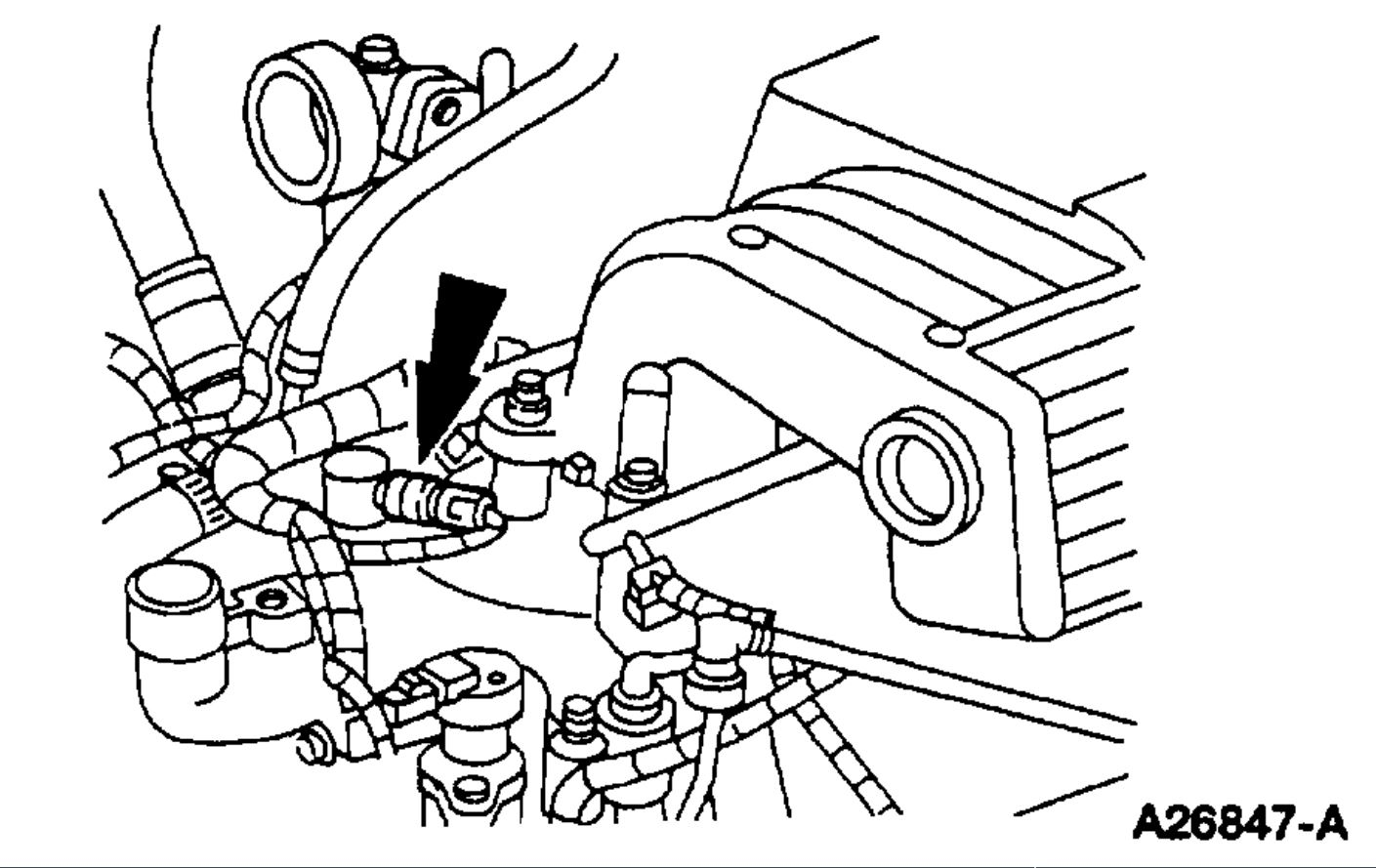
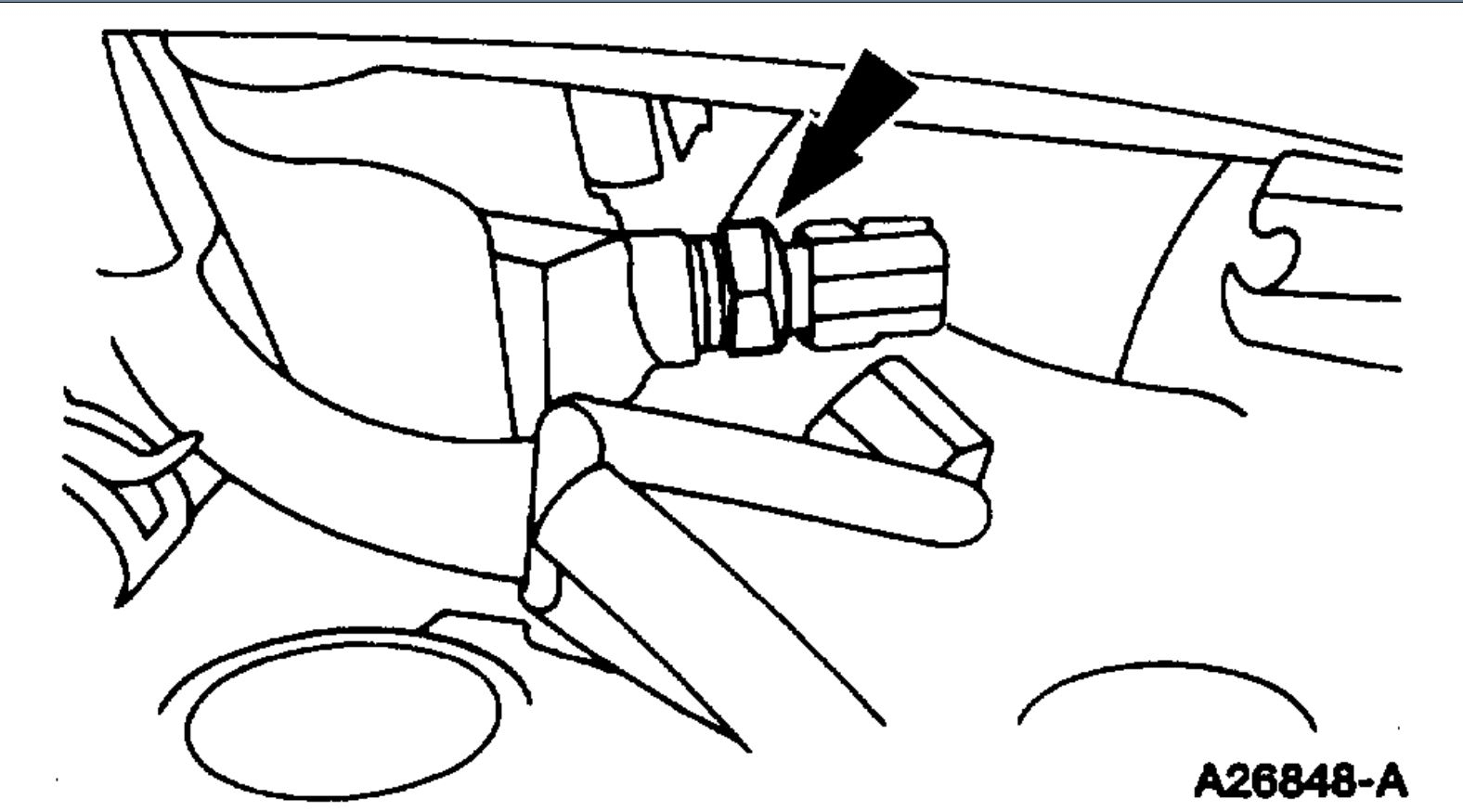
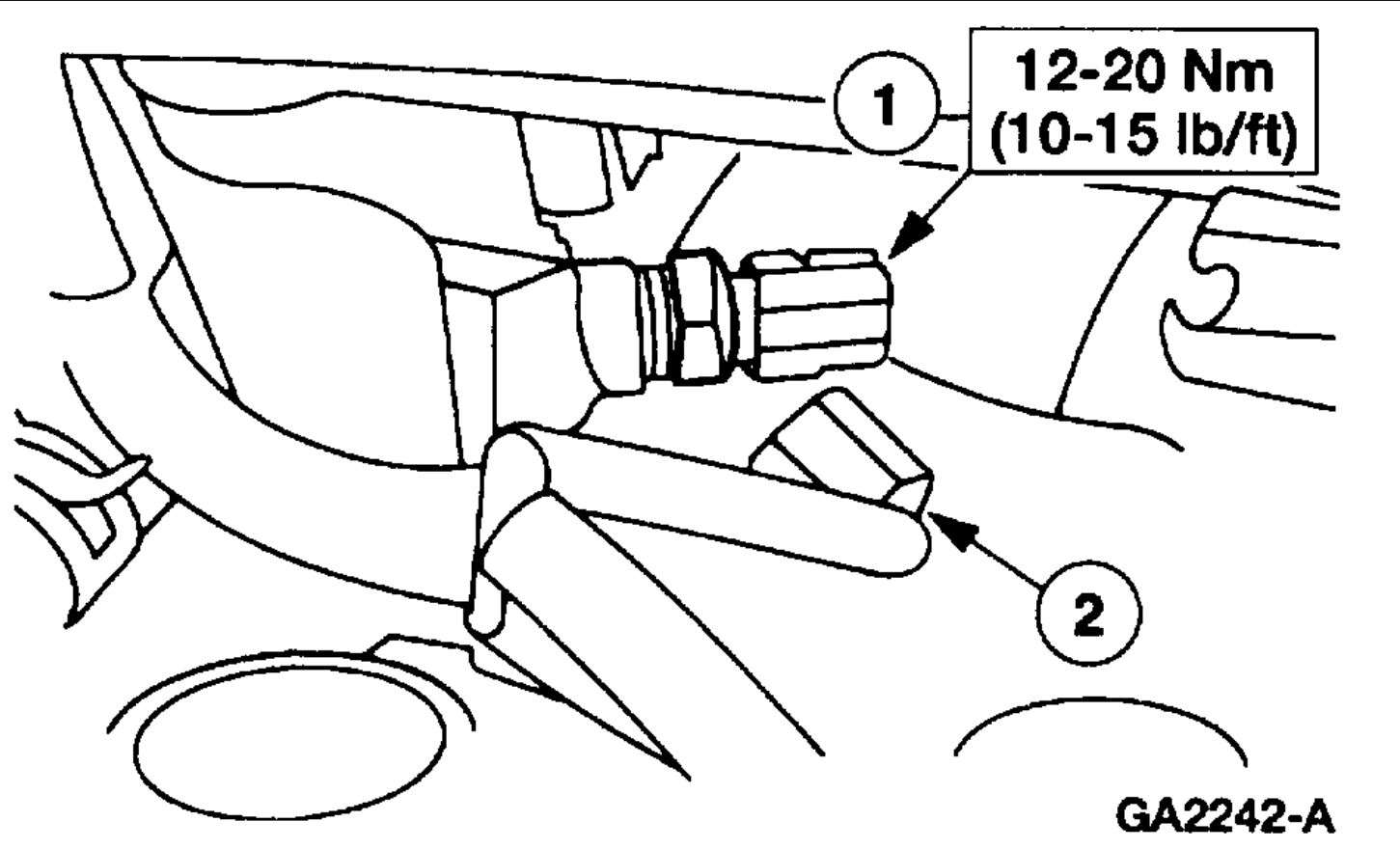
need to know where this sensor is and how to replace it
Aug 11, 2020 at 4:50 PM (Merged)
Avatar
RASMATAZ
  • CAR REPAIR CONTRIBUTOR
  • 75,992 POSTS
All you need is an open end wrench

Heres a guide to look at, not vehicle specific but pretty much the same thing

https://www.2carpros.com/articles/coolant-temperature-sensor-cts-replacement


See attachments below for your vehicle
Aug 11, 2020 at 4:50 PM (Merged)
Avatar
FENWAYJEFF
  • MEMBER
  • 3 POSTS
I have just replaced the radiator, thermostat, hoses and temp sending unit. I can sit it at idle for 45 min and it just runs a little hot but as soon as i drive it , the temp gage red lines and the check engine light comes on. I cant seem to figure out why it is overheating, please help me.
Aug 11, 2020 at 4:50 PM (Merged)
Avatar
JACOBANDNICKOLAS
  • CAR REPAIR CONTRIBUTOR
  • 110,190 POSTS
It sounds like you replaced everything. Did you check to make sure there is no air in the cooling system? Also, you you may need to check for a bad head gasket.
Aug 11, 2020 at 4:50 PM (Merged)
Avatar
FENWAYJEFF
  • MEMBER
  • 3 POSTS
I have just replaced the radiator, thermostat, hoses, temp sending unit, and gotten all bubbles out of the system. I can let it sit at idle for 45 min and the temp is high but not overheating. If i drive the vehicle it will get all the way to redline on the temp gage and the check engine light comes on. please help me
Aug 11, 2020 at 4:50 PM (Merged)
Avatar
POORMNSDVD
  • MEMBER
  • 9 POSTS
do you have to keep adding coolant?
excisive water in exhuast?

and is it actually over heating?
Aug 11, 2020 at 4:50 PM (Merged)
Avatar
FENWAYJEFF
  • MEMBER
  • 3 POSTS
coolant level stays the same, no excessive water in exhaust and the water/coolant mix after it says its hot is boiling
Aug 11, 2020 at 4:50 PM (Merged)
Avatar
BLUELIGHTNIN6
  • CAR REPAIR CONTRIBUTOR
  • 16,542 POSTS
hello and thanks for donating!


you will need to have the water pump tested, it may not be pushing coolant through system correctly to cool engine.
Aug 11, 2020 at 4:50 PM (Merged)
Avatar
POORMNSDVD
  • MEMBER
  • 9 POSTS
what code is the ecm generating

is there any coolant dripping from the pin hole at the water pump
Aug 11, 2020 at 4:50 PM (Merged)
Avatar
CARLA REED
  • MEMBER
  • 27 POSTS
Need to know where to locate this on my truck. See image below.
Thanks,
Carla Reed
Oct 14, 2020 at 12:56 PM (Merged)