
Introduction
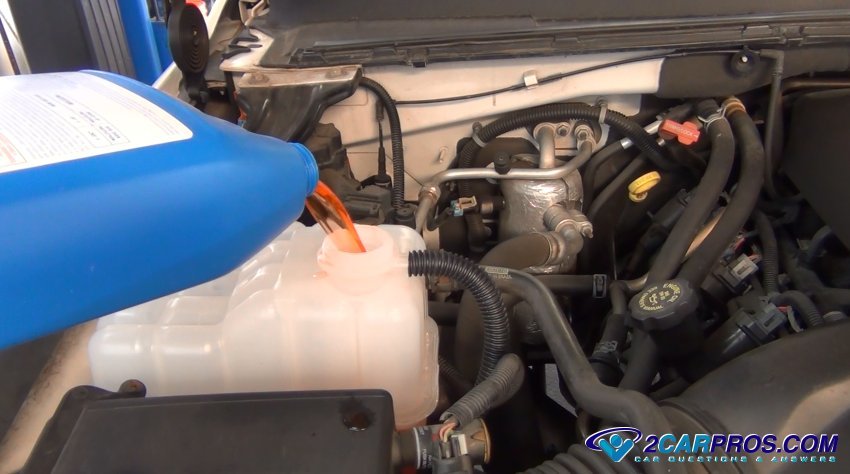
Your car's cooling system is designed to keep the engine from overheating while in operation. In time, the engine coolant will need to be changed and flushed to help protect engine parts from corrosion which will cause coolant leaks. If the cooling system is neglected the coolant will turn corrosive and will not be able to protect as well.
Tools and Materials Required
- Coolant flush solution
- New engine coolant (refer to your vehicle's manual for specifications)
- Distilled water
- Drain pan
- Socket wrench set
- Screwdriver
- Hose clamps
- Safety gloves and goggles
- Funnel
- Shop towels
- Garden hose
Precautions
- Ensure the engine is completely cool before starting the procedure to avoid burns.
- Dispose of old coolant properly, as it is toxic and harmful to the environment.
- Always wear gloves and goggles when handling coolant and chemicals.
Cooling System Drain and Fill (Flush)
No matter how much coolant has drained out of the system, there will always be a little amount left in the engine block. A flush machine can be used, but the problem is most states have outlawed these machines due to their waste coolant expulsion into the environment. It is now preferred to drain the cooling system then refill it, run the engine for a short time and then drain and refill it again to flush the system.
You may need to raise your car off of the ground using a floor jack and supporting it with jack stands for safety. Start with the engine cool and wear gloves and safety goggles.
1. Locate and Remove the Radiator Cap
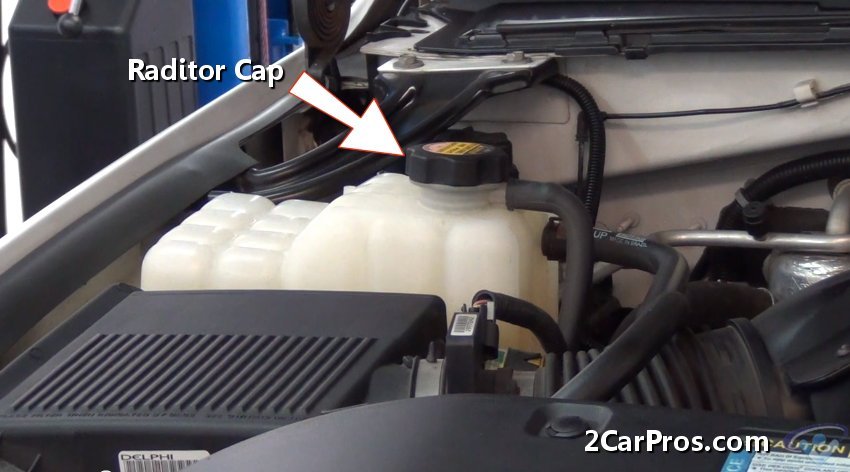
The radiator cap is located on the top of the radiator, or on the coolant reservoir. Some systems have two caps, one that holds pressure and the other just keeps dust and dirt out of the reservoir. Release the pressure inside the cooling system by pushing down and slowly twisting the cap counter clockwise. This will make sure there is no pressure in the system and it will allow air to enter the system while draining.
2. Coolant Draining
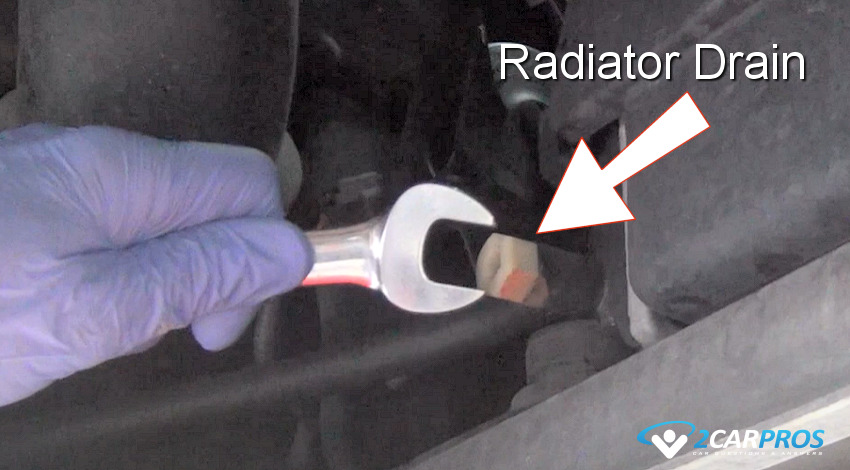
Most car's have a radiator drain valve that will be visible at the bottom tank or side tank. If a drain valve is not available loosen the lower radiator hose and slowly remove it from the radiator to initiate the draining process. Open the drain valve by turning the it counterclockwise, have a fluid catch basin ready to catch the draining coolant. After a short time the coolant will stop flowing which means the coolant is done draining.
You should have between 1 1/2 and 2 gallons in the fluid bucket or catch basin. Be sure the radiator cap has been removed which will help get most of the coolant out if the system. Then tighten the drain plug or reinstall the lower radiator hose.
3. System Flush
To flush the cooling system refill the radiator with distilled water, then start the engine and allow it to run until warm while keeping the radiator or reservoir full, (turn heater on full hot to flush the heater core). Once the engine is warm and the thermostat has opened shut the engine off and repeat the draining process motioned earlier in this guide. Perform this operation as many times as needed until the system is clean. If your car has a non pressurized external coolant reservoir you are going to want to remove it and clean it out separately so any old coolant does not contaminate the new coolant inside the system.
4. Radiator Coolant Refill
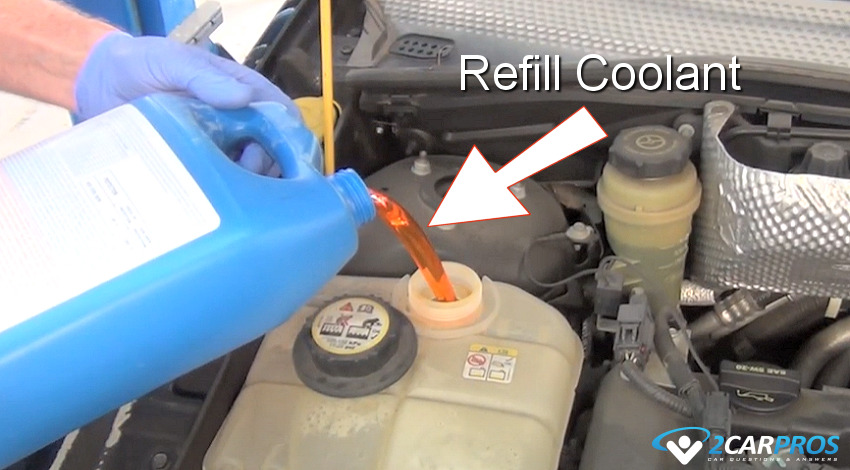
When you are ready to refill the system with coolant, use a funnel to avoid spillage while slowly pouring the coolant into the radiator or reservoir until full. Then start the engine and allow it to warm up while slowly adding coolant. If you have flushed the system there will be no need to mix coolant with distilled water because there will be a sufficient amount or water still remaining in the engine block.
Continue to add coolant and distilled water until you have reached the full line in the reservoir or the top of the radiator. Start the engine and allow it to warn up until the thermostat opens, you will notice the level in the reservoir or radiator drop. Continue filling the system until the coolant level reaches the hot line in the reservoir or near the top of the radiator cap.
5. Radiator Cap Installation
While the engine is still running reinstall the radiator cap, be sure to double check the coolant level in a few days (engine cold) in case air bubbles inside the system that have worked themselves out lowering the coolant level.
6. Bleed System (if necessary)
To remove air pockets from the cooling system some engine's have a bleeder screw that allows air to escape which is normally located near the thermostat housing. To remove air from the heater core, raise the front, and then the rear of the car while the engine is running. Watch for bubbles in the coolant, indicating air escaping the system.
Conclusion
Depending on usage and driving conditions such as sub zero weather the engine coolant should be changed every 60,000 miles. There are different kinds of coolant which can go longer between changes, many car manufactures use specific coolant that must be used with their particular automobiles, (do not mix coolant colors). If a normal service schedule has been neglected, coolant can transform its chemical composition and actually turn into an acid which will erode gaskets and seals causing coolant leaks.
Using only distilled water to ensure all remnants of the flush solution and contaminants are removed from the system.
Transfer the used coolant to a sealed container and take it to a recycling or disposal facility. Never pour coolant down the drain or onto the ground.
Watch the Video!
Please watch this video of the job being done to glean additional helpful information.
Credits
This guide knowledge base was created by the 2CarPros Team. If you have a car repair question, you can ask the 2CarPros community for help. Please visit our 2CarPros YouTube Channel for more helpful repair videos.