The $150.00 they charge is to insure you'll bring the tool back, then they give you your money back. If you decide you'd like to keep the tool, you still bring it back, then they order you a new one.
There is no fuel pressure test other than with a gauge. Many cars have test ports on the fuel rails, and often people think if fuel squirts out there, especially if it hits the hood, that must be okay, but in fact, some engines will not start or run right when fuel pressure is just a few pounds too low. You could have 40 pounds of pressure, which will cause a lot of excitement when you press the valve, but that can be ten pounds too low for the engine to run.
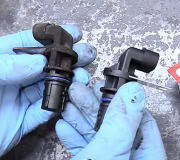
Forget the spark plugs. You could have a spark-related problem, but you know all six spark plugs aren't going to fail at the same time. Where most people get lost is you need to check for spark during cranking, and fuel pressure, but the fuel pressure can be misleading. Your fuel pump should run for about two seconds when you turn on the ignition switch, and you might be able to hear it hum. That by itself can get the fuel pressure up to specs, but what is important is if the pump resumes running when the engine is rotating, meaning cranking or running. About 95 percent of crank / no-starts are caused by a loss of both fuel pump and injector pulses, and spark. That means neither system is defective. They aren't being turned on by something else they have in common. That is the Engine Computer, and it's not turning those systems on because it doesn't know the engine is rotating. It knows that by the signal pulses it receives from the crankshaft position sensor and the camshaft position sensor.
The first thing you should do is check if there is spark when a helper cranks the engine. If you have that, we'll need to look at the fuel system, but from your description of the symptoms, I'd be more suspicious of the strainer inside the gas tank, and not the pump itself. If it looks like that is the culprit, the best test is a fuel volume test. I just went through this two weeks ago on my cousin's Villager. A scanner is used to command the Engine Computer to turn on the fuel pump relay, then fuel flows from a disconnected hose into a container.. On his van, that flow was nice and strong for about 30 seconds, then it dropped off to barely a trickle. I've run into the same thing four times on three of my Chrysler products. His is the first Ford product that I worked on for this. You can do this volume test without a pressure gauge, but remember, this is only relevant if you do have spar.
If spark is missing due to a failed cam or crank sensor, the fuel pump will not resume running when you're cranking the engine. It still runs for that two seconds when you turn on the ignition switch. That's why fuel pressure will appear to be okay. The other clue is there will be no gas smell at the tail pipe because the injectors won't be firing either. If you do smell a lot of gas, you could indeed have just an ignition system failure, but that is by far the least common type of failure.
Here's links to some article that might be of value:
https://www.2carpros.com/articles/how-to-test-an-ignition-system
https://www.2carpros.com/articles/how-to-check-fuel-system-pressure-and-regulator
Saturday, May 18th, 2019 AT 9:42 PM