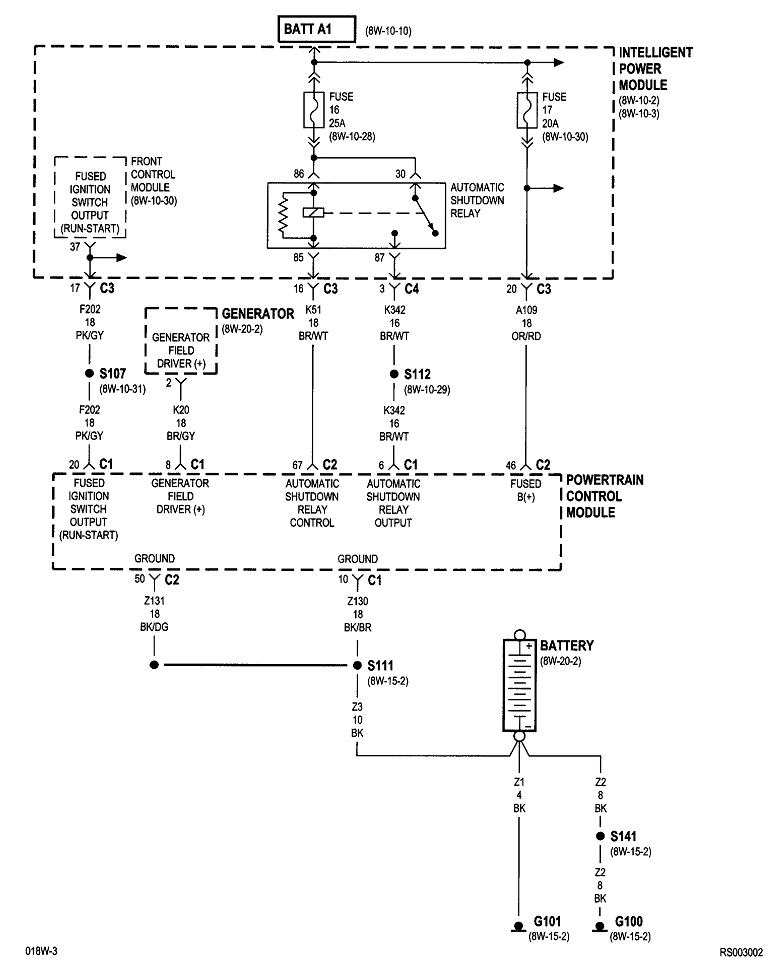
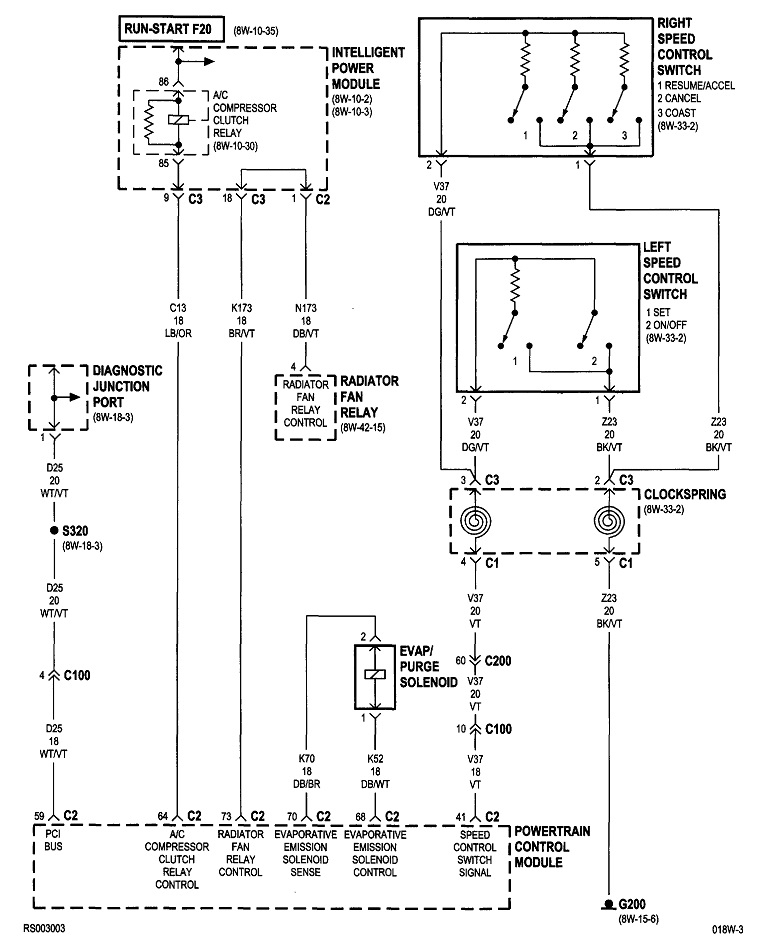
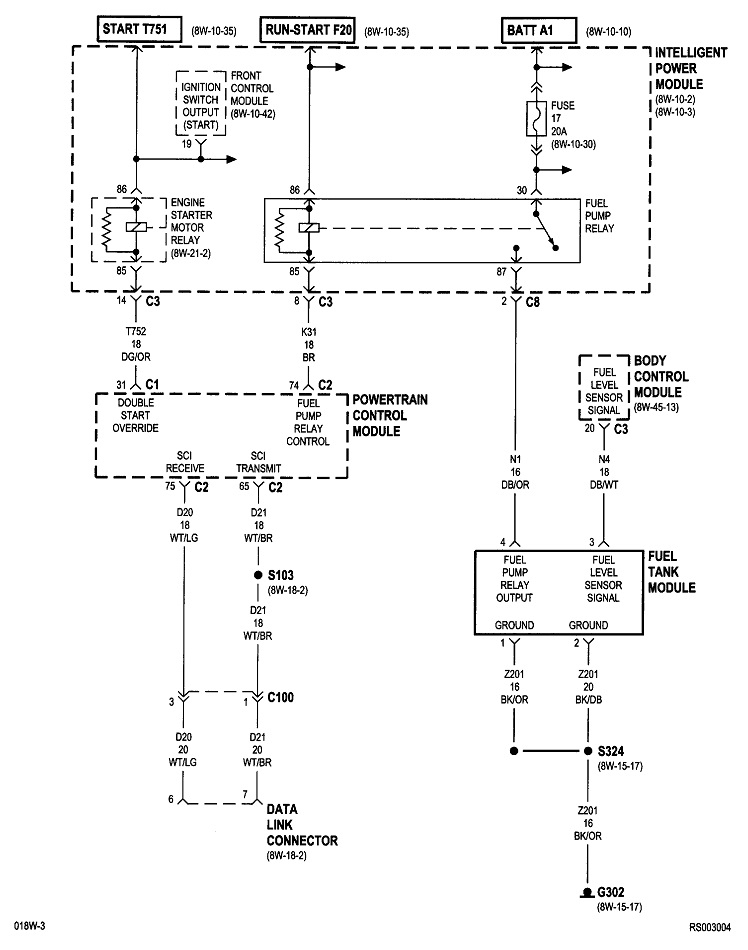
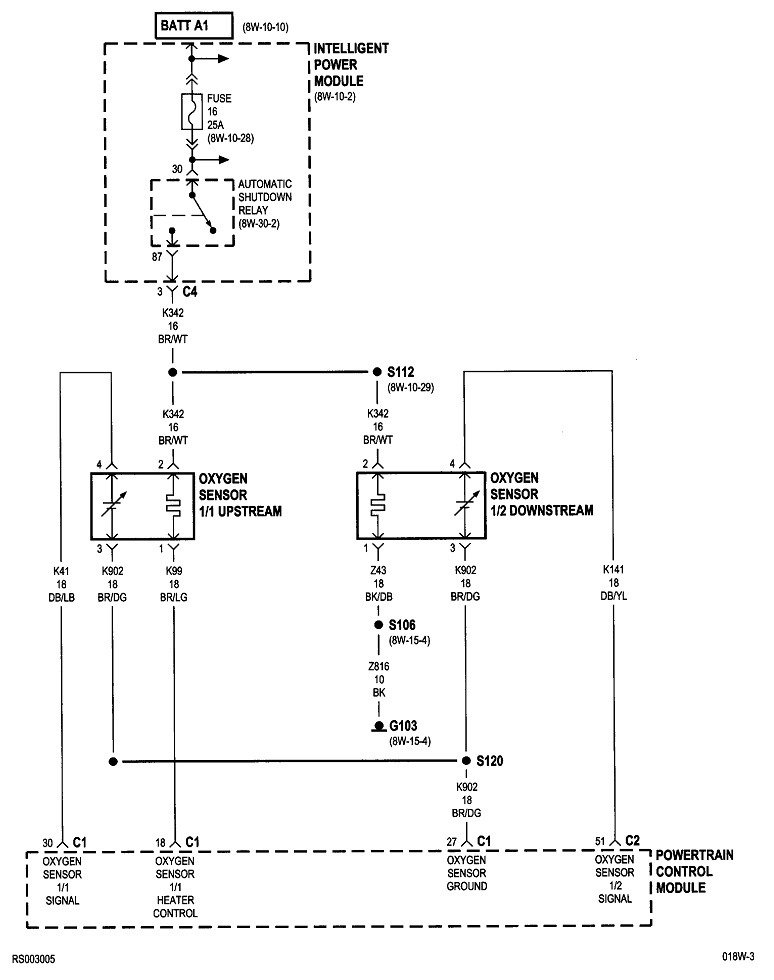
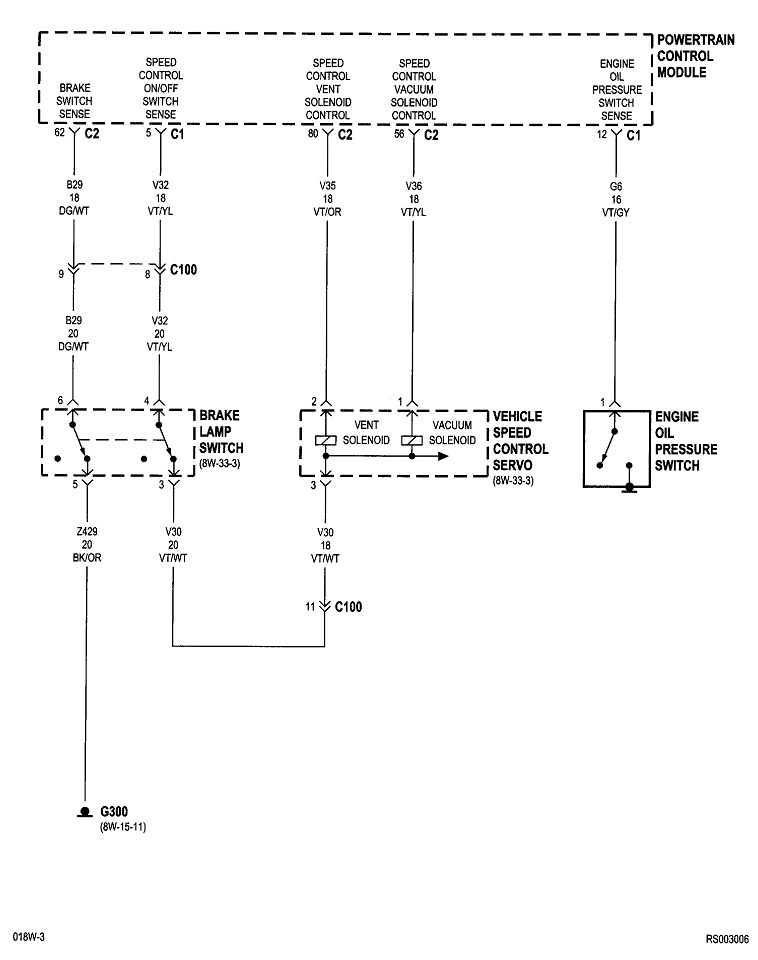
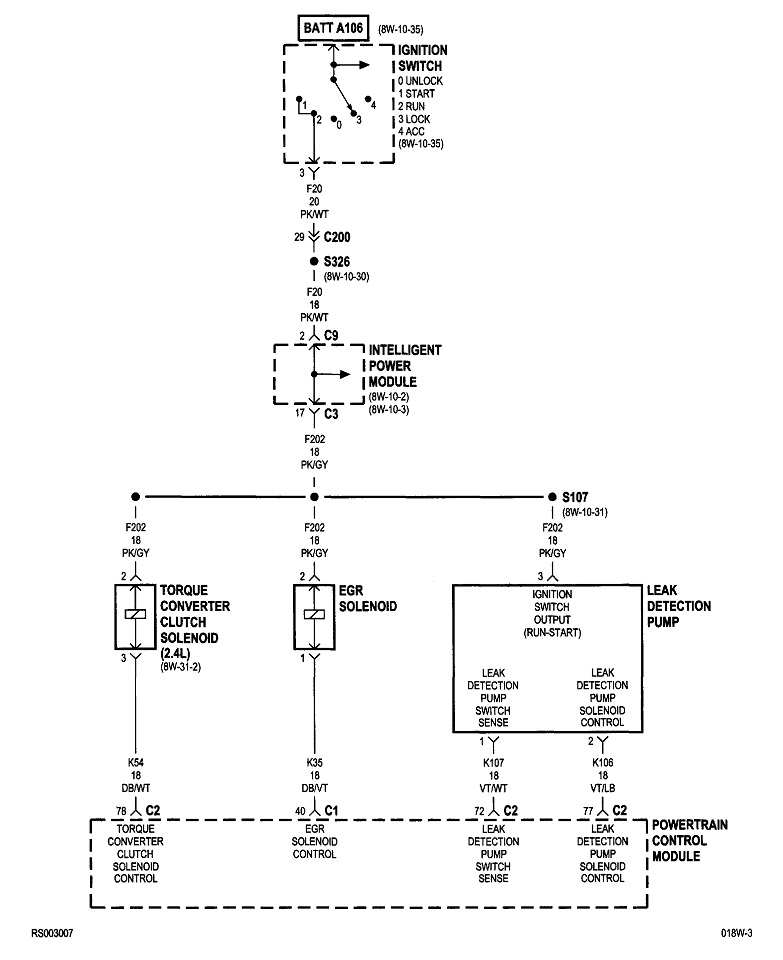
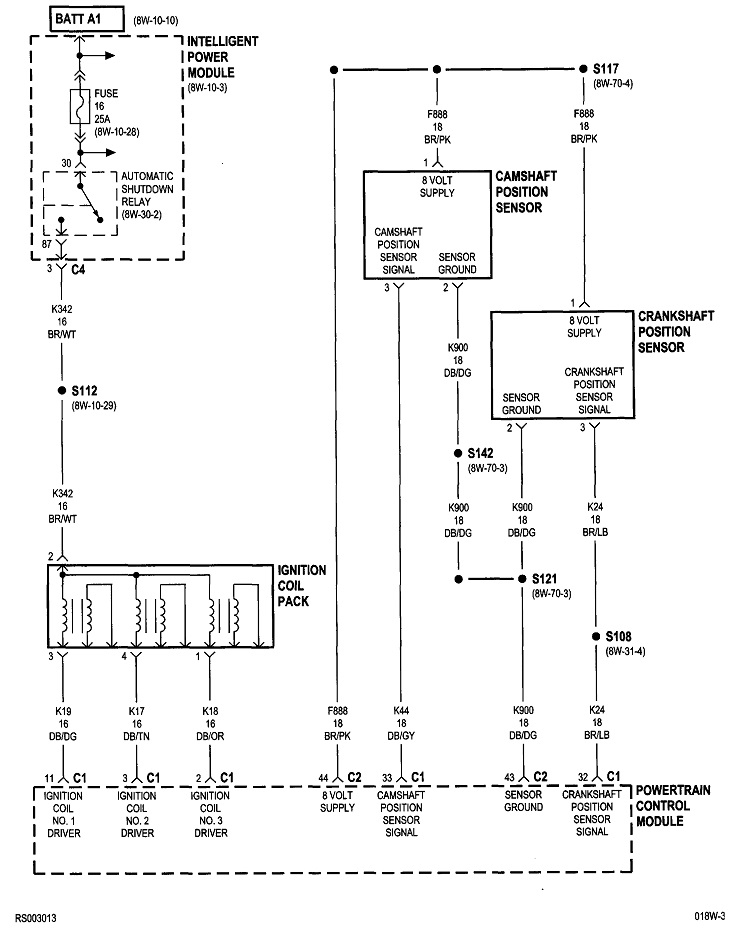
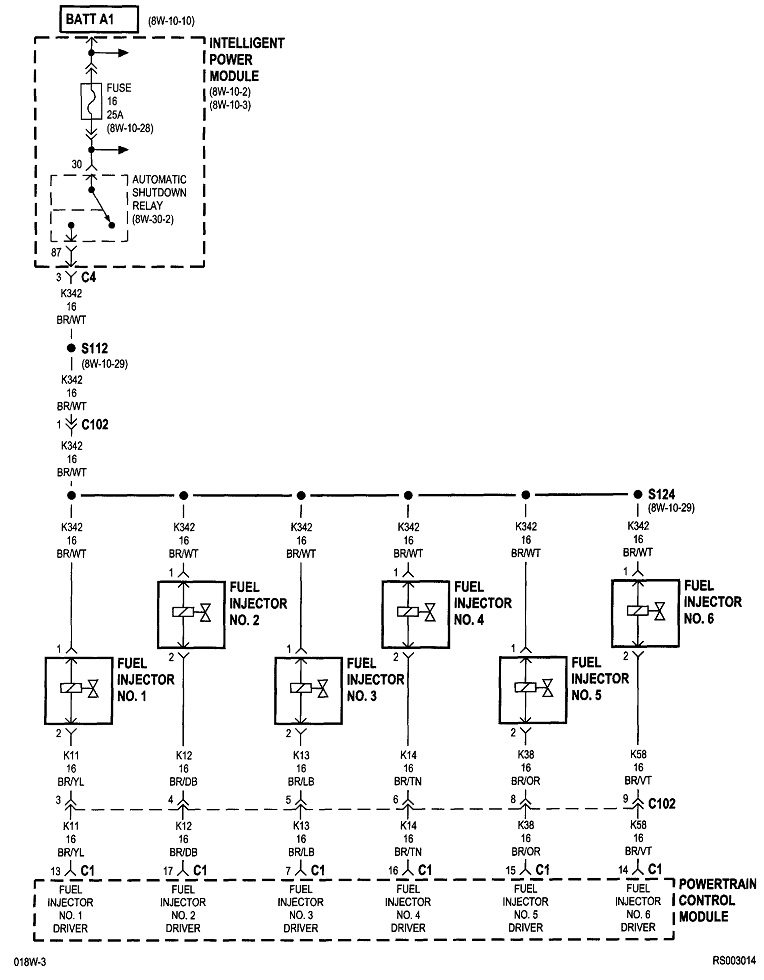
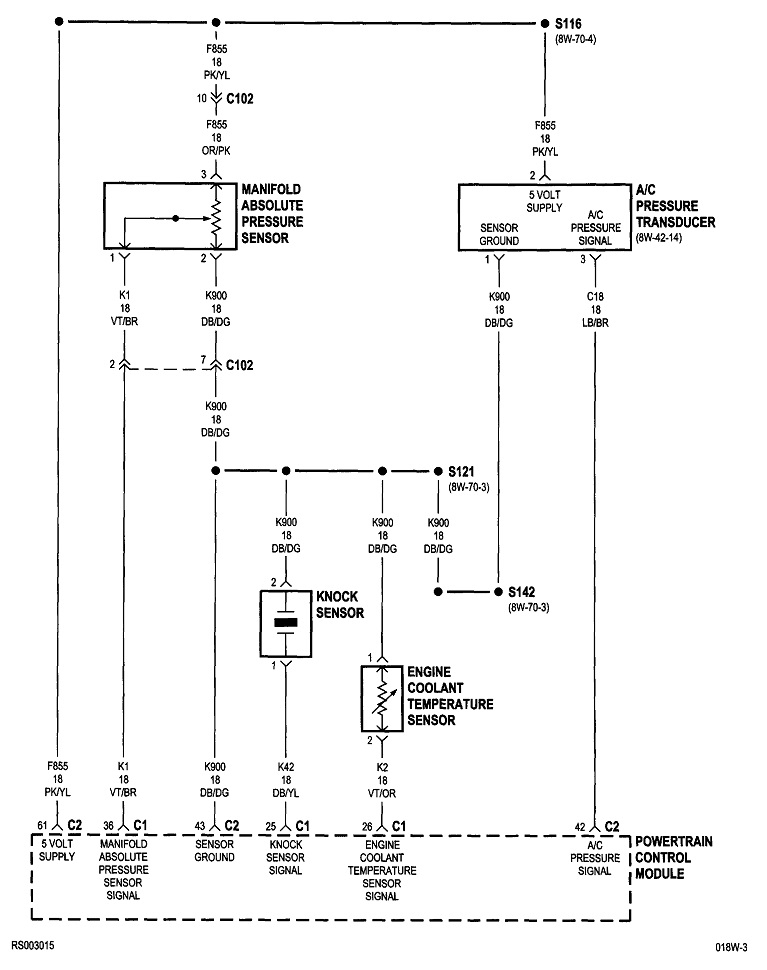
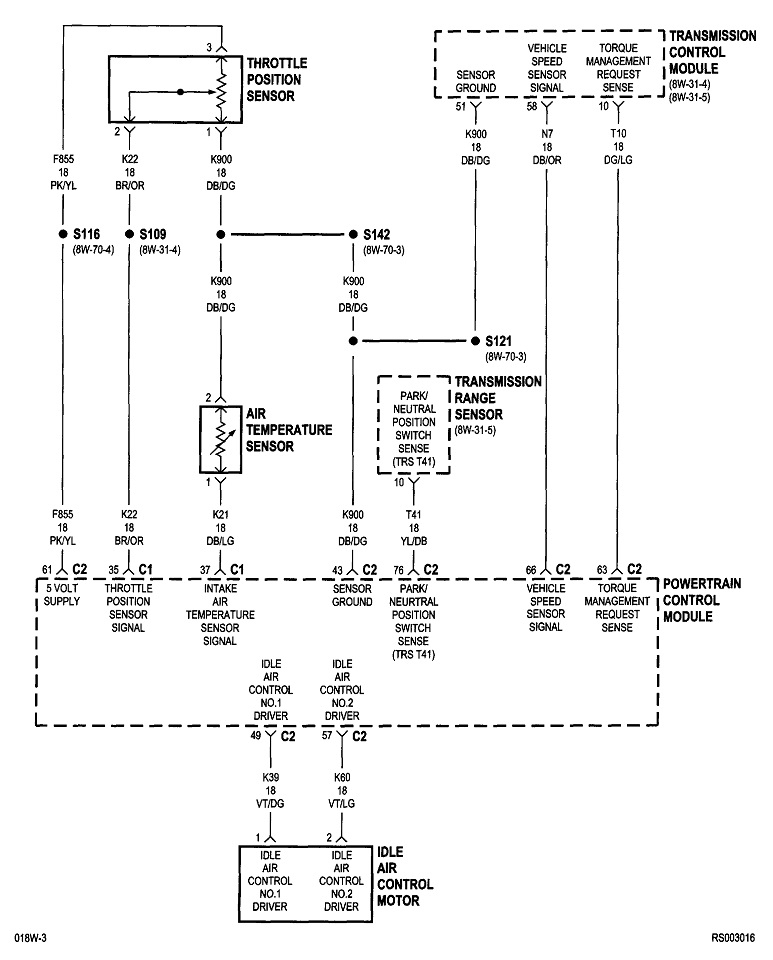
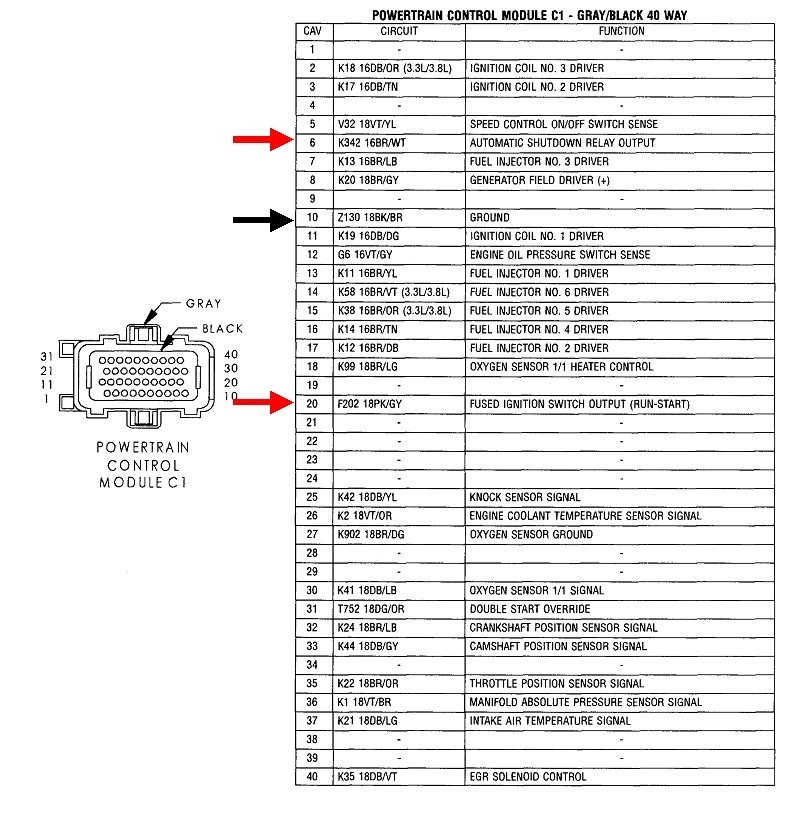
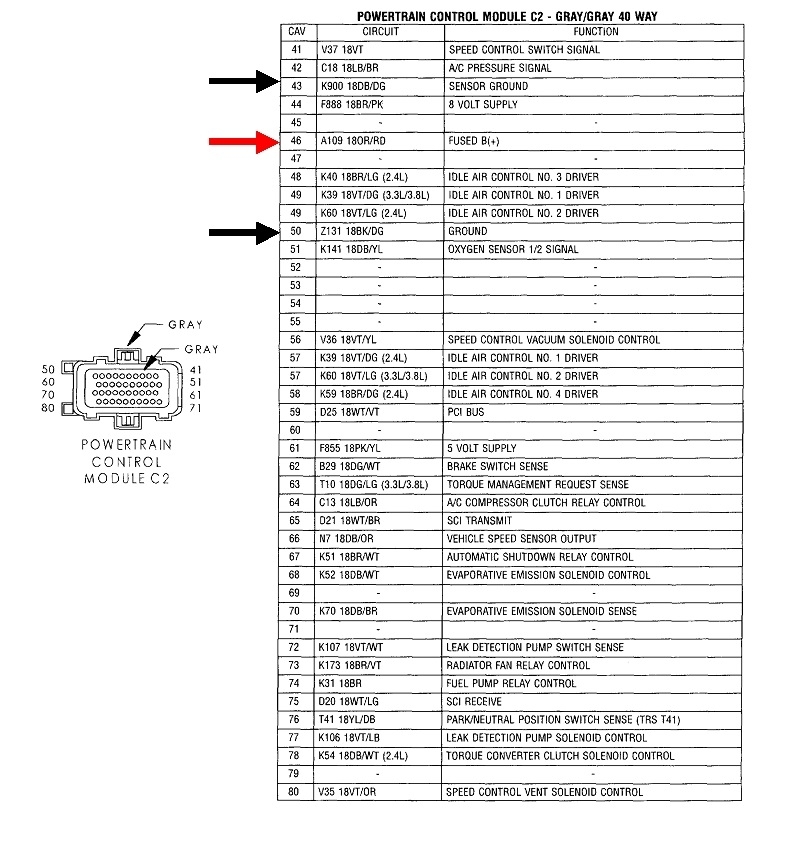
I didn't look closely at these diagrams, but I can add a couple of comments of value. First, it was common on Chrysler Engine Computers to find four ground wires. One was called a "power ground", meaning it was used for high power circuits like ignition coils, injectors, solenoids, and relays. The second was a "sensor ground". Then, for redundancy, there was a second one for each of those, thus, four ground wires in total.
The reason for separate grounds is there is always a little resistance in a wire. When current flows through that resistance, it causes a small voltage to be "dropped" across it. In the high-power ground circuit, that voltage drop could be in the order of a few hundredths of a volt, which is completely meaningless to how well those systems operate. The problem is if that ground wire was to be shared with the sensor grounds, a few hundredths of a volt means a lot to the computer. In the case of the very sensitive MAP sensor, for example, the voltage drop would affect engine performance due to the computer seeing the wrong signal voltage. In addition, as ignition coils and injectors turn off, they create voltage spikes from the collapsing magnetic fields in their coils. Those voltage spikes also show up on the power ground wires. If there was just the one shared ground wire, those voltage fluctuations would again show up in the sensor signals.
The second problem with testing ground wires is trying to perform a continuity test is pointless. All you need is one tiny strand of wire still intact for the ohm meter to show the entire wire is good. In fact, that would not allow enough current to flow without causing its own severe voltage drop. Think of a garden hose that's 99 percent blocked by a kink. As long as the nozzle is turned off, you would find normal pressure there, but open the nozzle and expect water, (current) to flow, and all it would do is drip on your shoes. Just like with the garden hose, to be accurate, you have to test the circuit while it's in operation. That means instead of the continuity test, measure the voltage drop on each ground wire. To say that in normal terms, measure the voltages on terminals 10, 43, and 50 while the engine is running.
I've never actually done this test except for training purposes, so I don't know what "normal" is, but I can share that you aren't going to find a questionable amount of voltage. If a power ground wire is open, as in corroded off at the terminal, you'll have a no-crank or a crank / no-start condition since the ignition coils and injectors can't fire. You'll find very high voltage on that power ground wire, as in probably 2 volts or more.
Most sensors are fed with a carefully regulated 5.0 volts. If their ground wires are open, that will put close to that 5.0 volts onto the signal wires. That will set all kinds of "signal voltage high" fault codes related to each of those sensors. When you get that code for just one sensor, suspect a break inside the sensor itself, a spread connector terminal, or a break in the wire from that sensor to where it splices together with the other sensors' ground wires. When you get those fault codes for multiple sensors, that's when to look at the sensor ground wire for the computer.
As a side note, power grounds go through the computer because that's where it turns those circuits on and off. Sensor grounds go through the computer so they can be monitored for proper operation. Because there is that monitoring circuitry in the computer, a small amount of voltage is dropped across it. To see that, go to the ground terminal for the throttle position sensor or the MAP sensor, and you'll find very close to 0.20 volts, not 0.00 volts like you might expect to see.
All of these voltages are part of the training story. In actual practice, we never waste our customers' time, (money), with these tests during the diagnosis. We might perform one or two to verify what we found, but there's too many other variables to make these tests worthwhile. A perfect example is the stray voltage that can be "induced" electromagnetically into your meter's leads. You may even find when your meter is set to its lowest voltage scale, it will show a small voltage just by sitting near the running engine without its leads even touching anything.
For the computer's 12-volt power wires, I've seen up to four of them. One is on all the time to keep the memory alive. That keeps any stored fault codes in memory and it retains learned values like individual sensor personalities and learned fuel trim data. The second will be a switched power wire that turns the computer on from the ignition switch. I briefly mentioned the automatic shutdown, (ASD) relay previously. The computer turns that on for just one second when the ignition switch is turned to "run", then again anytime it sees engine rotation, (cranking or running). When it's turned on, it sends 12 volts to the ignition coil(s), injectors, alternator field, oxygen sensor heaters, and to the fuel pump or pump relay. One additional place it sends 12 volts is back to the Engine Computer so it can verify that ASD relay did, in fact, turn on. That's the third 12-volt power wire and it is the one that powers the alternator's voltage regulator circuit and is where system voltage is monitored. That regulator is inside the Engine Computer. Chrysler developed the world's first electronic voltage regulator for 1970 models. One of its features was it included temperature compensation to boost battery charging voltage in cold weather. Today, with the regulator built into the computer, it can make fine tuning adjustments for all the variables the computer knows.
There's one more thing I want to point out that is a major source of confusion. That is the terminology used for some of these circuits. The biggest one that comes to mind is terminal # 6 in connector C1. It's listed as, "automatic shutdown relay output". That implies the ASD relay turns on, then its output 12 volts comes out on terminal #6. That's how most of us would read it. In fact, what it means is the ASD relay turns on, then, along with all the places I said it sends 12 volts to, this relay's "output" goes TO terminal # 6. The output of the relay is an input to the computer on terminal # 6. That's what happens when the engineers who design the circuits aren't the same people who write the service manuals.
May 28, 2025 at 12:23 PM