Replacing brake shoes is a little more involve then replacing rear brake pads, to add each manufacturer has a different idea on how the brake shoe system is designed so the step can vary slightly for each application. This detailed guide will walk you through the process step by step, providing technical details to help you perform the job correctly.
Tools and Materials Needed
- Jack and jack stands
- Wheel chocks
- Lug wrench
- Brake spring pliers
- Brake shoe retaining spring tool
- Flathead screwdriver
- Needle-nose pliers
- Brake cleaner
- New brake shoes
- New hardware kit (springs, retainers, etc.)
- Grease
- Safety glasses and gloves
Getting Started
If you decide to replace the drum brakes yourself there are a few specialty tools that will make the job much easier. Anchor pin tools and spring tools will keep you from possibly hurting yourself trying to pry them off and on. As with any vehicle repair wear the proper safety attire (mask, gloves and safety eye wear) to avoid ingesting the dust created by the brakes.
- Before beginning work park the car on level ground while blocking (four blocks) front wheels to prevent wheel roll in either direction.
- Parking brake must not be engaged
- Only take apart one side at a time so you can have reference on how it will go back together. It also helps to use your phone and take a quick picture of the brakes.
- Use a floor jack and raise the car and support it with jack stands for safety.
- Remove the rear tires from the car
1. Use a small chisel with a hammer to remove the bearing dust cap, on some cars the drum will just slide off or be held on by thin sheet metal clips which will need to be removed.

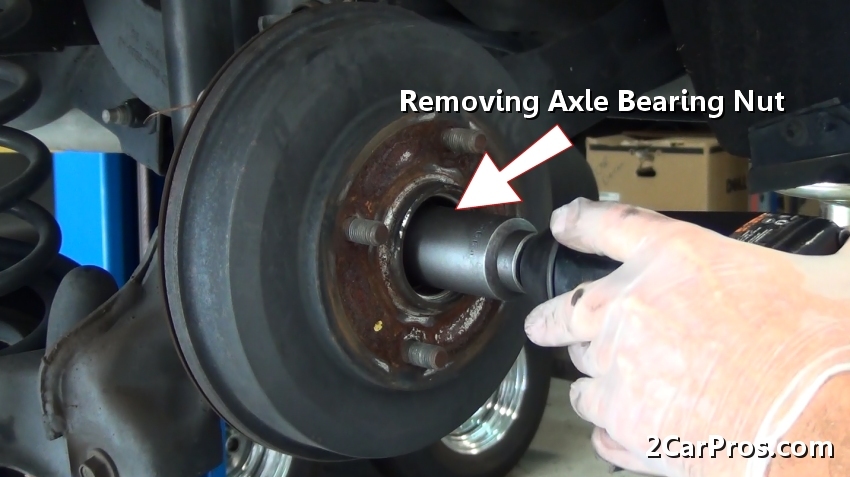
2. Remove the bearing dust cap and the axle bearing retainer nut will be exposed, choose the correct size socket usually 22mm or 24mm and remove the axle bearing retainer nut, this can be done using a breaker bar.
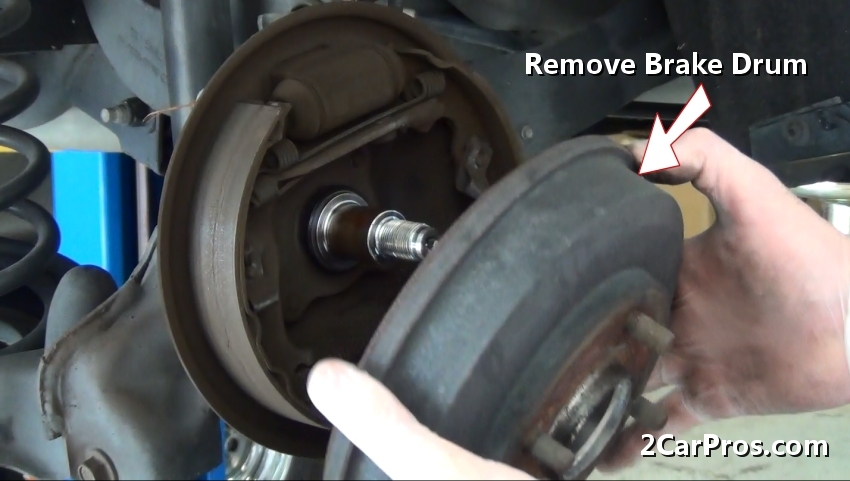
3. Gasp the drum and with a twisting and pulling motion remove it from the car, turning the drum helps release the unit from the axle and the brake shoes. Use this guide if the brake drum is stuck.
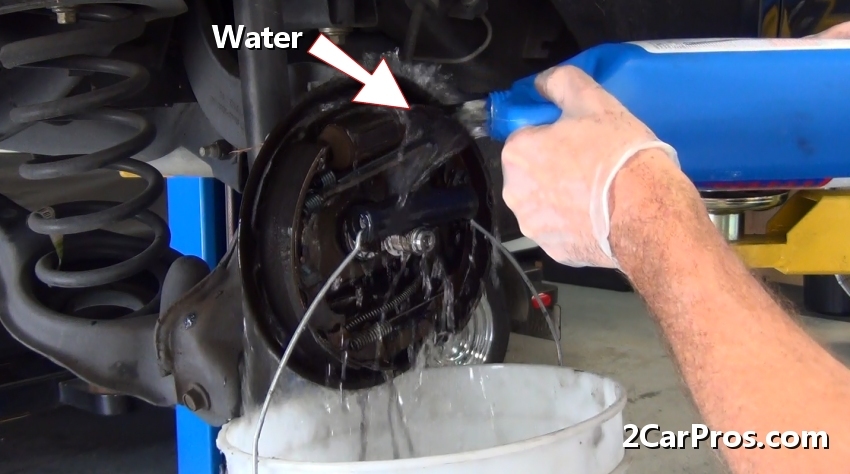
4. Hang a bucket on the axle which will be used as a catch basin, this step will keep the brake dust down to a minimum and make the job cleaner and more enjoyable. Use regular water to rinse away harmful dust particles and allow to dry, wipe away any water from the axle. If you use a garden hose for this step be careful not to blow the brake dust in the air when the pressure from the hose is released. Use the fan feature of the nozzle which will help keep the brake dust down.
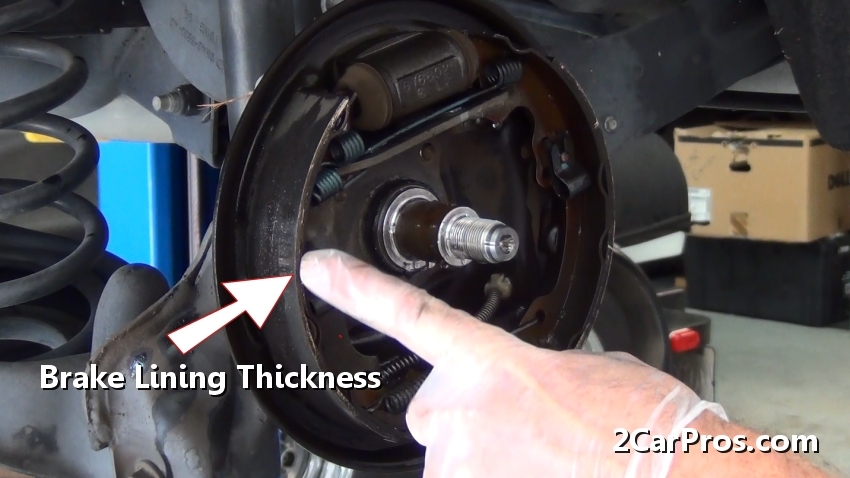
5. Inspect the brake shoe thickness to the new brake shoes. Each shoe can be little different which requires a comparison.
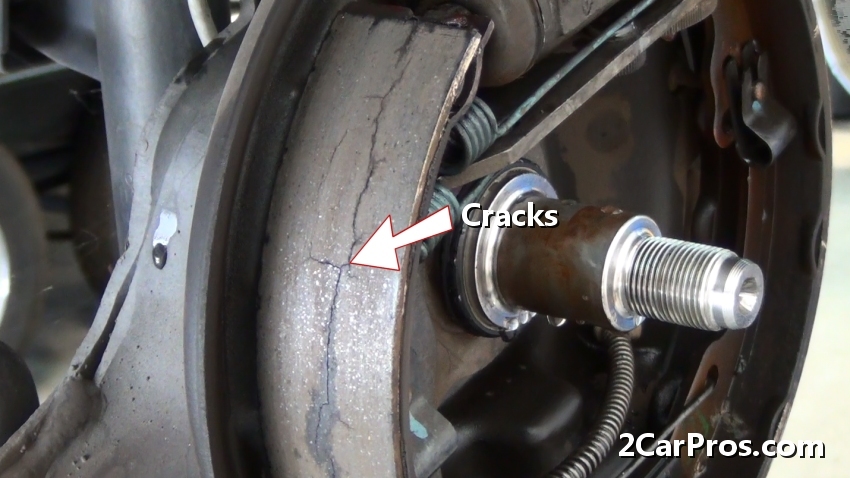
6. When the brake shoes become overheated it can crack the lining of the shoe which requires replacement. When a brake shoe is in this condition a large piece of the lining can come loose and lodge between the shoe and drum causing the wheel to lock up.
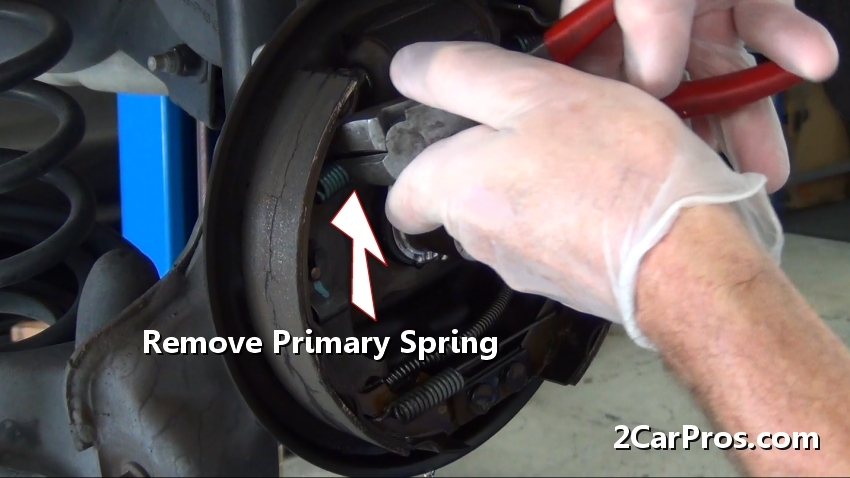
7. Begin the brake shoe removal by identifying the primary brake shoe spring or springs. (Note: Some brake systems utilize two upper springs.) We feature two videos at the bottom of this article which shows different designs of brake shoes please watch them to get an idea of the different kinds available on cars, light trucks and SUV's.
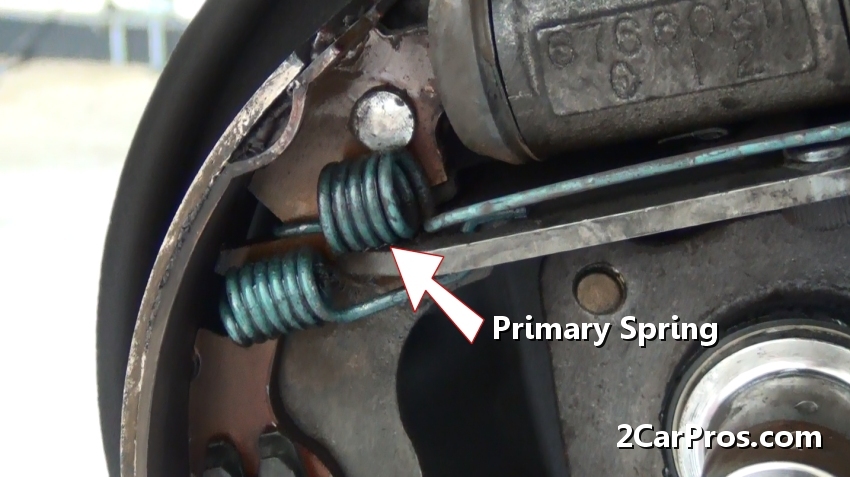
8. Use a pair of needle nose vise grips and grasp the spring and pull it towards the brake shoe until it is released, this can take some doing so hang in there. Once the spring has been released the opposite side will be easily removed.
9. Use a pair of needle nose pliers to release the brake shoe hold down clips there will be one on each shoe. On some types of brakes you are want to use a brake shoe removal tool for this.
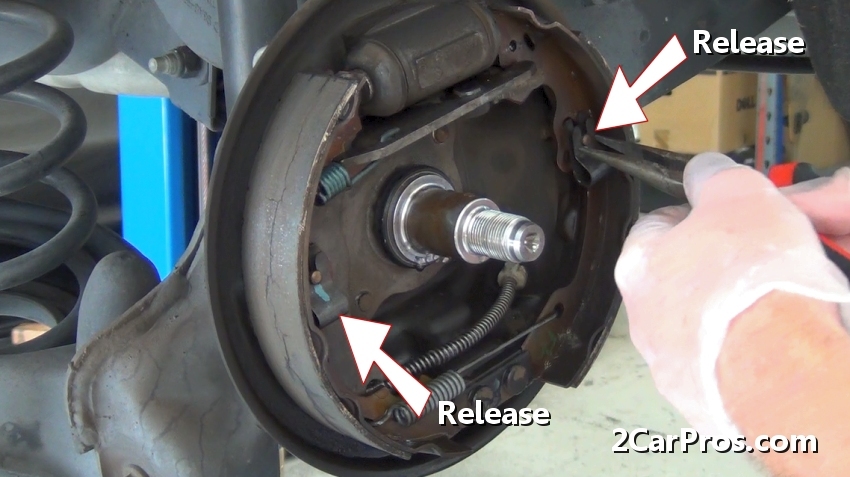
10. After both shoe hold down or anchor clips have been released grasp both brake shoes firmly and pull slightly outward which will allow the shoes to separate from the backing plate and wheel cylinder.
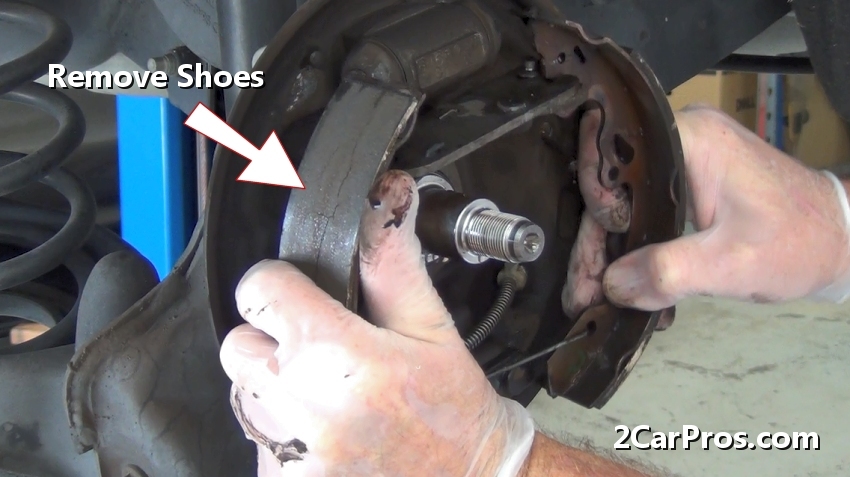
11. Pull the parking brake cable spring downward and release the cable from the parking brake arm.

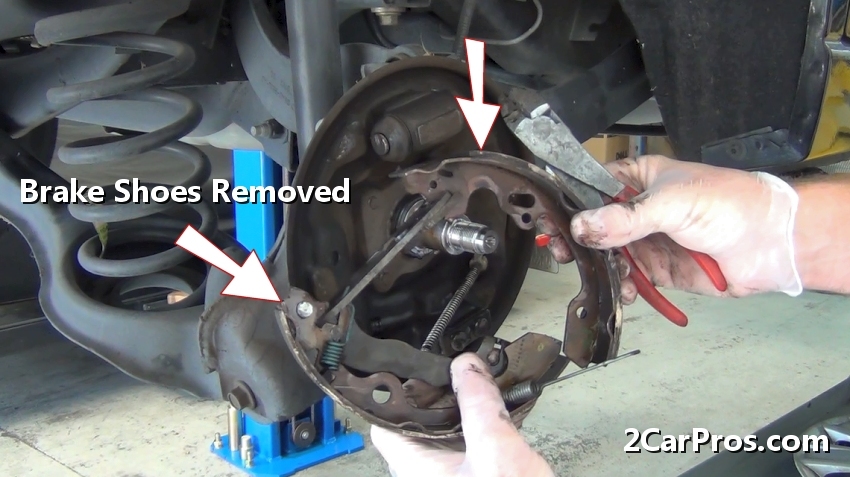
12. The brake shoe set will become free from the backing plate. Hold the shoe set together because it will want to come part.
Check the Wheel Cylinder
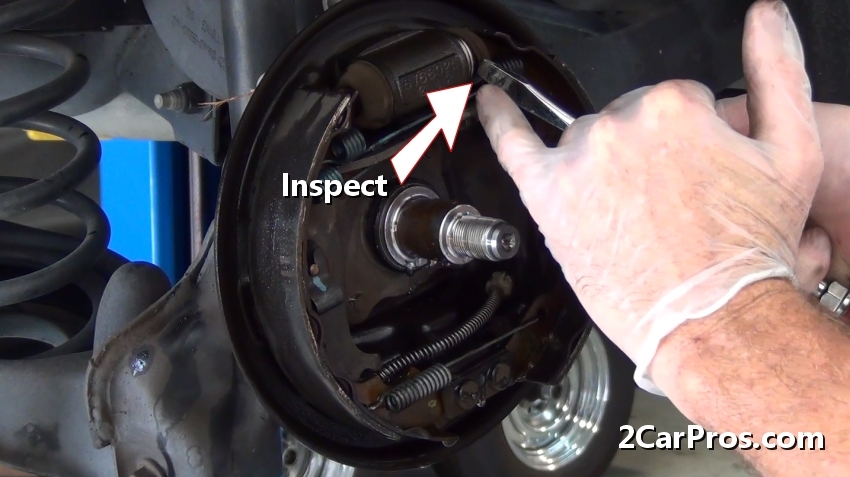
Once the brake shoes are clear use a flat blade (standard) screwdriver and pull back the rubber cups to check for the presents of brake fluid which is an indication of failure. It is recommended to replace the wheel cylinders every time a brake job is done, but if the car is fairly new you can leave them if they are not leaking. It is also advisable to replace the wheel cylinders as a set (both sides) if one is leaking the other side can’t be far behind.
Install New Brake Shoes
1. Use a medium size flat surface to initiate spring and e-bake lever swap onto the new shoes. Take note how how the springs and shoe are situated. Now would be a good time to snap another picture using your phone. At this point a brake new spring hardware kit (combo kit) can be used if the vehicles brakes have been overheated or the car has more than 80,000 miles on it. Springs can become brittle and lose their strength when they get hot and then cooled.
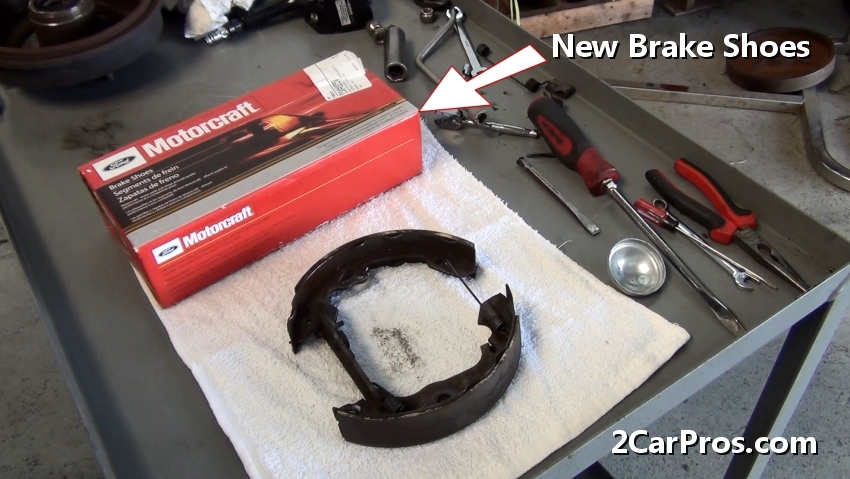
2. Once the new brake shoes have been unboxed match the warn brake shoes to the new brake set. They should be identical in most cases, sometimes the manufacturer will have an update that can make the shoe a little different but no very often.
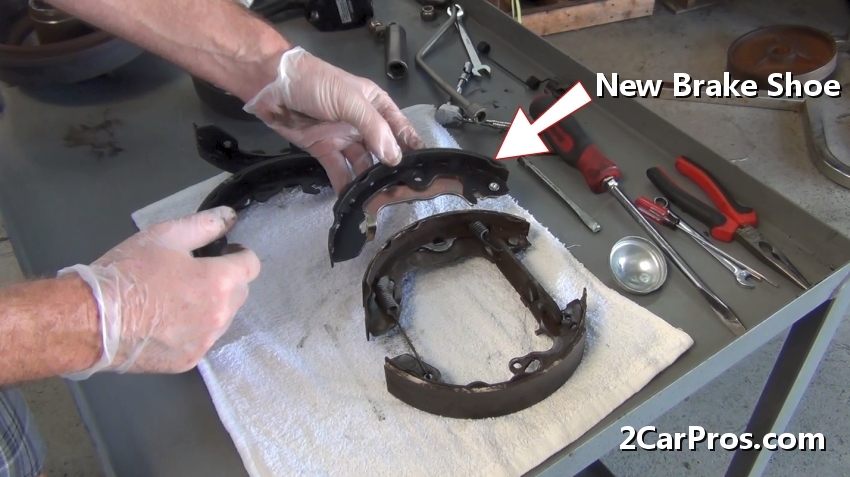
3. Align the new brake shoes with the old set on a flat table or bench and start removing brake springs and swapping them to the new shoe set. Try not to get the linings of the new shoe set dirty or greasy as this can inhibit their braking ability. If dirt or grease does get on the linings try to use a small amount of brake cleaner and shop towel to help remove it.
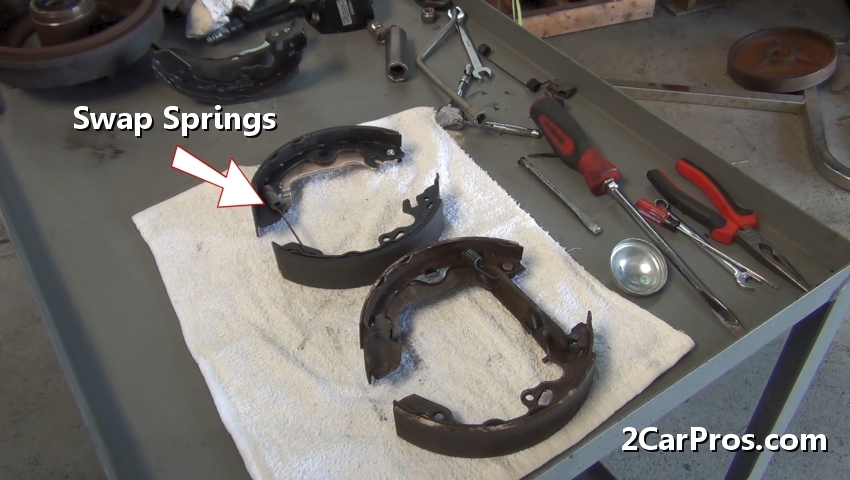
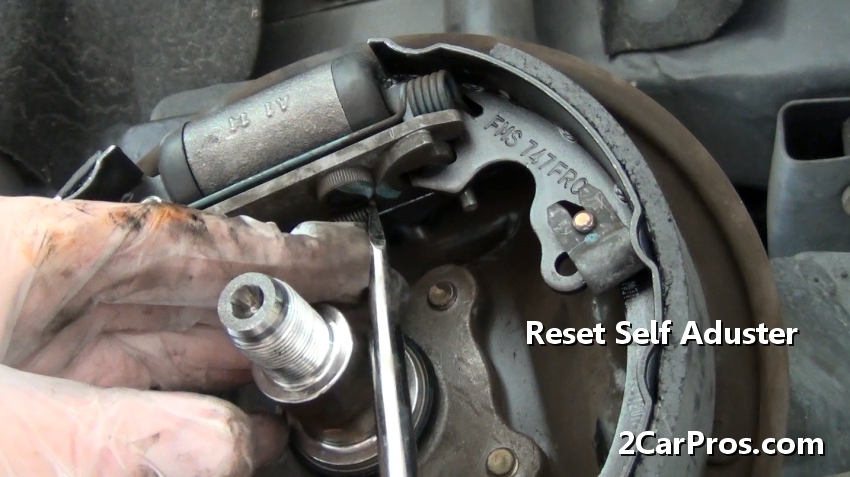
4. Also, remove the parking brake lever and self adjuster from the old shoe set. If the self adjuster is the threaded type disassemble it can clean the threads while adding a small amount of brake lube to help it work more easily and keep from seizing.
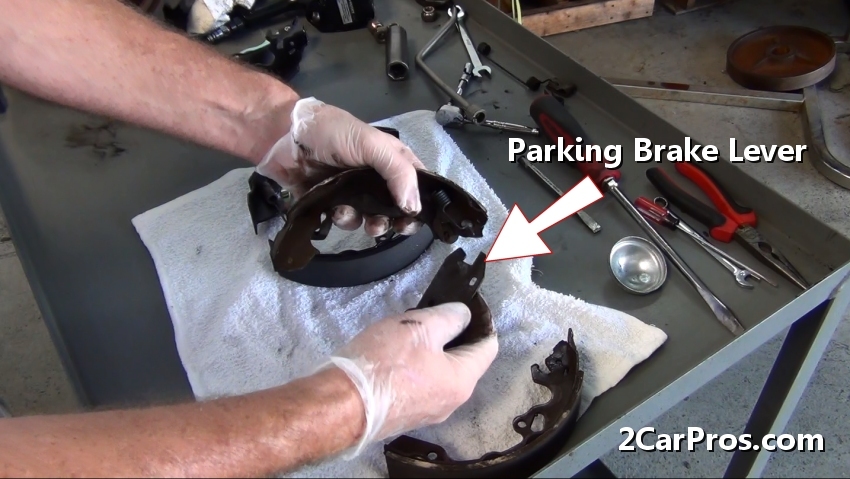
5. Reset the adjuster by pushing the adjuster wheel away from the pin and install it onto the new shoe along with the mounting spring, or twist the threads inward to make the adjuster as short as possible.
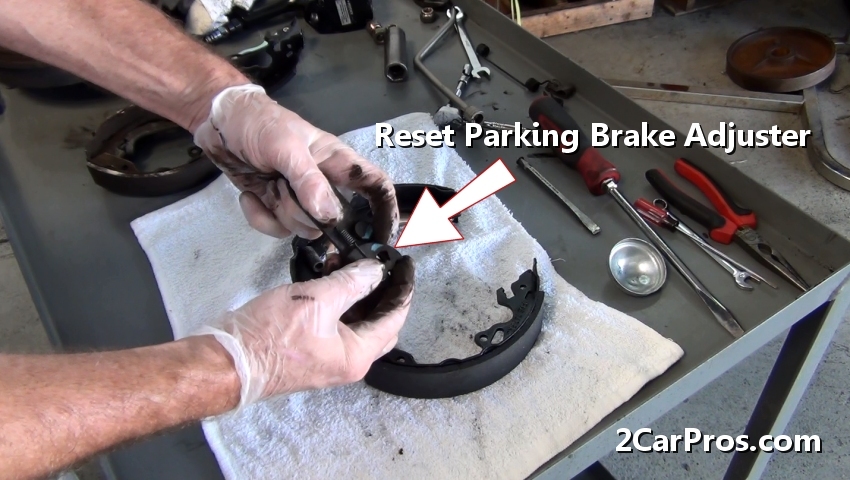
6. Once all necessary brake components have been swapped over the new shoe set is ready for installation.
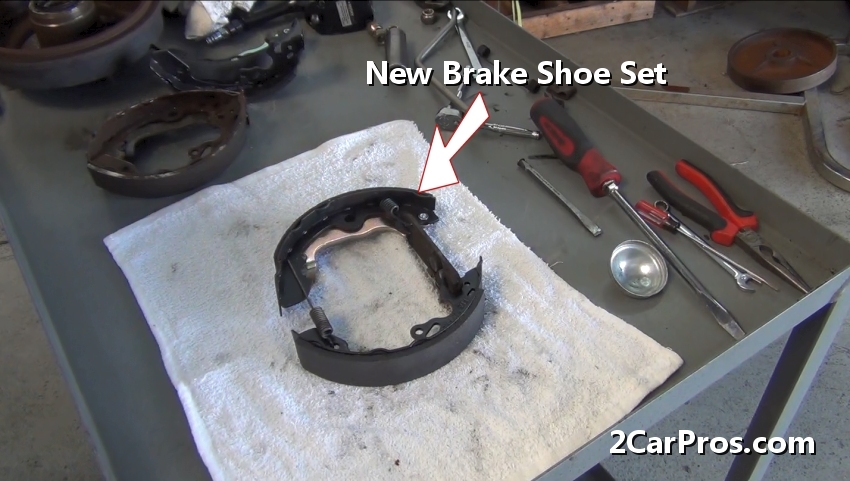
7. Before installing the new brake shoes use a pair of needle nose vise grips to grasp onto the parking brake spring holding it in place away from the cable end, this will help attach the parking brake lever with little effort.
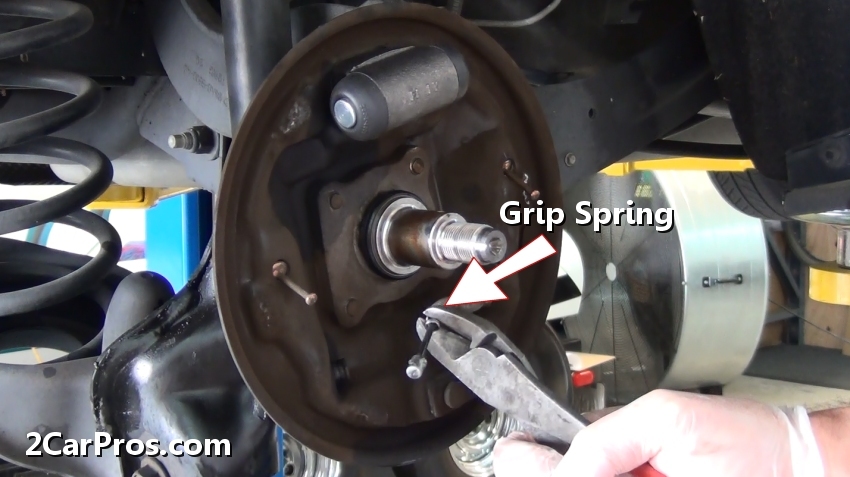
8. Reposition the shoe set onto the backing plate and over the wheel cylinder while holding the shoes in place, this is where a mechanic can use three hands.

9. While holding the brake shoes in place position and install the brake shoe retainer clips.
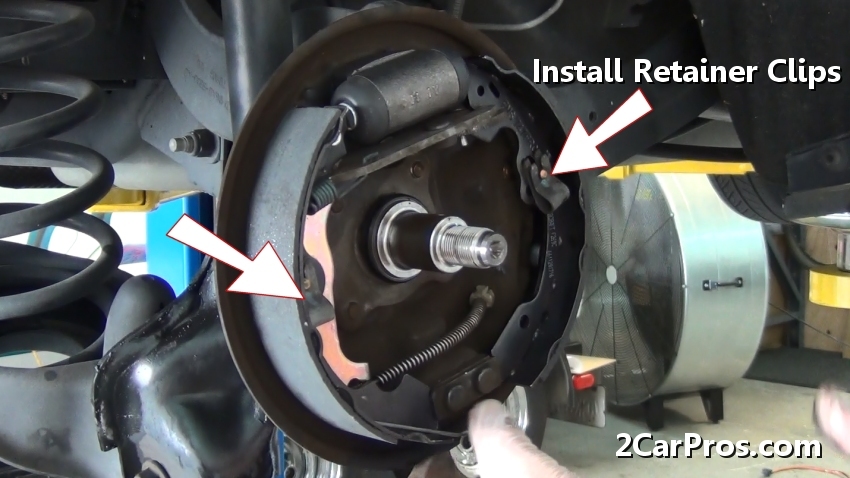
10. Once the retainer clips have been installed reposition and attach the lower brake spring using a pair of needle nose vise grips.
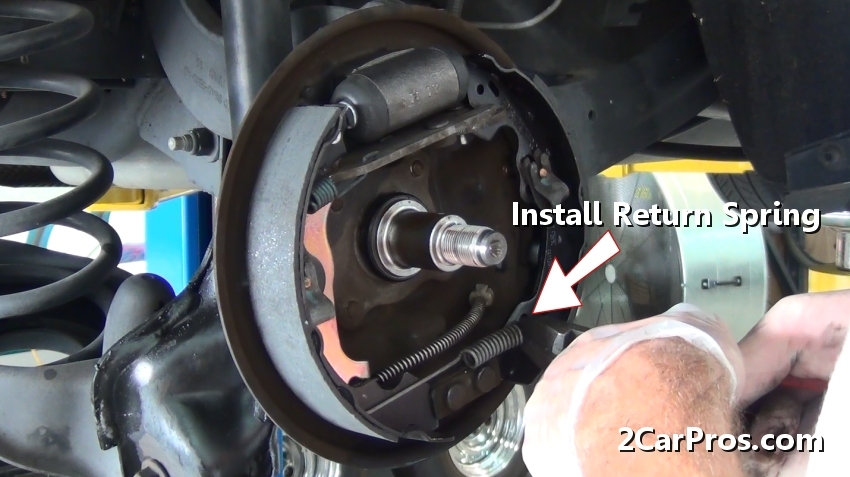
11. To complete the new brake shoe set reinstallation connect one side of the spring to the brake shoe. Attach it to the side that is easiest for you to get leverage on the opposing side.
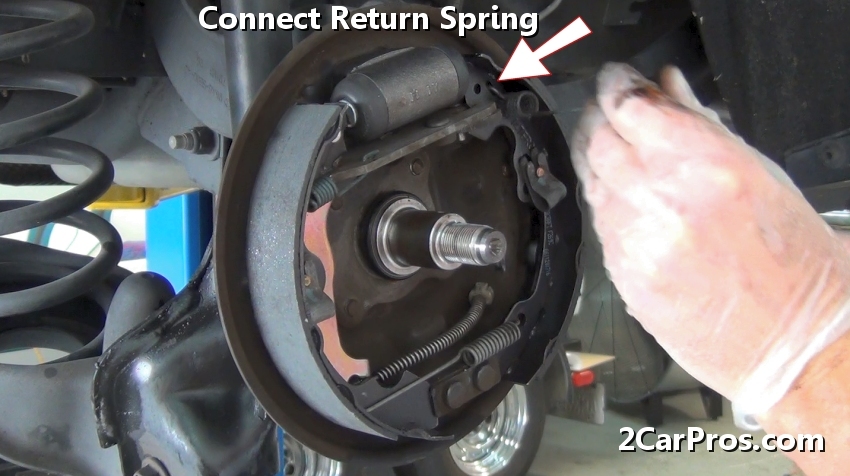
12. Using a pair of needle nose vise grips grasp the spring and pull in toward the secondary shoe, this completes the shoe assembly phase of your repair.
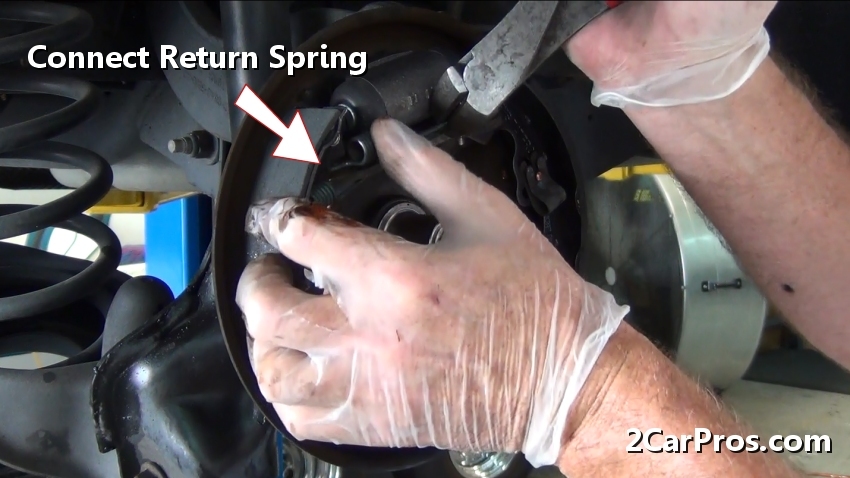
All brake shoes require a self a adjuster of some kind which must be reset and then re-adjusted when replacing brake shoes and then be fine tuned once the drum is reinstalled.
Reinstall Brake Drum
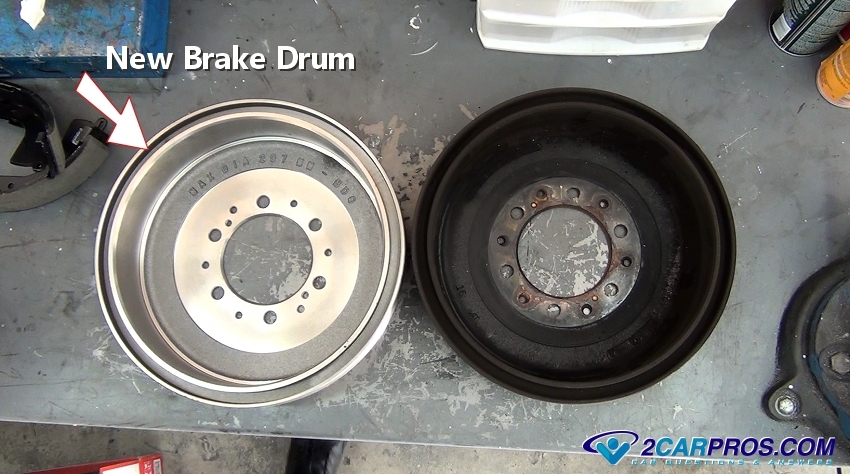
When replacing a brake drum match the new drum to the old one, they should be an identical match. All brake drums have a maximum diameter which is the limit of what it can be re-machined too. The more metal that is removed the less effective the drum will be in removing heat. This excess heat can cause brake fade and will make the drum warp and become out of round. This condition will cause the car to brake unevenly which is unsafe.
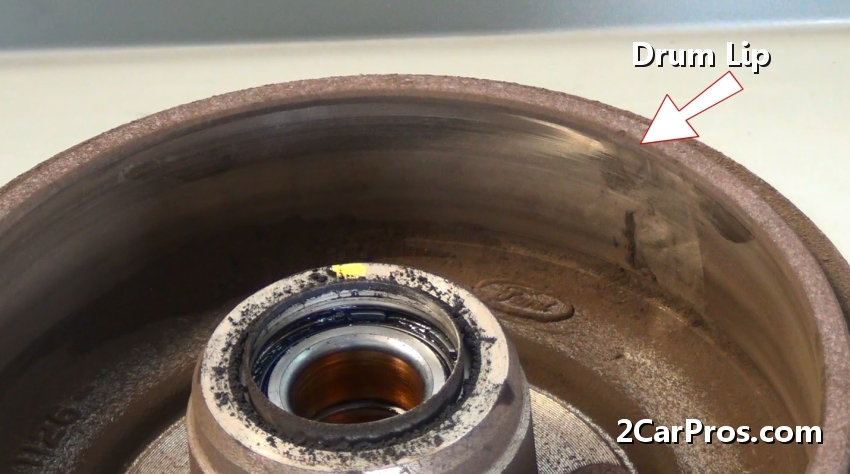
1. Before the brake drum can be reinstalled it must be replaced or re-machined to ensure a square surface for the new shoe to contact when braking. Here is an example of uneven wear (lip) which will affect the braking ability of the new brake shoes which are perfectly flat.
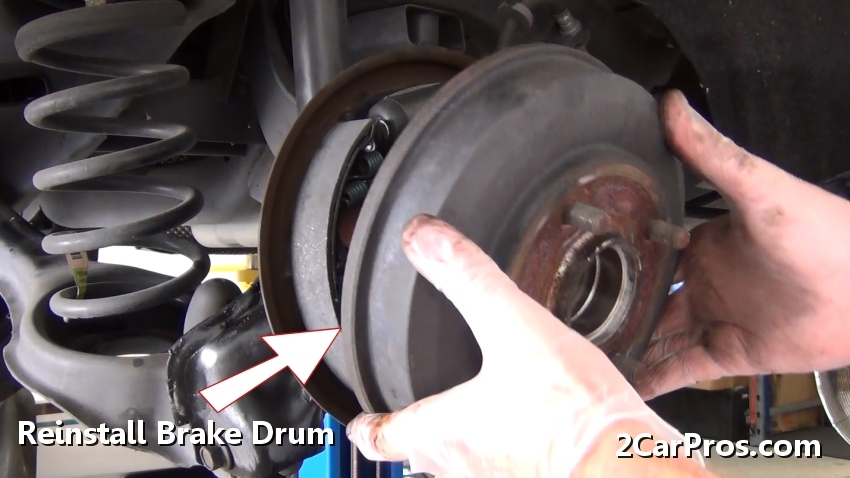
2. Reinstall the re-machined or new brake drum while spinning it, then move the shoe self adjuster outward slightly each time until you hear the shoe gently contact the drum. This process may need to be performed a number of times to fine tune the self adjuster. The drum should spin freely with slight contact with the brake shoes.
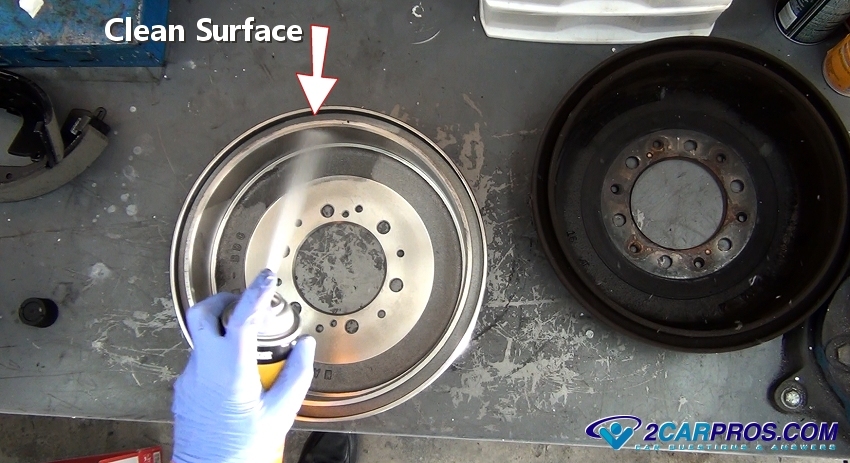
3. Use a clean shop towel and brake or carburetor cleaner to wipe out the drum's shoe surface.
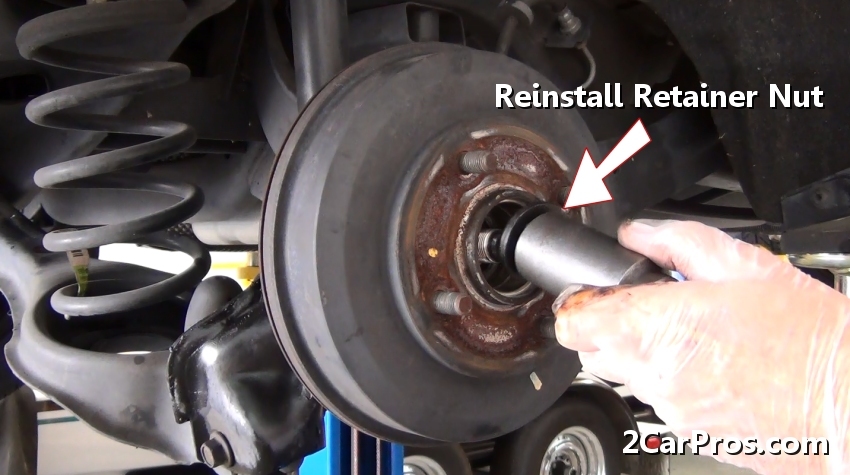
4. Once the drum has been installed insert the drum-bearing retainer nut by hand to avoid cross threading, (Some drum will just slide onto the axle with no nut required).
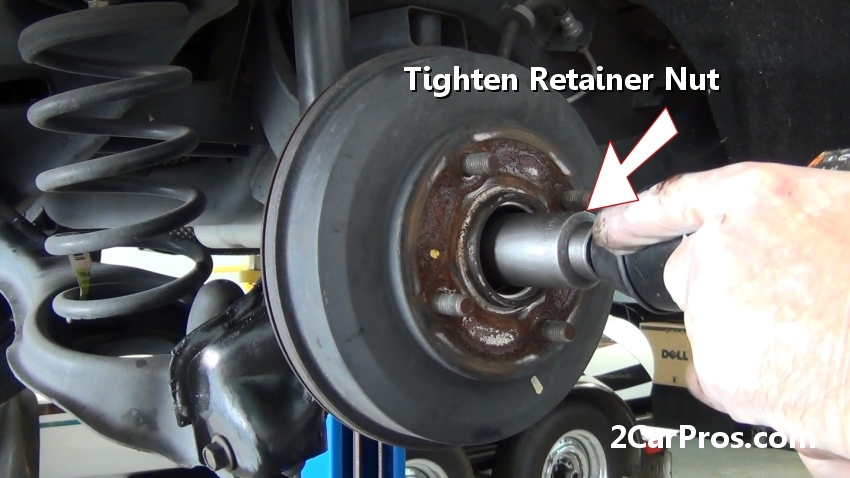
5. After threading the retainer nut onto the axle tighten it to manufacturer's specifications usually between 170 and 240 foot pounds of torque. At this point the brake drum should still spin freely with minimal contact to the brake shoes. If the brake drum does not spin the shoes are too tight and the drum must be removed to readjust the shoes inward.
WARNING: Don't think the shoes will just wear in, this is a mistake because the brake will heat up and expand which will make the problem even worse until the wheel stops turning altogether and locks up.
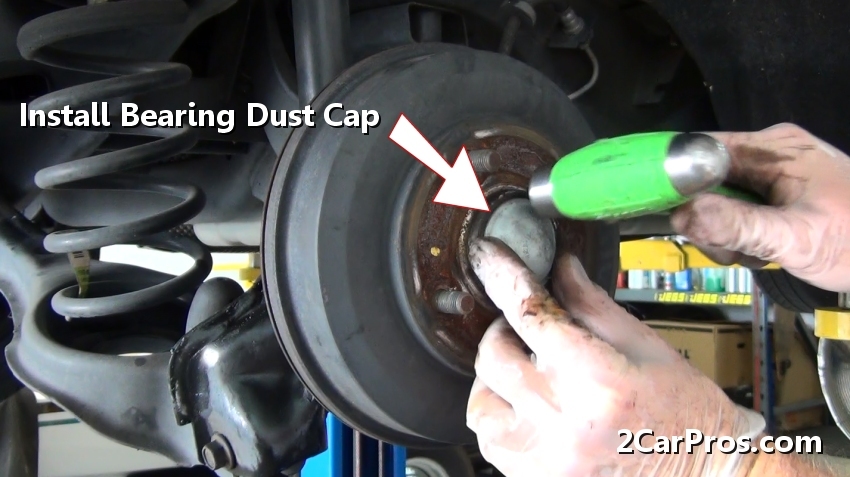
6. Reinsert the bearing dust cap by gently tapping it into place using a hammer. These caps are made of thin sheet metal and can bend and distort if hammered on to hard in which case they will lose their ability to hold onto the drum and must be replaced. Once competed on the both sides follow the guide on how to reinstall the wheel and remove the car from the jack stands.
Check the Brake Fluid Level
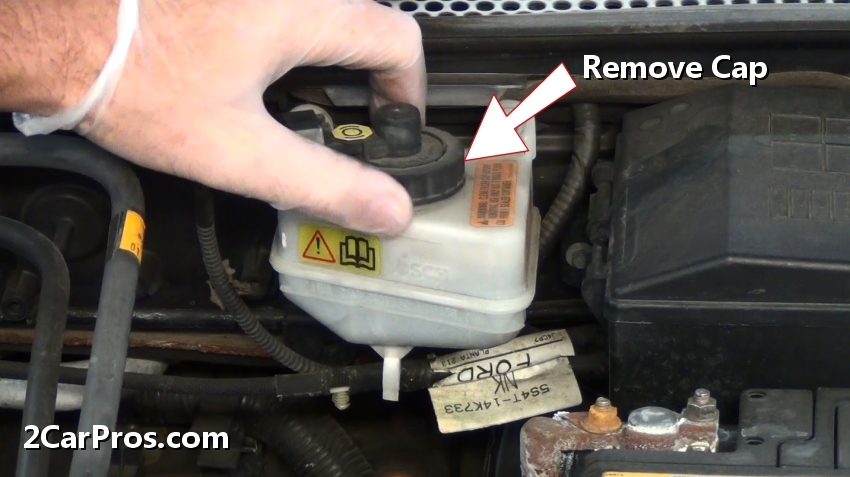
1. Lift the hood of the car and locate the brake master cylinder's fluid reservoir. Clean the top of the brake master cylinder using a shop towel then loosen and remove the lid.
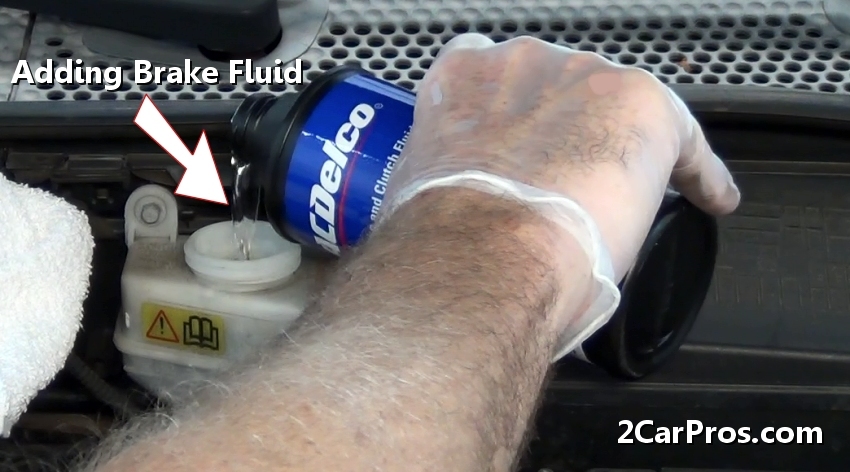
2. If the fluid level is low add brake fluid from a sealed container until the level reaches the fill line.
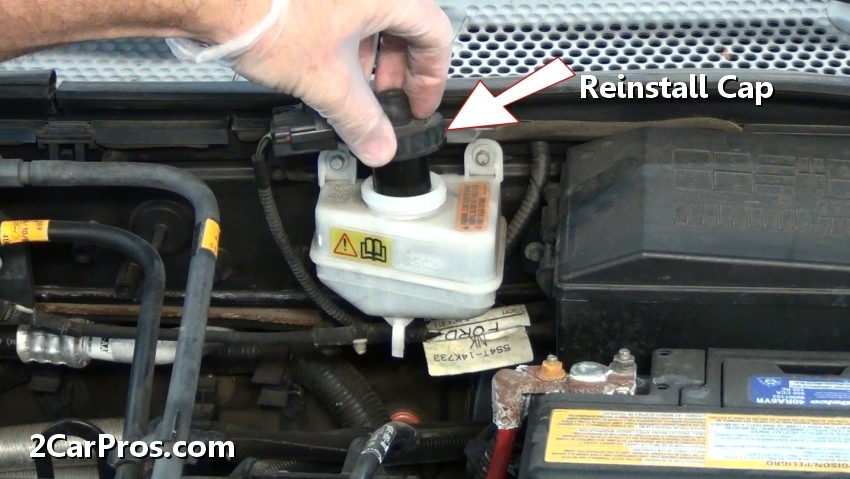
3. Reinstall and tighten the reservoir cap.
Set the Rear Brake Shoes
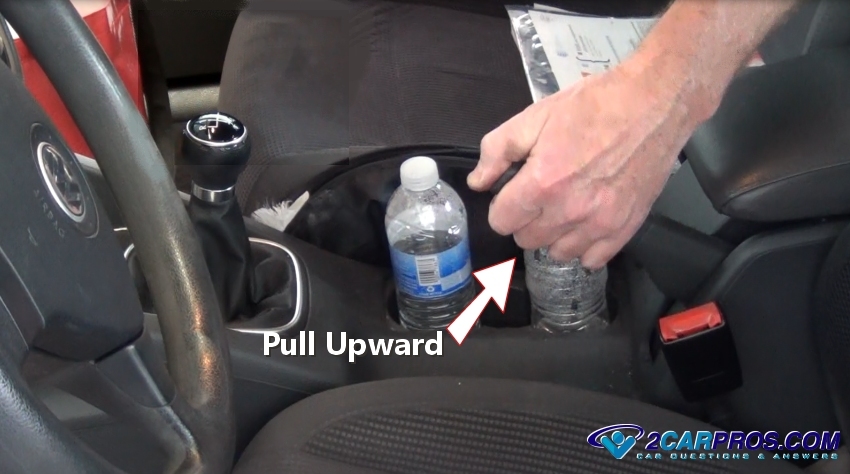
Once both wheels have been completed and the car is back on the ground the brake shoes are ready to be set to the drum, hold the brake pedal down and activate the parking brake lever several times. This operation will give the brake shoes a final adjustment automatically by actuating the brake shoe self adjuster. This will also increase firmness of the brake pedal.
Conclusion
- Bleed the brake system once the job is completed is case air has entered the system.
- Each brake shoe replacement varies and some applications require spring removal tools.
- Drum style brakes are more susceptible to moisture (water) which can decrease braking ability.
- When replacing brake shoes check the spring hardware (return and mounting) and replace if damaged or broken.
- On larger vehicles replacing the spring hardware is necessary every time the brakes are replaced.
- Some brake systems must be adjusted after assembly, these systems generally provide an adjustment slot which is used to manually turn an adjuster wheel to obtain proper shoe to drum clearance.
- Test drive the car and listen for abnormal noises which is a sign the job will need to be re-inspected.
Watch the Video!
Please watch this video of the job being done to glean additional helpful information.
Credits
This guide knowledge base was created by the 2CarPros Team, and by Ken Lavacot: Automobile repair shop owner and certified master automobile technician of over 30 years. If you have question or need help please ask one of our experts we are happy to help. Please visit our 2CarPros YouTube Channel for additional car repairs.
Article published 2024-07-15