Like any sub system in today's car a problem and be minor or a little more involved, this guide will help you find the problem and perform repairs. You can be the judge if this is something you want to do, or have a professional step in. It helps if you understand how an automotive air conditioner system works.
When the air conditioner is switched on three things begin to happen, the compressor, blower motor and vent actuators all receive an electrical signal to turn on. This causes the compressor clutch to engage while working the internal parts of the compressor pump. This pumping action compresses the refrigerant so it can circulate around the system. The following problems are presented in order of popularity.
Suggested Tools and Supplies
- Flashlight
- Test light
- Basic tool set
- Work gloves
- Protective eyewear
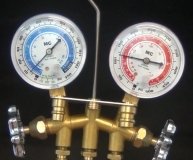
- AC gauge set - available on Amazon (starts at $25.00)
- AC recharge kit - available on Amazon (starts at $33.00)
Caution: Never loosen or undo any AC hoses or fitting before discharging the system of refrigerant.
Before You Begin
Start with the car on level ground, engine off with the transmission is park and the emergency brake set. Wear safety goggles and gloves for protection. Okay, now that you are ready let's approach this problem like a mechanic would.
Let's Get Started
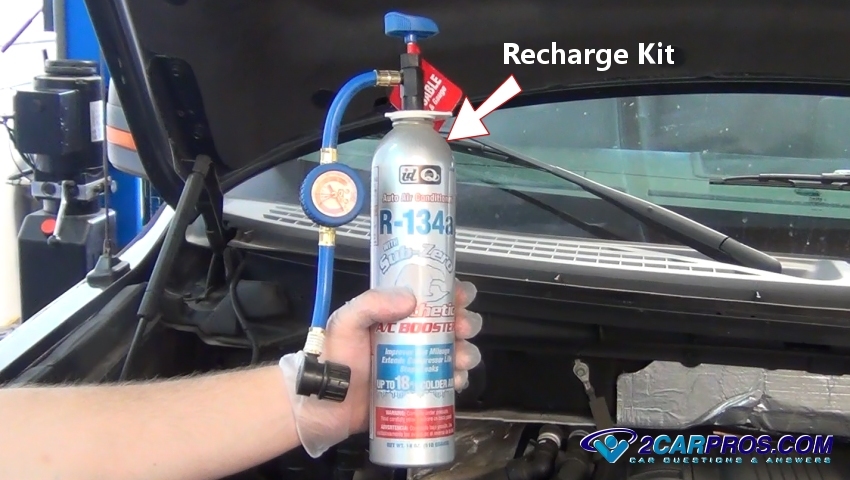
1. The number one reason for an air conditioner to stop working is lack of refrigerant. When this part liquid, part gas runs low the AC system is equipped with a pressure sensor that will shut the system down to protect the compressor. To check the refrigerant level, simply attach a recharge kit and add until the system turns back on, then top off the system according the the kit gauge and you are all set, AC recharge video. If the system works for a while but then stops working again you have a refrigerant leak that needs to be found and repaired.
2. If the refrigerant level is okay you need to check the HVAC (heating, ventilation, and air conditioning) system fuses. This system can use several fuses to run the compressor, blower motor, HVAC controller, blend door actuators, radiator/condenser cooling fans and auxiliary HVAC system. Located the fuses in question by checking the owners manual, fuse panel cover or ask one of our experts for free. If the compressor fuse is blown most of the time this problem is related to the compressor clutch coil, which needs to be replaced.

3. Locate the AC compressor which is located on the lower right or lower left front of the engine in most cases. Have a helper start the engine, and turn the AC system on full cold while you observe the compressor clutch. It should "click in" letting you know the compressor is engaged. If when you turn the air conditioner on there is a loud screeching noise or a rattling sound shut the system off because the compressor needs to be replaced.
Use a flashlight to inspect the clutch operation, it will be doing one of two things; first, it will be cycling on and off which means the system is low on charge, the condenser fan is not operating, or there is a blockage in the expansion or orifice tube.
If the clutch is doing nothing then its time to connect a gauge or charge kit to see if the system is completely flat or is just so super low on charge. When the system is low or overcharged pressure sensors tell the compressor to shut down while avoiding damage. On internal valve compressors i.e. German cars you must use a test light to see if the signal wire is getting power or not. This style of system does not cycle when it's low it just shuts down so its best to check the systems charge.
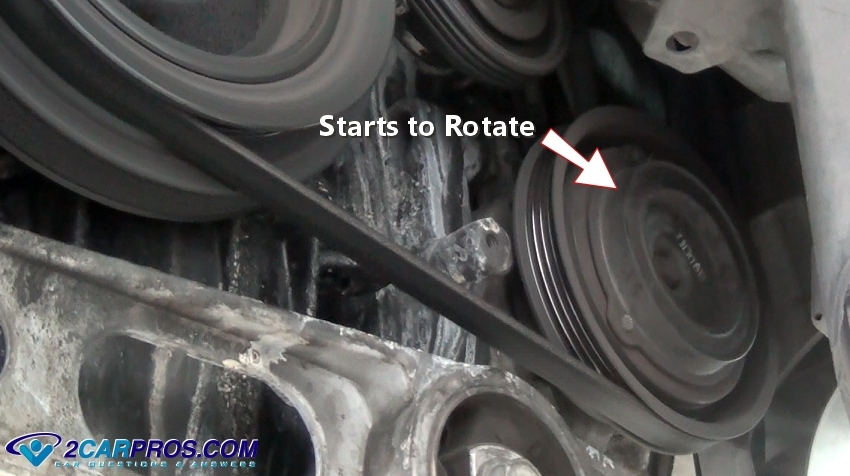
As you can see on this style of compressor the pulley hub where the clutch would be located is directly bolted to the input shaft of the compressor. These compressors have an internal valve which is located at the rear of the compressor to begin the process when activated.

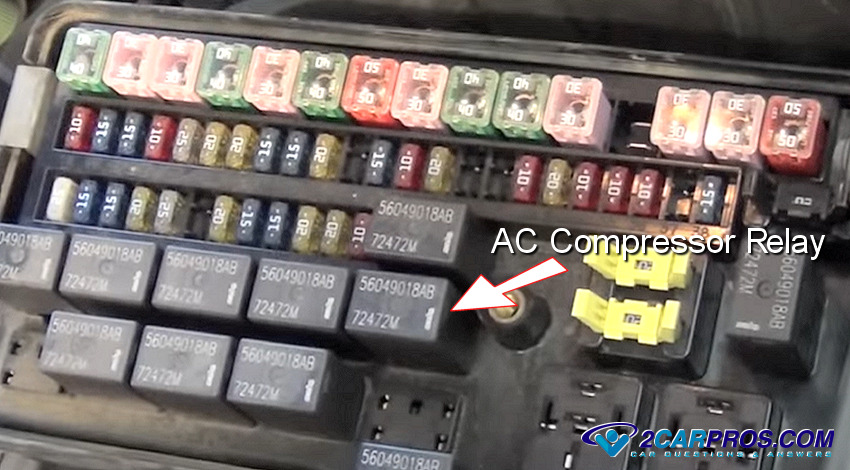
4. If the system has pressure and the fuse is good the next part in the system that has a high failure rate is the AC clutch control relay. This relay supplies main power to the compressor via the system fuse. Locate the relay in the fuse panel or power distribution center using the owners manual.
Once located, check the terminals of the relay for power and ground and then replace the relay to recheck the system. You can swap the relay for a similar one such as the power windows or door locks for testing, many of these relays are the same.
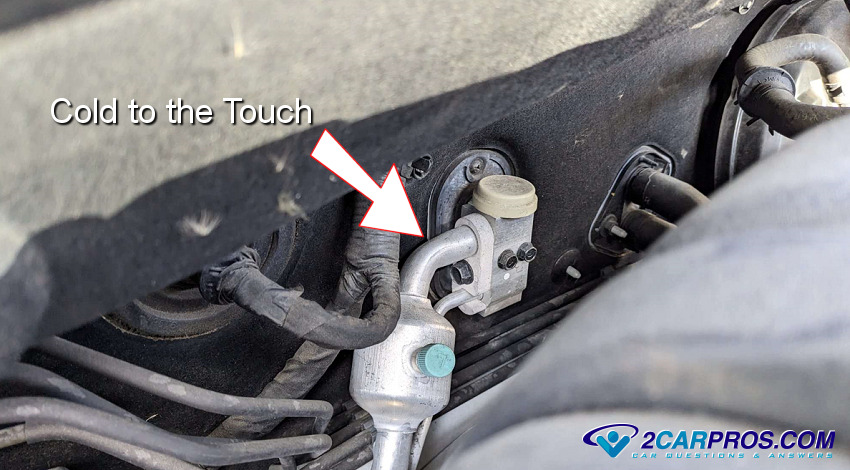
5. If the compressor is running and you still do not have cold air you need to connect an AC gauge set to check the charge and pressures to see what's going on, this is true for the style of compressor with no clutch. If the refrigerant level is okay and the compressor seems to be running the next step is to check the return hose or tube that comes out of the firewall and to the compressor.
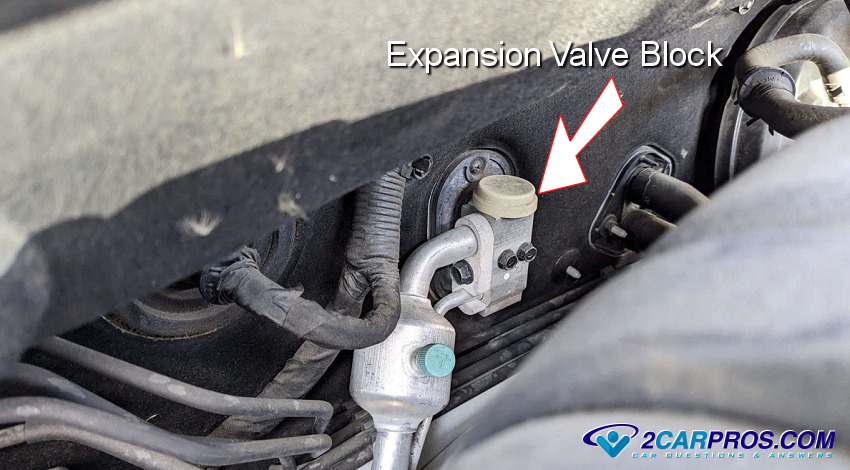
It should be cold to the touch with the system running, if not there is a problem with the expansion valve or the orifice tube which you should be able to see with the pressure gauges. This AC recharge video can help you.
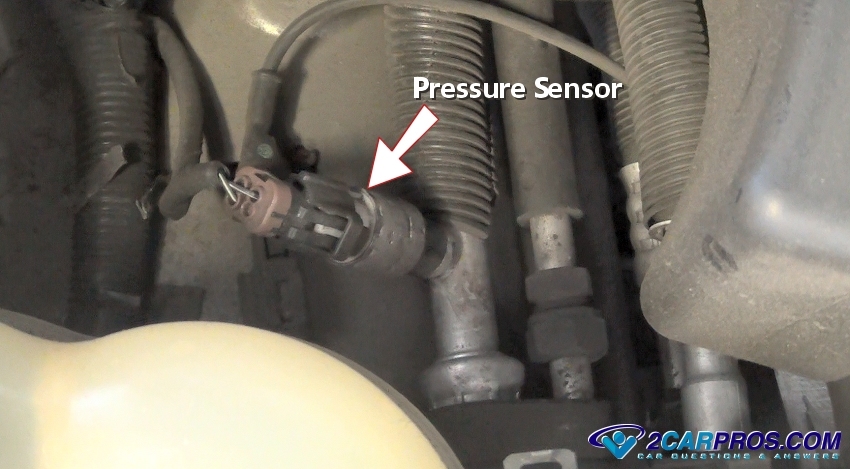
6. A pressure sensor is used to measure the amount of refrigerant is in the system. When this sensor goes bad the compressor will not turn on. To test this sensor remove the wiring connector and insert a jumper wire between the two terminals of the connector. If the compressor turns on the sensor is bad or the system is low. If nothing happens use a test light to see if there is 12 volts at one of the wires. If no power is present and the fuses are good suspect a failed climate control computer.
Not a Compressor (Refrigerant) Problem
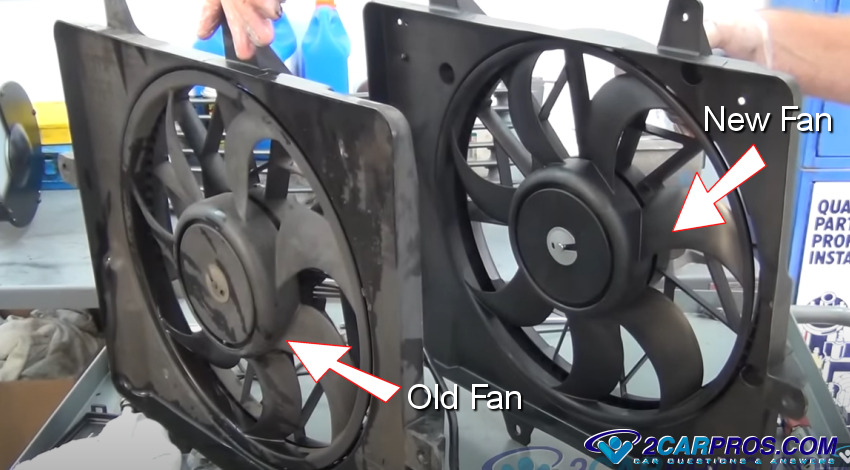
1. Anytime the air conditioner is on the radiator/condenser fan must run which pulls air over the condenser to help cool the refrigerant. This fan should turn on within a minute of the AC system being switched on. If the fan is not operating the air conditioner will not work, usually the cooling fan motor will burn out which needs to be replaced.
On some rear wheel drive vehicles a mechanical fan is used, with the AC system and engine running look to see if the fan is "freewheeling" which is an indication of the fan clutch needing replacement.
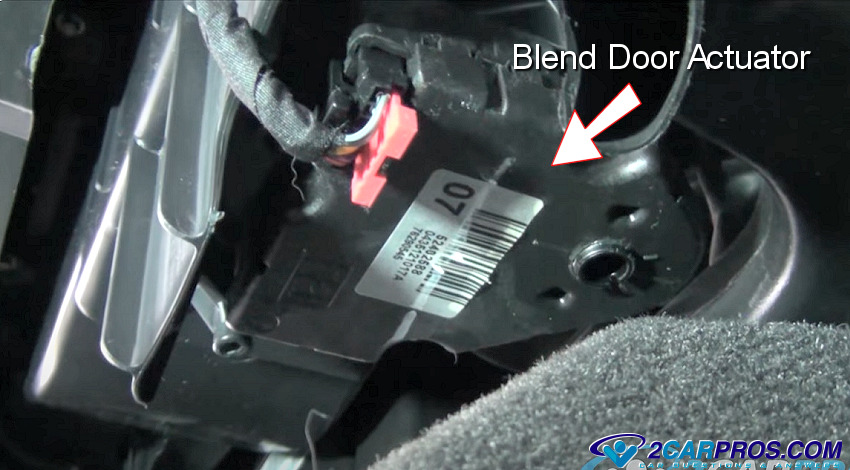
2. If the refrigerant side of the air conditioner is working but you don't feel cold air blowing out from the vents this typically means the temperature blend door actuator is bad, the location of this item will be in different locations for each manufacturer.
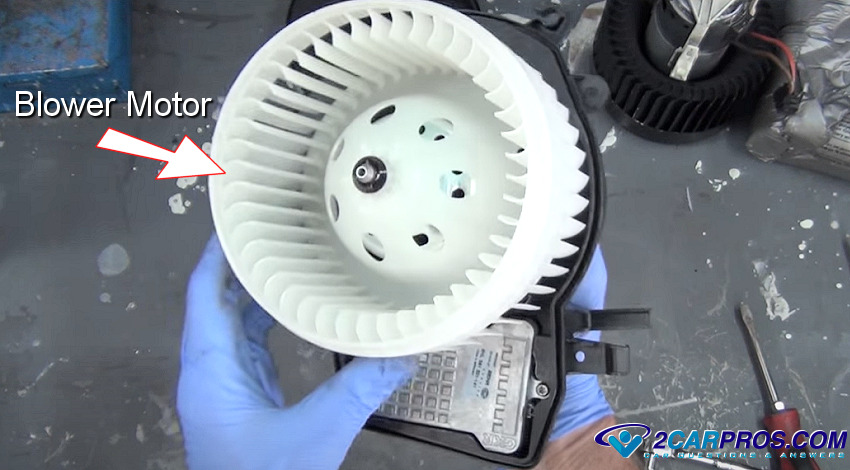
3. If air is not blowing from the vents it can be attributed to the blower motor or a mode vent control actuator. Here is how to tell which; start the engine and turn the air conditioner on. Next, move the fan setting to the highest speed setting, if you can hear nothing there is a problem with the blower fan. If you do hear the blower motor working then the mode actuator needs to be replaced.
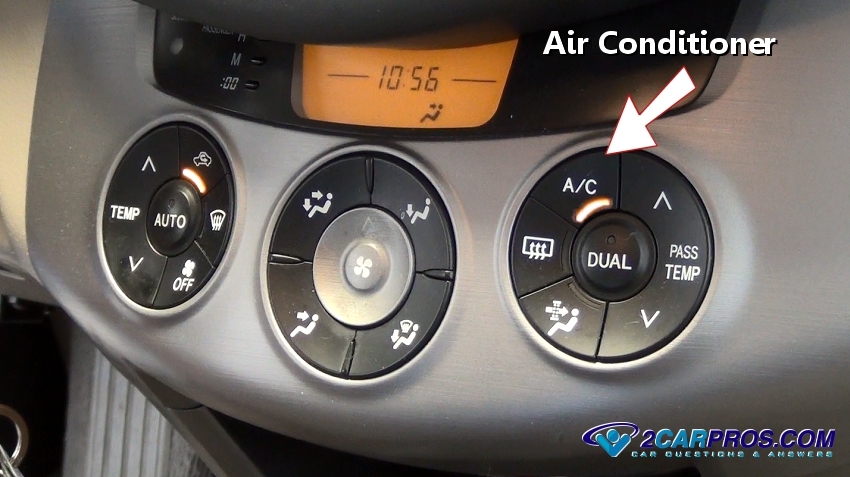
4. Observe the climate control panel to see if there are any blinking lights that indicates there is a failure in which a code must be read. This should be done using a CAN scanner, once the code is identified and repairs made clear the codes and the system should start working.
5. If the engine is overheating or low on coolant, the air conditioner will be weak or not work at all. If you have been driving for sometime and you noticed the system stops working the first thing to check it the engine temperature gauge or warning light.
6. If you have perform all of this tests above and the system is still not working a pin to pin voltage and continuity check is in order. This test sounds harder than it is, using a wiring diagram for you car you basically you are required to test each wire for power or ground, and then continuity to make sure each wire is fully connected.
Watch the Video!
Please watch this video of the job being done to glean additional helpful information.
Credits
This guide knowledge base was created by the 2CarPros Team, and by Ken Lavacot: Automobile repair shop owner and certified master automobile technician of over 30 years. If you have question or need help please ask one of our experts we are happy to help. Please visit our 2CarPros YouTube Channel.

Article published 2024-04-15
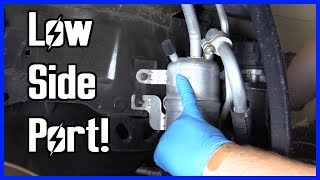
How to Find Low Side A/C Service Port