Will start and then shuts off?

Tiny
BEETLEPUNK21
  • MEMBER
  • 2010 FORD F-150
  • 5.4L
  • V8
  • 4WD
  • AUTOMATIC
  • 250,000 MILES
I just bought this truck at an auction, so I know nothing about it.

It’s possible that it had run out of gas. The tank was empty, so I filled it about 20%.

I tried starting it probably about 20 times. It would start but then immediately die every time.

I noticed that I could give it some gas as I'm starting it, and it would rev up as I'm pumping the gas pedal but would eventually quit running.

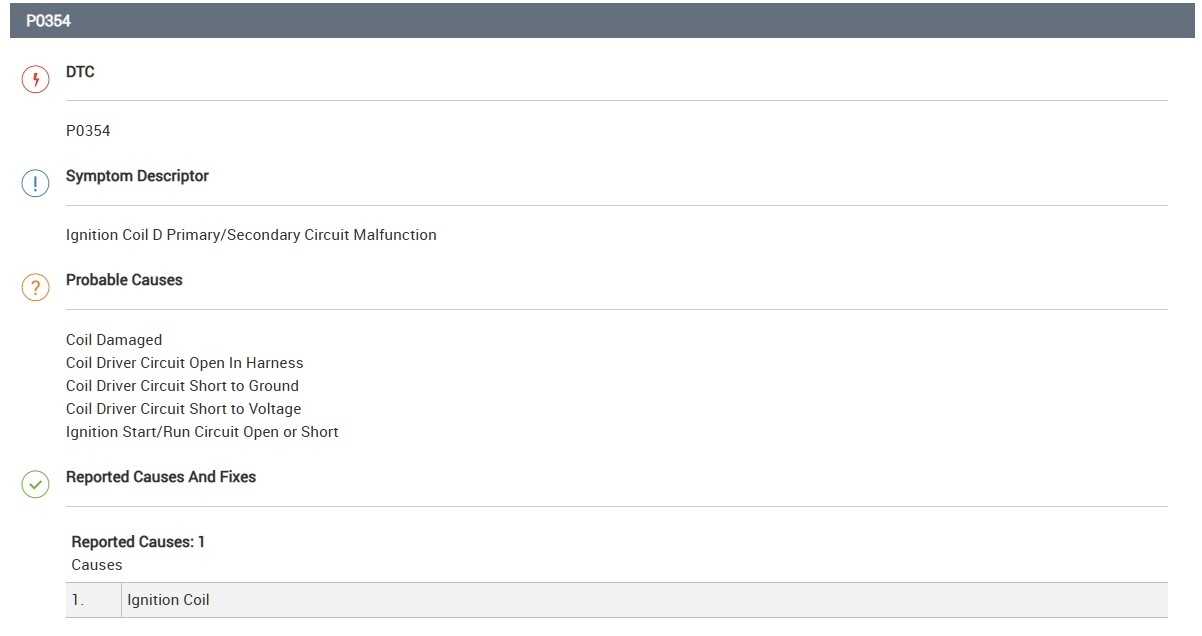
There were no fault codes except for one. P0354 for ignition coil D. But I would think that would not keep it from starting and running, right?
Saturday, February 22nd, 2025 AT 2:33 PM

10 Replies

Tiny
AL514
  • MECHANIC
  • 5,550 POSTS
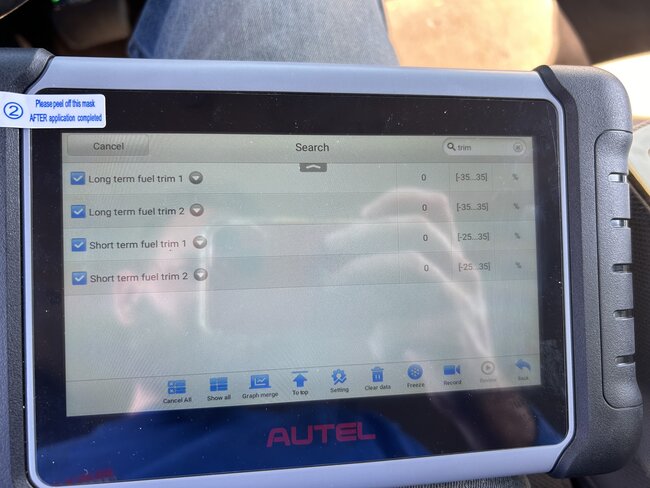
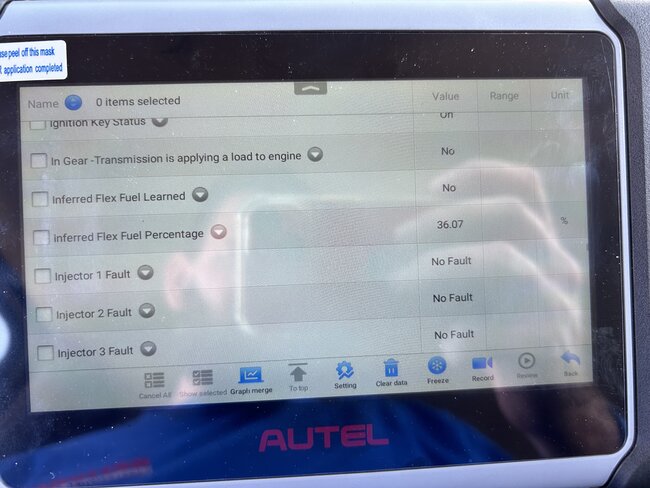
Hello, sorry to hear about this issue, service info has it listed as a Flex Fuel vehicle, so if you have a scan tool, go into the live engine data and look at the data PID for the "calculated flex fuel composition", if its reading higher than even 30-40%, try resetting the Flex Fuel calculator". This will bring the fuel strategy back down to a relearn value and the PCM will relearn the E85/gas mixture, right now if the Flex Fuel percentage is very high and there is regular gas in it, such as 87 octane, the PCM doesn't know there is regular gas in the tank, it only knows what its learned fuel strategy is right now. So, try that first. A clue to if that composition is off is the Long Term and Short Term Fuel Trims will go very negative (-25%) because the air/fuel mixture is different when E85 is added, Ill post the code info on the coil D code setting, but no that should not prevent it from starting. It actually may be a result of the flex fuel calculation being off, if the engine runs super lean like it can in these situations the coils can overheat due to a lean mixture.
The Flex Fuel reset will be under special functions or an option like it on a capable scan tool.
Was this
answer
helpful?
Yes
No
Sunday, February 23rd, 2025 AT 9:59 AM
Tiny
AL514
  • MECHANIC
  • 5,550 POSTS
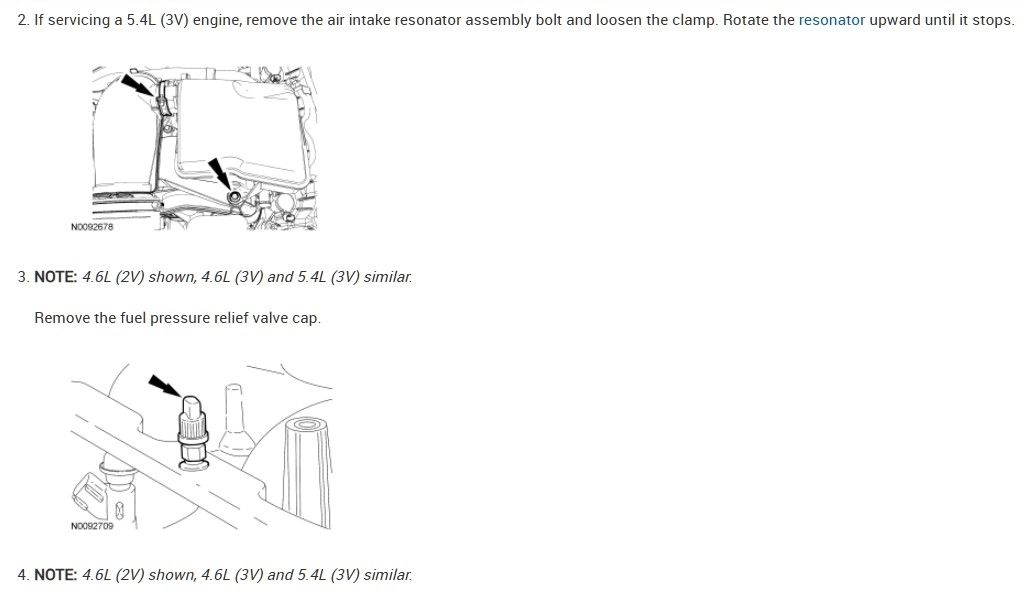
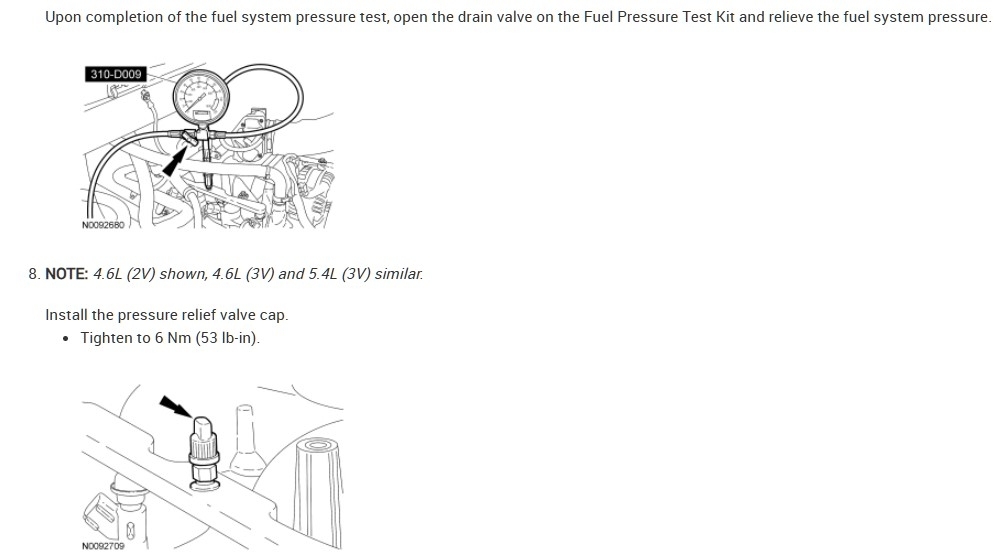
Checking the fuel pressure is also very easy on these Fords, this doesn't look like it has a high pressure fuel system, if you see steel fuel lines going to the direct injection fuel injectors, that's a high pressure system and needs to be addressed differently due to the high amount of pressure those systems run, checking the fuel pressure with a scan tool is the first step.
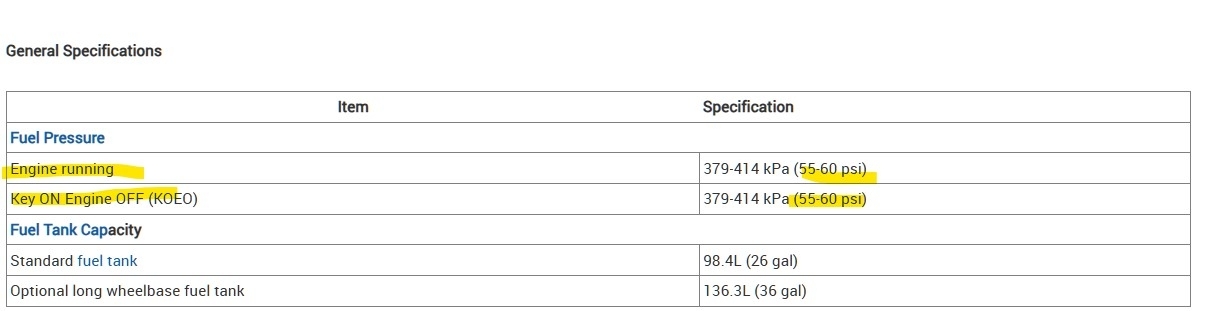
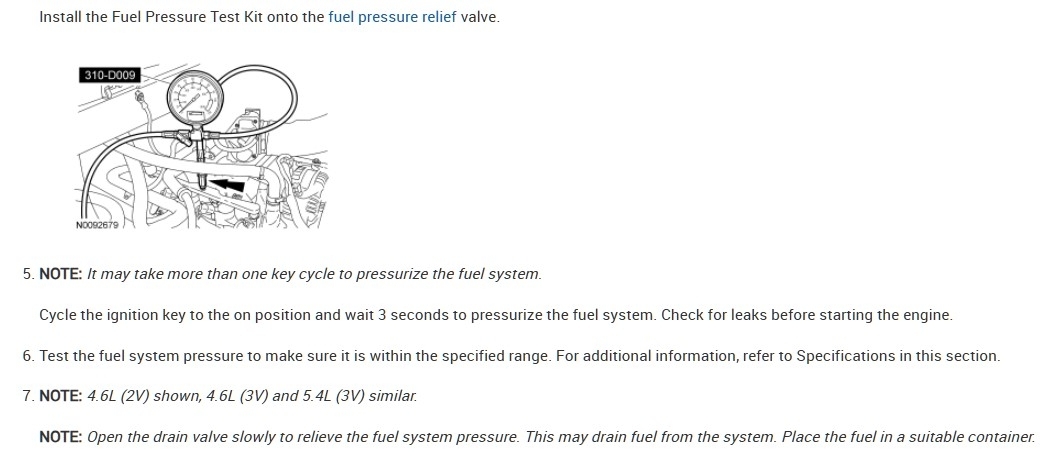
If there is a small cap on the fuel test port located on the fuel rail, and conventional port injections plastic fuel injectors, it's a low-pressure system. Under the small cap, there is a screw on adapter with a valve inside that is depressed when screwing on a fuel pressure test gauge. Key On the system should prime for 2 seconds up to 55-60PSI, and it should hold that pressure, if you see the pressure drop off quickly, it may be that the check valve in the fuel pump assembly is stuck, and pressure is just leaking back into the tank.

But on these systems most of time the engine will run, I have seen them run with bad check valves in some cases, and then not in others, but checking the fuel pressure would be a next step after looking at the Long Term and Short Term Fuel Trims and Flex Fuel cal, If the engine is running out of fuel, you should see the Fuel Trims go very high as the PCM tries to keep the engine running. The diagrams below 1-4 are for checking the fuel pressure.

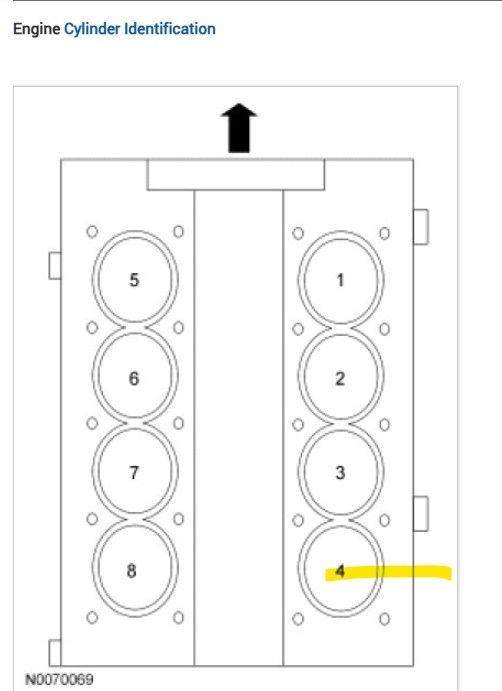
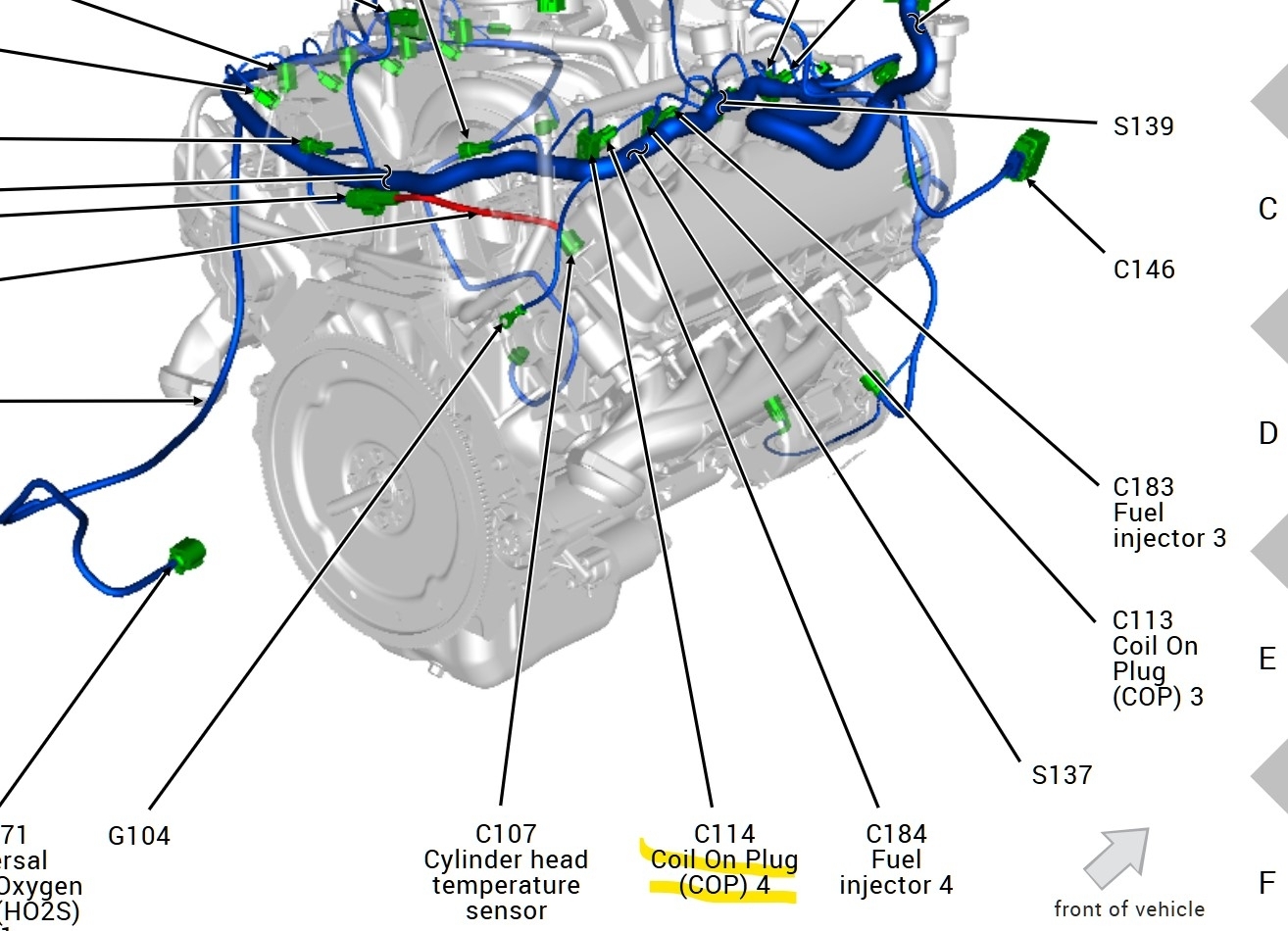
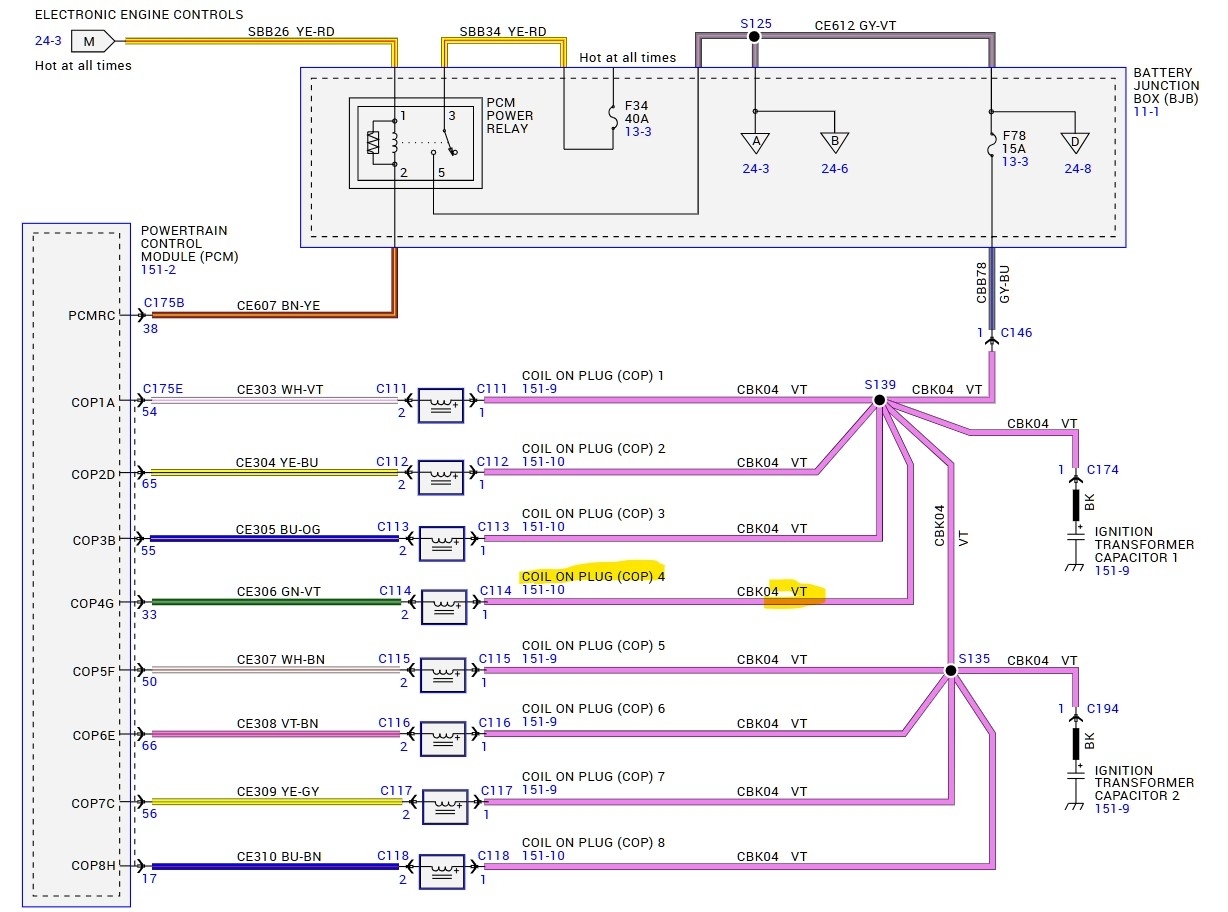
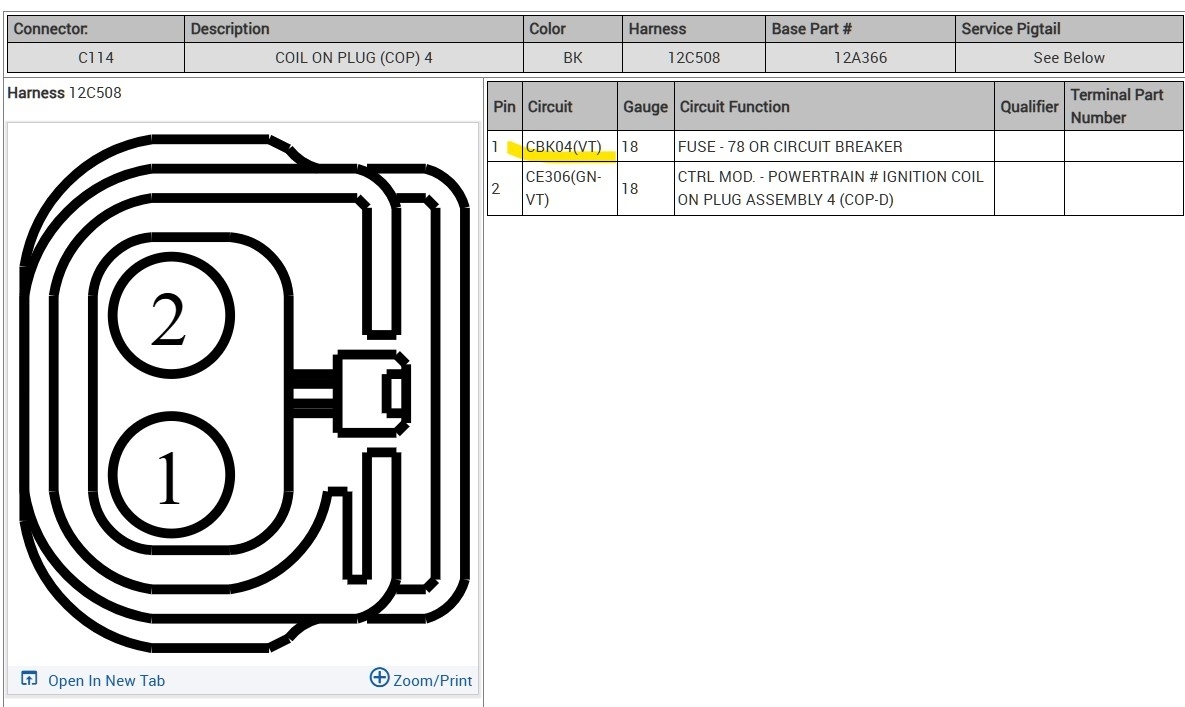
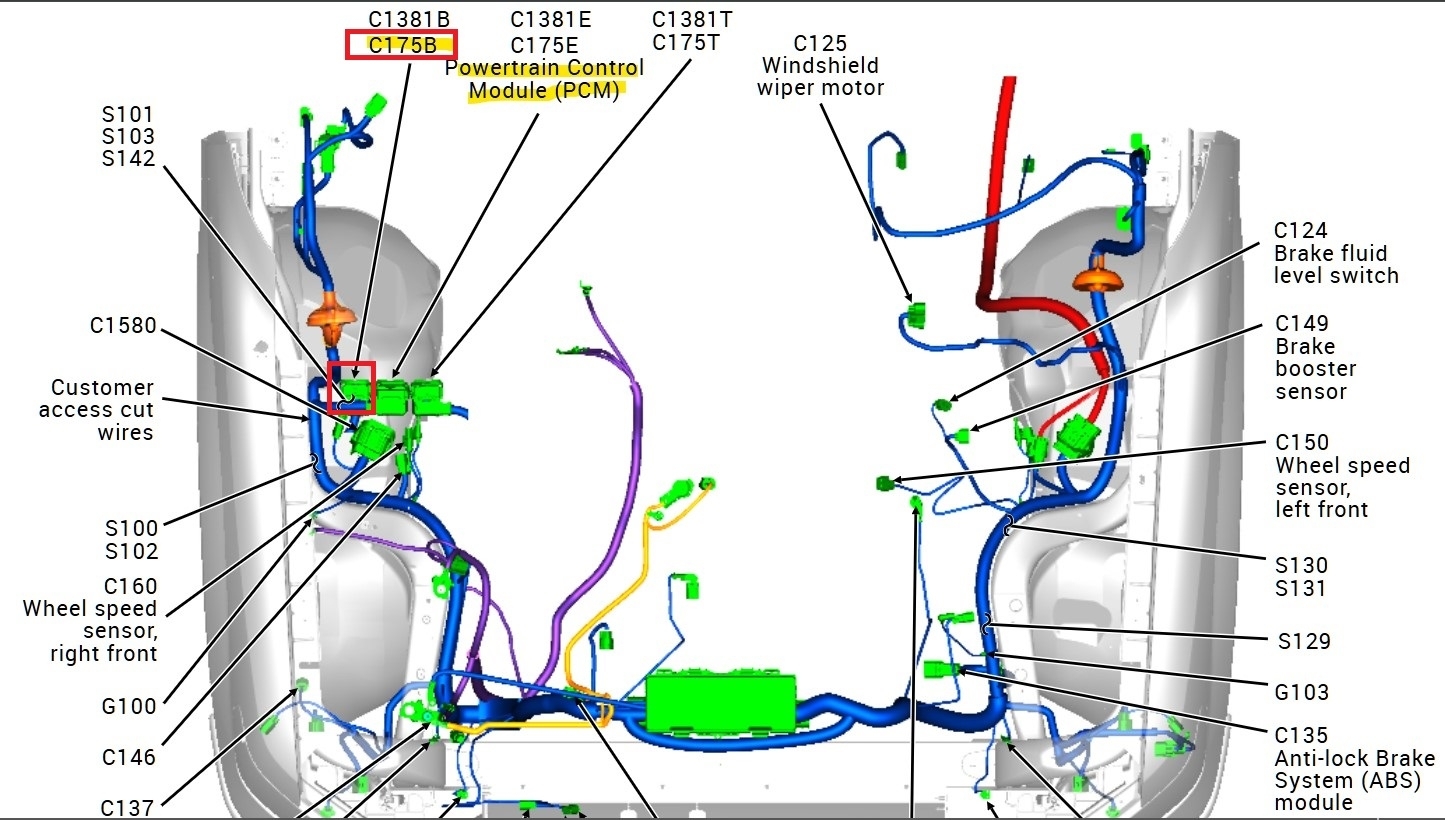
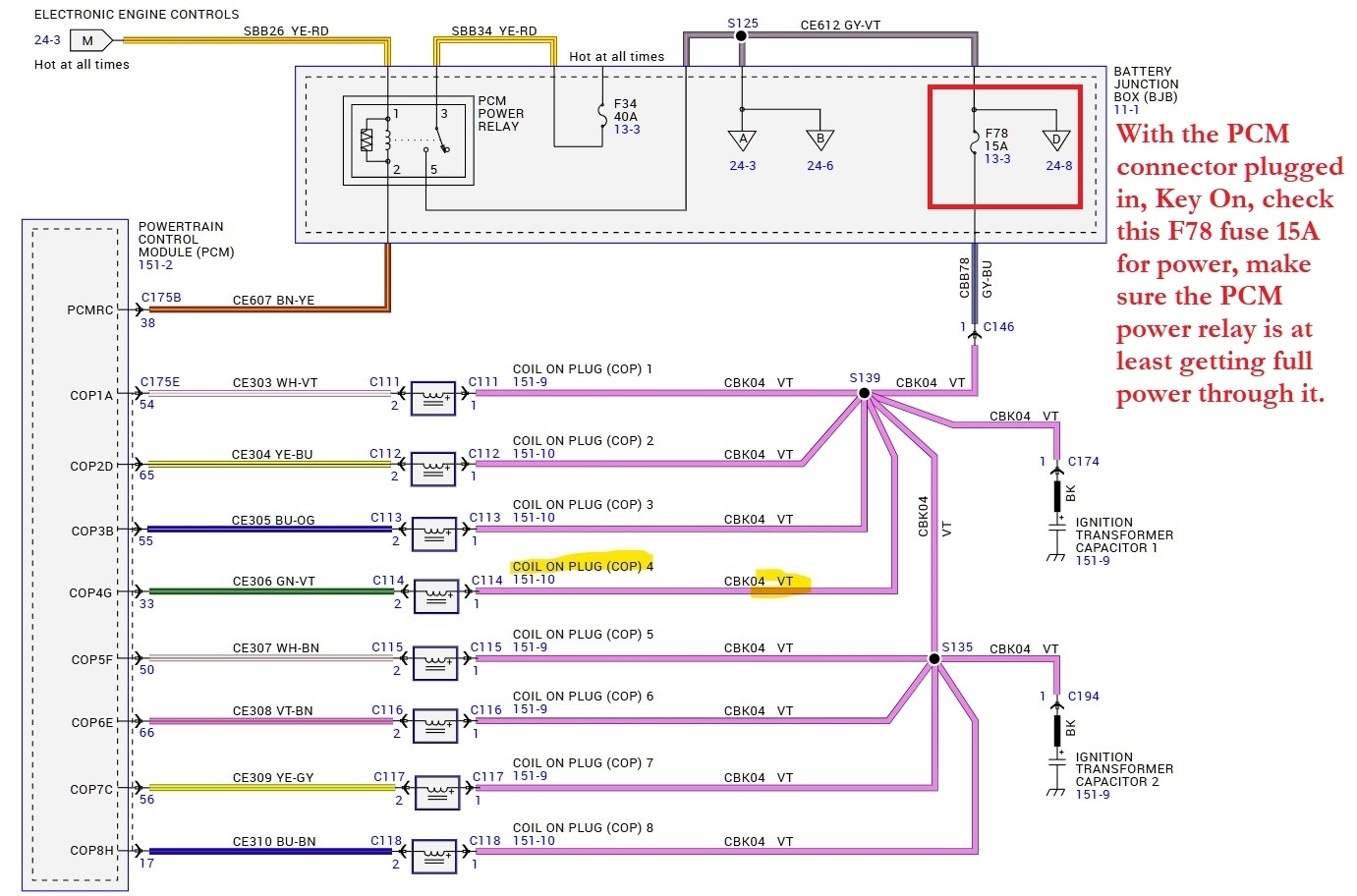
As for the P0354 code, I would check for spark out of that coil, if its accessible, disconnect the electrical connector, pull the coil out, plug its electrical connector back on and use a spark check tester, the adjustable type is best but you're just checking for basic coil operation first. The guide below will help. Diagrams 5-10 are for the coils, it should be a 2-wire coil, the Violet(purple) wire should have battery power with the key On, the other wire is the control wire that goes to the PCM and is ground side controlled. Make sure the pins inside the harness side of the connector are tight and not corroded. Cylinder 4 is going to be the cylinder on the back of the engine to the left when facing it. They can be difficult to get to sometimes in the back, some brackets may need to be unbolted or removed to check for spark on the coil.

https://www.2carpros.com/articles/how-to-check-fuel-system-pressure-and-regulator

https://www.2carpros.com/articles/how-to-check-for-ignition-spark
Was this
answer
helpful?
Yes
No
Sunday, February 23rd, 2025 AT 11:16 AM
Tiny
BEETLEPUNK21
  • MEMBER
  • 146 POSTS
I have an Autel MP808 and I was able to read some live data but not able to reset the flex fuel or read the fuel pressure through the scanner. I will attach photos of what I found.

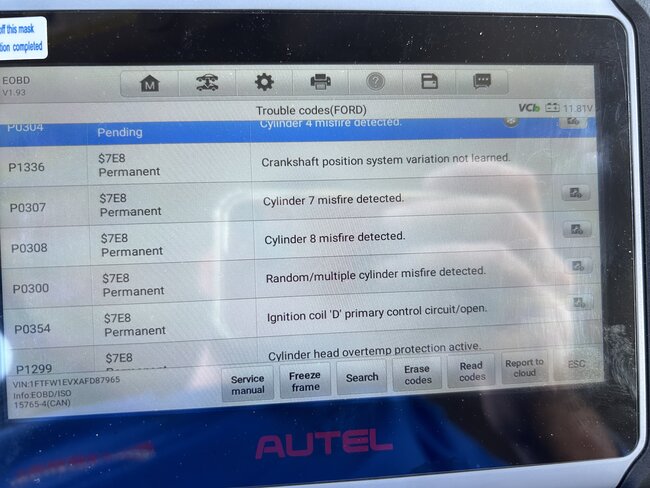
I also was able to keep the engine running by heavily pressing the gas pedal long enough to pull some more codes. Multiple misfires. I will attach that photo as well.

I’m assuming with the high mileage, do you think this engine is shot?
Was this
answer
helpful?
Yes
No
Sunday, February 23rd, 2025 AT 1:29 PM
Tiny
AL514
  • MECHANIC
  • 5,550 POSTS
I wouldn't call an engine on it yet, some of that data looks a bit odd to me, the Inferred Flex Fuel percentage looks a little high, did you put just 87 octane in it, not E85 correct? And the fuel trims all at complete 0%, along with the crankshaft variation not learned suggests either the Keep alive memory is not staying powered up, and/or the engine is just not been running long enough to even go into Closed Loop operations, Another thing is with all these misfire codes, the PCM may be disabling each of the injectors for those cylinders to protect the Cat from being damaged by raw fuel dumping down the exhaust. So, there's a lot going on here that looks out of place.
The P1299 Cylinder head over temp protection active is another code that might be preventing it from going into a correct fuel strategy or possible ignition timing, Ill have to look up that code setting criteria and see what it actually does.
But we can start with seeing if the PCM is getting its memory power at all times. And the crank relearn procedure is a must.
Do you hear any timing chain noises when it's starting up? The camshaft phasers are known for causing all kinds of issues on these, especially if the timing chains were done and it wasn't OEM Ford parts.
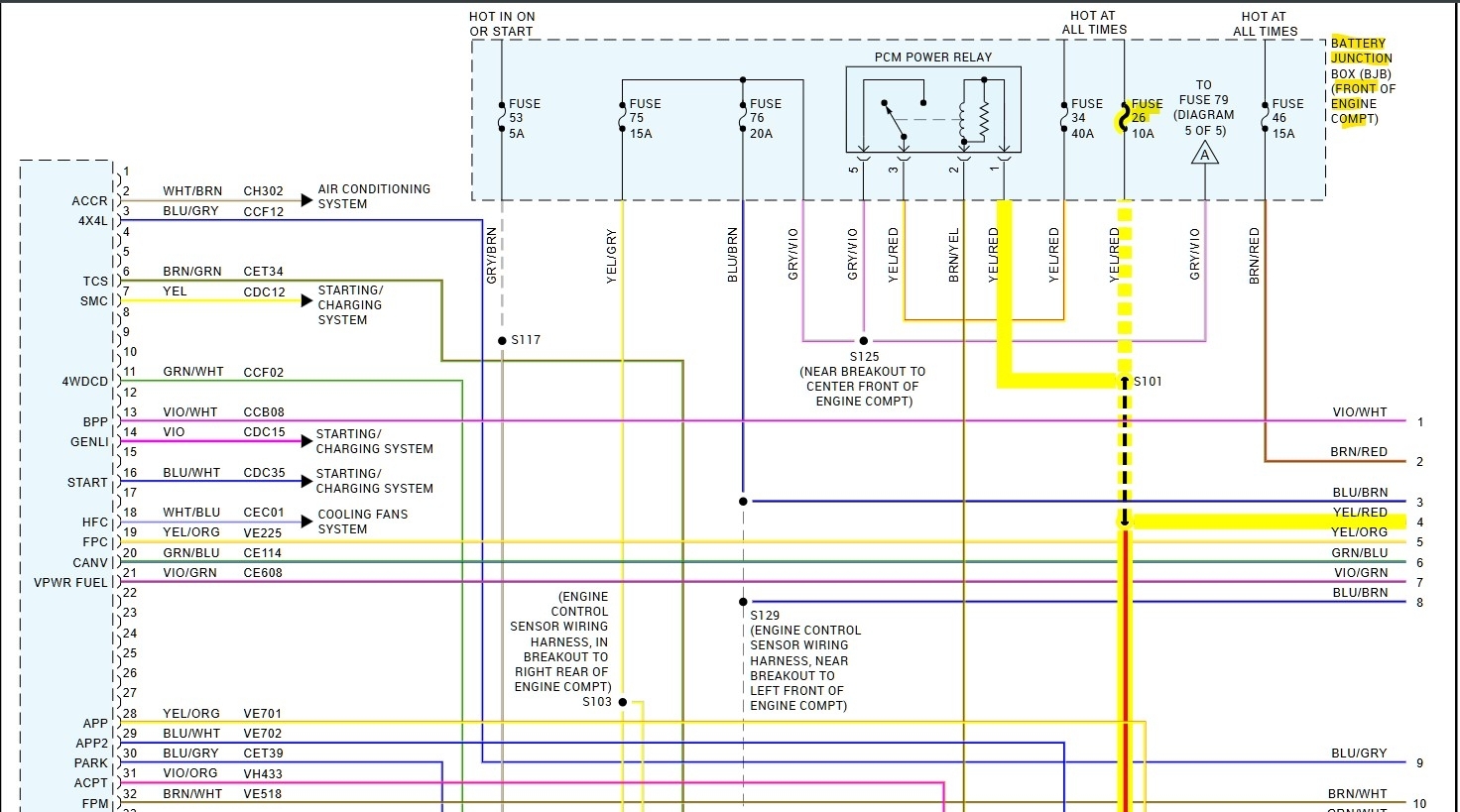
Your battery voltage is low as well, 11.81v. Let me grab some wiring diagrams so you can check the keep alive memory fuse.
Was this
answer
helpful?
Yes
No
Sunday, February 23rd, 2025 AT 3:54 PM
Tiny
AL514
  • MECHANIC
  • 5,550 POSTS
In the morning, or when it has cooled off enough, check to see if the coolant level is full as well. On these more modern vehicles, even a 2010, I now use a vacuum fill method for cooling systems, which pulls the entire cooling system into a vacuum, therefore pulling all the air out, then drawing in coolant in without allowing any air to enter in, it's so much more effective, especially on these Fords.
Was this
answer
helpful?
Yes
No
Sunday, February 23rd, 2025 AT 4:02 PM
Tiny
AL514
  • MECHANIC
  • 5,550 POSTS
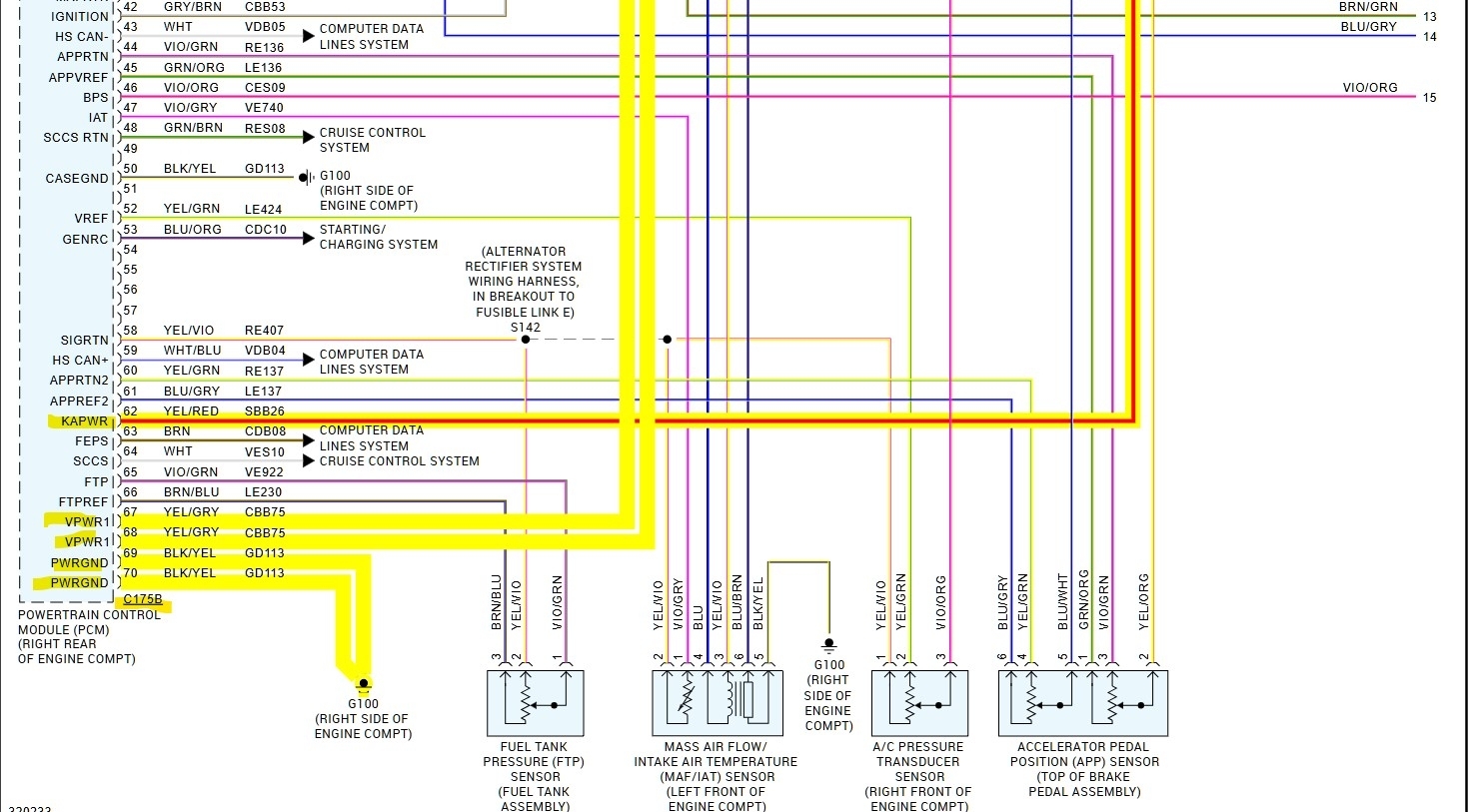
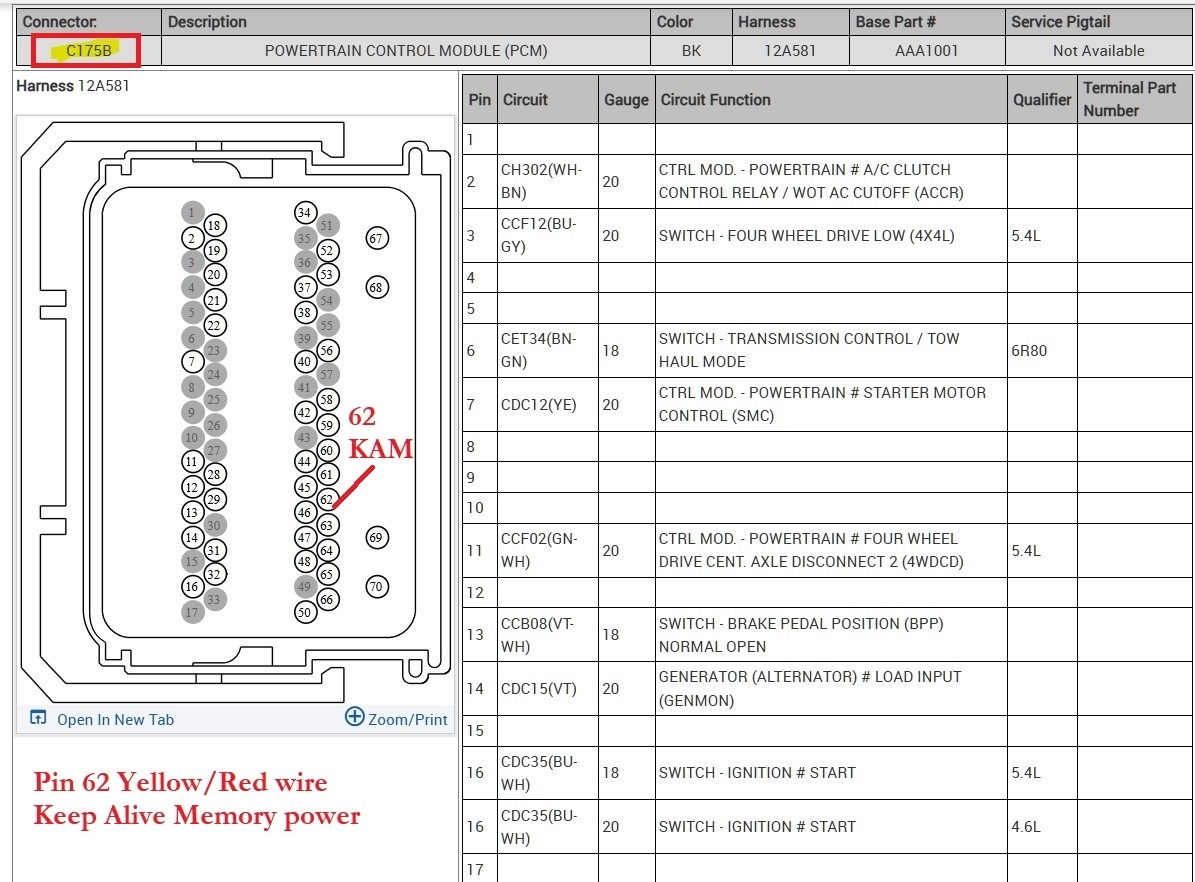
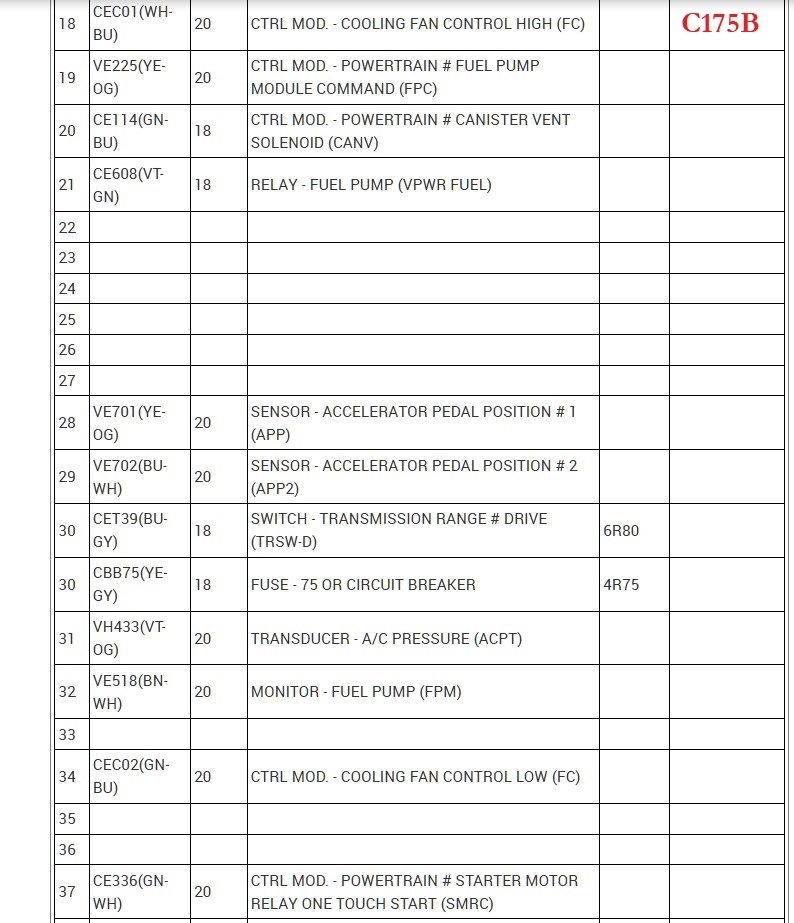
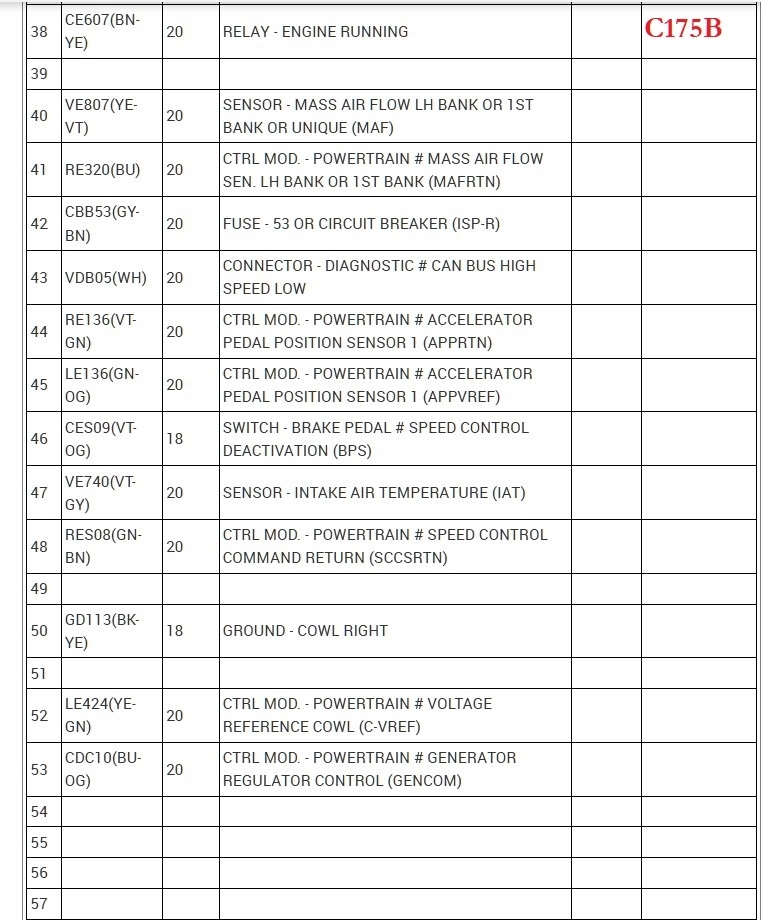
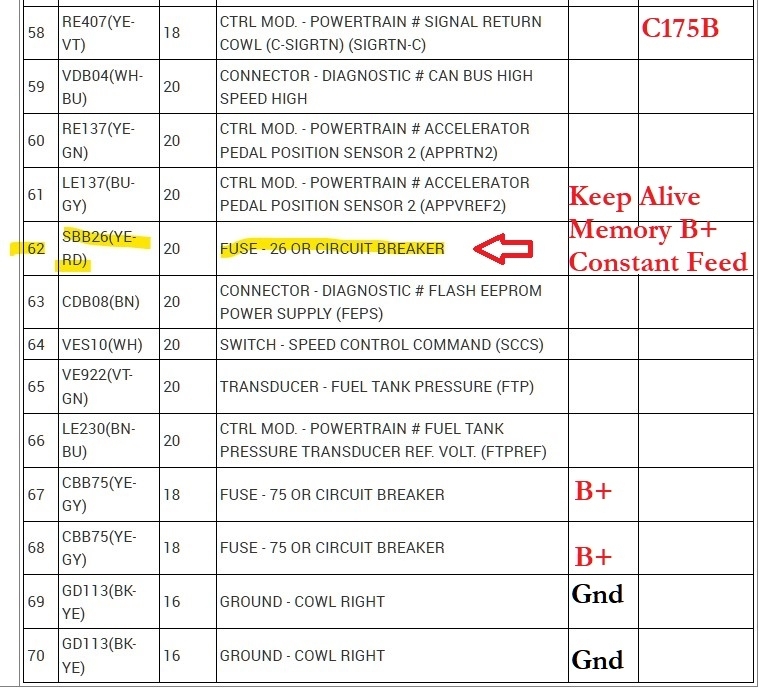
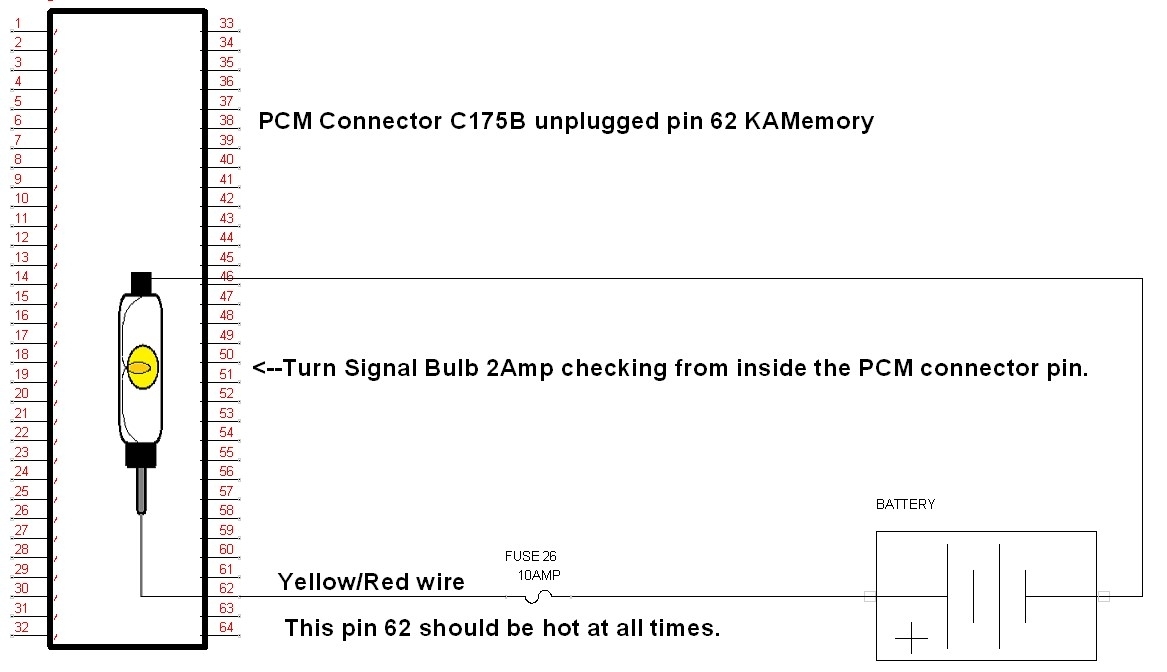
So, this Fuse 26 10Amp is the memory fuse for the PCM, it should be hot at all times providing constant power to C175B PCM connector pin 62 (Yellow/Red wire).
This would be a wire I would load test with a higher amperage test bulb. Even though memory is not a high current circuit, the dotted line indicates that wire feeds other circuits, i.E. The PCM power relay and the Evap Vent valve, and possible other components as well.

There are also 2 other power feeds and 2 grounds you can see in the 3rd diagram.
I use different turn signal bulbs to load test wires, since they will pull anywhere from 1 to 4 amps depending on how they are set up.

Since it won't run on its own at this point, start with some key on testing, make sure the battery is fully charged up and I like to keep a maintainer on the battery when testing so it doesn't discharge while the key is on, low battery voltage will cause all kinds of issues.
With the key Off and out of the vehicle, you could disconnect the PCM C175B connector to check pin 62 for power, and load test the 2 grounds (pins 69, 70).

This is where I'd start, the cylinder 4 is Pending, and cylinders 7 and 8 are on a different bank of the engine, so it would be really good if this turns out to a lack of voltage issue, just causing the PCM to go nuts.
Theres too many possibilities right now to give a definite answer as to what's happening. But those fuel trims at 0% look really strange too.
The engine might be running on half the cylinders if those injectors are disabled due to codes.
Let's see what you get for voltage readings, if it's low, we can do some voltage drop testing on the power feeds to see if there possible corroded connectors or wiring damage.
Was this
answer
helpful?
Yes
No
Sunday, February 23rd, 2025 AT 4:50 PM
Tiny
BEETLEPUNK21
  • MEMBER
  • 146 POSTS
Dang, that’s crazy that it could be doing all that stuff.

So yes, I put 87 octane in the tank. Should I just drain the gas tank and put in E85?

And when I picked up the truck from the auction, the battery was completely dead. And who knows how long it sat at the auction yard. There was blue corrosion all over both of the terminals.

I did not hear any strange noises such as timing chain noises when the engine was running. I also had to keep it at a pretty high RPM in order to keep it running or it would just shut off.

Yesterday I checked the coolant level, and it was a little low, so I filled it.

And you lost me when you started talking about load testing and all the wiring stuff. I’m not very electrically inclined. Can you walk me through that process and what exactly I need to do?

And can I just say, thank you for your help. I feel like I got in over my head with this truck, but you are making it seem manageable, and I greatly appreciate it.
Was this
answer
helpful?
Yes
No
Sunday, February 23rd, 2025 AT 5:09 PM
Tiny
AL514
  • MECHANIC
  • 5,550 POSTS
No, I would stick with 87 for now, since it is already there. And the Flex Fuel inferred indicates not learned yet, If the load testing is too confusing to start with, use a multimeter and just start checking the voltage levels at fuses with the battery fully charged up. The battery terminals need to be completely cleaned up, use baking soda and then put some water on it and it will neutralize the battery acid on the terminals, you can also get electrical terminal cleaner spray at AutoZone to spray into the wire strands in the battery terminals. If the main power wires at the battery are that bad, it's one of the first things that need to be addressed, it sounds like the electrical system is in rough shape. This is why these vehicles end up at auctions unfortunately. But the key "on" testing with a fully charged battery, with also good solid terminals is where you'll need to start with this. These cylinder misfires can even be low voltage to the coils, the real issue is we can only give advice as to what information is known on this end. And there's a lot of codes setting.
With a load test on a circuit, let's say you have the PCM C175B connector unplugged, pin 62 is the yellow/red wire in that connector, so what I do is ground the test bulb you're using at the battery negative, and using the other lead from the test bulb to pin 62 and make sure that wire can carry a couple amps.

Let me know if this diagram explains the load testing aspect enough, I know my art work isn't the greatest, but the idea is checking power from the B+ through the Fuse 26, through the wiring harness to the PCM connector C175B pin 62 using a turn signal bulb that will pull at least 1-2 Amps. A regular 12v automotive test light only pulls about 250ma at max, not nearly what turn signal bulbs or head lamp bulbs pull for current.
The turn signal bulb is grounded at Battery Negative. You don't need to keep the bulb lit for long, it just needs to be able to light it to verify the circuit can carry enough current to do its job.
If you are unsure of this testing then don't attempt it, there are some YouTube videos that can help show in real time how to load test wires in this manner, its very important to know there isn't corroded connectors or shorted wires in between the two locations.
Was this
answer
helpful?
Yes
No
Sunday, February 23rd, 2025 AT 6:02 PM
Tiny
AL514
  • MECHANIC
  • 5,550 POSTS
In this video Jake shows why load testing is so important, he shows checking power with a meter and then adds a high amperage bulb and shows what happens to the voltage with the bulb added to the power feed wire. I highly recommend watching the rest of his video as well, he does a lot of electrical testing and is really great at showing how to do it correctly.

https://www.youtube.com/watch?v=ZMqZlkGQcbY
Was this
answer
helpful?
Yes
No
Sunday, February 23rd, 2025 AT 6:10 PM
Tiny
BEETLEPUNK21
  • MEMBER
  • 146 POSTS
Hey boss, I’m working on repairing both battery terminals.
In the meantime, is there a video you can show me that shows step by step how to test the pins? I couldn’t find a good one.
Was this
answer
helpful?
Yes
No
Wednesday, February 26th, 2025 AT 6:00 AM

Please login or register to post a reply.