Transmission oil cooler bypass valve?

Tiny
SAM MUSSELMAN
  • MEMBER
  • 2004 FORD F-450
  • 6.8L
  • V10
  • 4WD
  • AUTOMATIC
  • 263,111 MILES
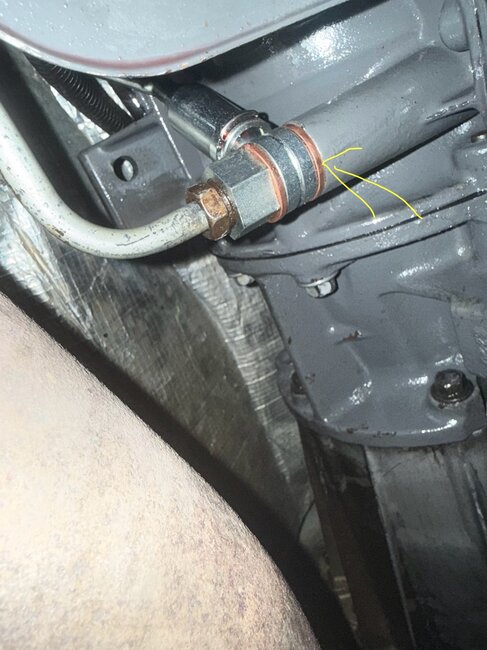
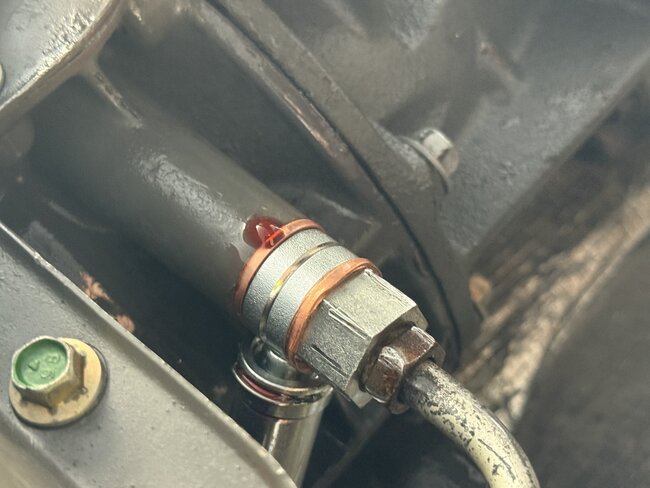
I just bought a new transmission from monster transmission. It is a 4r100. I have had a leak from day 1 from a bad transmission oil cooler bypass line and it hasn’t been drivable until today when my mechanic put a new assembly valve on the transmission. It continues to leak but not quite as bad so it was leaking from the assembly valve from monster and now not quite as bad when my mechanic replaced it. Is it possible that the port that the high-pressure part of the valve assembly goes into on the transmission is bad meaning it could have bad threads, or could it be a faulty part again that my mechanic put on it? I’ve attached a picture where it was leaking. I wiped off the fluid because I wanted to see if it was leaking new fluid or old fluid so sorry it’s not on there but leaking where the yellow arrow is pointing to in the picture. Also worth noting, monster did put a higher PSI pump in the transmission as my vehicle is a bucket truck for hauling heavy batteries for comcast as I am a contractor.
Friday, March 28th, 2025 AT 6:32 PM

14 Replies

Tiny
STEVE W.
  • MECHANIC
  • 15,233 POSTS
The picture didn't make it, but external leaks are commonly bad threads in the housing or a bad fitting. See both all the time. Threads are a common leak point because of the design of threads, there is always a small gap at the root of the threads that nothing fills so it leaves a passage that oil can follow. Combine that with any thread damage and you end up with a leak. In this case you have the threads and the crush washers that can leak plus the line fittings. If it's the threads in the case that are the issue you could install a thread insert in the hole, a heli-coil with Loctite on it to seal it in would give you stronger threads than stock and allow the bolt to crush the washers to seal better. Beyond that would be if the lines are leaking, those depend on the fittings, I have seen the crimps leak as well as having bad threads on the fittings.
Was this
answer
helpful?
Yes
No
Saturday, March 29th, 2025 AT 2:54 PM
Tiny
SAM MUSSELMAN
  • MEMBER
  • 36 POSTS
I drove it about 50 or 60 miles today and there was just a tiny dot of fluid around the newly installed oil cooler bypass valve. I’m not sure if that was old fluid, but I washed heavily around the leaking area. I do have a feeling that the leak was coming from the threads. If it does start to leak again, I will follow the procedure you gave so I appreciate the tip thanks.
I have attached a picture, and I cleaned around the affected area, but the fluid was coming out through the threads. You can see the one picture I added an arrow to show you where the seep occurred.
Was this
answer
helpful?
Yes
No
Saturday, March 29th, 2025 AT 4:53 PM
Tiny
STEVE W.
  • MECHANIC
  • 15,233 POSTS
If the arrow was the leak that is a crush washer. What can be done there is to get a couple new crush washers, use a torch or stove burner to heat them red hot, then quench in water. That will anneal the copper to make it softer. Some of the washers out there don't compress very well. Now remove the line and valve, swap the washers out for the soft ones and put it back together. The dead soft washers should seal better. Then install the line.
Was this
answer
helpful?
Yes
No
+1
Saturday, March 29th, 2025 AT 6:27 PM
Tiny
SAM MUSSELMAN
  • MEMBER
  • 36 POSTS
Will do. Thanks
Was this
answer
helpful?
Yes
No
Saturday, March 29th, 2025 AT 10:22 PM
Tiny
SAM MUSSELMAN
  • MEMBER
  • 36 POSTS
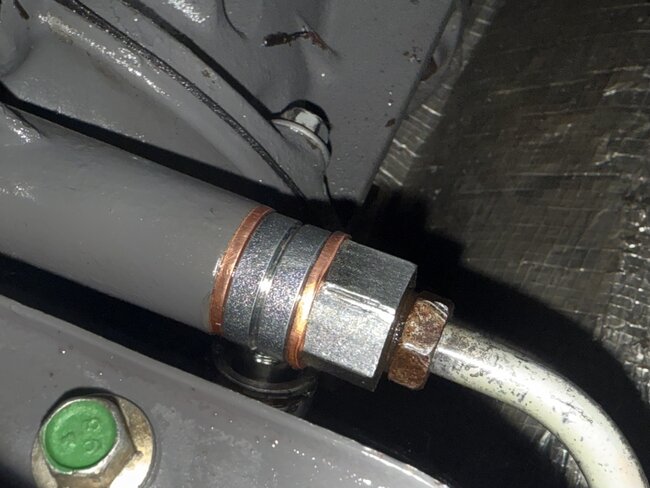
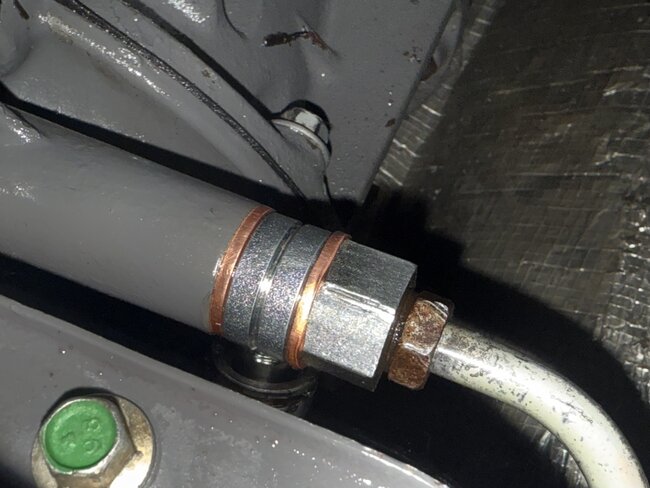
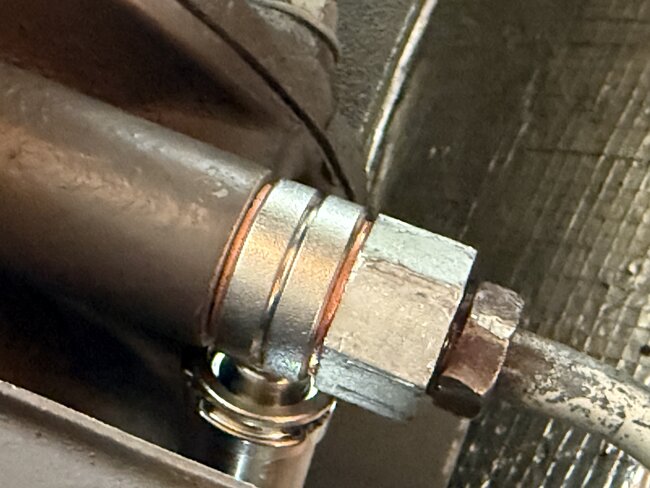
Would adding a third crush washer solve the problem? My mechanic just extremely tightened it down today and I’m not sure yet if there is a leak. Cleaned off area with pressure washer. You can see the bottom crush washer by the bolt is compressed.
Was this
answer
helpful?
Yes
No
Monday, March 31st, 2025 AT 5:34 PM
Tiny
STEVE W.
  • MECHANIC
  • 15,233 POSTS
Generally you don't want more than one because every added seam is a potential leak. There are various methods to ensure it does seal but most are not cost efficient so they are not commonly used. However it looks like they might be seated now. If you want to know for sure, wipe the area off with brake clean. Then take a white paper towel, wrap it around that fitting and use a couple zip-ties to hold it. Drive it around and after a couple days check it, is it soaked through? Or does it have a tiny damp spot? Then you know.
Was this
answer
helpful?
Yes
No
Monday, March 31st, 2025 AT 7:24 PM
Tiny
SAM MUSSELMAN
  • MEMBER
  • 36 POSTS
Okay. I’ll do the paper towel method and see how much fluid leaks out. If it does begin to leak, as you mentioned earlier in the thread, would it just be better to have one new crush washer with Loctite or not use the Loctite with just one crush washer? Which one of those two would be the most effective to close up the leak permanently?
Was this
answer
helpful?
Yes
No
Monday, March 31st, 2025 AT 8:35 PM
Tiny
STEVE W.
  • MECHANIC
  • 15,233 POSTS
If it still leaks I would get two new crush washers, then heat them cherry red and drop them in water. That will make them much softer. Then look over the face of the transmission case where it sets, is it smooth? Then the valve, it it smooth with no scrapes or grooves? Then look at the banjo bolt for the same things. It doesn't take much for pressurized fluid to find a path. Now look at the threads, are they in good shape in the case? Most of those have dual threads, there is a set of straight threads inside that the banjo bolt engages and a tapered set that is used with just the line when there is no bypass. That taper flares out and gives a thinner area for the washer to seal against, but it should still seal.
Was this
answer
helpful?
Yes
No
Tuesday, April 1st, 2025 AT 1:02 AM
Tiny
SAM MUSSELMAN
  • MEMBER
  • 36 POSTS
My mechanic tightened the banjo bolt today and put RTV on the bolt threads and put RTV around the high pressure port on the transmission and it is still slowly dripping, not as bad as it was. Would it hurt anything if I removed the bypass valve on top and bottom on the transmission since I have a brand new cooler and a brand new transmission to ensure that there is no more leaks?
Was this
answer
helpful?
Yes
No
Tuesday, April 1st, 2025 AT 2:36 PM
Tiny
STEVE W.
  • MECHANIC
  • 15,233 POSTS
Are you sure the leak is at the fitting and not above it? There appears to be fluid on the piece above that connection. The idea of the bypass is because the transmission can dump fluid out at a higher flow than the cooler can handle and the cooler becomes a restriction. To prevent the cooler from coming apart the valve dumps the excess back into the pan before the pressure gets to high. It's needed on the higher towing rated trucks. At this point I'd pull it apart and inspect the threads for damage. There has to be something physically wrong with the threads or maybe a minute crack in the casting.
Was this
answer
helpful?
Yes
No
Tuesday, April 1st, 2025 AT 9:41 PM
Tiny
SAM MUSSELMAN
  • MEMBER
  • 36 POSTS
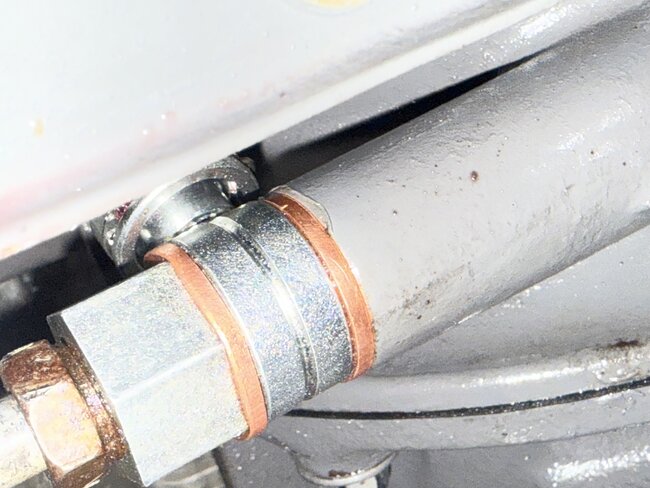
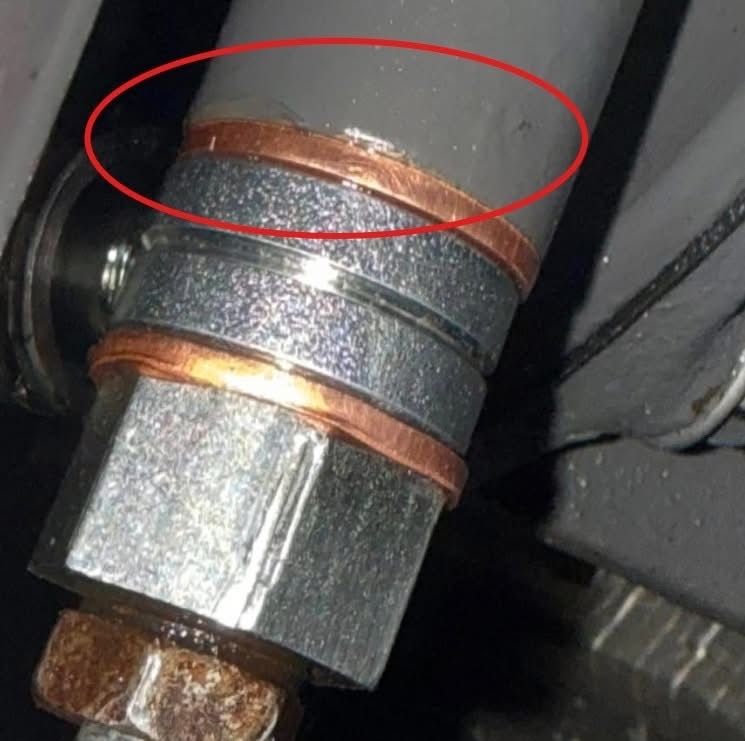
I did notice after I left the shop, I pulled over and noticed the drip on the bypass valve. When I wiped it clean, I noticed a tiny little bubble of fluid coming out where there is a tiny paint chip on the transmission I will inspect the threads, but also what should I do about the area where there is a tiny air bubble of fluid at idle and I believe where the fluid is leaking? Should I sand it down or hit it down with some type of hammer until metal on transmission is smooth? I’ve attached a picture. You have to zoom in close to see where it appears paint is chipped, or someone has hit the transmission with something.
Was this
answer
helpful?
Yes
No
Wednesday, April 2nd, 2025 AT 5:21 AM
Tiny
STEVE W.
  • MECHANIC
  • 15,233 POSTS
That should seal if the copper wash is as soft as it should be. I hesitate to say sand it off because that surface needs to be flat and at a 90 degree to the bolt that goes into it and doing that with simple sanding isn't all that easy. If it has any angle the washers really won't seal. I was thinking that you could use a piloted counterbore cutter to spot face the boss to give it a true flat surface, but that isn't something most folks have hanging around. Now if you know of a machine shop you could ask. The pilot would go in where the threads are and then you would turn it and face off the area in question.
Was this
answer
helpful?
Yes
No
Wednesday, April 2nd, 2025 AT 6:35 AM
Tiny
SAM MUSSELMAN
  • MEMBER
  • 36 POSTS
I had a mobile mechanic come and fix it. The RTV that my main mechanic put on it failed, and more fluid came out and also, he was using crush washers that were too big, and they were not smooth but jagged and lumpy. The mobile mechanic put the correct size washers, and it seemed to have crushed better and now there is no leak. Problem seems to be resolved. Thanks for the help.
Was this
answer
helpful?
Yes
No
Thursday, April 3rd, 2025 AT 8:09 PM
Tiny
STEVE W.
  • MECHANIC
  • 15,233 POSTS
Great to hear. Sounds like they might have grabbed some of the "universal" crush washers. Good ones will be dead soft and smooth. Then when you crank down on them they deform and fill in little pits and imperfections. That is why most items that use them tell you to replace them once used. The copper actually work hardens from being crushed, then it doesn't deform if re-used.
Was this
answer
helpful?
Yes
No
Friday, April 4th, 2025 AT 4:30 PM

Please login or register to post a reply.