
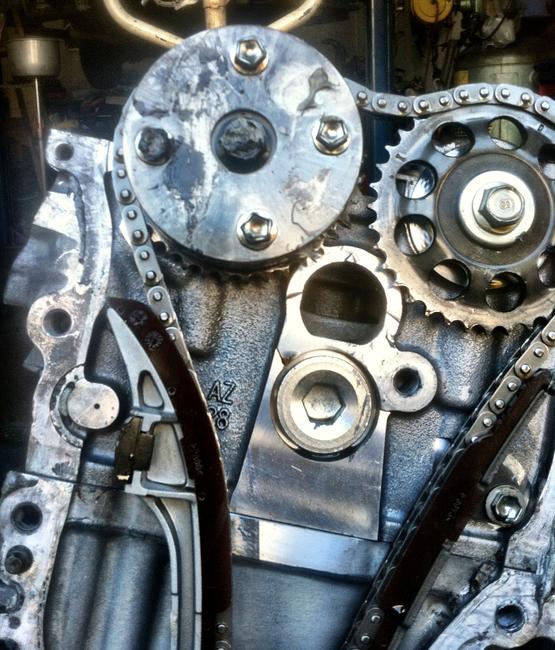
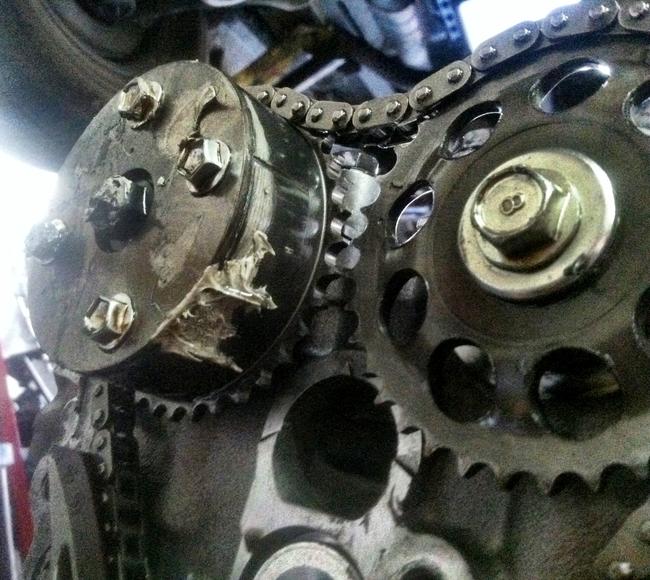
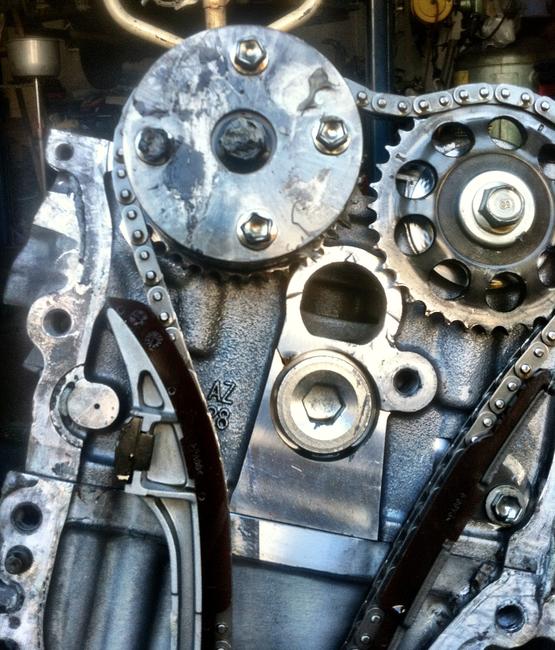
A few months ago my car overheated due to a leak in the radiator. I took it to a garage where they replaced the radiator as well as the head gasket which had also been damaged. Shortly after getting the car back my low oil pressure light came on. I took it back to the garage where they found metal shavings, silicone and a large piece of metal in my oil pan. The mechanics were unable to identify the large piece of metal. They cleaned it out and ran fresh oil through and I was back on the street. Shortly after that my check engine light came on. I took the car to another mechanic who identified the metal as a piece of the thrust bearing. Having looked on the internet that seems correct. He said the car may continue or the other piece of the thrust bearing may break causing the engine to cease. That is what happened a week or so after. I then took the car to a different garage where they replaced the motor and other parts that were damaged like the clutch, water pump, etc. There they found that excessive silicone on the old motor and blocked key oil holes causing the engine to cease. I am wondering if silicone is used in replacing a head gasket? I have been told conflicting things. If not on the gasket directly is it used when replacing the engine cover? I have pictures that show large amounts of silicone on the timing chain and around that area. Prior to overheating the car ran great so I am convinced that some sort of work done was done poorly, causing me to need a new motor. Alternatively, if the damage was already done when the car originally overheated, why would the first shop not have seen that? Then at least I would have saved the money to replace the head gasket on a motor that stopped shortly after. Any info you can share is greatly appreciated!
Images (Click to enlarge)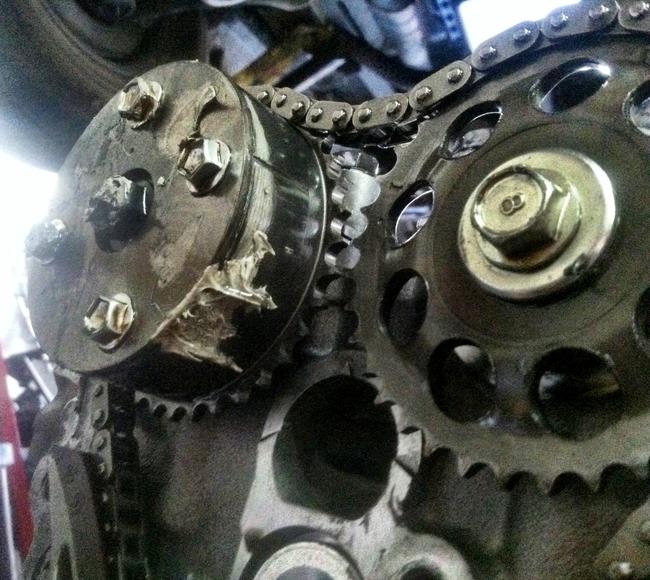
Apr 16, 2013 at 2:10 PM