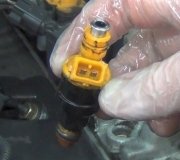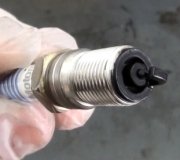
A fuel injector is responsible for allowing fuel into the engine and is controlled by the PCM as part of the fuel injection system. Fuel pressure supplied by the fuel pump is metered by the duty cycle of the computer which varies by engine load. This guide will show you how to check the trigger (ground) signal from the PCM, power circuit and the operation of the injector itself. To test the injector signal from the computer a test light works best. You will need a voltmeter to check resistance through the injector. Fuel maybe present during testing so the usual fire precautions are necessary. Use protective gloves and eye wear for safety. Test for FI systems only.
Fuel injector Testing
- Observe audible clicking confirming injector operation
- Check trigger signal output from the PCM
- Confirm the injector has power
- Test the coil windings resistance using a volt meter
- Confirm injector valve operation
- Inspect the injector casing for leaks
- Check flow and spray pattern
Let's Get Started
Simple Test
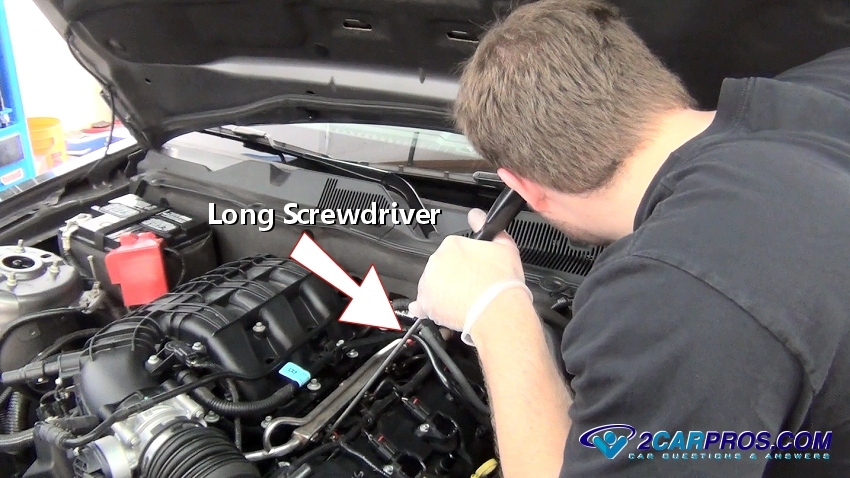
Start the engine and allow it to idle. Using a long metal rod like a screwdriver
touch the end of the screwdriver to the injector. Gently lay an ear to the opposite
end of the rod or handle to observe an audible clicking sound to confirm the injector
is working.
Injector Circuit Power Test
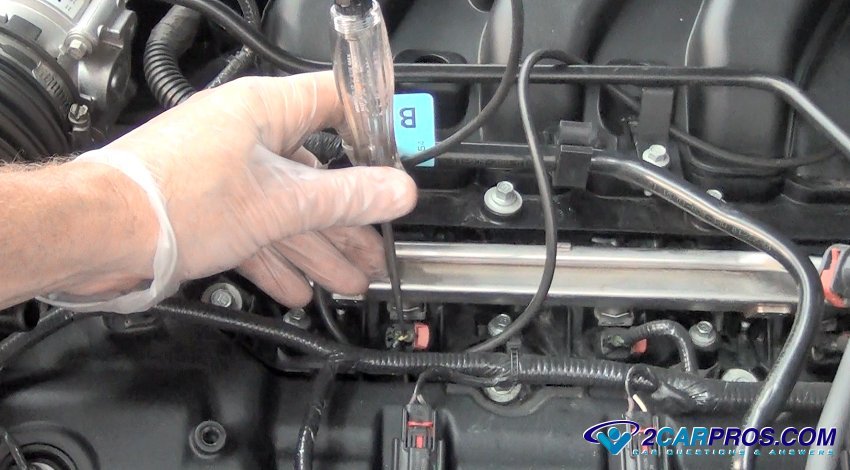
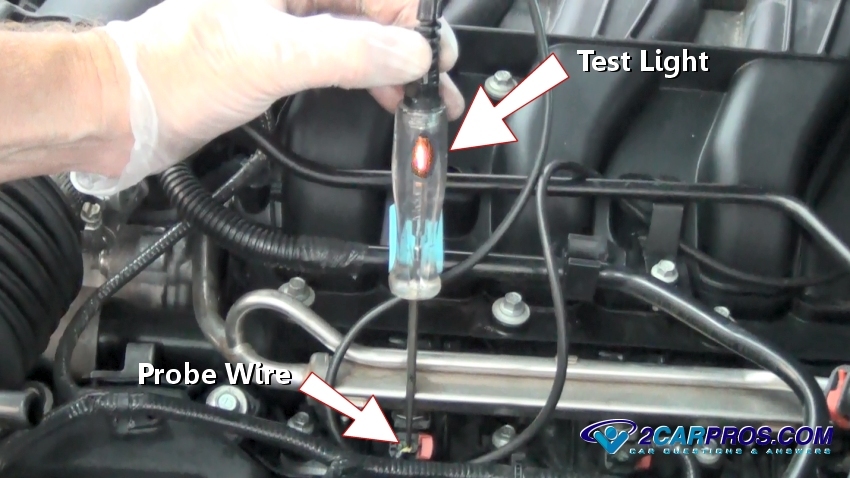
With the key in the on position use a
test light or
voltmeter connected to the negative
side of the battery. Gently probe both sides of the injector wiring connector, one
of the wires should react by registering around 12 volts on the meter or illuminating
the test light. If neither wire reacts test the fuel injector fuse in the PDC. If
the fuse is okay a fuel injection wiring diagram is needed to help
trace the wire and repair the connection.
Seal test points with a small dab of silicone rubber once testing is complete.
Injector Ground Trigger Test
The PCM closes the
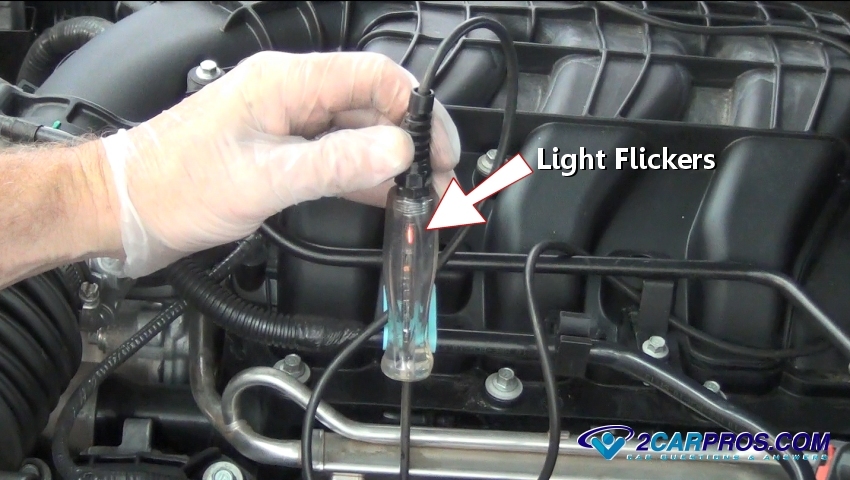
injector circuit to trigger the injector operation. For this a test light works
best to observe the pulse produced by the PCM. Attach the test light lead to the
positive side of the battery and have a helper start or crank the engine. Probe
the opposite side of the injector connector from the power circuit, you should observe
the test light flicking which will respond to engine RPM/Load. If the engine is
running and no pulse is observed suspect a bad wiring connection or a failed PCM
injector driver which will warrant a PCM replacement. A shorted injector can hinder
the injector driver operation for additional injectors, unplug all injectors and
re-test the signal. If pulse returns plug the injectors back in one at a time until
the pulse fails then replace the shorted injector. If the
engine is not running check the
crankshaft angle sensor
which the computer uses to open the injectors (Note: A failed crankshaft angle sensor
will not set a trouble code in most cases).
Fuel Injector Winding Test (key off)
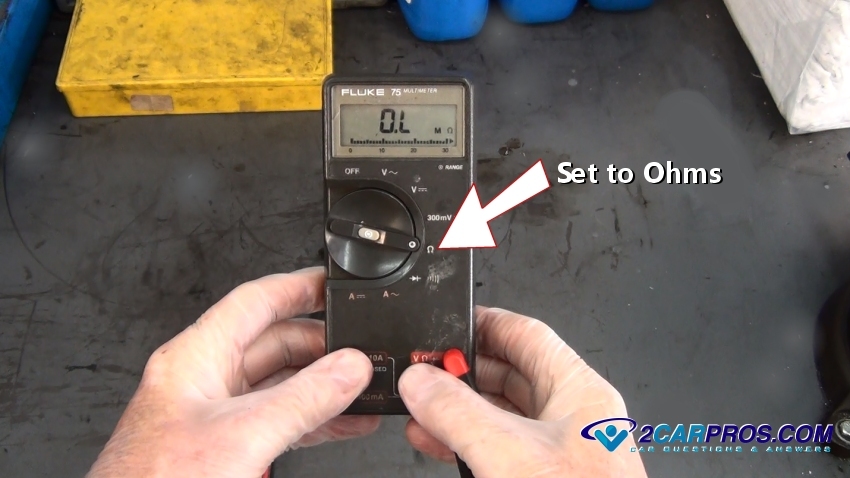
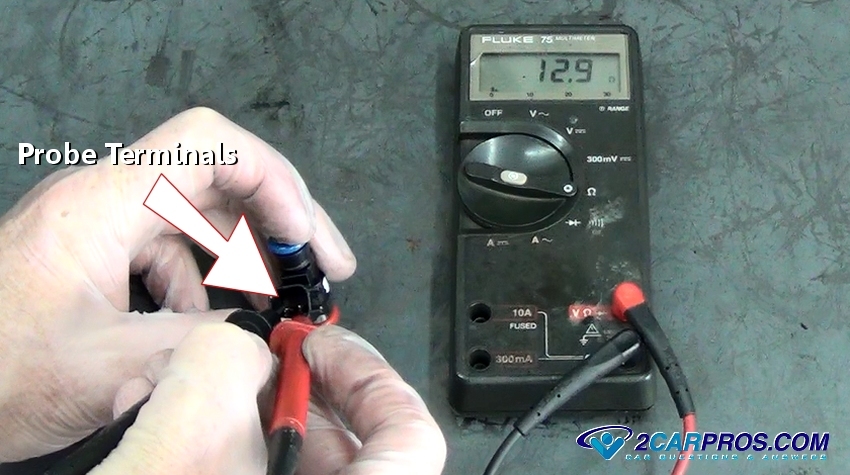
Using a voltmeter, adjust the setting to ohms. This test can be performed with
the injector installed or uninstalled.
Remove the injector electrical connector
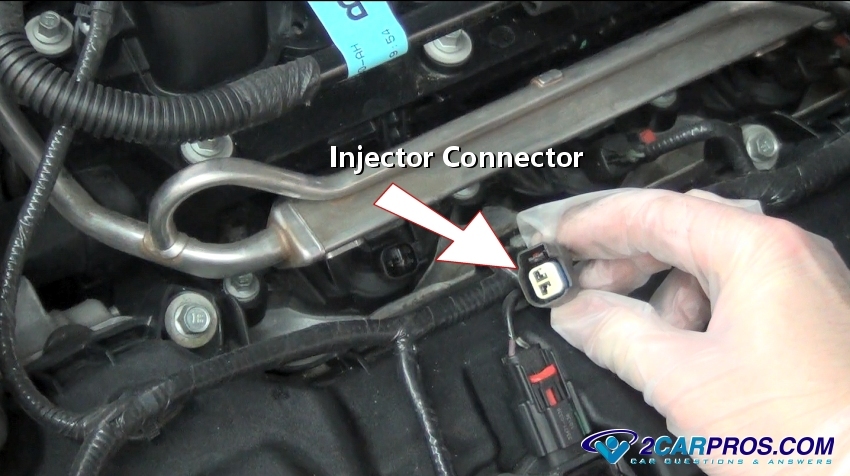
This will expose the injector electrical terminals.
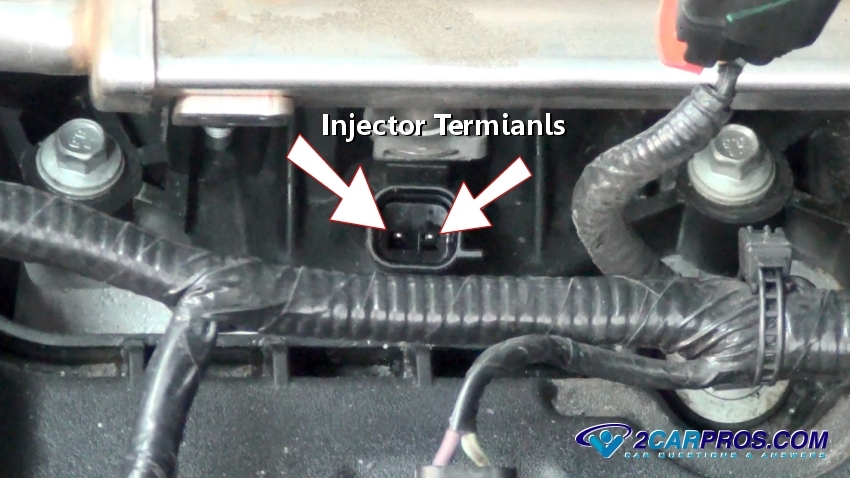
Connect the voltmeter leads to the terminals, the polarity of the leads is irrelevant.
This test gives a baseline ohm reading of all injectors, a service manual also has
this information. Most injector readings should range between 11 and 14 ohms. Fuel
injectors should be tested cold unless otherwise specified, temperature variances
will change the readings. If the test shows high resistance or an open circuit the
injector needs replacement.
For this test the injector
must be removed. Inspect the injector housing for leaks and electrical connectors
for corrosion. The valve and spray pattern is the most important part of testing a fuel injector.
Valve testing can be done with the injector still installed using a fuel pressure
gauge while hot wiring the fuel pump to stay on. Carefully attach a 12 volt power
(power and ground) source to the injector, you should be able to see the gauge fluctuate
as you connect and disconnect the circuit if the injector valve is working and not
plugged. To check the injector spray pattern the injector must be removed. Attach pressurized
air to the injector inlet. Attach a 12 volt power and ground source to energize
the injector. Compressed air should be released from the outlet valve with traces
of fuel still remaining from the injector (use fire precautions). Observe the pattern
which should be robust, if the pattern is muted the injector should be replaced. Our certified technicians are ready to answer fuel injector
test questions for free. We hope you saved money and learned from this guide.
We are creating a full set of car repair guides. Please
subscribe to our 2CarPros YouTube
channel and check back often for new videos which are uploaded regularly.
 Injector Spray Pattern Test
Questions?
Article published 2023-06-14