Logo Automobile Information Add Site to Favorites  
Auto Repair
Auto Repair Home
Auto Repair Ask a Car Repair Question
Auto Repair Car Question Forum
Auto Repair Questions by Manufacturer
Auto Repair Questions by Topic
Auto Repair First Things to Check
Auto Repair How to Repair or Service
Auto Repair Car Repair Manuals
Auto Repair How Does it Work
Auto Repair Car Repair Video Series
Auto Repair Auto Maintenance
Auto Repair Car Sound Problems
Auto Repair Auto Term Abbreviations


Popular Site Links


Auto Repair Automobile Safety Inspection
Auto Repair Brake Replacement Guides
Auto Repair Service Engine Soon Light
Auto Repair Belt Routing Diagrams
Auto Repair Avoid Car Repair Rip Offs
Auto Repair Trouble Code Table
Auto Repair How to use Diagnostic Tools
Auto Repair Smog Test Preparation
Auto Repair Hybrid Car Information
Auto Repair Test Equipment Store
Auto Repair Auto Parts
 
Search Website
 
 
Recent Repair Topics


Auto Repair1993 Chevy Blazer Stall...
Auto Repair1996 Gmc Suburban
Auto Repair2002 Ford Expedition Ca...
Auto Repair1985 Ford Bronco Lift K...
Auto Repair1996 Chevy Lumina 96 Lu...
Auto Repair1985 Oldsmobile 98 Roug...
Auto Repair2000 Ford Crown Victoria...
Auto Repair More Repair Topics...


We are the Auto Repair Experts!


How Does it Work / Fuel Pump

How a Fuel Pump Works

Introduction

A fuel pump is used to supply fuel to the fuel injection system or carburetor, depending on the year of the vehicle. Older vehicles use a mechanical pump to deliver low pressure fuel to the carburetor, while fuel injected vehicles require an electric pump capable of the high pressures required to make the system work efficiently. A fuel injection system is more efficient than its predecessor the carburetor and can better operate in extreme conditions, while becoming more dependable at start up.

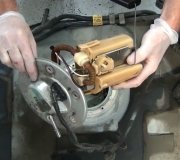
Fuel Pump
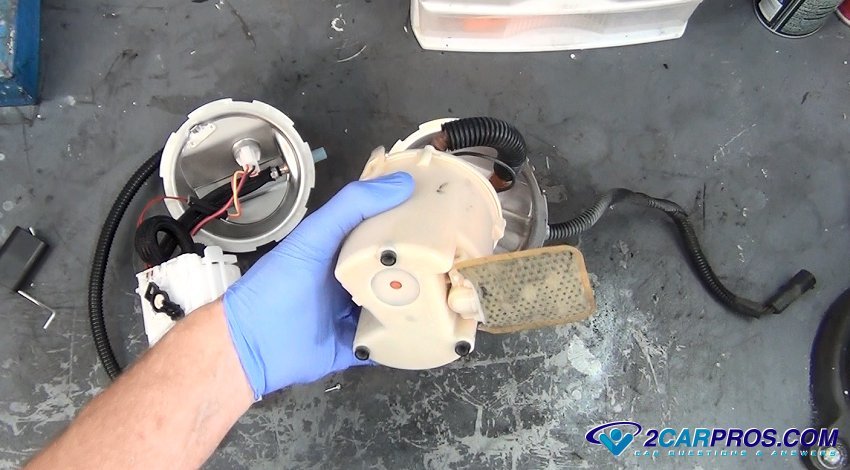
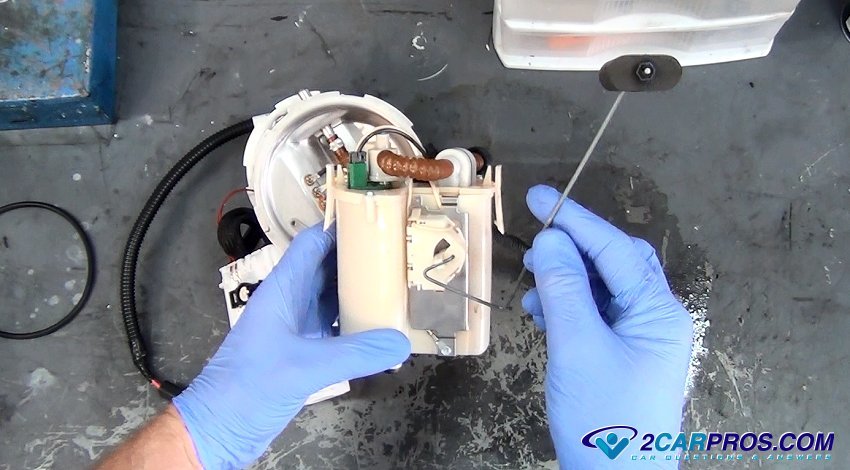
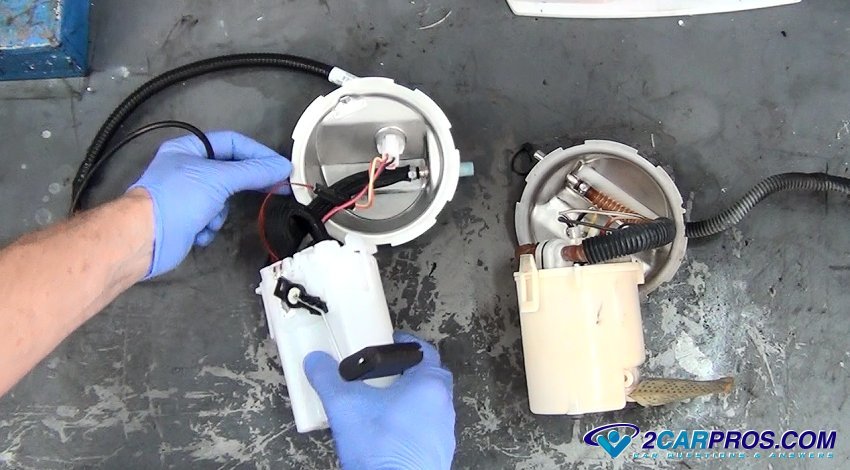
Typical Electric Fuel Pump

Simply put, the purpose of a fuel pump is to draw fuel from the fuel tank then to deliver it to a fuel injector or carburetor. All vehicle engines operate by way of a mechanical pump or via a fuel injected pump. Chances are if your engine requires a mechanical pump it is quite old and has fuel pumping at a low pressure from a fuel tank to the carburetor. Most likely your engine uses a fuel injected pump as do most modern engines and transfers fuel at high pressure into the fuel injection system from an electrical pump mounted either inside or outside the fuel tank.

Typical Fuel Injection System

Mechanical Pumps

Before electronic fuel injection, most carbureted vehicle engines used mechanical fuel pumps to move fuel from the fuel tank into the fuel sections of the carburetor. However, more recently, as vehicle engines shifted from carburetors to fuel injection, mechanical fuel pumps are increasingly being replaced with electric fuel pumps. This is because electronic fuel injection systems generally run more effectively at higher fuel pressures than mechanical pumps

Fuel Injected Pumps

Fuel injection pumps, which are usually electric, are located within the fuel tank or near the gas tank in order to maintain a steady amount of fuel and to utilize the fuel in the tank to cool the pump. Fuel injection pumps are part of an electronic system, which means that they are controlled by a computer system that oversees key factors including the air to fuel ratio, the contents of the exhaust gases and the actual position of the throttle.

When Fuel Pumps Fail

There are a couple of reasons why your fuel pump will fail, be it electric or mechanical. Electric fuel pumps can experience wear and tear on the armature, brushes or bearings. In addition, roller gears and pump vanes can also wear down. This will cause a gradual loss of pressure and poor engine performance. Some causes of fuel pump failure can include rust or dirt because they can get past the inlet filter sock, which is designed to filter these sediments. When this occurs the fuel pump will break down because of contaminants that have infiltrated the pump and cause it to jam. This will result in having the motor overheat and burn out. Sometimes a fuel pump will not work properly if it is not given the proper amount of fuel needed to run adequately. Your vehicle’s fuel pump relies on fuel running through it to cool and lubricate it. Starving your fuel pump for fuel can cause your vehicle's fuel pump to fail prematurely. Mechanical fuel pumps usually rupture the diaphragm that is used as the pump, and will leak a small amount of fuel externally (from the weep hole) or just not have pressure.

How to Replace a Fuel Pump

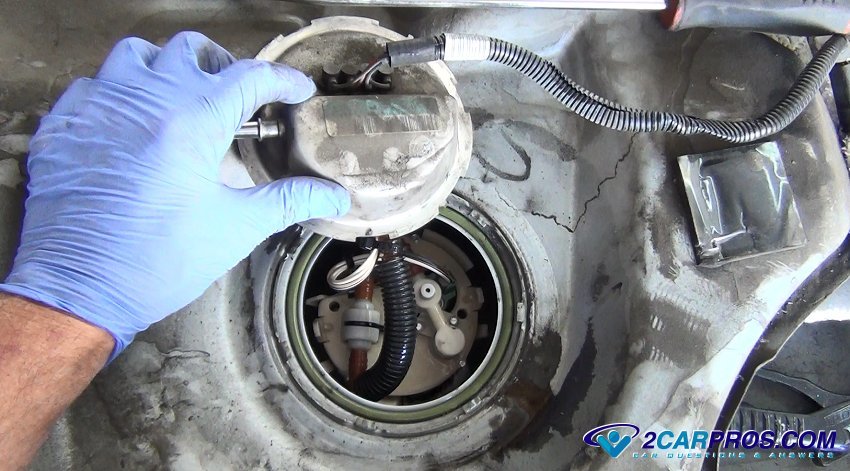
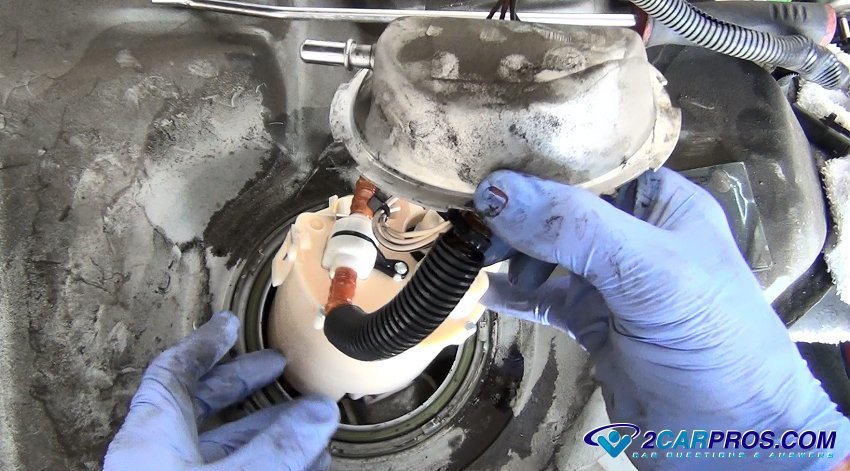
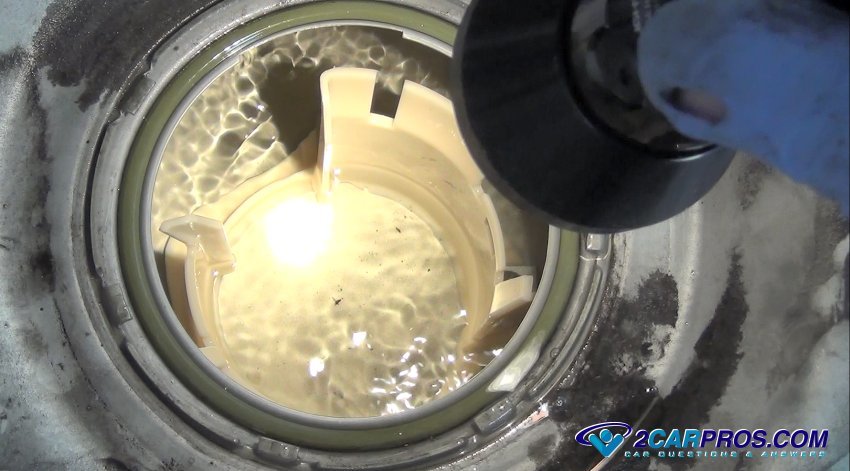
To replace your fuel pump first start with a nearly empty tank then make sure that the transmission is in park, the parking brake is activated and the front wheels are secured. Next elevate the vehicle with at least two jack stands for safety and disconnect the filler neck from the fuel tank itself. This can be done by removing the hose clamp that holds the hose to the fuel tank. Then remove either the rear or front two bolts that fasten the fuel tank to the vehicle and gently lower one side of the tank. At this point you should be able to reach the fuel line and wiring connectors, which should be disconnected prior to removing the two other bolts. Now you can remove the fuel pump from the tank and insert a replacement pump. When replacing your fuel pump opt for the same type of pump. Installing a different type of replacement pump can create difficulties. Your fuel pump is a vital component of the fuel system, so its electrical draw, flow and pressure characteristics must be in specification with the remainder of your vehicle’s system. Having a different fuel pump substituted for another can result in a mismatch, creating durability, noise and, most importantly, engine performance problems. Always check the system fuel pressure after a fuel pump replacement. It is also a good idea to replace the fuel filter and the fuel pump relay when replacing the pump, due to the extra amperage an old pump can draw through the relay.

Get the Free Flash Player to see this video.

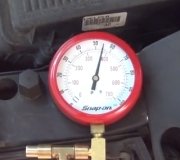
Fuel Injection Pressure and Pressure Regulator Test

Fuel Pump Best Practices

When selecting the correct fuel pump for your vehicle’s engine, be sure to have the engine size, year, make and model of your vehicle. Having this information handy will allow you to obtain the correct fuel pump specifically calibrated to your engine's performance specifications. In addition, make sure the fuel tank is clean. Although this should be self evident you must inspect the fuel tank carefully to make sure there is no dirt or rust inside and clean it as needed. Be sure to check the fuel lines for cleanliness as well at this point. The reason for these examinations is to prevent the most prevalent cause a fuel system failure, dirt.  Take an extra few extra minutes and replace the fuel filter when replacing the pump.

Basic Maintenance

The main preventive maintenance you can do with a fuel injection system is to keep your throttle body clean and your fuel filter changed.

How Does it Work / Fuel Pump

Additional Resources

Check Manufacturer Specific Fuel Pump Questions and Answers

Related Subjects

ASK A CAR REPAIR QUESTION - Join our question and answer forum where over 6,000 free auto repair questions are answered every month, after you have completed our free signup you will able to ask a question and receive an answer from one of our many forum members. If you elect to donate any small amount of money we will assign one of our 2CarPros Certified Repair Technicians to answer your question. Questions with donations are answered promptly and 100% of the donation is awarded to the technician helping you.

GET AN ONLINE CAR REPAIR MANUAL - Get instant access to your vehicles wiring diagrams, firing orders, component locator, vacuum diagrams, repair procedures, specific testing and diagnostics for troubleshooting, steering and suspension information, heating and air-conditioning problems, safety belt and airbag restraint repair, factory bulletins and general information and much more. We recommend that anyone needing technical repair information should have a quality auto repair manual for their car.


Popular Service Repairs
Test Fuses
Replace Front Brake Pads
Check Engine Light
Rear Brake Shoes
Rear Brake Pads
Test Alternator
Replace Air Filter
Test Battery
Tune Up
More Service Repairs...
Advertisement
Car Questions
Acura
Alfa Romeo
American Motors
Audi
BMW
Buick
Cadillac
Chevy
Chrysler
Citron
Daewoo
Daihatsu
Dodge
Eagle
Ferrari
Fiat
Ford
Geo
GMC
Honda
Holden
Hummer
Hyundai
Infiniti
International
Isuzu
Jaguar
Jeep
Kia
Land Rover
Lexus
Lincoln
Mazda
Mercedes Benz
MG
Mercury
Mini
Mitsubishi
Nissan
Oldsmobile
Opel
Peugeot
Plymouth
Pontiac
Porsche
Renault
Rolls Royce
Rover
Saab
Saturn
Scion
Seat
Skoda
Subaru
Suzuki
Toyota
Vauxhall
Volkswagen
Volvo

Home l Help l Privacy Policy l User Agreement l About Us l Computer Repair Question l Contact Us l Link to Us l We're Hiring l Affiliate Program
  Copyright © 1999 - 2009 2CarPros.com - Professional Mechanics Online