Introduction
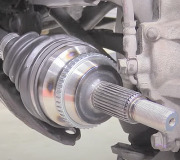
The Constant Velocity (CV) axle is a crucial component of a vehicle’s drivetrain, especially in front-wheel drive and all-wheel drive vehicles. A CV axle has is a type of multi-ball flex joint that connects two fixed rotating shafts/hubs and is designed to transfer force from the transmission to the drive wheels. Theses joints have a wide range of motion that is broader than conventional U joints.
CV joints are also designed to deliver engine torque more evenly throughout their range of motion/rotation where as U joints give restrictive movement at extreme angles. This guide explores the detailed workings of a CV axle, including its structure and function.
Components of a CV Axle
- Inner CV Joint: Connects the CV axle to the transaxle and allows in-and-out movement for suspension travel.
- Outer CV Joint: Connects to the wheel hub and allows flexibility during steering.
- Axle Shaft: The central connecting shaft that transfers rotational force between the CV joints.
- CV Boots: Rubber covers that protect the joints from dirt, debris, and moisture.
- Grease: Lubricant inside the CV boots that reduces friction and prevents wear.
CV Axle Attachment
CV axles are held inside the transaxle, (front wheel drive) or differential (rear or all wheel drive) using C clips which expand once installed, this is why there is a CV axle puller used to remove the axle. On the same shaft there is a place for the bearing and seal to ride keeping the inner joint secure and free from vibration and leaks.

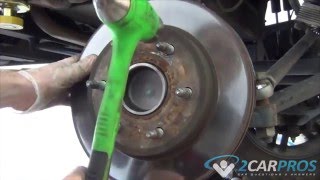
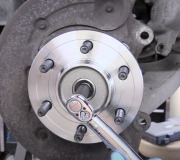
On the outboard part of the CV axle, is the CV joint which protrudes through the bearing hub in which an axle nut is attached, this nut must be very tight, in some cases up to 140 foot pounds of torque.

CV Joint
All outer CV joints are "ball type", consisting of a series of six hardened metal balls encased within its housing while using an inner metal cross (center) in which is connected to the axle. These joints can be disassembled and inspected by removing the axle and forcing the inner cross beyond center, this will allow the balls to be removed, inspected and reassembled.
These joints are lubricated by graphite based grease, which is held inside the joint by a rubber CV boot is used to prevent grease from being thrown out of the joint while in operation. Once a boot has failed it should be repaired to prevent failure and a more costly repair. A CV axle is supported by a CV axle bearing which is held inside of a suspension spindle that will turn side to side with the steering wheel on front wheel drive cars.

Maintenance and Inspection
Service on this style of axle is minimal, with the exception of a visual inspection of the axle boots. This "boot" must stay intact with no cracks or tears or the CV grease that is used to lubricate the joint will leak out causing the CV axle to fail.
Types of CV Joints
Ball-Type CV Joint
Commonly used in front-wheel drive vehicles, this type allows a greater range of motion for steering.
Tripod-Type CV Joint
More common in inner joints, it uses three roller bearings to accommodate in-and-out movement.
Conclusion
The CV axle is a vital drivetrain component, ensuring efficient power delivery and flexibility for steering and suspension movement.
Credits
This guide knowledge base was created by the 2CarPros Team, and by Ken Lavacot: Automobile repair shop owner and certified master automobile technician of over 30 years. If you have question or need help please ask one of our experts we are happy to help. Please visit our 2CarPros YouTube Channel.
Article published 2025-03-04