Logo Automobile Information Add Site to Favorites  
Auto Repair
Auto Repair Home
Auto Repair Ask a Car Repair Question
Auto Repair Car Question Forum
Auto Repair Questions by Manufacturer
Auto Repair Questions by Topic
Auto Repair First Things to Check
Auto Repair How to Repair or Service
Auto Repair Car Repair Manuals
Auto Repair How Does it Work
Auto Repair Car Repair Video Series
Auto Repair Auto Maintenance
Auto Repair Car Sound Problems
Auto Repair Auto Term Abbreviations


Popular Site Links


Auto Repair Automobile Safety Inspection
Auto Repair Brake Replacement Guides
Auto Repair Service Engine Soon Light
Auto Repair Belt Routing Diagrams
Auto Repair Avoid Car Repair Rip Offs
Auto Repair Trouble Code Table
Auto Repair How to use Diagnostic Tools
Auto Repair Smog Test Preparation
Auto Repair Hybrid Car Information
Auto Repair Test Equipment Store
Auto Repair Auto Parts
 
Search Website
 
 
Recent Repair Topics


Auto Repair2000 Ford Crown Victoria...
Auto Repair1989 Chevy Suburban
Auto Repair1994 Jaguar Xj6 Brake L...
Auto Repair1999 Buick Century In R...
Auto Repair1993 Jeep Cherokee Jeep...
Auto Repair2002 Ford Explorer Tran...
Auto Repair1999 Dodge Truck Engine...
Auto Repair More Repair Topics...


Professional Automotive Experts Answering Your Questions


Troubleshooting / Car Front Suspension Noise

Car Front Suspension Noise Ticking, Popping, Bumping and Rattling

Introduction

The front suspension in your car is designed to hold the front wheel steady when turning and as the car travels over bumps. There are basically two styles of vehicle steering systems, rack and pinion and worm gear box. Rack and pinion steering is one of the oldest types of steering systems and is still used today. Inside the rack body a flat rack gear moves in a linear direction driven by a circular gear called a pinion. The steering wheel is connected to the pinion gear (shaft). The rack gear is connected to an inner tie rod end that is covered by a rubber bellow. The inner tie rod end is connected to the outer tie rod end. These tie ends have the ability to move in any linear direction. Finally, the tie rod end is connected to the wheel spindle. A worm gear box style of steering system is constructed of two main parts much like the rack and pinion style system. The main part is called a worm gear, the other is a selector shaft gear. The worm gear is connected to the pitman arm and then to a center link and tie rod ends. The opposing end of the center link is supported by an idler arm, which is located on the opposite side of the frame from the steering box. If you're steering is making a gurgling noise and is not operating properly please visit, Power Steering Problems. If your car is making a ticking, bumping, rattling, or popping you are in the right place. While some road noise is acceptable when driving, a clicking or rattling sound is an indication of a component that has failed or has come loose. Many suspension components are in action while the car is driving include shocks, struts, ball joints, lower control arm, bushings, sway bar links and more. Isolate the noise from front to rear; this will help in the diagnoses. If the location of the noise is difficult to detect have a helper ride along in the rear seat of the car and compare opinions. We have listed below the some of the more common reasons for these noise conditions.

 Car Repair Guide - READ COMPLETELY BEFORE BEGINNING!

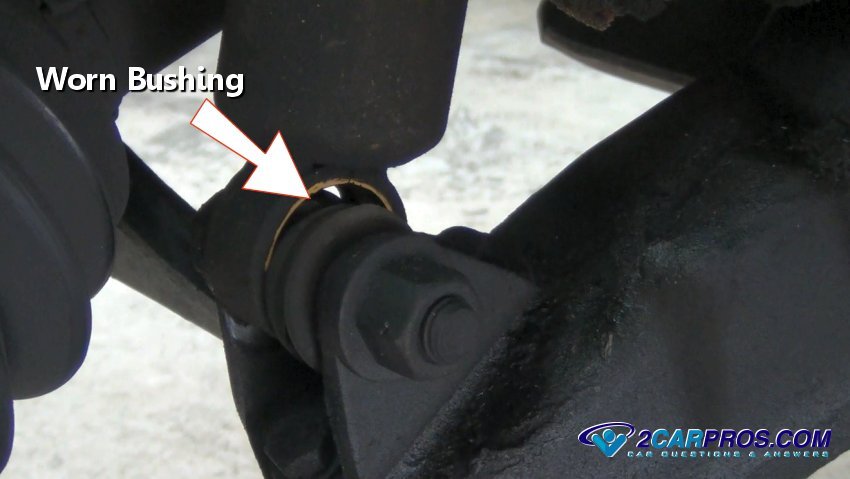
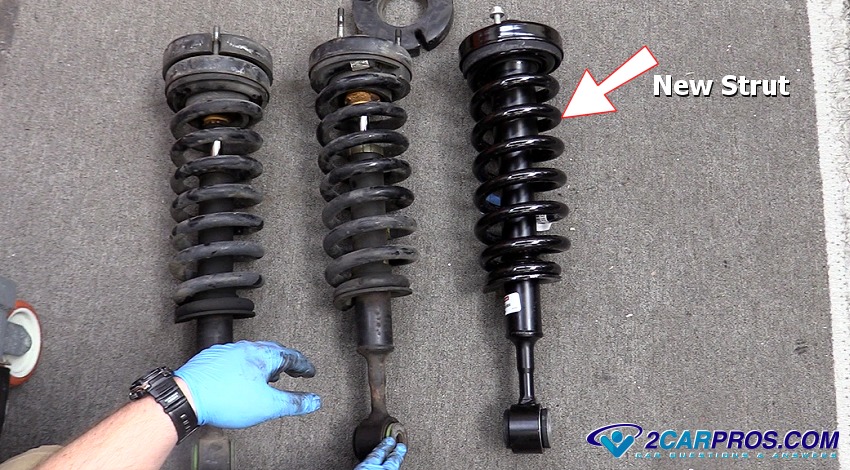
  • Step 1 - The strut or shock in your car is designed to dampen unwanted vehicle motion. If these components become loose or leak they came create popping, banging and rattling noises. To check for this condition inspect the mounting bushings and connecting bolts making sure they are tight and in good condition. Also inspect the shocks or struts for leaks, if oil is detected replace the component with a new unit.
     

    Front Strut Leakage
     
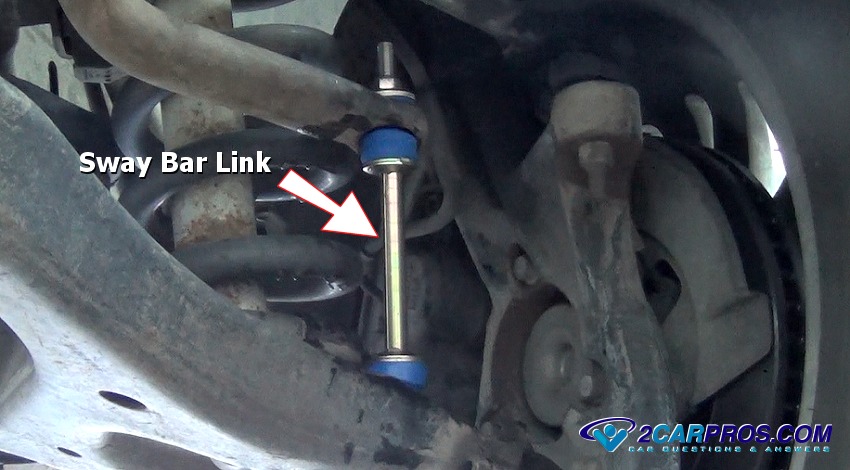
  • Step 2 - The sway bar or bars, (some cars have front and rear sway bars) on your car are designed to prevent the car from rolling (leaning) when cornering. These sway bars are mounted to the frame and connected to the suspension arms using connecting links. If either the sway bar mount or the connecting links becomes worn or loose it will generate a banging, popping or rattling sound. To check for this condition check the mounting bolts and bushings, retighten or replace as needed.
     
  • Step 3 - Front wheel drive cars utilize front drive axles with CV (constant velocity) joints. When CV joints start to wear they will bind up on acceleration, especially in a turn. This causes a vibration in the front suspension that transfers to the vehicle. Remove drive axles and inspect flexibility of each CV joint. If a bind or hard spot is observed the CV Joint/Axle needs to be replaced.

    Front Wheel Drive Axle
    Front Wheel Drive Axle

  • Step 4 - The tie rods connect the steering to the spindle which is attached to the rim and tire. These tie rod ends have a ball joint at one end and threads on the other. When the universal or ball joint wears it can cause a popping or ticking sounds. Check the tie rod end for wear and replace as needed. (note: car realignment is required when replacing suspension components)
     
  • Step 5 - The control arm bushes are designed to allow the suspension arms to pivot near the frame mount. These bushings are constructed of two metal collars, one large and one small with rubber molded inside the larger collar holding the smaller collar inside. Control arm bushings help prevent road vibration from being transferred to the car frame. With time and usage the rubber inside the bushings can deteriorate allowing the suspension arm to rattle and make bumping sounds. To check for this condition use a flashlight to view the upper and lower control arm bushings. If any rubber is missing or pushed out of the side of the bushing it must be replaced. Control arm bushings are sometimes serviced by replacing the whole suspension arm. To replace the suspension arms or bushings a car repair manual is needed for exact procedures, every car is different (note: car realignment is required when replacing suspension components)
     
  • Step 6 - The idler arm and pitman arms are used for steering box suspensions only. These arms transfer steering pressure from the steering box to the center link and then onto the tie rod ends. The pitman arm is mounted on the steering box output shaft and the idler arm is mounted on the opposite side of the frame as the steering box. When these components wear they allow the tires to wander producing a rattling, clicking or bumping noise. To check for this condition have a helper move the steering wheel back and forth a little bit continually. Observe the pitman and idler arm; if excessive play exists the component must be replaced. (Note: car realignment is required when replacing suspension components).
     
  • Step 7 - The brake pads and calipers are designed to slow the vehicle when applied. The brake caliper holds the brake pads that are applied to the brake rotor. If the caliper is loose or if the brake pads are not fitted properly they will make a rattling or bumping noise. To check for this condition inspect the brake caliper mounting bolts and brake pad mounting. The brake pads should not move vertically.
     
  • Step 8 - The rim and tire for your car are designed to hold the extreme pressures of normal usage. If the rim has developed a crack or if the lug nuts that hold the rim to the wheel hub are loose it could create a popping, rattling or ticking noise. To check for this condition remove the wheel cover (hub cap if equipped) and inspect the rim for cracks and check the tightness of the rim lug nuts, If a crack is observed replace the rim immediately and tighten all lug nuts to specification.
     
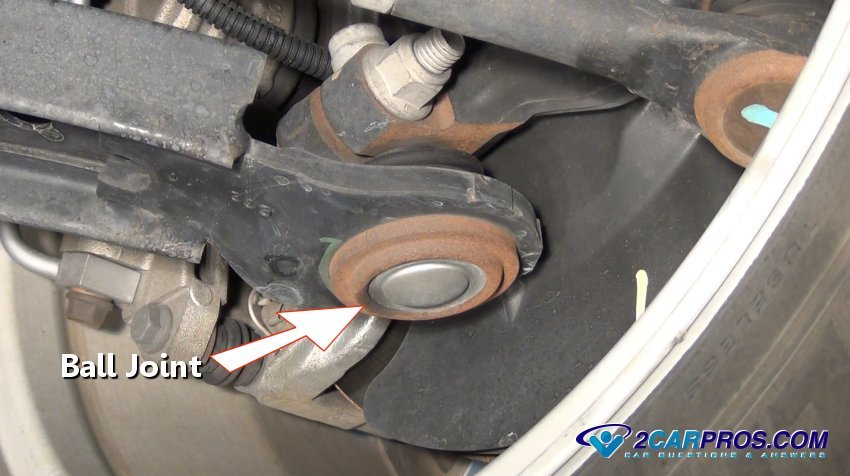
  • Step 9 - The ball joints in your car's suspension are used as the universal joint that allows the movement needed in a suspension system. This joint is constructed of a metal base in the form of a pocket and the ball which fits inside the pocket. Both parts are made of metal and require grease to work freely. These joints are under extreme pressure and can cause suspension noises when they are worn out or need lubrication. Ball joints can be difficult to replace, we suggest using a car repair manual for the exact car repair procedure. (Note: car realignment is required when replacing suspension components)
For exact specific repair procedures for any of the steps above visit our car repair manuals page.

WARNING! Always have the vehicle under inspection on level ground, in park with the emergency brake on. Always wear protective eyewear, gloves and necessary clothing before inspection or work begins. Never crank an engine over when anyone is near the battery or engine. Always have an operational fire extinguisher close by, obey all first aid instructions in the event of an injury. Never stand in front or behind a vehicle when starting or running. When engine is cranked over keep hands and clothing away from rotating components. Anyone with a heart pacemaker should not perform these tests.

Troubleshooting / Car Front Suspension Noise

Additional Resources

Check Manufacturer Specific Popping Bumping Rattling Knocking Noise Sounds Questions and Answers

Related Subjects

ASK A CAR REPAIR QUESTION - Join our question and answer forum where over 10,000 free auto repair questions are answered every month, after you have completed our free signup you will able to ask a question and receive an answer from one of our many forum members. If you elect to donate any small amount of money we will assign one of our 2CarPros Certified Repair Technicians to answer your question. Questions with donations are answered promptly and 100% of the donation is awarded to the technician helping you.

GET AN ONLINE CAR REPAIR MANUALS - Get instant access to your vehicles wiring diagrams, firing orders, component locator, vacuum diagrams, repair procedures, specific testing and diagnostics for troubleshooting, steering and suspension information, heating and air-conditioning problems, safety belt and airbag restraint repair, factory bulletins and general information and much more. We recommend that anyone needing technical repair information should have a quality auto repair manual for their car.


Popular Service Repairs
Test Fuses
Replace Front Brake Pads
Check Engine Light
Rear Brake Shoes
Rear Brake Pads
Test Alternator
Replace Air Filter
Test Battery
Tune Up
More Service Repairs...
Advertisement
Car Questions
Acura
Alfa Romeo
American Motors
Audi
BMW
Buick
Cadillac
Chevy
Chrysler
Citron
Daewoo
Daihatsu
Dodge
Eagle
Ferrari
Fiat
Ford
Geo
GMC
Honda
Holden
Hummer
Hyundai
Infiniti
International
Isuzu
Jaguar
Jeep
Kia
Land Rover
Lexus
Lincoln
Mazda
Mercedes Benz
MG
Mercury
Mini
Mitsubishi
Nissan
Oldsmobile
Opel
Peugeot
Plymouth
Pontiac
Porsche
Renault
Rolls Royce
Rover
Saab
Saturn
Scion
Seat
Skoda
Subaru
Suzuki
Toyota
Vauxhall
Volkswagen
Volvo

Home l Help l Privacy Policy l User Agreement l About Us l Computer Repair Question l Contact Us l Link to Us l We're Hiring l Affiliate Program
  Copyright © 1999 - 2009 2CarPros.com - Professional Mechanics Online