Auto Repair Advice by Professional Automotive Experts
Car Noises /
Howling Noise
Why is My Car Making a Howling Noise?
Introduction:
Howling noises are funny because the sound can be related to a minor
problem to a very major problem. The ability to differentiate between the two
variables means the difference between a minor repair or service cost to a major
replacement item such as a transmission. Howling noise can be one of the hardest
noises to detect the point of generation. If you are having a hard time
detecting the location of the howling sound, have a helper ride along in the
rear seat to give a new perspective on the origin of the howling noise. Most
grinding noises will be being generated while driving but sometimes the noise
can be heard without the car moving. Like other particular noises some howling
sounds are common among a specific manufacturer. Most howling noises are created
by a roller bearing that has failed or an air management system that has failed
or is malfunctioning. The intensity and duration can greatly vary depending on
the system malfunctioning, for example: If the howling noise is being generated
by the air injection for the exhaust system. This air
injection system can create a howling sound that is audible even though there is
no malfunction, just an undesirable noise. Some howling noises are less audible
but can be creating a large problem. Some howling noises can be progressive by
starting quietly and slowly or quickly become very loud while other
systems malfunctions can become apparent immediately. We have listed the most common problems
below:

Howling Sounds
Car Howling Noise Repair Guide:
-
Checking the Tire Wear Pattern.
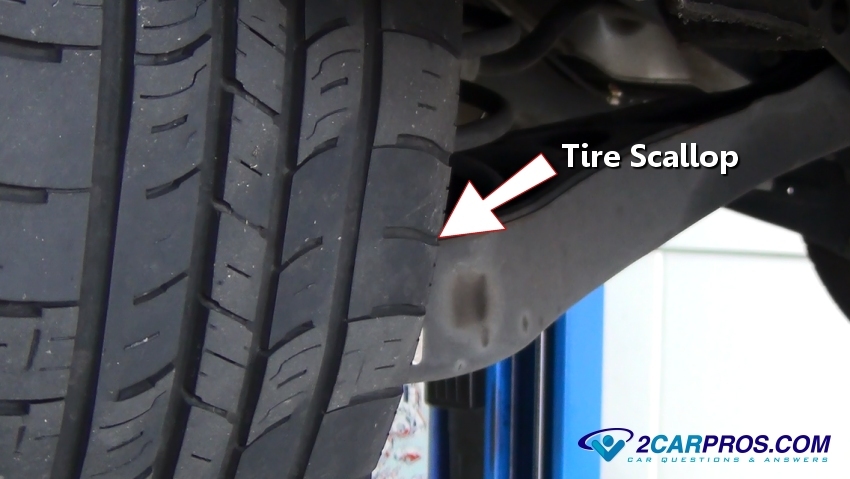
A tire with a scalloped pattern on the
tire will cause a howling sound at speeds
over about 45 MPH. This tire condition is caused by a combination of worn struts or
shocks and or tire imbalance. If a tire is not being controlled evenly the tire
will vibrate causing the tread to contact the ground inconsistently. This
inconsistent contact with the road causes the tires tread to wear unevenly.
(Cupping, tire example on the right). To check for this condition, take your
hand and pass it over the tire tread, it should be smooth. If high and low
points exist the tire is cupped and needs to be rotated or replaced depending on
the severity of the cupping condition, and the suspension repair accordingly. 
Tire Wear Patterns
- Checking the IAC motor (Ford Only). IAC is an abbreviation for
Idle Air Controller. A problem that is specialized to
Ford cars and trucks is
the
IAC motor with fail causing a howling noise when the engine is running.
This noise can vary slightly as the engine is subject to load. The IAC can
still control the engine idle or not. To check for this condition can be
difficult, first remove the IAC and inspect the plunger inside the valve. If
any of the plastic coils are broken or missing replace the IAC, that's an
easy find but sometimes broken pieces are tough to see but replacement is
still required.

Ford Idle Air Controller
- Checking the Air Injection Pump and System. An air
injection pump is used to pump air into the exhaust system to help complete
the combustion process after the
exhaust charge as left the
combustion
chamber. The added air promotes the charge to continue burning to expend any
additional fuel that was not burned. The air pump also helps the
catalytic
converter arrive at operating temperature by adding air which in turn
creates heat to the catalyst material. Much like a fire, and what happens to
it when the fire is fanned with addition air, the fire gets hotter. On
vehicles equipped with an air injection system the air
pump can create a howling sound that will start and stop during
engine
operation. The air injection system is equipped with one or two check valves
that allow air to transfer into the exhaust system. If one or both of these
valves fails it can cause the air pump to labor creating the howling noise.
To check for this condition remove the check valves also called diverter
valves and blow through them both ways, the valve should only allow the air
to pass through in one direction. If the valve allows air to pass in two
directions the valve has failed and needs replacement.

Electric Air Pump
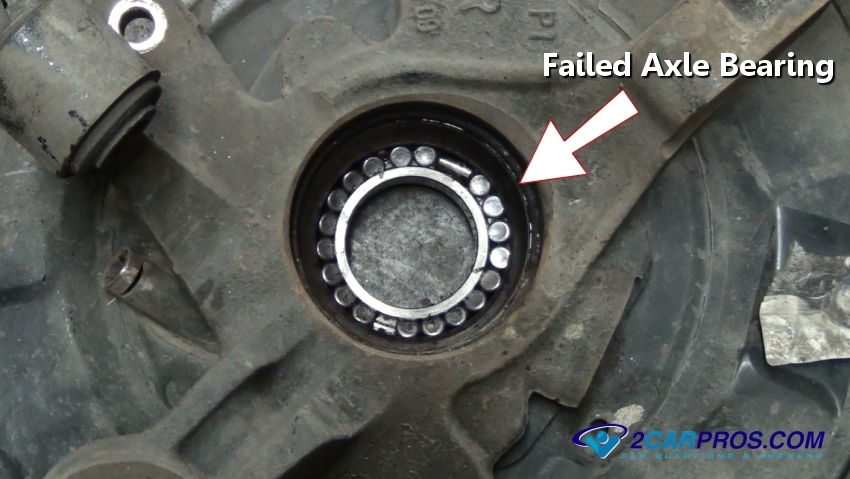
- Checking Axle Bearing Failure: An axle bearing is designed to
support the weight of the vehicle while allowing the wheels to rotate. These
bearings are manufactured with high grade steel that resists wear under
extreme conditions. When an axle bearing fails it allows metal to contact
metal under pressure with a linear motion creating a howling noise. Once an axle bearing fails it cannot be repair, replacement is required. Remove
axle bearing and replace with new and recheck. Some vehicles are equipped
with a bearing hub assembly. The bearing below is the style of bearing is
replaced by un-bolting the bearing hub assembly and replacing it with new.

Axle Bearing Hub
Other bearing designs include separated bearings that include inner and
outer bearings with bearing races, a four piece set. Separated bearings
require an inboard seal attached to the bearing hub. This seal rides on the
spindle to hold grease inside of the bearing hub, keeping lubricating inside
of the bearings.

Axle Bearing/Race Set with Seals
Check Main Differential Gears: The main
differential gears transfer power that is delivered from the
transmission to the wheels. These differential gears can become misaligned
because of a failed carrier or pinion bearing and they will disintegrate and fail. While this
condition is occurring it will make a howling or grumbling sound. The only way
to confirm this condition is to disassemble and inspect the bearings and bearing
races. If you remove the oil fill drain plug and remove a small sample of oil
from the carrier, hold it up to the light and inspect for small metal particles.
If metal partials are detected further repair is required.

Failed Ring Gear Pattern
- Checking Power Steering: A
power
steering system is designed to utilize power from the engine to assist
in the force needed to steer the vehicle. When the engine is running, a
multi ribbed serpentine belt is used to transfer engine power to a
hydraulic fluid pump. This pump pressurizes fluid and then transfers this
fluid using power steering hoses that are connected to a power steering box
or rack and pinion depending on how the car is designed. When the power
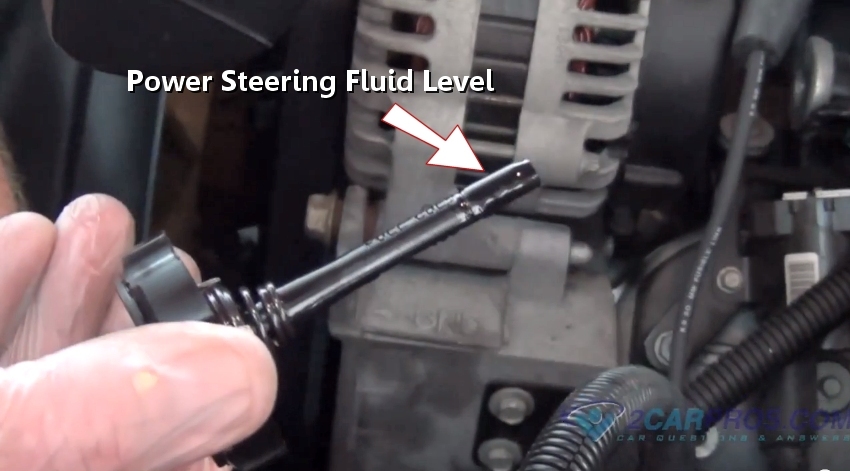
steering system has run low on fluid it can create a howling sound. This
noise is more apparent when steering the car. When the power steering is
malfunctioning the vehicle will be very difficult to steer. It is advised not to move a vehicle with the power steering system not operating. Any
steering component malfunction can cause the vehicle to be uncontrollable.
When a malfunction occurs check the system fluid level and add as needed.
When this condition occurs the
power
steering system has a leak and needs to be inspected and repaired.

Power Steering Cap
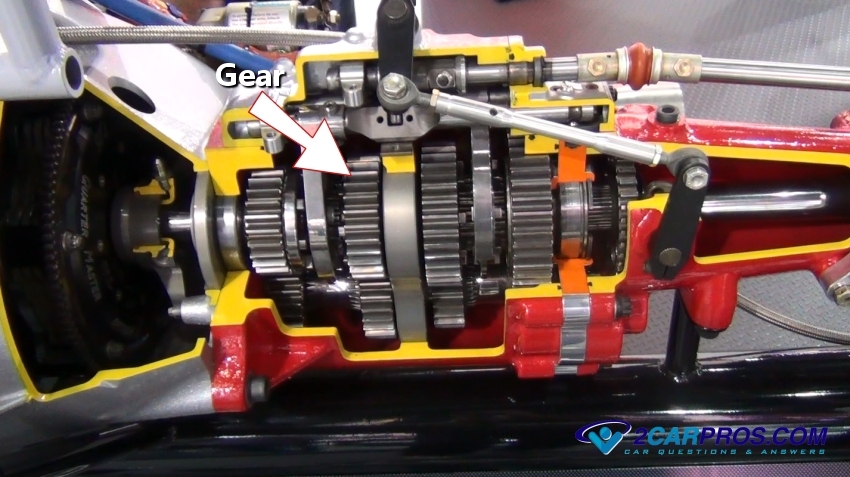
- Checking a Standard/Manual Transmission: A
standard transmission or
manual transmission is the traditional type of transmission
used in automobiles. The manual or standard transmission consists of a series of
heliacal gears, syncros, roller bearings, counter shafts and gear selectors. The
main clutch assembly is used to engage and disengage the engine from the transmission.
Heliacal cut gears are used to select the ratio desired the sector fork move gears
from one to another by using the gearshift knob. Syncros are used to slow the
gear to a stop before it is engaged to avoid gear grinding, the counter
shaft hold the gears in place and against the main input and output shaft.
When this transmission starts to fail it can produce a howling noise. In the
reverse gear a slight howling in normal because of the way the gears are
configured. All forward gears should produce no to very little noise. If the
transmission makes noise in one or two forward gears and not other gears the
noise producing gears have failed.

Typical Standard Transmission Configuration
If any noise is present check the transmission fluid level. This is done by
accessing the transmission from underneath the car. The transmission is equipped
with a fluid level inspection port on the side of the transmission case. This
port is accessed by removing a plug that is held in with threads much like a nut
and bolt assembly works. The fluid level should be at the bottom of the port, if
the fluid level is low re-fill as needed and recheck. (Never rotate the
transmission when checking fluid level)

Fluid Level Inspection Port
-
Checking an Automatic Transmission:
Automatic transmissions make specific noises when a malfunction
occurs. An automatic transmission is a hydraulic pressure driven system and it can
make different noises than a manual transmission. If the transmission filter becomes
plugged due to debris, it can make a howling noise. If the fluid level is low, you
might hear a gurgling sound, caused by the pump scavenging fluid inside the transmission
pan. Most internal failures are due to bearing, clutch or hard part failure. When
such a failure occurs the transmission can make
grinding, howling sounds or no
noise at all. When a transmission has a major failure you might hear a loud pop
which could mean a drive component inside the transmission has failed and the car
will stop moving.

Transmission Planetary Gear Set
Anytime you here an
automatic transmission noise inspect the fluid level by
starting the car on level ground and allow the engine it idle. Next remove the
fluid level dipstick and using a shop or paper towel to whip the stick clean.
Reinsert the stick completely and remove it it inspect the fluid level. Add
fluid as needed, also inspect the fluid condition, it should be a clear pink or
red color with a normal hydraulic oil odor. If the fluid condition is dark and
has a pungent smell it probably means the transmission is having a problem and
needs to be rebuilt or replaced. If the transmission filter is plugged it can
also cause a howling noise as the pump is fighting to pull fluid through it. To
check for this condition remove the transmission oil pan and inspect the filter
condition and replace if needed. Some transmissions have no fluid level
dip stick, these vehicles require replacement whenever a transmission malfunction
occurs.

Locate and Remove the Transmission Fluid Level Indicator
-
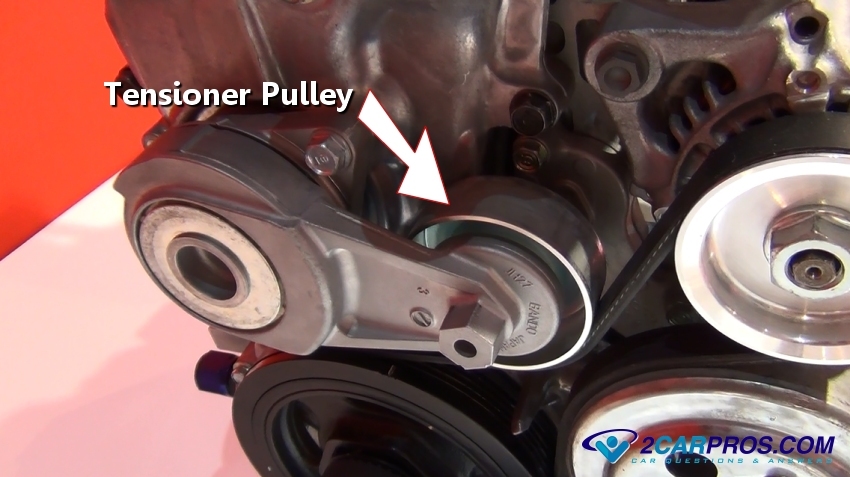
Checking Engine Accessory Bearings: Engine accessories
such as alternator,
water pump,
power steering pump and
air conditioner
compressor utilize bearings. These bearings can create a howling noise has
malfunctioning while the engine is operating. To check for this condition
shut the engine off, then remove the
multi rib drive belt. With the belt
removed spin the accessories and check for noise or rough spots while a
particular accessory is rotating. If a noise or rough spot is present
replace that accessory with a new or rebuild unit.

Typical Engine Accessory Configuration
-
Checking a Fan Clutch: The engine cooling fan system in your
car is designed to move air through the radiator when the vehicle is at slower
speeds or stopped. This air flow removes heat from the coolant created by the
engine using the radiator as a conductor. A clutch fan has
the ability to disengage when not in use allowing the engine to work more efficiently
while allowing a better user experience. When a clutch fan fails it causes the coolant to retain heat, forcing the engine
to run hot and eventually
overheat.
A clutch fan is engaged and disengaged from operation by a temperature produced
from the radiator. This fan clutch is constructed using a silicon grease and temperature
sensitive coil spring that expands and contracts with heat. As the spring absorbs
heat it expands engaging the clutch fan utilizing engine power to drive the fan.
As the engine coolant cools the fan clutch will disengage. A clutch fan can fail
one of two ways, it can either lock the fan to the clutch causing poor mileage and
a howling sound, like an airplane is taking off next to you. Or the silicon grease
can start to leak causing the fan clutch not to lock up allowing the fan to "freewheel",
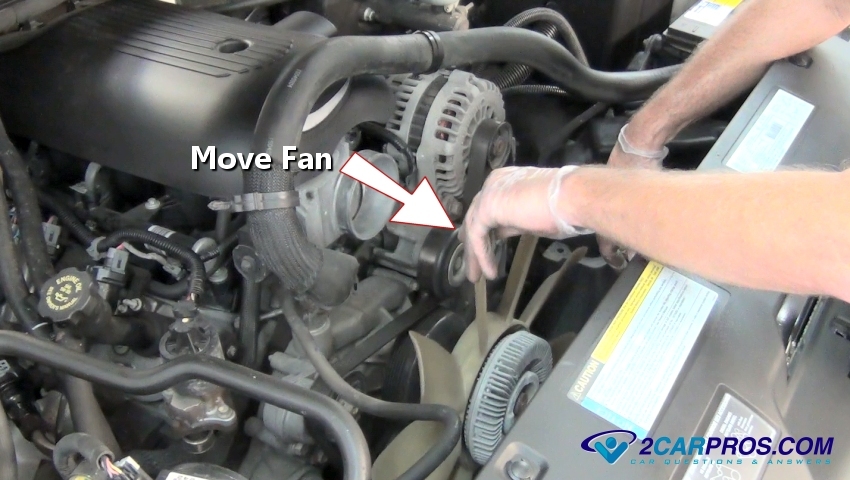
failing to pull air through the radiator when needed. To check a fan clutch condition the engine must be off. Inspect
the fan clutch for leakage at the front or rear of the unit (input shaft and temperature
controlled expansion spring). If leakage is observed the fan clutch has failed and
needs replacing. Next, take the fan blade and turn it, the fan blade should free
wheel, if you cannot turn the fan blade the clutch has locked up and needs to be
replaced. Also, there should be no or very little play as you turn the fan, if excess
play exists replace the fan clutch.

Engine Fan Clutch (fan blade not attached)
For manufacturer specific procedures for any of the steps above please visit
our car repair
manual page.
Car Noises /
Howling Noise
Check Manufacturer Specific
Howling Noise Questions and Answers
Additional "How to" Car Repair or Services
ASK CAR REPAIR QUESTIONS -
Join our question and answer forum where over 10,000 free auto repair
questions are answered every month, after you have completed our free signup you
will able to ask a question and receive an answer from one of our many forum
members. If you elect to donate any small amount of money we will assign one of
our 2CarPros Certified Repair Technicians to answer your question. Questions
with donations are answered promptly and 100% of the donation is awarded to the
technician helping you.
GET ONLINE
CAR REPAIR MANUALS
- Get instant access to your vehicles wiring diagrams, firing orders, component
locator, vacuum diagrams, repair procedures, specific testing and diagnostics
for troubleshooting, steering and suspension information, heating and
air-conditioning problems, safety belt and airbag restraint repair, factory
bulletins and general information and much more. We recommend that anyone
needing technical repair information should have a quality auto repair manual
for their car.
|