Inquiry About Coolant and Oil Leak Near Intake Manifold?

Tiny
MOHANBARATHI
  • MEMBER
  • 1996 SUZUKI ESTEEM
  • 1.2L
  • 4 CYL
  • 2WD
  • AUTOMATIC
  • 180,000 MILES
Hello,

I discovered a leak a couple of months ago coming from beneath the intake manifold, around a circular cup or plug approximately 0.75 inches in diameter. The leak appears to contain both coolant and engine oil.

I attempted to inspect the intake manifold by removing it from the engine, but I was unable to remove one of the bolts because it is located in a very narrow and difficult-to-access area. It seems that removing this bolt might only be possible if the engine is taken out of the car, which is not practical in my current situation. As a result, I have not been able to determine the exact source of the leak.

It may be possible to temporarily stop the leak using an appropriate adhesive or sealant. However, I have an important question: is there any possibility within the intake manifold for engine oil to mix with the coolant? If not, what could cause engine oil to appear in a leak from this location? Whenever the engine is started, coolant along with the engine oil is pumped out from the bottom of the manifold, near the circular plug.

I have also noticed black smoke coming from the exhaust. Initially, I assumed this might be due to carburetor misalignment or an issue with the distributor timing, so I did not investigate it further at the time. However, I have not yet checked these components, so I cannot confirm the exact cause.

For additional context, the car had been mostly idle for a couple of years. However, I would start it once a week and drive it briefly (about few kilometers) to keep it operational.

One more detail that may be relevant: about ten years ago, there was a coolant leak (without engine oil) from the same location. At that time, the leak was successfully stopped using a sealant that was available then, and the vehicle functioned normally afterward.

I would appreciate any guidance you can provide regarding the possible cause of this issue and how it might be addressed.

Thanks and regards,
SKM
Tuesday, March 10th, 2026 AT 10:11 PM

13 Replies

Tiny
STEVE W.
  • MECHANIC
  • 15,704 POSTS
Could you post a couple images of the area of the leak. The description sounds like a core plug that is leaking water and the head gasket is leaking oil. There are oil passages that pump oil up to the camshaft and it's possible one is leaking through the gasket. However without seeing the leak it would be difficult to say for sure.
Was this
answer
helpful?
Yes
No
Wednesday, March 11th, 2026 AT 8:47 PM
Tiny
MOHANBARATHI
  • MEMBER
  • 11 POSTS
Dear Steve,

Thank you for your assistance.

I’ve attached two images and one video for reference.

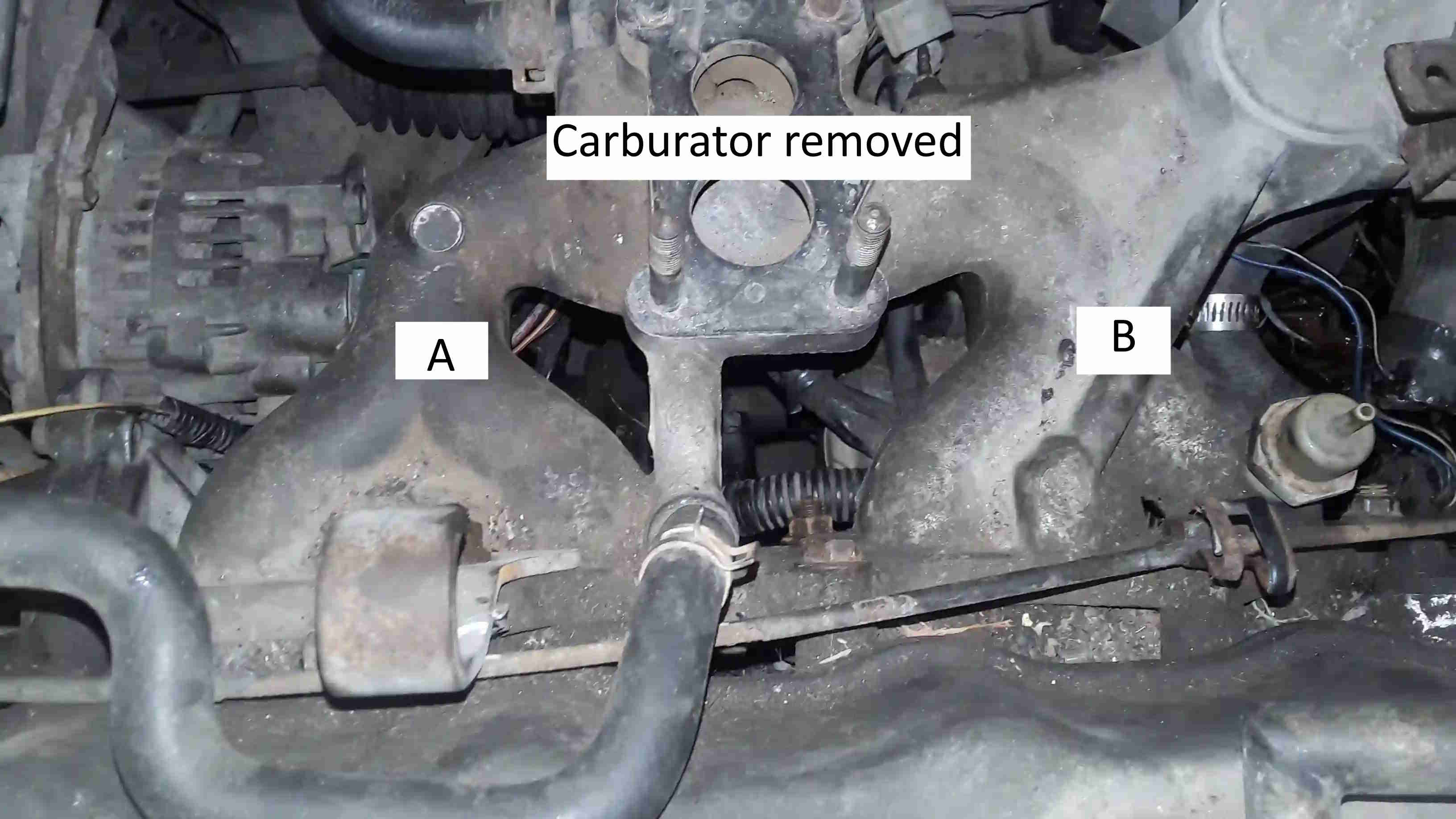
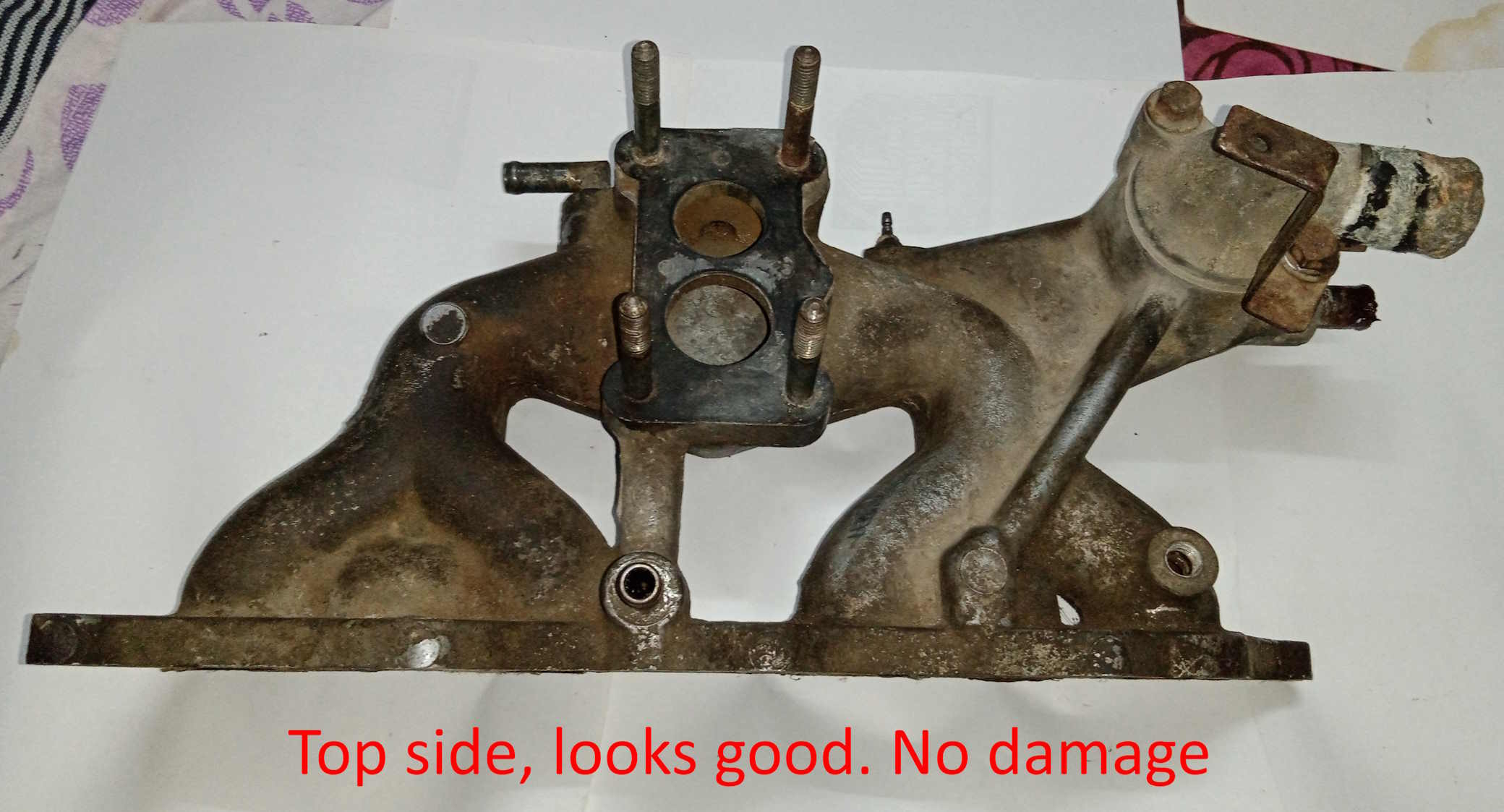
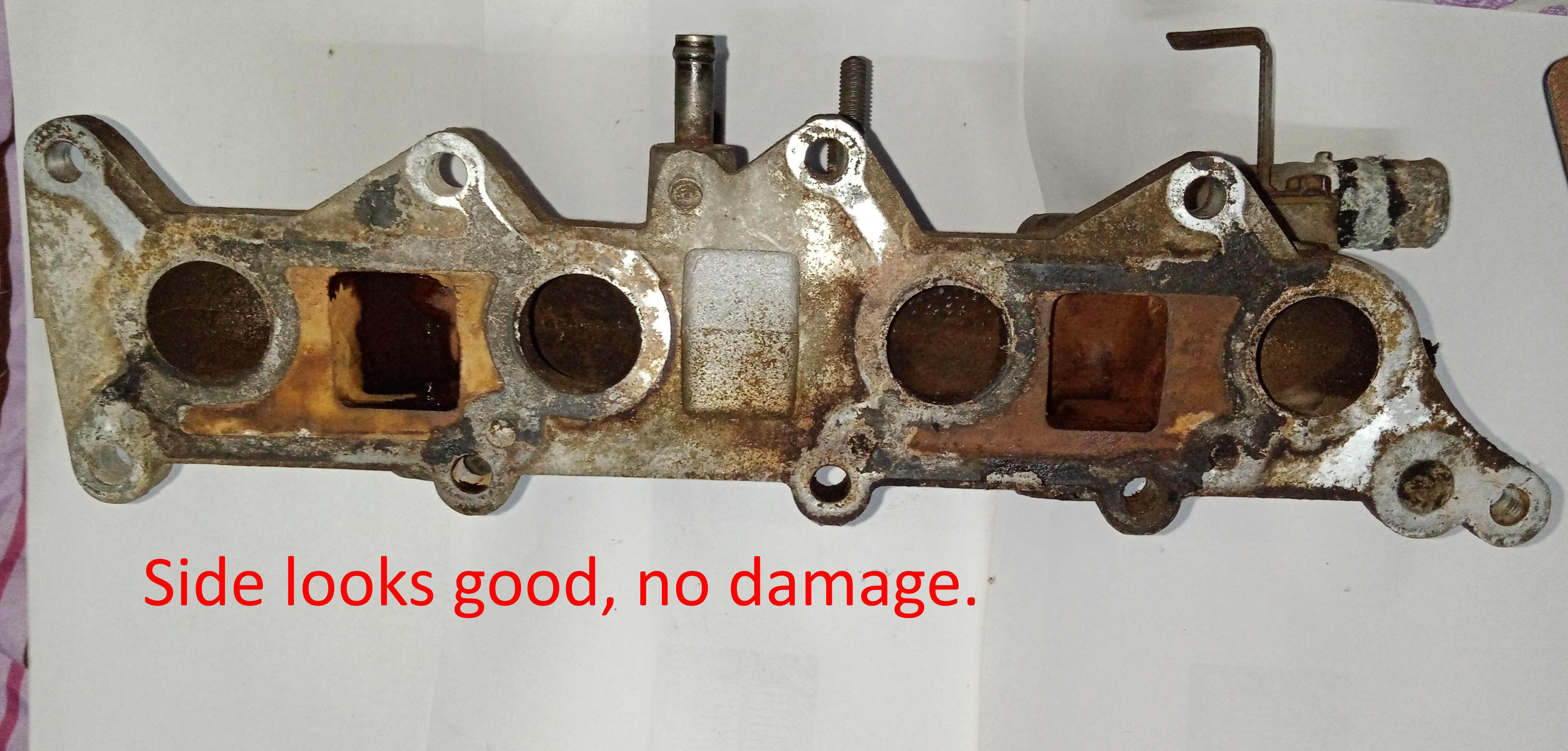
The first image shows the top of the intake manifold with the carburetor removed. The leak appears to be coming from the underside of the manifold, beneath one or both of the areas marked 'A' or 'B'. At the moment, I can’t clearly identify the exact spot because the area had already dried. Earlier, it was also difficult to pinpoint the source since the whole area was wet with both coolant and engine oil.

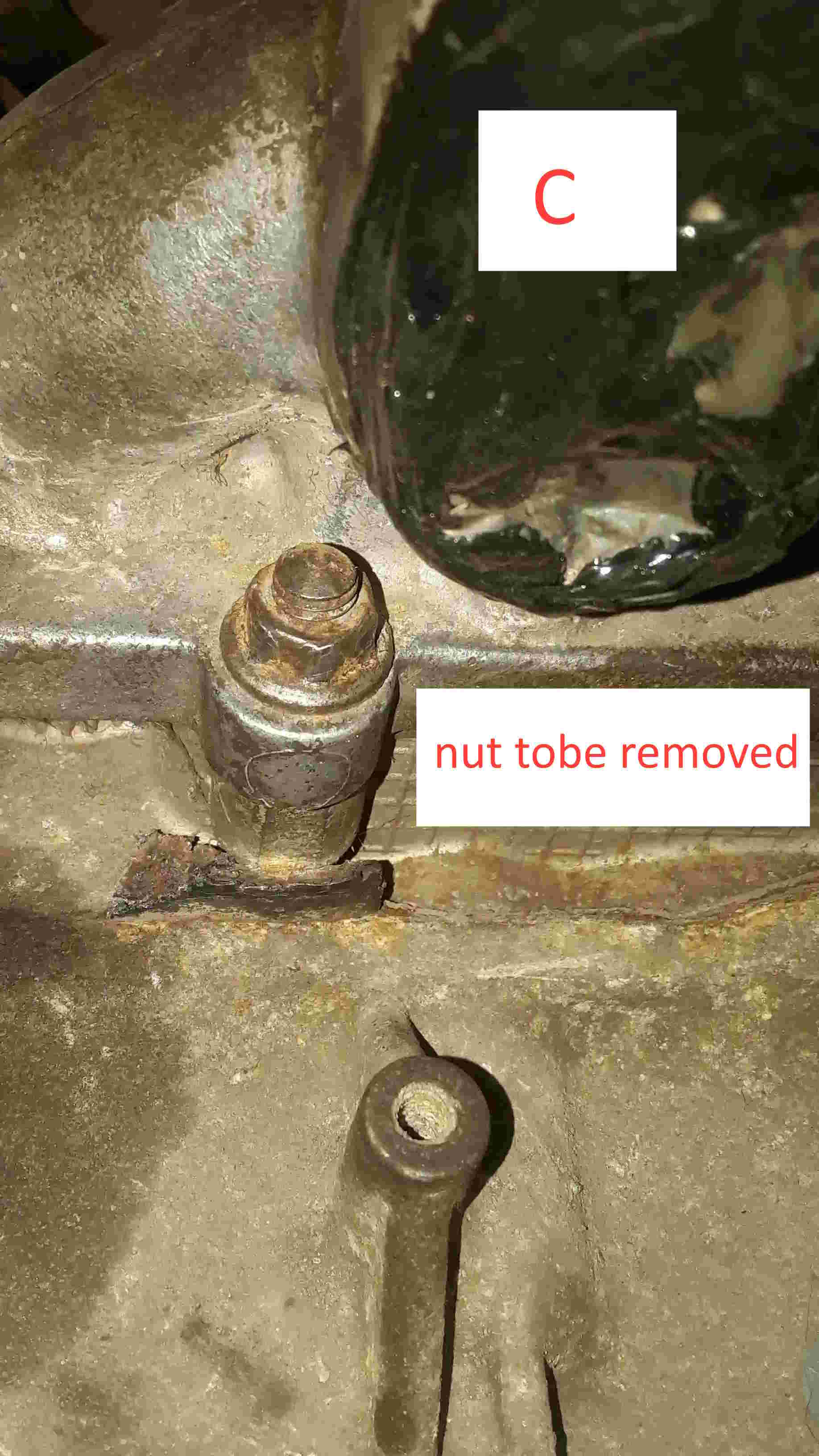
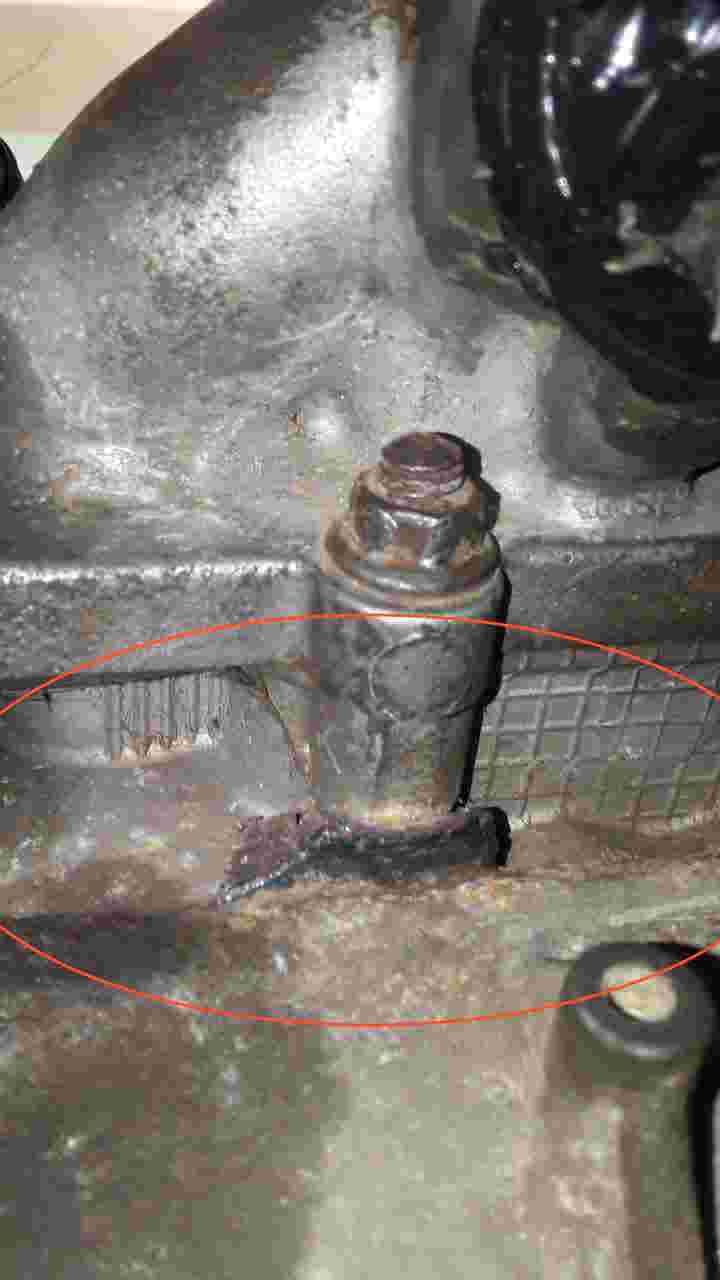
The second image shows the nut that cannot be removed, along with the underside of the manifold below 'A', marked as 'C'.

The black material visible is sealant that I applied about a month ago; however, I haven’t attempted to start the engine since applying it.

Please let me know if you need any additional information or closer photos.

Thanks and regards,
SKM
Was this
answer
helpful?
Yes
No
Saturday, March 14th, 2026 AT 5:08 AM
Tiny
STEVE W.
  • MECHANIC
  • 15,704 POSTS
That manifold has coolant running through it to keep the carb warm. That prevents it from icing up if there is any moisture in the air. Then, where it is mounted any oil seepage from the valve cover could get under it and make it look like it is coming from the manifold. It then mixes somewhat into the thinner coolant and you get a leak that looks like both from one spot. The nut to be removed looks like a simple one, Short socket on a swivel extension or a ratcheting box wrench should get it off. The plug in the bottom of the manifold can be leaking as well. They get corroded and then leak.
Was this
answer
helpful?
Yes
No
Saturday, March 14th, 2026 AT 11:26 AM
Tiny
MOHANBARATHI
  • MEMBER
  • 11 POSTS
Dear Steve,

Thank you for your assistance.

This car is about 30 years old. It has an automatic transmission (AT) with a torque converter, and I have owned it since 1996.

At the moment, the Fitness Certificate (FC) for the car expired a couple of years ago. I did not renew it earlier because I was unsure whether to renew it or scrap the vehicle. However, I am emotionally attached to this car, and since the repairs still appear technically manageable, I am now planning to renew the FC. Once renewed in India, it will remain valid for the next five years.

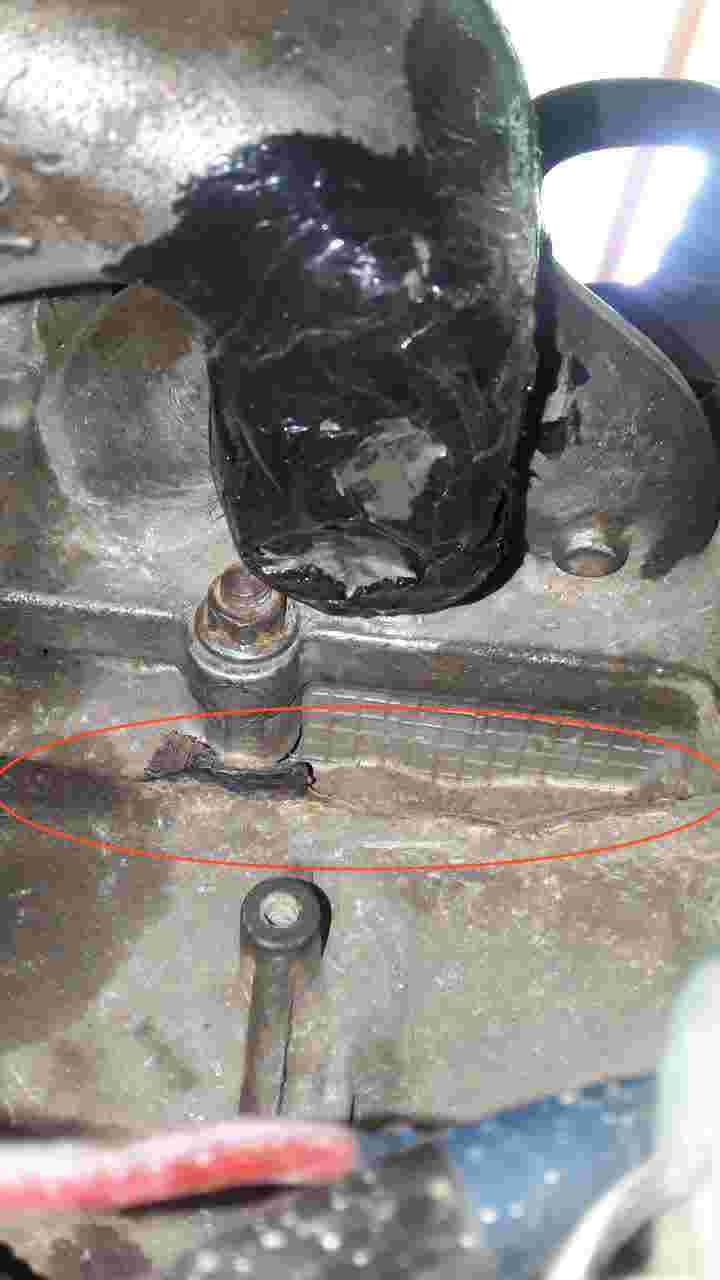
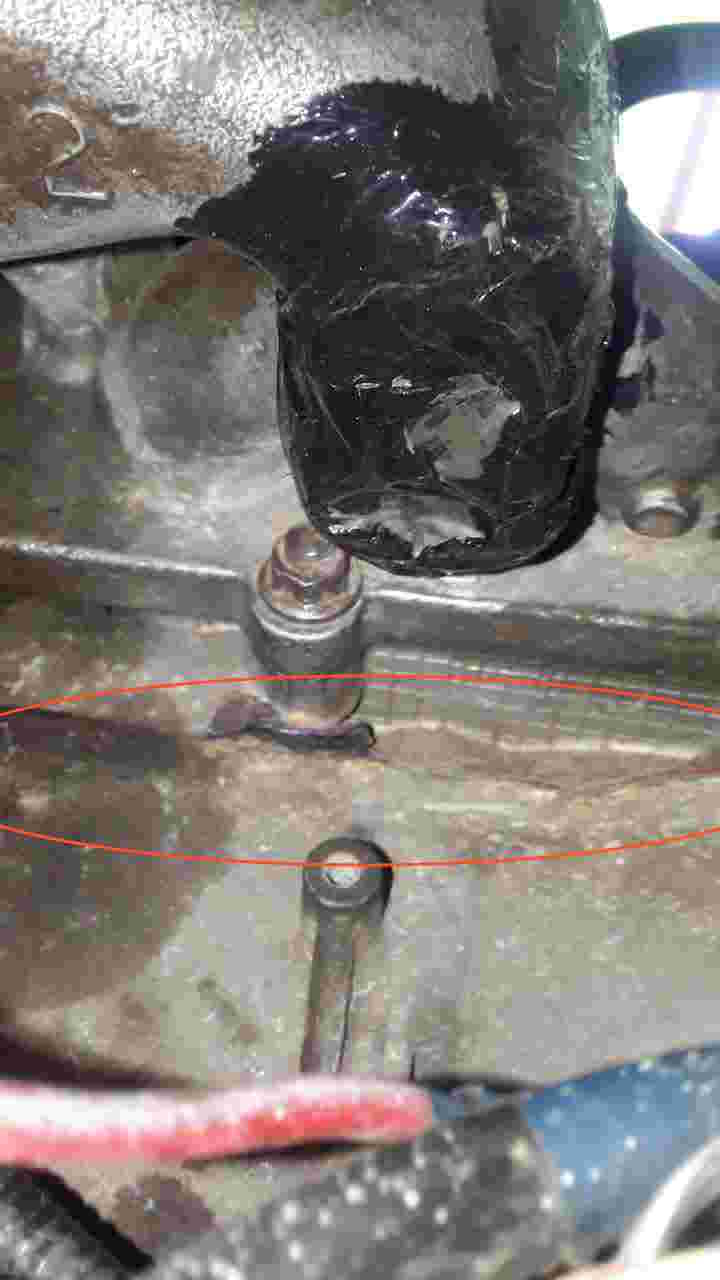
I am enclosing three additional images for your reference. In the photos, you can clearly see the crack and the rust around the base of the bolt where the nut needs to be removed, which I mentioned earlier.

Although I have managed to handle various issues with this car since the beginning, the crack and rust in this engine area are a concern for me. Since there is rust at the bolt base, do you think applying force to remove the nut could worsen the situation or possibly break the engine base around it?

If such a break were to occur, would it be possible to repair it using JB Weld or another suitable product?

I plan to do my best to get the car running again and would greatly appreciate your honest suggestion on this.

Thanks and regards,
SKM
Was this
answer
helpful?
Yes
No
Monday, March 16th, 2026 AT 10:07 AM
Tiny
STEVE W.
  • MECHANIC
  • 15,704 POSTS
That looks more like casting flash than a crack. If you can get a wire brush in there and clean the area, then see if it's a crack or if it's just casting debris.
Was this
answer
helpful?
Yes
No
Monday, March 16th, 2026 AT 6:32 PM
Tiny
MOHANBARATHI
  • MEMBER
  • 11 POSTS
Dear Steve,

I have successfully removed the intake manifold.

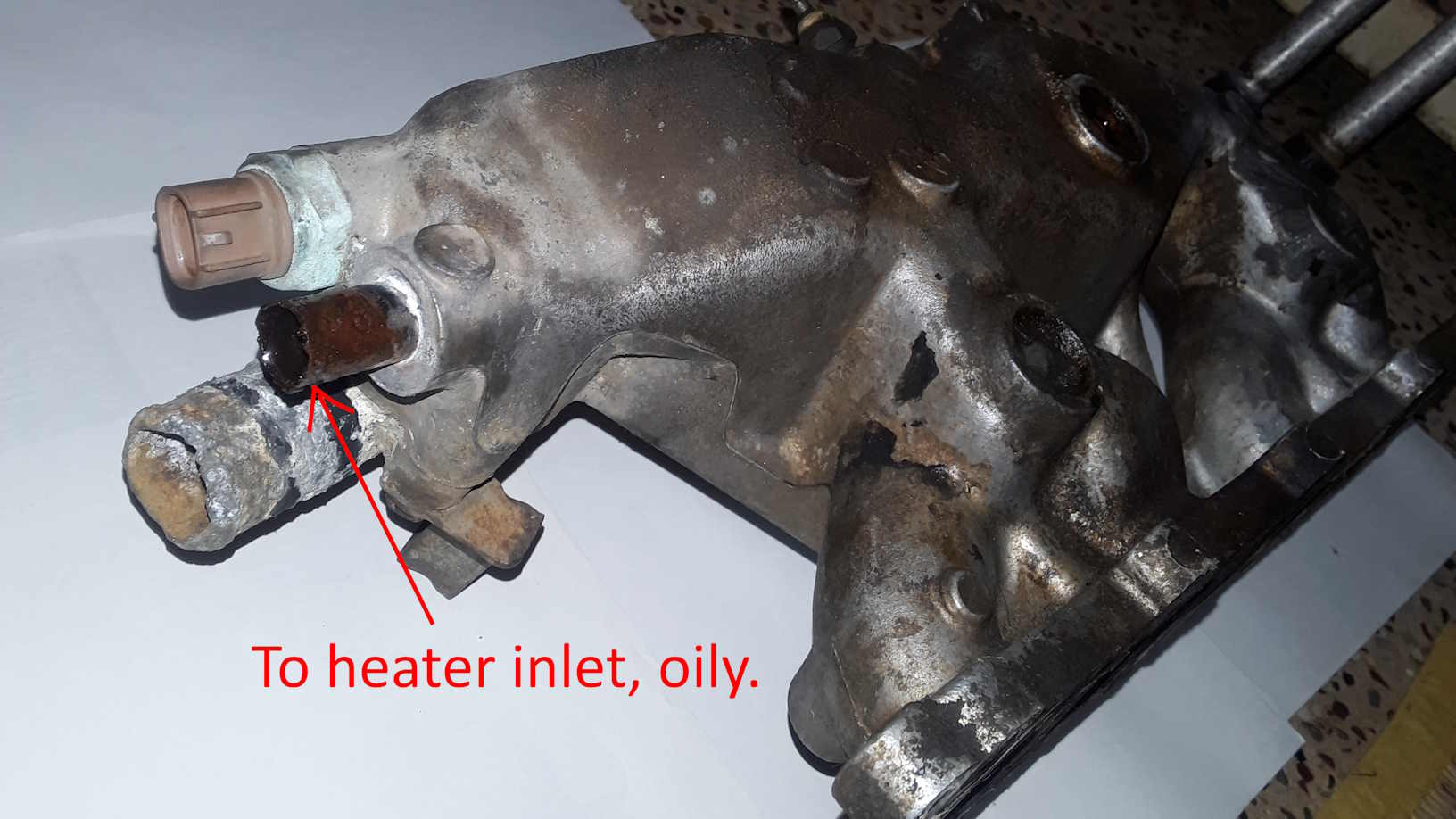
In the attached video, there is a clearly visible oil leak at the base of the engine where the intake manifold is connected. I’m unsure of the exact source or cause of the leak. Could you please advise on how this can be identified and resolved?

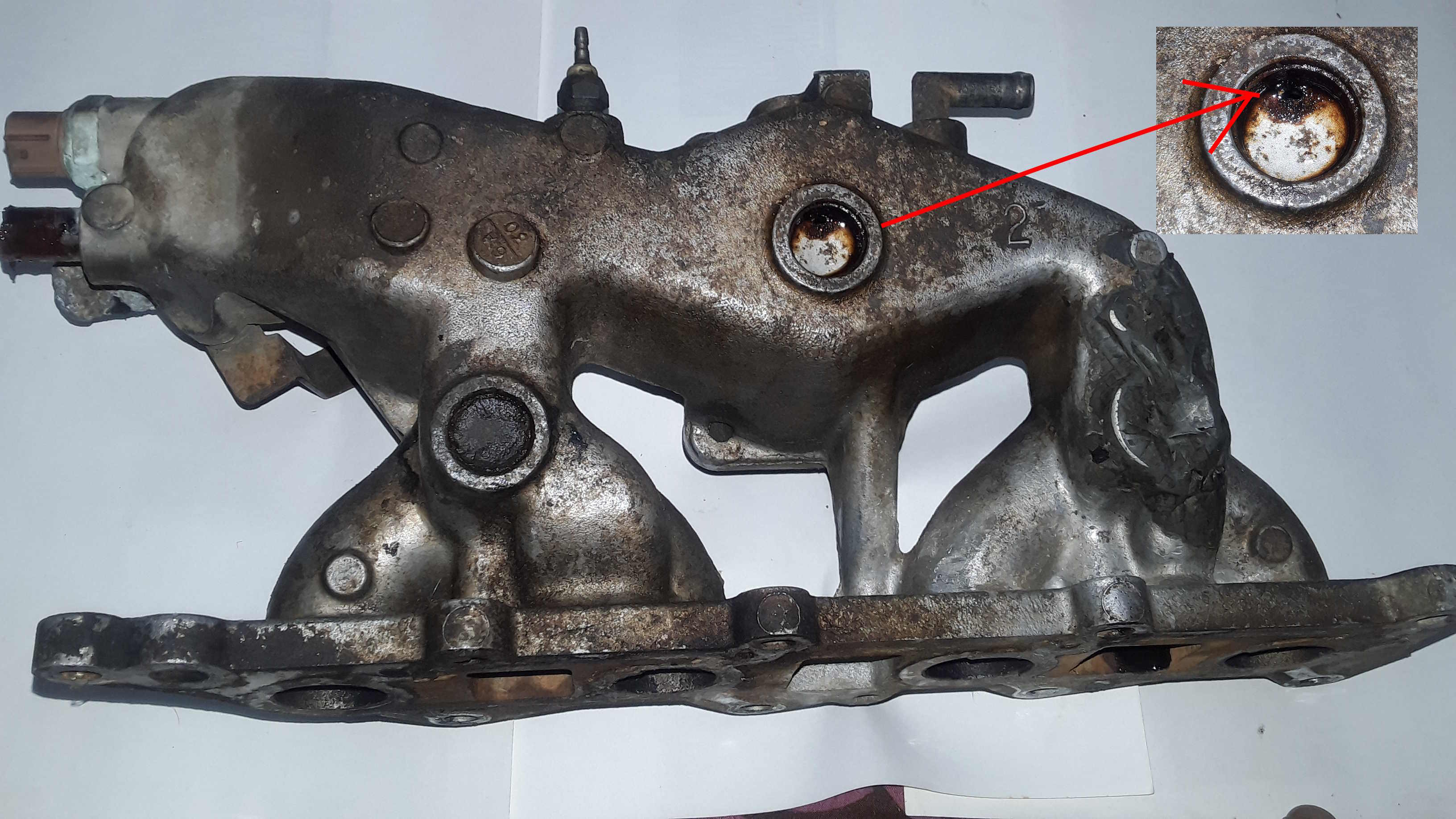
Additionally, from the images of the manifold, there appears to be a rusted core plug with a hole. I believe this might be repairable using JB Weld or a similar product; please let me know your thoughts on this.

Also, note that the oil leak is visible near the heater inlet line as well.

My primary concern at this stage is the oil leak, and I would greatly appreciate your guidance on how to address it.

Thanks and regards,
SKM
Was this
answer
helpful?
Yes
No
Tuesday, March 17th, 2026 AT 12:33 PM
Tiny
STEVE W.
  • MECHANIC
  • 15,704 POSTS
Give that a good bath and clean off the gasket surface. For the core plug, most parts stores can get you that. Then you take a punch and tap on one side to tilt it, then use pliers to remove it. Clean the hole good, then apply a very thin coat of sealer around the outside of the sleeve on the replacement plug. Use a socket and hammer to install it. That and replacing the intake gasket should stop the leaks as it looks like it was seeping on the one side and some leakage from the plug as well. For oil leaks, wipe around the valve cover with some cleaner. If it were mine I would clean out where all the plugs are and replace all of them. I avoid using anything like epoxy on them, unless you clean the surface very well it doesn't really seal anything.
Was this
answer
helpful?
Yes
No
Tuesday, March 17th, 2026 AT 4:41 PM
Tiny
MOHANBARATHI
  • MEMBER
  • 11 POSTS
Dear Steve,

Thank you again for your earlier help.

I would like to clarify a couple of observations after removing the intake manifold:

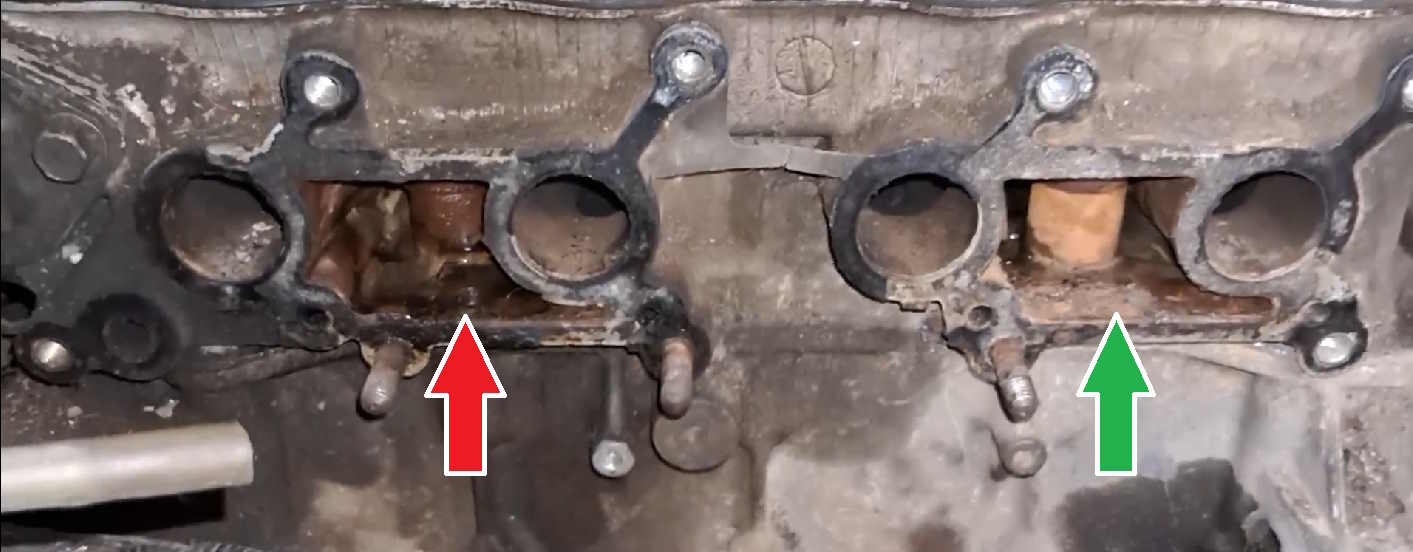
1. As shown in the previously attached video, one of the intake ports has visible engine oil inside it while the adjacent port is dry. I am enclosing a screenshot for clarity (red arrow showing oil, green arrow showing a dry port). Since the intake manifold itself does not carry engine oil, could this oil be entering the port from the cylinder head side, possibly due to a worn valve guide or valve stem seal or head gasket leak?

2. What would happen if I simply replace the intake manifold gasket and repair the core plug (resolving the manifold-related issues), but *ignore* the oil seen in the intake port and start using the car normally? Would this likely cause any immediate problems?

Thanks and regards,
SKM
Was this
answer
helpful?
Yes
No
Wednesday, March 18th, 2026 AT 1:22 AM
Tiny
STEVE W.
  • MECHANIC
  • 15,704 POSTS
That isn't oil, it looks like baked coolant. Those ports carry coolant from the engine out through the intake. That is why they have the rusty color. However this is an automatic, have you noticed any low transmission fluid? A small leak could let transmission fluid into the cooling system. However I don't think that is the case.
Was this
answer
helpful?
Yes
No
Wednesday, March 18th, 2026 AT 8:26 PM
Tiny
MOHANBARATHI
  • MEMBER
  • 11 POSTS
Dear Steve,

Thank you for your continued support.

My second question from the previous message was not addressed, so I would appreciate your input:

What would happen if I simply replace the intake manifold gasket and repair the core plug (resolving the complete manifold-related issues), but *ignore* the oil seen in the intake port and start using the car normally? Would this likely cause any immediate problems?

Also, to clarify - there is no issue with transmission fluid. The level is stable with no signs of leakage.

Thanks and regards,
SKM
Was this
answer
helpful?
Yes
No
Friday, March 27th, 2026 AT 9:40 AM
Tiny
STEVE W.
  • MECHANIC
  • 15,704 POSTS
Just clean out the goo and run it, if it is oil it's likely from seepage and not a real issue. A lot like seeing a small dark area around a valve cover after the engine has been run a lot of years. Dealerships will be "OH that's a bad oil leak that needs to be fixed $$$$$ ! When it's really nothing but typical seeping. When you start to worry is when you see a lot of oil flowing and clean areas from the hot oil.
Was this
answer
helpful?
Yes
No
Friday, March 27th, 2026 AT 11:18 AM
Tiny
MOHANBARATHI
  • MEMBER
  • 11 POSTS
Dear Steve,

Thank you for your earlier assistance.

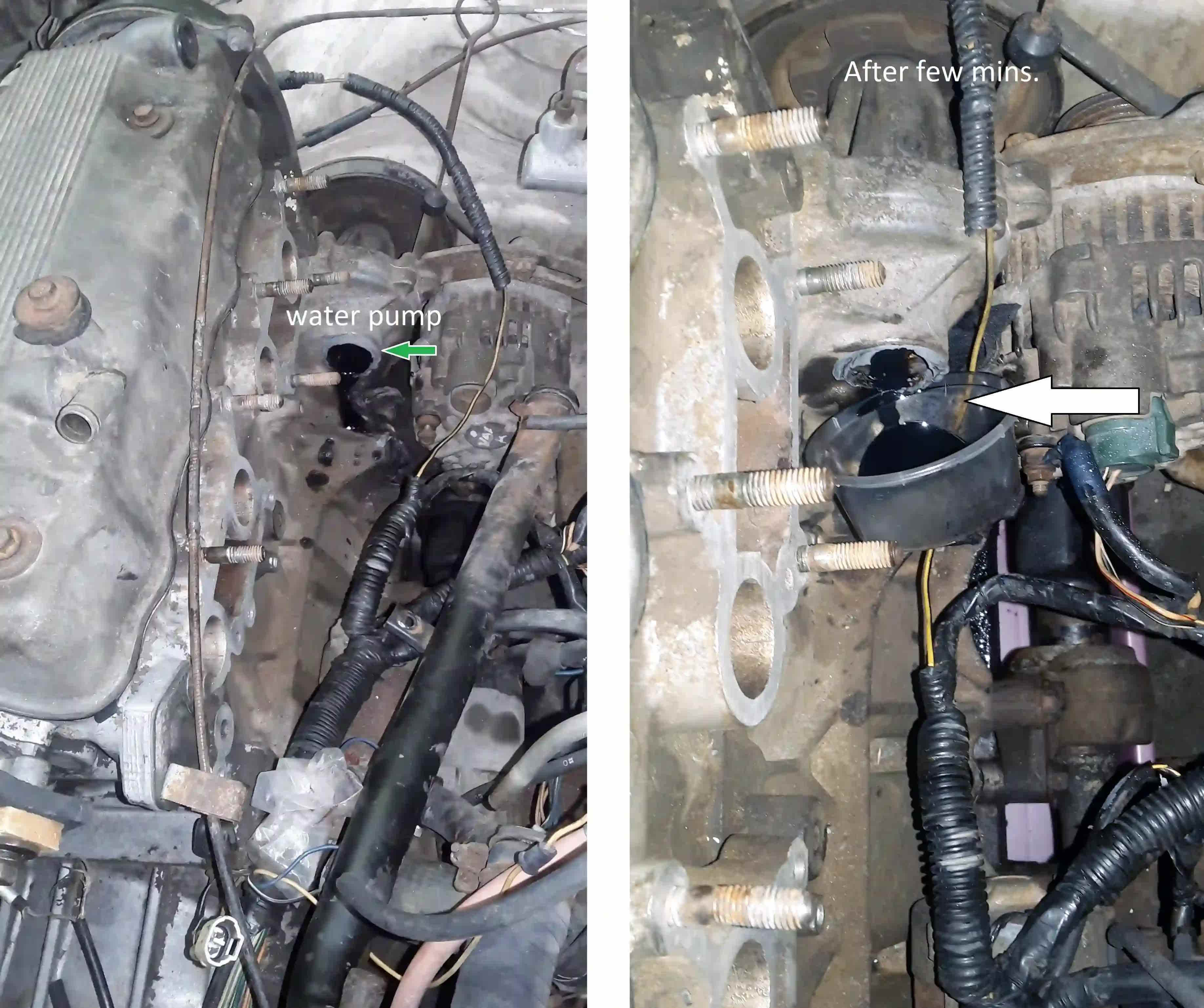
Following your suggestion, I proceeded with further inspection before reassembly. Since the engine oil had been drained earlier due to a leak, I added approximately 3 liters of old engine oil to check for any leaks.

During this process, I observed what appears to be oil inside the water pump port (either the inlet or outlet-I’m not certain). I had already disconnected the pipe connected to that port before making this observation.

I’ve attached an image for reference. The first part shows the condition immediately after filling the oil. I did not notice the oil in that area initially, so I checked again after a few minutes and captured a second image, which is shown in the later part.

Could you please advise on the possible reasons for oil appearing in the water pump port? Could this be due to a gasket issue, or might there be another cause?

Thanks and regards,
SKM
Was this
answer
helpful?
Yes
No
Thursday, April 2nd, 2026 AT 6:30 AM
Tiny
STEVE W.
  • MECHANIC
  • 15,704 POSTS
That isn't good. Was this test under pressure or just oil dumped in? If it was just poured in then it will take some extra work to determine where that is coming from. A bad head gasket would be my first idea. Add some low pressure air in the cooling system and block off other cooling system ports and see if you get air out that port. Then add pressure to the oil system and see if you get air then. If you do then pull the water pump. It's possible there is an oil passage there that is open.
Was this
answer
helpful?
Yes
No
Thursday, April 2nd, 2026 AT 6:24 PM

Please login or register to post a reply.