Front main bearing seal leak?

Tiny
TEHOFF1870
  • MEMBER
  • 2015 JEEP GRAND CHEROKEE
  • 3.6L
  • 6 CYL
  • 4WD
  • AUTOMATIC
  • 73,000 MILES
I’ve discovered what I believe to be a slow leak from the front crankshaft main bearing seal. My belief is based on seeing oil gunk collected on the front passenger side of the engine and also directly below the crank shaft location. Even spattered on the alternator. If I’m correct, it must be a very slow leak because the engine doesn’t use oil and there’s no spots on the garage floor. My question is that if I only drive the Jeep about 4,000 miles a year and plan to sell the vehicle in 18 months, is it worth the expense of getting it fixed or can I just manage it by watching the oil level? Am I in any danger of the vehicle just suddenly failing?
Thursday, December 4th, 2025 AT 8:31 AM

4 Replies

Tiny
STEVE W.
  • MECHANIC
  • 15,451 POSTS
That is most likely not the seal leaking but the oil cooler that is buried under the intake manifold. They have been a known issue since pretty much day one on the 3.6. A way to tell is simple, remove the engine cover and use a flashlight to look in the valley under the intake. If it's leaking the oil can pool up there and can get over an inch deep before you notice it getting out. I've seen it leak in the front and rear of the engine. The repair is to remove the upper and lower intakes and replace the cooler O-Rings. There are literally hundreds of videos on the replacement of the cooler. This is just one of them
https://www.youtube.com/watch?v=IPMoe875Ghw
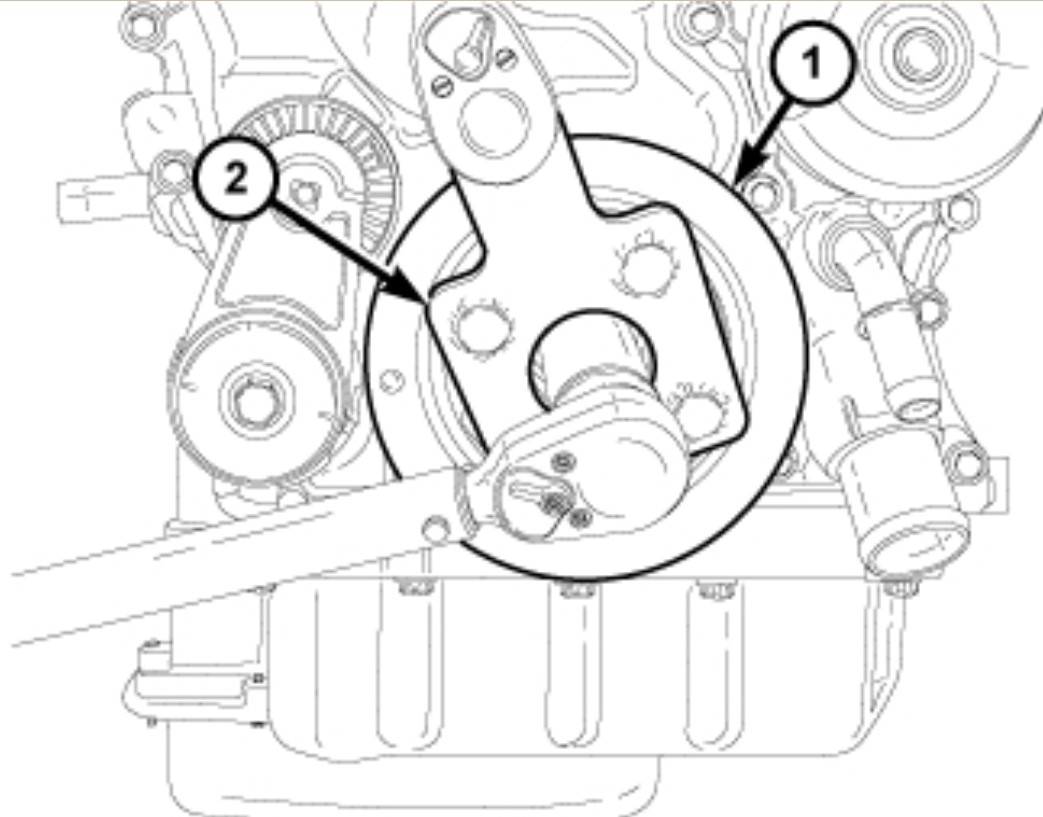
Now if you really feel it is the front main seal, It is very easy to change it out. You remove the accessory belt. Then use a puller tool to remove the crankshaft damper then you use the seal remover (or the older trick is to use a couple sheet metal screws driven into the seal) and remove the old seal. Wipe up the area the seal goes into, then start the seal and gently tap it into place in the engine block. Then you apply some oil to the seal lip and slide the crankshaft damper back into place and use the installer or the retainer bolt to put it back into place and re-install the belt. Takes about an hour to do. Then change the oil just in case you knocked anything into the engine while cleaning the seals seat.
Was this
answer
helpful?
Yes
No
-1
Thursday, December 4th, 2025 AT 7:06 PM
Tiny
TEHOFF1870
  • MEMBER
  • 2 POSTS
I did check the valley at the oil cooler and don't see any oil. That aside, you didn't really answer my question. I don't want to fix it or or have a mechanic fix it, if I don't have to. My question is, assuming that I'm only going to put another 6 to 8 thousand miles on the vehicle and the loss of oil is apparently VERY low, am I in danger of something suddenly blowing out, losing oil pressure, and being stuck on the side of the road? Is it relatively safe to simply watch my oil level and, if I keep it full, just continue to drive the vehicle? If the leak gets worse, then I can get it fixed. Is this a really bad idea or an educated slight risk?
Was this
answer
helpful?
Yes
No
Friday, December 5th, 2025 AT 8:49 AM
Tiny
STEVE W.
  • MECHANIC
  • 15,451 POSTS
Your plan could work provided it doesn't get worse fast. I just wanted you to know where the leak might be as that is a common one and it can cause engine failure because there is both coolant and oil in the cooler and they can mix. However if you watch it close and don't let it run out of oil it might be fine to keep driving it. Hard to say 100% because I have not seen it.
Was this
answer
helpful?
Yes
No
+1
Friday, December 5th, 2025 AT 2:39 PM
Tiny
CARADIODOC
  • MECHANIC
  • 34,400 POSTS
Hi guys. You're seriously over-worried. Next time you're on the highway, watch for a short dark patch on the road every once in a while. You'll notice there's a dip in the road surface right before that dark spot. The dip causes oil drips to drop off leaking engines and accumulate right after that. To say that a different way, there's hundreds of cars passing by every day with really serious oil leaks, but you don't see them on the side of the road with engine failures. From what you've described, you have nothing more than the common oil seepage that occurs on every engine with the mileage you listed. It's good to be observant, and to check the oil level periodically, but you can sleep well tonight. Engines fail all the time, but not due to the little accumulation you're seeing.

As a side note, you'll notice that most oil dip sticks have not listed "full" and "add" for a long time. That's because engines are designed to be as fuel efficient as possible. One of the many changes is to use low-tension piston rings that develop less friction, but they let a light film of oil sneak by too that gets burned. You won't see that at the tail pipe, but it is quite common for the oil level to go down between changes. Toyota even had an oil reserve tank back in the 1980s on some of their vans. Today dip sticks show, "Min" and "Max". As long as the level is between those two points, there's no need to add. If the level gets below "minimum", there's still a safety margin built in, but on hard corners, the oil could wash to the side and allow air to be sucked up by the oil pump. Over-filling can be just as bad. The oil can reach the spinning crankshaft and get air whipped into it. Air going through the oiling system is the same as no oil to separate the moving parts. My experience has been when the specified amount of oil is put in at an oil change, the level shows up at about 3/4 from "minimum" to "maximum".

If you want to discuss engine problems, the better topic would be the use of variable valve timing. GM and FORD engines have a lot of trouble with that. Chrysler's 3.6L has had very little trouble, but the biggest thing to prevent problems is to keep the oil clean. I have a 3.6L in a 2014 Caravan, and a 5.7L in a 2014 Ram, both using the variable valve timing. The advice I've gotten from local engine rebuilders is to not go by the oil-change gauges on the instrument cluster. Those draw out the recommendations too far, as in up to 10,000 miles. It's true the oils today are much improved, but I still change oil at no more than 5,000 miles. Every manufacturer used to recommend every 3,000 miles, then Ford started trying to make their cost of regular maintenance appear lower than that of their competitors, so they started recommending every 7,500 miles except for "severe" conditions. If you read their requirements carefully, you'd see "severe" included short-trip driving conditions, extended long trips, cold weather, hot weather, dirt roads, heavy loads, to include multiple passengers, etc. In fact, there was no such thing as "non-severe" use. You were guaranteed they could find a reason you should have changed the oil every 3,000 miles.

The problem with dirty oil is tiny particles can develop that make it through the filter, then can plug the small passages that switch oil flow on and off to the variable valve timing components. I don't know that I'd call that an "engine failure" exactly, but it would require a visit to the repair shop. Both power and fuel mileage would be reduced by quite a bit.

To boil this all down, there's no need to worry about the seepage you described. I suspect you would still see the same thing after replacing the crankshaft seal.
Was this
answer
helpful?
Yes
No
+1
Friday, December 5th, 2025 AT 2:54 PM

Please login or register to post a reply.