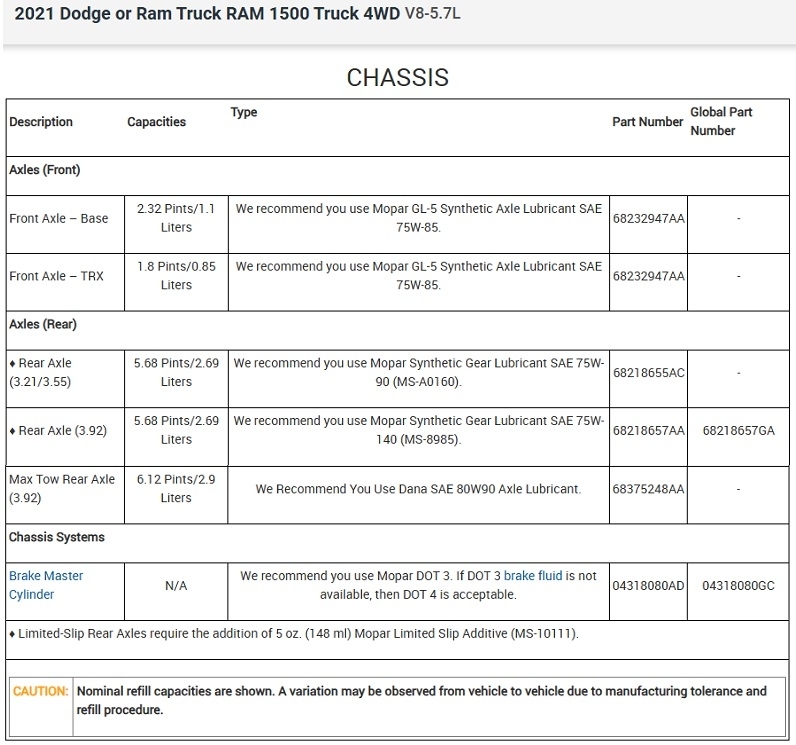
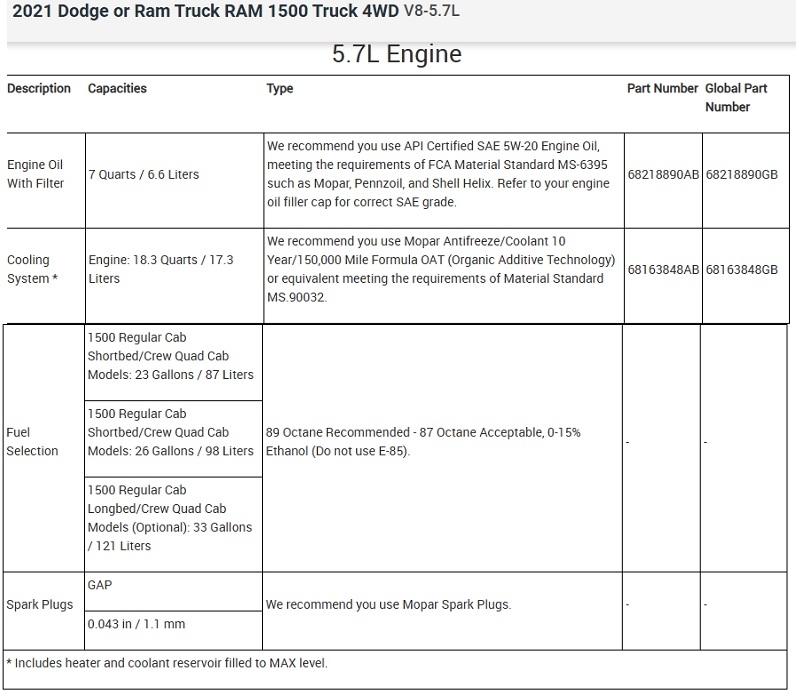
I can share my experience with a very similar 2014 Ram 1500. The coolant is listed as good for ten years. It is alcohol and will always be alcohol. It's the additives, like anti-corrosion agents, seal conditioners, and water pump lubricant that wear out. It becomes acidic from combustion gases that naturally sneak into the cooling system. The additives neutralize that.
Those additives in engine coolant used to wear out in about two years, so that was the recommended change interval. Some new coolants advertise "lifetime", but I'm not sold on that. "Lifetime" means different things in different states. For example, here in Wisconsin, if you buy a "lifetime" warranty for your new vehicle, that is considered 14 years. You won't get the free engine you expect after 20 or 30 years.
Check your owner's manual for the fluid change recommendations. I'd be surprised if it isn't listed as "10 years".
Forget the brake fluid change. That is a very real service, but almost everyone ignores it or isn't even aware of it because the brake hydraulic systems cause such little trouble. The concern is brake fluid loves to absorb moisture. That occurs through the rubber flex hoses and when a container of new fluid or the cap on the reservoir is left loose. That moisture promotes the corrosion of metal parts from the inside, but it also leads to one type of brake fade. Brake pads generate a lot of heat, especially in city driving. That heat migrates through the pads and caliper pistons, then into the brake fluid. Brake fluid boils at well over 400 degrees F. Moisture boils at 212 degrees. It's pretty easy for brake parts and fluid to get that hot, then the moisture vaporizes, developing air in the fluid. Since air can be compressed, it causes a low and spongy brake pedal. It can also prevent the anti-lock brake system hydraulic controller from performing properly. It's normal for brake fluid to turn dark over time. That's a result of being heated multiple times. We want to replace brake fluid periodically to get the moisture out. If you have nothing better to spend your money on, have the brake fluid replaced every 50,000 to perhaps 75,000 miles, since you put on so few miles per year. This is more of a time thing rather than a mileage thing.
If your truck is a 1500, it has a rack and pinion steering gear with electric power assist. You'll see there is no belt-driven power steering pump on the front of the engine. This doesn't even show up in the specifications. I posted some fluid charts but they don't include the recommended change intervals.
Oil and fuel additives are not necessary. We call those "mechanic in a can". When a refiner's turn comes up, they pump a million gallons of gas into the distribution pipeline, but the million gallons that comes out the other end came from some other refiner. It all gets mixed together and all must follow the same strict formulations for best engine performance and lowest emissions. Once it leaves the storage facility in a tanker truck is when each gas station operator gets to add their own proprietary blend of additives that they think makes their gas "better". They've already added detergents so there's no need to add more of the same stuff from a bottle.
Engine oil already has detergents to dissolve sludge and particles, dispersants to carry that crud to the filter, conditioners to keep rubber seals pliable, anti-corrosive and anti-foaming agents. Each manufacturer brags about their own blend, but there's one thing to help you follow the guidelines. That is the ratings on each container of oil. Look for something similar to "SG / CD". In the "SG", the "S" stands for "spark ignition", meaning your gas engine. If you have a diesel engine, use the "CD" rating. "C" stands for "compression ignition".
Every time engine oil goes through a major upgrade, it gets a new rating with the next higher letter. When an engine manufacturer comes up with a design that requires some new formulation, it will go from an "SG" rating to an "SH". If you buy your oil from any auto parts store or any other retailer, you will be getting oil with the latest rating. In my sad story, any oil with an "SH" rating is more than good enough for any older engine. The only time you have to be concerned with ratings is when you have a stockpile of oil you bought on sale years ago and you want to use it in a newer vehicle. I don't recommend trying to mix it with some newer oil to try to use up the old stuff. Same is more true with switching brands or mixing different brands in one oil change. In some instances one oil might have a detergent, for example, that attacks the seal conditioners in a different brand of oil. It is not uncommon to develop a leak on high-mileage engines right after switching to a different brand of oil. This is also where you can run into trouble by adding a can of additives. Those additives have to be compatible with any brand of oil, so they may be unable to include some of the best ones there are.
Your truck has an oil change reminder built in that will tell you when it's time to change it. I have a gauge on my instrument cluster programmed to show that all the time. This is one time I would not go solely by that. Your engine has "variable valve timing". That's a rather complicated system that gives you the best of both engine designs; high low-end torque with high high-end fuel mileage. The mechanics works on pressurized engine oil and it's important to keep that oil clean. Small particles that sneak through the filter could plug the tiny orifices that turn that oil flow on and off. My truck and my 2014 Caravan recommend oil changes at 10,000 miles, but it's better to do that every 5,000 miles. Even that is a big savings over the old 3,000-mile recommendations years ago.
I also have a 1993 Dodge Dynasty. I did flush the brake fluid about ten years ago. It still has the original coolant. In another 50 miles, it will get its second oil change. When I bought it new from the dealership I worked for, I planned on doing that oil change every 2,500 miles. I'm excited about hitting the 5,000-mile mark in the next few years. For that car, I have a stash of Mopar oil that had the highest rating in 1993. That would not be recommended for my newer vehicles, but any new oil today would satisfy all of them.
As for the battery, no car has ever had a warning light to warn of a failing battery. For decades Chrysler used a very informative "Amps" gauge that showed how much the battery was being recharged after starting the engine. Today, like all the others, they just use a "Voltage" gauge. Proper charging voltage is between 13.75 and 14.75 volts. When there's a problem with the charging system, voltage will gradually drop as the battery runs down. The warning light doesn't mean the battery is bad. It means the charging system has stopped supplying the current needed to run the truck and keep the battery charged. The warning light means it's the charging system that must be tested. When the time comes, I can describe that better and help you to start the testing on your own. Also, here's a link to an article that explains it better:
https://www.2carpros.com/articles/how-to-check-a-car-alternator
Your truck came with a new type of battery called "absorbed glass mat", or "AGM" for short. It uses a conductive paste inside instead of liquid acid and water. In both of my 2014 vehicles, those batteries lasted ten years. Batteries, as part of Automotive Electrical, was one of the specialty areas I taught, but I never really got into AGM batteries, so I don't know how they fail compared the lead-acid batteries. My best recommendation for now is to pay attention to how healthy the starter sounds. If you start to notice the engine is cranking slower than normal, having the battery tested is a quick, easy process. Lead-acid batteries used to seem to fail just a few months short of their warranty, which was usually five years for car batteries and three years for truck batteries. The lead naturally flakes off the plates over time, and the increased vibration in trucks makes that occur faster. That's why truck batteries have shorter warranties. As the lead flakes off, it floats down and collects in the bottom of the case. Once it builds up high enough, it shorts that cell, then the battery won't start the engine and must be replaced. That type of failure shouldn't happen in an AGM battery.
Images (Click to enlarge)
Oct 18, 2025 at 5:05 PM