Free Auto Repair Advice by Professional Mechanics
Hybrid Car Information
Introduction:
Hybrid cars and trucks are becoming more popular as petroleum based fuels
have become more expense to obtain as the world supply diminishes. As technology
improves on both the efficiency of the rechargeable battery packs and the increased
motor output hybrids cars have become more feasible. Research in hybrid technology
has been extensive and beneficial to extend the range and power aspects. The most
noticeable advancements have been in the battery sector. The batteries that power
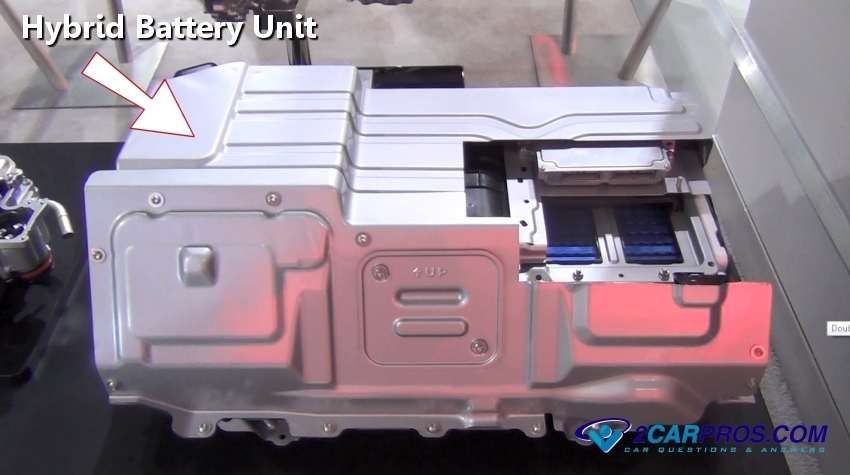
a hybrid vehicle are composed of many cells connected together into "battery packs".
These packs can be permanently mounted to the vehicle or designed for easy removal
and replacement. The "quick change" design is beneficial for future deployment
of
"charge stations" that will enable long distance travel by replacing the battery
pack within a couple minutes.

Hybrid Car
There is no doubt, the world will run low petroleum fuel sometime in the near
future and hybrid/electric vehicles will be the solution. Automakers have taking
notice of this forecast and have made changes in the car lineup that will enable
them to respond to the new hybrid car demand. This lineup includes new models along
with existing models that have been updated with the new hybrid design. A definition
of "hybrid" means "more than one source of power" whereas an electric car is fully
electrically powered with no alterative power source. A hybrid can be comprised
of hydrogen and electric, petroleum fuel and electric and any other combination
imaginable. The controller area network (CAN) incorporates high-speed communication
busses to facilitate communication between the microprocessors and additional control
systems. The multi-layer control system consists of electric motor controllers,
battery management systems, transmission controller, engine controller, and electrical
the power grid controller. The hybrid systems are more complex when integrated with
an anti-lock brake system. Some hybrid system design controls complex systems
such as regenerative brakes, main motor electrical power output/backup systems and
switching between fuel and electrical power.
This system also controls the more normal aspects of the car such as anti-theft,
climate control, window, light operation and entertainment systems. The computer
system is separated into modules and connects via an information bus. As in most
computer systems an automatic malfunction detection program is designed to alert
the driver a malfunction has occurred. Once this system MIL (malfunction inductor
lamp) has illuminated a diagnostic trouble code will be stored in the vehicle's
computer and can be retrieved much like a fully petroleum based fuel car would.
The method of code retrieval can vary from a self initiated request to a serial
port design to allow a code reader or a lap top with a specific program to retrieve
the trouble codes. Even though it true hybrid cars and trucks have less maintenance,
the maintenance and service they do need will be more expensive. One of the largest
maintenance items that will need little service compared to regular petroleum fuel
car is the brake system. Because a hybrid's brake system is regenerative the energy
normally lost in the brake process is now directed to the batteries in the form
of electricity. Brake systems for conventional petroleum based cars utilize a hydraulic
pressure system that creates friction via brake pads, shoes, drums and rotors to
slow the vehicle. This action creates heat generated from the linear motion of a
brake rotor or drum. This heat/friction energy is recovered in a regenerative braking
system.
To increase range capabilities for the hybrid car an auxiliary battery pack can
be installed on some models to help increase battery life. These extras battery
packs are designed to boost the current system as a supplemental electric supply.
Extended life batteries can be charged separately and carried onboard to increase
travel distance. Additionally, after market battery manufactures have produced "extra
life" main battery packs designed to replace the original battery pack. Some companies
claim to have improved battery life more than 100 miles to the vehicle range.
Hybrid Car Advancement Categories
- Weight Reduction
- Aerodynamics
- Lubrication Systems
- Wheels and Tires/Rolling Resistance
- Optical Systems
The body of the hybrid car is lighter than a conventional vehicle thus facilitating
higher mileage. The tires are made of firm material and hold more air pressure to
decrease drag. The batteries are charged by recovering brake energy (kinetic) and
are recharged. Unlike the batteries of a conventional car the battery of a hybrid
car differs in the internal structure and the amount of energy stored. The replacement
of nickel with copper has made the hybrid battery more powerful but the cost is
rising do to the increased demand of raw materials. A battery called a lithium ion
is quickly becoming a viable alternative. They can produce more power with a shorter
recharge rate.

Basic Hybrid Configuration
A lightweight lithium ion battery also provides more power and a longer
running time than copper based batteries. This increases the efficiency and
acceleration of the car. The biggest advantage to users will be when lithium
batteries are mass produced to hold down the cost. Some hybrid cars are now
being produce have
the option of "plug-in to charge" batteries. The user will plug in the vehicle to
a conventional electrical outlet to charge. This technology is a major advancement
and requires robust battery technology and an intelligent computer control system.

Toyota Hybrid Motorium ion batteries have cobalt oxide cathode material, which
makes it more vulnerable to catch fire or explode. This is known as the thermal
runaway effect. To defeat this condition manufacturers have now replaced the cobalt
metal with phosphate. This provides the same charging power and energy storage when
compared to cobalt oxide battery.
Scientists claim that the modern nickel metal hydride batteries, when compared to
the traditional nickel cadmium and lead acid batteries cause less harm to the environment.
Lead batteries are the most toxic followed by nickel and then lithium. Most manufacturers
recycle many of the components of the battery. The parts are disassembled and divided
into categories, plastic is shredded, metals and fluid extracted. The remainder
of the contents is neutralized before it is sent into landfills.
Got a Hybrid Car Repair Question,
we will answer it for FREE!
Check Manufacturer Specific Hybrid
Question and Answers
Related Subjects
GET
CAR REPAIR MANUALS
FOR YOUR HYBRID CAR. Get instant access to your vehicles drive belt routing,
wiring diagrams, trouble code information and other available updates and factory
bulletins.
|