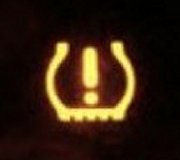
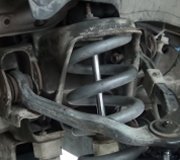
A vehicle tire wear pattern is subject to the condition of the suspension, air pressure, alignment, balance of the tire and the ability of the shocks or struts to hold the tire steady when the tire is in motion.
Tire Maintenance Helps
There are two aspects to the tire which help the performance and life expectancy which are, balance and inflation. Once a new tire has been run for a while signs of irregular wear can begin to show up such as flat spots, cupping or extreme wear on one or both sides of the tire. It is the responsibility of the vehicle operator to inspect tire conditions such as punctures, cuts and embedded sharp objects like screws, nails, broken glass and metal. The depth of the tread should be inspected at each service interval and be replaced once the wear bars have been exposed.
Tire Pressure
Tires are designed to run on a specific amount of air pressure according to the manufacturers recommendations which is motioned on the tire sidewall. Using a tire air pressure gauge with compressed air to increase pressure, or allow air to escape to decrease pressure, correct air pressure is essential for proper vehicle operation and will improve mileage (range) and help performance as well.
SPONSORED LINKS
Tire Rotation
Due to the nature of the vehicle the front tires will wear differently than the rear, for this a tire rotation is recommended every 12,000 to 15,000 miles. Rotation patterns have varied in the past but traditionally front to rear is best while keeping the tire on the same side of the vehicle, never changing the direction a tire rotates, this can cause it to come apart and have integrity issues.
What Are Tire Wear Patterns Telling You?
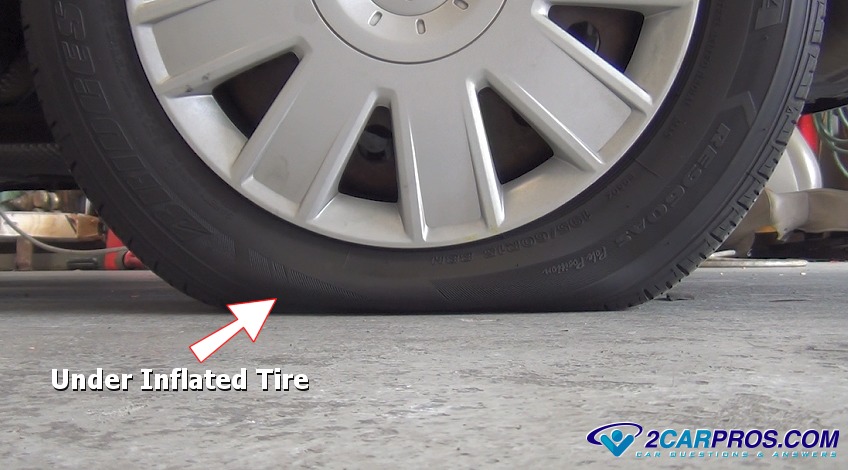
If a tire is run under inflated, it will cause the sidewall to overwork itself
resulting in tire failure, under inflation can also cause the outside portion of
the tread to wear prematurely and hurt gas mileage by increasing the vehicle's rolling
resistance.
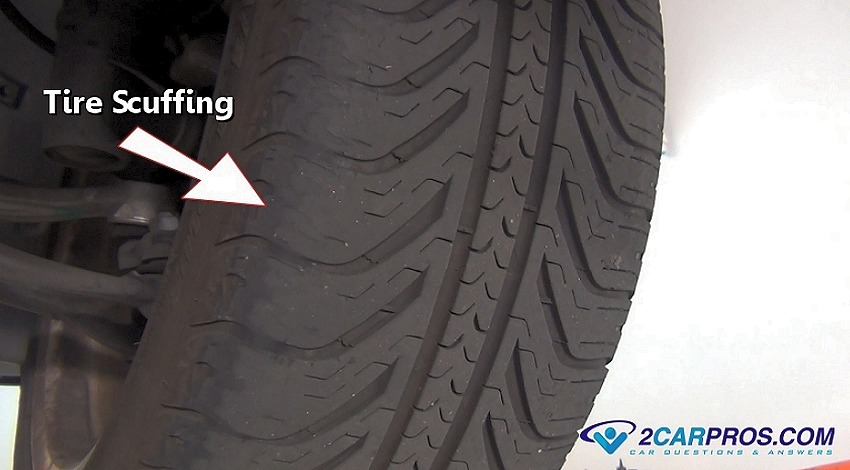
Tire alignment does more then keep your vehicle from pulling to the left or right,
it helps the tire track correctly while holding the weight of the vehicle. When
a tire alignment is out of specification, or the vehicle has a worn steering component
such a tie rod end, or a failed
suspension part such as an upper
control arm, it can cause the tire to wear out prematurely due to the scuffing
or feathering action as in the example below.
When a tire has been run over inflated, the center of the tread will wear out
prematurely and the vehicle will have a more rigid feel to the ride, this is a less
offensive problem but still requires the tire to be replaced.
.jpg)
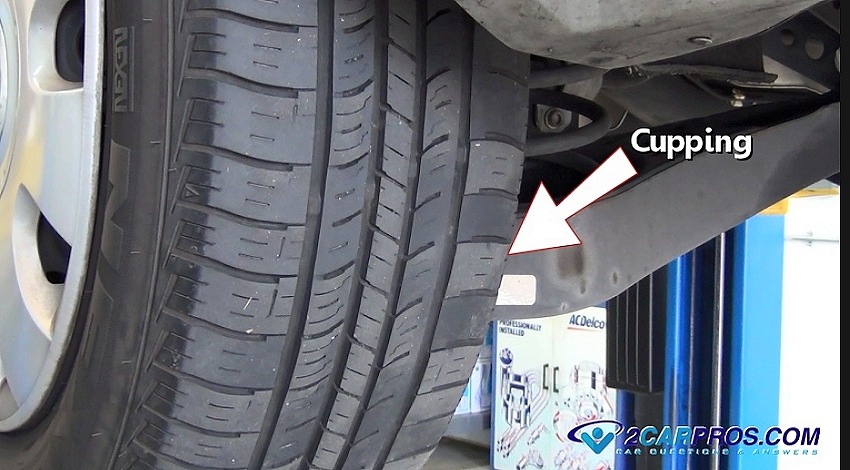
Tire cupping is caused by a tire being out of balance, or a worn strut or shock
which allows the tire to bounce which produces this uneven tread pattern. Before
the tires are replaced this issue should be addressed by
replacing the struts
or shocks
and ensuring correct tire balance.
SPONSORED LINKS
Questions?
Our certified technicians are ready to answer car repair questions for free. We hope you saved money and learned from this guide. We are creating a full set of car repair guides. Please subscribe to our 2CarPros YouTube channel and check back often for new videos which are uploaded regularly.
Article published 2022-03-09