Professional Mechanics Online Automobile Information Add Site to Favorites  


Auto Repair
Auto Repair Car Repair Home
Auto Repair Manual Auto Repair by Topic
Auto Repair Manual Auto Repair by Manufacturer
Auto Repair Talk Ask a Car Repair Question
Vehicle Repair Car Repair Video Series
Auto Repair Talk Car Repair Forum
Vehicle Repair How to Repair or Service
Vehicle Repair Car Repair Troubleshooting
Vehicle Repair How Does it Work?
Auto Repair Manual Car Maintenance
Vehicle Repair Online Repair Manual
Vehicle Repair Discount Auto Parts
Vehicle Repair Car Safety Inspection
Vehicle Repair Smog Test
Auto Repair Manual Diagnostic Trouble Codes
Vehicle Repair Engine Code Scanner
Vehicle Repair Avoid Car Repair Rip Offs
Car Repair Search Search Our Website
Car Repair Questions Auto Term Abbreviations
 
Search Website
 
 
Recent Repair Topics


Auto Repair1995 Chevy S-10 Multifun...
Auto Repair1993 Chevy Lumina Stalling
Auto Repair1998 Buick Lesabre Fuel ...
Auto Repair2001 Ford Ranger
Auto Repair1997 Chevy Camaro Hesita...
Auto Repair2003 Renault Megane Fuel...
Auto Repair1984 Subaru Impreza Over...
Auto Repair1996 Ford F150 Electrica...
Auto Repair1996 Chevy Cavalier Star...
Auto Repair1992 Honda Accord My Car...
Auto Repair1993 Buick Lesabre Ignition
Auto Repair1994 Lincoln Town Car Fa...
Auto Repair1999 Pontiac Firebird Va...
Auto Repair1999 Plymouth Breeze Hea...
Auto Repair1990 Jeep Cherokee Windo...
Auto RepairMore Repair Topics...
 
 
Latest Repair Videos


Auto Repair Motor Oil and Filter Video
Auto Repair Engine Air Filter Video
Auto Repair Air Cabin Filter Video


Free Auto Repair Advice by Certified ASE Technicians.


Troubleshooting / Engine Will Not Crank

Engine Will Not Crank / Start

The electrical system of your car has several different voltage and amperage demand systems. The engine starter circuit is designed to carry 12 volts at high current (amperage). This is why a battery cable is larger in diameter compared to other wires in the electrical system. When the ignition key is activated the starter will turn the engine over, if not we have listed below some of the most popular causes for non starter operation.

Troubleshooting Procedure

A. Test Electrical System Voltage. The best way to test for electrical system voltage is use a voltage meter. Attach the voltmeter leads to the positive and negative terminals of the battery. To check a battery surface voltage remove the positive terminal protective cover. Connect the +positive side meter lead (red) to the positive side battery terminal. Connect the - negative (black) side meter lead to the negative battery terminal. With the vehicle not running and the car sitting over night the battery voltage should be between 12.4 and 12.6 volts. To test the system without a volt meter activate the headlights, if they illuminate brightly the electrical system probably has sufficient voltage. If the headlights are dim or not working the battery charge is low or the battery has failed and needs replacing.

Checking Battery Voltage


B. Check Battery Cable Terminals:  The starter circuit of your car is a basic electrical circuit and is subject to corrosion and its effects. The first sign that corrosion is effecting the start is when you activate the ignition key to the start position the whole electrical system of the car shuts down. Once the connection has cooled the circuit will reconnect and car electrical will return. Inspect the battery terminals for corrosion but use caution. These deposits are corrosive, and are by-products of a normal battery charge and discharge function. While wearing protective goggles and clothing, use a garden hose to rinse the battery and surrounding area completely. This will dilute the acid to a non-corrosive state. You can also sprinkle baking soda to help neutralize the battery acid. Use a wire brush on the battery terminals to clean thoroughly and reassemble, recheck charging system as needed. If the corrosion is excessive the battery cables will need to be replaced, battery acid migrates down the cable strands and deteriorates the cable internally.
 
C. Starter Voltage/Amperage Draw Test. Turn the headlights on and observe, then activate the ignition key to crank the engine over. If the headlights stay bright the electrical circuit is not connected, therefore no voltage drop. A popular reason for this is the winding inside the starter has shorted or the starter armature brushes have worn out and replacement is recommended. If headlights dim way down it means your battery is weak and needs either replacement or recharge. As a rule of thumb, a typical car battery will last three to four years before replacement is needed.

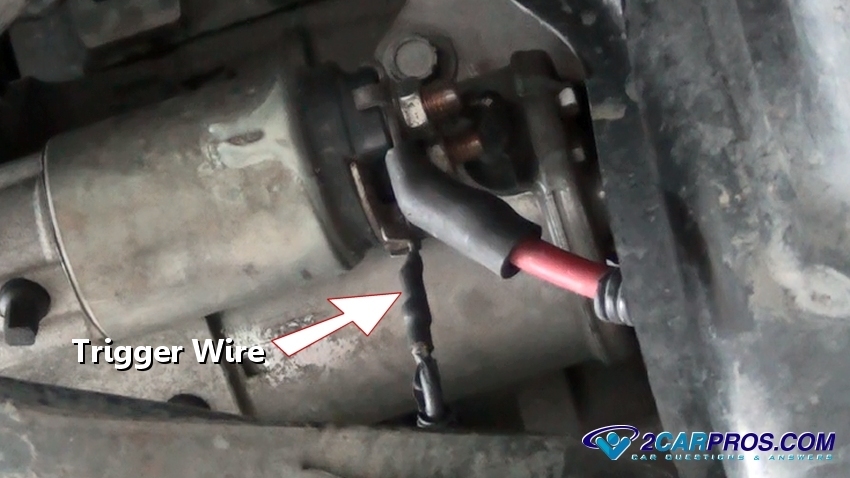
D. Check Neutral Safety Switch/Clutch Safety Switch. A neutral or clutch safety switch is used to disengage the electrical circuit from the ignition key to the starter motor as a safety device. Automatic transmission vehicle gear selector needs to be either in park or neutral before the engine will crank. If the gear selector is in any other gear sections the engine will not crank over. A standard transmission vehicle clutch peddle needs to be fully depressed before the engine will crank over. To test this circuit a automotive test light is needed. Attach one end of the test light to engine ground and the other end at the starter trigger terminal of the starter solenoid. The test light should illuminate when the ignition switch is activated (crank engine over). If the test light illuminates the starter motor/solenoid has failed and needs to be replaced. If the test light does not illuminate suspect a neutral safety switch or clutch safety switch. A wiring diagram is needed to trace power from the ignition switch through the safety switch and down to the starter solenoid. Replace failed components as needed and recheck system.

Starter Solenoid
Starter Solenoid (appearance may vary)

E. Testing Anti Theft Device. Some cars have a anti theft system that will not allow the starter to operate. If this system malfunctions the car will not crank over even after the alarm has been disabled. To test this system observe the "security" light on the dash or instrument cluster. If this light flashes while the key is being activated the security system is in failsafe mode. If you have a aftermarket alarm system in your car and you think it may be suspect locate the main system interrupted relay and bypass main control circuit . If car cranks over the alarm system has failed and replacement is needed.


F. Check for Internal Engine Damage. If your engine has had a major malfunction it will not turn over. To check for this condition install a socket wrench on the front crankshaft bolt, then try to rotate. The engine will turn with a certain degree of difficulty but it should rotate a full 360 degrees. If the engine doesn't turn disassembly is required, repair as needed and reassemble.

Troubleshooting / Engine Will Not Crank

Check Manufacturer Specific Engine Will Not Crank Questions and Answers

Related Subjects

Got a Car Repair Question we will answer it for FREE!

GET A REPAIR MANUAL FOR YOUR CAR. Get instant access to your vehicles drive belt routing, wiring diagrams, trouble code information and other available updates and factory bulletins.

Popular Service Repairs
Test Fuses
Front Brake Pads
Tune Up
Transmission Service
Rear Brake Pads
Rear Brake Shoes
Replace Window Motor
Test Alternator
Test Battery

Replace Air Filter

Check Engine Light

More Service Repairs...
Advertisement
Popular Question Topics
Alternator
Starter
Exhaust System
Fuel Economy
Rough Idle
Won't Start
Water Pump
Fuel Filter
Battery
Car Alarm
Multi Rib Belt
Catalytic Converter
Head Gasket
Intake Manifold
Motor Oil
Antenna
Air Bag
Fuel Pump
Seat Belts
Heater Core
Air Conditioner
Transmission
CV Axle Joint
Clutch
ABS
Front Brakes
Brake Rotor
Suspension
Oxygen Sensor
Mass Air Flow Sensor
Spark Plugs
Fuel Injector
Check Engine Light
EGR Valve
More Topics...
Popular Manufacturers
ACURA
ASTON MARTIN
AUDI
BMW
BUICK
CADILLAC
CHEVY
CHRYSLER
DODGE
FORD
HONDA
HYUNDAI
ISUZU
JAGUAR
JEEP
LAND ROVER
LINCOLN
MAZDA
MERCEDES BENZ
MERCURY
MITSUBISHI
NISSAN
OLDSMOBILE
PLYMOUTH
PONTIAC
PORSCHE
RENAULT
SAAB
SATURN
SUBARU
SUZUKI
TOYOTA
VOLKSWAGEN
VOLVO
More Manufacturers...

Car Repair Home l Help l Privacy Policy l User Agreement l About Us l Contact Us l Link to Us l Affiliate Program
  Copyright © 1998 - 2008 2CarPros.com - Professional Mechanics Online