Introduction
Experiencing a pull to the right or left when applying the brakes can be alarming and is a common issue that many drivers face. While a light right hand pull when a car is heading down the highway is normal, (for safety purposes - left for some European and Australian cars) a jerk right or left when hitting the brakes is irregular and in some cases can be dangerous.
The brake system depends on even pressure to be applied to the right front and left front caliper, along with the rear brake pads or shoes. If this pressure is offset due to a malfunction the car will pull when the brakes are applied. Additional causes of brake pull is suspension, steering or tire related which we will cover in this guide.
Getting Started
This problem will require you to lift the car using a hydraulic jack while securing the vehicle with jack stands, begin with the vehicle on level ground, in park with the emergency brake set. You will be using everyday tools while wearing protective gloves and eye wear and may need to remove the front tires. The following steps are presented in order of popularity and pertain to most vehicles.
Brake Rotor Temperature
1. Check Front Brake Rotor Temperature: To help find if the problem is brake system, suspension or steering related is to use an infrared laser temperature reader. The test is simple, take the car for a short drive while diligently using the brakes. Then stop the car and get out, use an infrared laser temperature reader to check the temperature of each front brake rotor. Place the beam of the meter in the same place on each rotor (through the rim or backside of the tire), if there is a problem with the brake system there will be a large difference in temperature.
Example: Right side reads 190° F (87.7 C) and the left 80° F (26.6 C) there is a problem (brake rotors should be close to the same temperature from side to side).
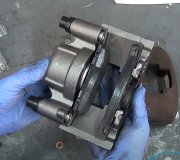
2. Check the Caliper Slides: Most vehicles are equipped with floating brake calipers which move on the caliper slides. When these caliper slides become stuck (seized) the caliper will either not fully engage or release creating a brake pull.
3. Bad Brake Caliper: If one of the brake calipers is not actuating, (not applying hydraulic pressure) is leaking, or is stuck on, it can cause a brake pull. This can be checked by removing the caliper for inspection and then retracting it, it should move smoothly into the caliper housing, if not the caliper will need to be replaced or rebuilt.
4. Brake Flex Hose Collapse: Because a brake hose is constructed of rubber, they can fail internally allowing a small part of the inner hose liner to become lodged. This will act like a one-way check valve that will either withhold brake pressure to the caliper, or not allow hydraulic pressure to bleed off. If a brake job was recently performed check the hose to make sure it is not kinked or bent because sometimes the hose can get twisted when reinstalling the brake caliper.
5. Brakes Grinding: If the brakes are grinding while pulling it could mean the pads have worn and replacement is required.
Steering System
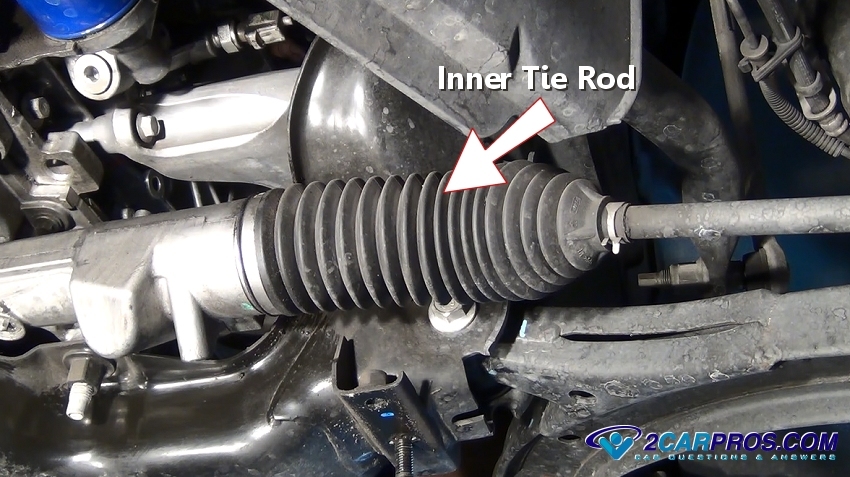
1. Loose Tie Rod Ends: An inner and outer tie rod end hold the steering spindle steady which supports the front tires. These parts can wear it can cause play, allowing the front tires to move right or left when the brakes are applied. To check for this problem, raise the front of the car and grasp the front wheels, (one at a time, move them back and forth while watching the tie rods (4) with a flashlight. There should be no visible play, if play exists the tie rod end needs to be replaced.
Worn Out Outer Tie Rod End

Suspension
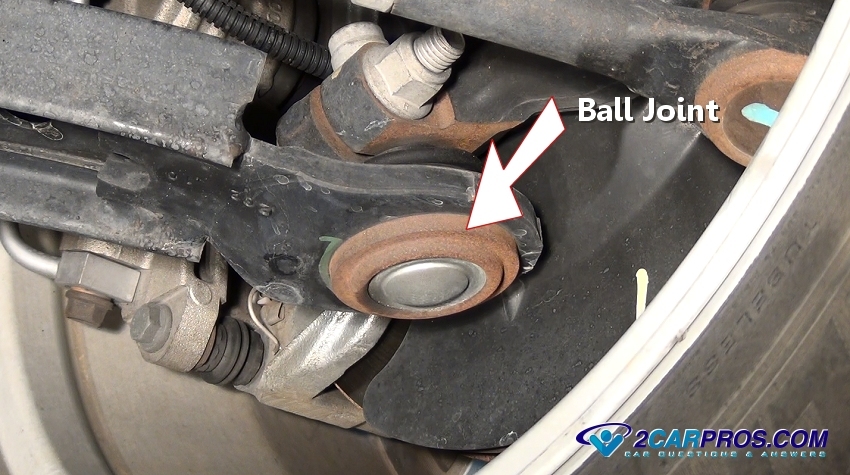
1. Bad Lower Ball Joints: Lower ball joints are also used to hold the steering spindle steady while the car is driven. If the ball joints become worn, they will allow suspension components to move out of line causing the car the wonder to one side when the brakes are applied. When checking the ball joints lift the car slightly, but leave the wheels on the ground. This will take pressure off the joints and allow you to see any play while turning the steering wheel slightly from side to side.
Checking the ball joints while the car is still on the ground, or completely lifted, will make it difficult to check due to the heavy pressure of the car or spring. A large pry bar can be used by inserting it between the ball joint and spindle. Rock the bar back and forth while checking for excessive movement in the ball joint. If the ball joint has play it will need to be replaced.
2. Worn Control Arm Bushing:
A control arm bushing is used to insolate the metal control arm from road vibration. When this rubber insulator falls apart it allows the control arm to move when the brakes are applied which causes a pull. Using a flashlight check the control arm bushing and see if any rubber parts are cracked, missing or have fallen out. Also, look for shiny surfaces which shows the suspension components that have moved, which is a sign of wear.

Tires
1. Rotate the Tires: Tires are constructed with many vulcanized layers that can become dislodged internally. A tire can perform one way, and then shift internally when braking causing a pull. Rotating the tires front to back can help this problem.
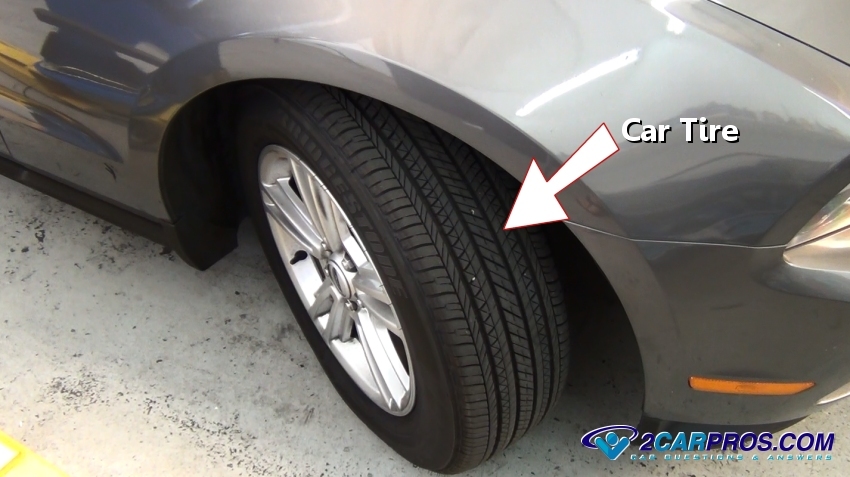
2. Bad Wheel Alignment: If the front wheel are not aligned properly the car will pull slightly, but when the brakes are applied it will amplify this problem. It is recommended to have a four wheel alignment performed to check for this condition.
- Toe-In or Toe-Out: Incorrect toe settings can cause the vehicle to pull to one side, especially during braking.
- Camber Misalignment: If the camber angle is off, it can lead to uneven tire wear and brake pull.
3. Tire Pressure: Always make sure the tire pressures are within factory specifications which is easy to do with a simple tire gauge.
Conclusion
Always address brake pull issues promptly, as they can compromise the safety and handling of your vehicle. If you're unsure about any aspect of the diagnosis or repair, consult a professional mechanic.
Credits
This guide knowledge base was created by the 2CarPros Team, and by Ken Lavacot: Automobile repair shop owner and certified master automobile technician of over 30 years. If you have question or need help please ask one of our experts we are happy to help. Please visit our 2CarPros YouTube Channel for additional car repairs.
Article published 2024-08-26