Why is my battery ground Bolt hot?

Tiny
DAVENOOB
  • MEMBER
  • 2013 CHEVROLET IMPALA
  • 6 CYL
  • AUTOMATIC
  • 180,000 MILES
I just replaced my headlights with H11 LEDs with fans. Now my battery is always dead and the bolt that the ground goes to is hot. Also, the LEDs flicker. Are these LED lights maybe causing the issue? Also, I just broke the light bulb in the trunk because it hangs. Could this be the issue?
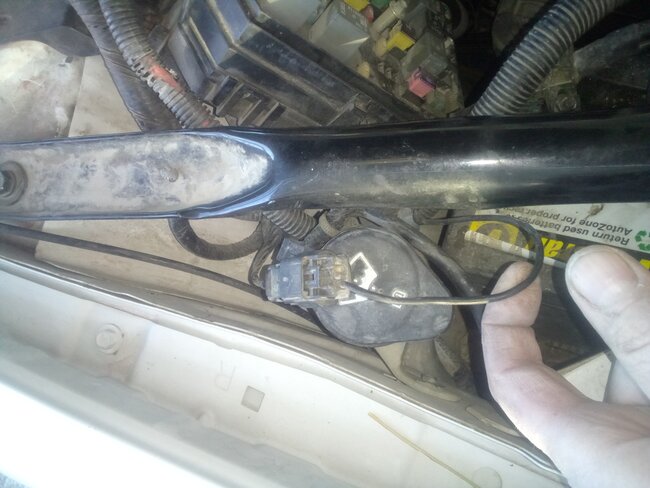
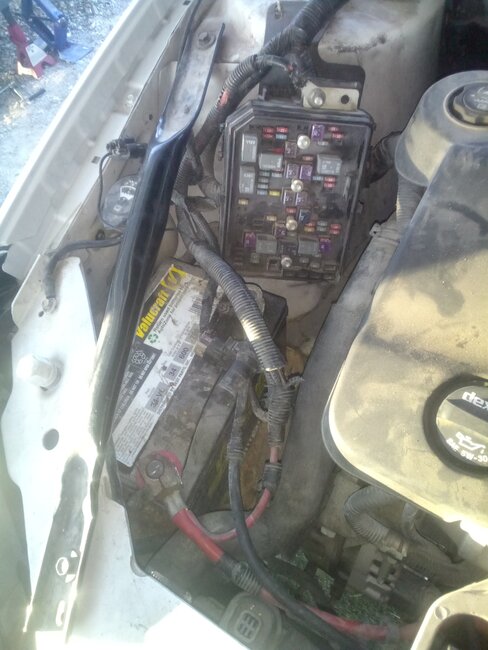
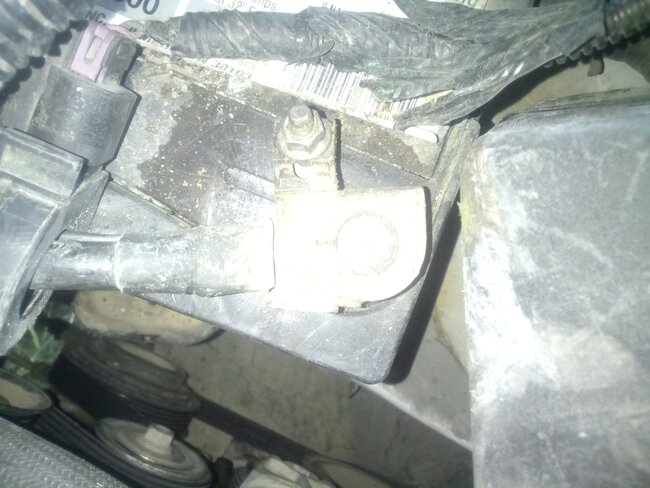
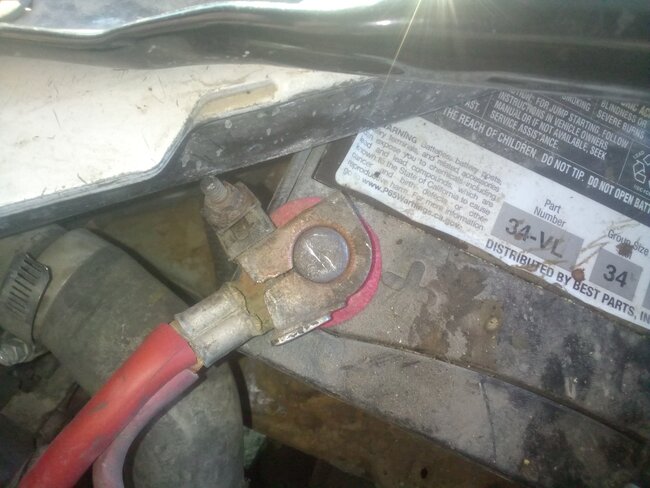
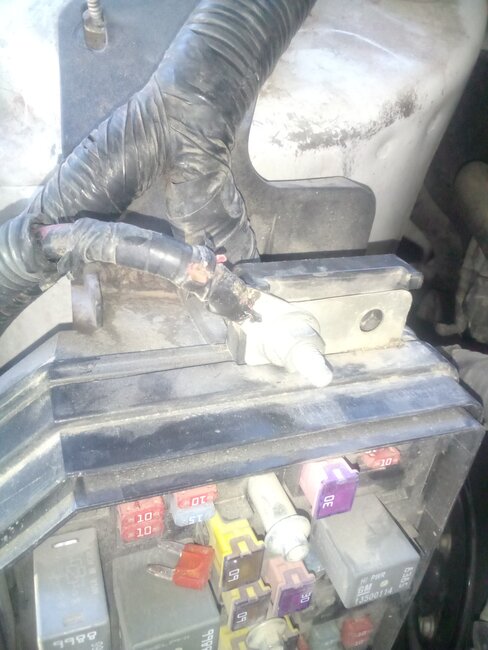
Here's the hot bolt.
Okay, so won't load a pic because the site won't let me but it's the ground bolt next to battery.
Monday, December 16th, 2024 AT 1:08 PM

20 Replies

Tiny
CARADIODOC
  • MECHANIC
  • 34,330 POSTS
Heat is developed by current flow through an electrical resistance. That resistance is a result of a loose, poor, or corroded connection. The clinker in my story is a less than perfect connection will cause trouble first for the highest current circuits which are the starter, then the generator.

The battery's negative cable will have two wires. The fat one must bolt to the engine or transmission. It handles that high current from the starting and charging circuits. The smaller wire bolts to the body sheet metal. If that is the one that's getting hot, it would explain why the starter is working okay. That smaller wire handles current returning from the lights, fan and seat motors, and all the other electronics on the car. Given the age of the car, rust and corrosion really shouldn't be an issue yet, but it is something to look for.

To upload photos, I save them in an MS Word typing document where I can add arrows and callouts, then I copy them into MS Paint where they can be saved in jpeg format. That version can be uploaded. I know there's at least one other format than can be uploaded, but I stick with jpegs because I'm familiar with the procedure.

If the problem is with the cable clamp on the battery, it can explain why the battery is low on charge. There are some easy electrical tests we can do, but they don't work with GM's side post terminals. For now, the best you can do is clean up and tighten any connection that is getting hot.

Let me know if that helps or what you find, then we'll figure out where to go next.
Was this
answer
helpful?
Yes
No
Monday, December 16th, 2024 AT 2:10 PM
Tiny
DAVENOOB
  • MEMBER
  • 303 POSTS
I know how to upload videos thanks. When I clicked add image or video it didn't do anything. I tried with 3 different phones, and it just wasn't working. I've loaded many pics and videos. It is the small wire bolted to the frame of the vehicle right next to the battery. The only thing I've changed the was the headlights. From reg h8 and h9 to h11 led. Everyone I've read said it would be fine, even other mechanics. These LEDs have a small fan. Oh, ya the battery was dead, but the ground bolt was hot. Do you think if I put the old bulbs in and see if bolt gets hot it not then it's the lights. Is it possible the new led lights draw more power than the old ones? Doesn't make sense though since LEDs are supposed to use less power for brighter lights. Thanks
Was this
answer
helpful?
Yes
No
Monday, December 16th, 2024 AT 6:21 PM
Tiny
DAVENOOB
  • MEMBER
  • 303 POSTS
Lol I use phone so no MS word. That makes sense though thanks. So, you are saying clean up the battery poles (top poles not side mount) cause the negative had a bunch of green corrosion around the pole. Where I live rust isn't an issue. I live in a high plains desert so high heat, no rain, no snow so rust isn't an issue, but extreme heat is. The battery was replaced about a year ago. What are some of these tests? I have a multi meter if necessary for tests.
Was this
answer
helpful?
Yes
No
Monday, December 16th, 2024 AT 6:25 PM
Tiny
CARADIODOC
  • MECHANIC
  • 34,330 POSTS
This will work with top post batteries but you'll likely need a helper. I posted a copy of the "Notes" page I handed out in class, for your viewing excitement, but all we care about is the drawing in the lower left. Put one voltmeter probe on the battery's post and the other right next to it on the cable clamp. Logic dictates you should find 0.00 volts there because they're the same point in the circuit, and you'll be right, ... Until you try to draw current through that mechanical connection. The resistance in that connection will be WAY too small to measure, but we can measure the results of it. That resistance will cause a very small drop in voltage when current tries to flow through it.

You'll see 0.00 volts with the meter set to its lowest DC Volts scale. Now have your helper crank the engine. To be more effective, I like to jump the starter relay. That way the engine won't start and you have much more time to read the meter. Another easy trick is to pop the cover off the starter relay, reinstall it that way, then just press or squeeze the movable contact to run the starter. Read the voltage while the starter is running. It should be no higher than 0.20 volts. That's the maximum allowed in any one mechanical connection. The most allowed in total for the positive side or the negative side is 0.40 volts, but still, no more than 0.20 volts per connection. We don't count the connection where the cable clamp is molded around the end of the cable, although those do cause trouble too. Often the cable is corroded away under the insulation where it's next to impossible to see. That's where measuring the entire circuit will show up any hidden undesirable resistance.

This test is valid on ground wires for computer and lighting circuits too, and can identify burned or arced switch contacts. Let me know what you find for voltage drops, but I'm pretty sure you found the bad connection already from the heat.

Next we'll check if the charging system is working properly.
Was this
answer
helpful?
Yes
No
Monday, December 16th, 2024 AT 6:52 PM
Tiny
DAVENOOB
  • MEMBER
  • 303 POSTS
Cool thanks I'll try this tomorrow. When you say relay for starter do you mean the relay in the engine compartment fuse box? The charging system is working fine. I quick jumped the battery a few times and drove into town so that's almost 200 miles round trip. I think the battery would drain once I was in the city with all the stop lights maybe not.
Also, I'm going to pull the LED lights and see if that has anything to do with the issue since it started happening shortly after installing new bulbs but then it's been dropping to freezing.
For now, I have the battery completely disconnected while not around just to be safe.
Was this
answer
helpful?
Yes
No
Monday, December 16th, 2024 AT 8:49 PM
Tiny
CARADIODOC
  • MECHANIC
  • 34,330 POSTS
I don't think your new head light bulbs are the cause of any problems. I would sooner suspect in doing the work, a questionable cable connection got bumped, or something like that. Also, were there any symptoms before you did the swap? Maybe the hot connection was already there.

I mentioned the charging system test due to the dead battery concern. GM has had a really huge problem with their generators starting with the 1987 models. They went from, in my opinion, the world's second best design to by far the worst design ever, but they may have finally solved that by 2013. I'll save the explanation for later, but for now, the biggest cause of multiple repeat generator failures is an aged battery. It can work fine in '86 and older models, but if you have to replace the generator in a newer model, replace the battery at the same time unless it is less than about two years old.

You can start the testing yourself with just your digital voltmeter. Measure the battery's voltage with the engine running. It must be between 13.75 and 14.75 volts. If it is, that only means it is okay to perform the rest of the tests, but those require a professional load tester. Those include "full-load output current" and "ripple voltage". Even when output voltage is good, one failed internal diode of the six will result in the generator being able to develop only exactly one third of its rated current. The standard generator for your model is a 150-amp unit. With one bad diode, the most it can develop is 50 amps. Given the electric fuel pump, electronic ignition, and four or five dozen computers, 50 amps may not meet the needs of the entire electrical system under all conditions. The battery has to make up the difference as it slowly runs down. This is where the charging system can look like it's working, when it actually isn't able to keep up to demand.

To add another clinker to the story, that resistance in the battery cable connections usually shows up first with the starter circuit, but it also affects the other high-current circuit, the charging system. Just a little resistance, that is, again, too small to measure, can make it look to the voltage regulator as the battery is fully charged, when in fact it is not, and it may be draining very slowly.

The first step must be to solve any connection problems. Any heat, sparking, or wisps of smoke indicate a connection that must be repaired. Once that is done, look for any remaining symptoms. We'll address them as necessary, later.

Throughout this ordeal, keep in mind one comment of value that, at first, defies logic. That is we often need to take two or more voltage readings in the same circuit. There's two problems with that. First, if you take them at two different times by moving the positive meter probe, you're including slight fluctuations caused by electromagnetic interference, current flow in adjacent wires being magnetically coupled to the wire you're working on, and motors and solenoids turning on and off. Think of measuring water pressure at the base of the municipal water tower, and again at a faucet a mile away. You'd expect the pressures to be the same, but one reading might have been taken in the morning when the tower was full, and the other taken at night after everyone got done watering their yards. A better example would be the second pressure was measured at the house when their water main is 99 percent blocked by rust buildup. Pressure would be normal until some flow was desired, then the reading would drop. That rust buildup corresponds to the corrosion / resistance in your mechanical electrical connections.

So taking two readings doesn't work because both can be changing slightly. The other problem is the meter rounds off its readings to fit the display. 14.37 can round up to 14.4, and 14.44 will round down to 14.4 volts. Those two readings suggest there is no undesirable resistance between the two points you took those readings, but in fact, there is a little. By placing one meter probe at each point, you've eliminated the difference in time, and any electromagnetic interference is the same at both points, so it is overlooked by the meter. You're able to switch to a lower voltage range which gives an additional decimal place of accuracy, so now, you would see the difference in voltage between the two points, or 0.07 volts.

Now we have to make a judgement call as to whether that is too much "voltage drop" or it's acceptable. If this was a ground wire for a computer, I'd be concerned because that affects what the computer sees for sensor voltages, and 0.07 volts can mean a lot. If this 0.07 volts is in the charging circuit, I'd be quite pleased. There's always going to be some resistance in any wire, and we know there's a lot of current flowing in that one, so there is going to be a little voltage drop. A low voltage reading indicates every connection between the meter probes is okay. If you find the voltage is too high, first consider how much current is flowing through that wire. I'd like to see less than half a volt. When it's that high, you can find which connection is at fault by moving the meter probes to other connections. The industry standard, unless specified otherwise by the manufacturer, is no more voltage drop than 0.2 volts per connection, and no more than 0.4 volts total when there's three or more connections in that circuit. Even that can be refined. You might find 0.39 volts, for example, in a circuit with two connections, which looks okay, but not if 0.35 of that is across just one of those connections. The other consideration is current flow to the starter motor is always roughly the same, but current leaving the generator varies a lot depending on the needs of the electrical system. That means any voltage drop readings in its output circuit will vary a lot too.

The good news here is when a mechanical connection is causing an excessive voltage drop, and therefore reducing current flow, you will rarely find just a few hundredths of a volt is the clue. Rather, by the time symptoms show up, you're going to find a voltage drop much higher and easy to identify.

When you do find an excessively high voltage drop, a good place to look first is the fuse that is usually found in newer cars. Due to the high current, they are bolted into the under-hood fuse box. Be sure those two nuts are tight. Another real common source of poor connection on all car brands is the smaller battery positive wire where it's bolted to that fuse box.

What this part of my sad story boils down to is to test the generator's output circuit, place one meter probe on the battery's positive post, and the other one on the generator's output stud, (not the cable terminal crimped to the end of that fat wire). Set the voltmeter to one of its lowest DC Volts ranges, then watch what the meter shows for voltage drop in that circuit while your helper turns on multiple loads. The heater fan is a big one. Head lights is another as well as a rear window defogger. As more loads are added, system voltage will drop. That will be seen by the voltage regulator which will bump up generator output voltage which causes an increase in output current to meet those demands. As output current increases, you'll see the voltage drop reading on your meter increase. Don't get excited over a few hundredths of a volt. That can't be totally eliminated and it just proves you are getting output from the generator.

Once we know more, we can decide if the professional load test is needed or if the system appears to be okay. One more thing I should mention, especially for the benefit of others researching this topic, is to never, ever remove a battery cable while the engine is running. That was a trick done many years ago, before computers, by mechanics who didn't understand how these simple systems work. Today it can easily lead to excessive voltage and multiple damaged computers, especially if engine speed is increased. The thinking used to be if the engine kept running, the generator must be working. The problem today with that logic is depending on how the voltage regulator operates, an engine could stall with a perfectly functioning charging system, or it could remain running with a charging system with a major problem, so removing a battery cable doesn't prove anything and it can lead to expensive repairs. I'm bringing this up in hopes others will avoid this costly mistake.

I'll be back later to see what progress you made and to figure out where we need to go next.
Was this
answer
helpful?
Yes
No
Tuesday, December 17th, 2024 AT 12:34 PM
Tiny
DAVENOOB
  • MEMBER
  • 303 POSTS
What's the generator and its output? Also, the fuse box you speak of isn't tight in any way. It's mounted by to posts sticking out of car body by where the shocks connect. These posts are completely stripped so can screw any nut on it to tighten. The box literally is held up by the battery that's underneath it. Battery is less than a year old.
Was this
answer
helpful?
Yes
No
Tuesday, December 17th, 2024 AT 2:07 PM
Tiny
DAVENOOB
  • MEMBER
  • 303 POSTS
Oops forgot also when wheels turned hard I either direction ABS dummy light or Stabil tract dummy light comes on until pressure from. Wheel being turned all the way is released.
Was this
answer
helpful?
Yes
No
Tuesday, December 17th, 2024 AT 2:09 PM
Tiny
CARADIODOC
  • MECHANIC
  • 34,330 POSTS
"What's the generator and its output?"

Are you asking what those terms mean? We normally use the term "alternator", but it's important to use correct terminology in the classroom, so "generator" is what we call them now. To be technically correct, the first "AC generator" was developed by Chrysler for their 1960 models, and they copyrighted the term, "alternator".

Before 1960, everyone used "DC generators". They were very inefficient and huge for the little output current they could develop. If you were lucky, you might get as much as 30 amps, which was plenty in those days. The output current came from the spinning rotor, so all that current had to pass through a pair of very tough brushes. Those wore out very quickly.

Alternators develop alternating, (AC), current. There's no way that can be stored in a battery. Every alternator has at least six "diodes" to turn that into direct current that can be stored. Diodes are one-way valves for electrical current flow.

GM's first AC generator showed up on 1964 models. A much-improved version was used in 1972 and was a very nice generator used through the 1986 model year when they were redesigned again. Ford had their first AC generator by around 1966.

To understand how generators work, three things are needed. We need a piece of wire, (a coil of wire is more efficient), a magnet, (we use an electromagnet because their strength is easy to adjust), and most importantly, there must be movement between them. That's why we have to spin them with a belt and pulley. The generator can be compared to a water pump. It puts the water under pressure. Electrical pressure is voltage, or volts. The faster the water pump spins, the more volume of water it can move. In electrical terms, that's amps, or current flow. The slower the generator spins, the less current it is able to develop.

One of the interesting things about AC generators is they are physically incapable of developing more current than they were designed for, and they will always only develop exactly as much current as the electrical system needs and to charge the battery. You can often install a replacement generator with a higher current capacity, but it is still only going to develop just as much current as is needed. The only time any AC generator will develop it maximum rated current is during the "full-load output current" test I mentioned earlier. That test lasts just a few seconds; just long enough to get the reading.

You won't be tested on this, but to get technical, all vehicles use a type of "switch mode" circuit for their voltage regulator. That allows them to control a fairly high current for this circuit, up to three amps, with a very tiny and inexpensive switching transistor. This works by turning current flow on and off to the "field winding" in the generator. That's the part that spins. That three amps or less is what creates the spinning electromagnetic field. Part of the time that circuit is turned completely off, and part of the time it is turned fully on. That's where the term "switching" comes from. The ratio of on-time to off-time is varied to adjust the average output voltage from the stationary coils of wire along the outside of the generator. More average field current flow means a stronger electromagnetic field, more voltage "induced" into the stationary coils, and with more voltage, (electrical pressure), you get more current flow. Eventually that causes the battery's voltage to rise along with that of the entire electrical system. The voltage regulator monitors that voltage, then makes adjustments to the amount of field current flow as necessary to keep that output voltage between 13.75 and 14.75 volts. Under normal conditions, field current is often less than one amp. That has to pass through the pair of brushes, and being so low, the brushes last a long time.

Without getting too wrapped around the axle with theory, when current flow is abruptly stopped flowing through a coil of wire, the collapsing magnetic field induces a reverse voltage spike momentarily. That is exactly what we want and need for an ignition coil to fire a spark plug, but in all other applications, those spikes can be extremely harmful. Most relays have a diode or resistor across their coils of wire to suppress those spikes which could otherwise reach as high as 300 volts. Sometimes you can feel those jolts if you're touching a relay's terminals when you unplug it.

My reason for troubling you with this explanation is the same thing is happening in the generator each time the voltage regulator turns off. They do that roughly 400 times per second. I don't know why other manufacturers haven't had problems with those voltage spikes, but they have been a big problem for GM. They even use special "Zener" diodes designed to short out those spikes, but they don't do a complete job of that. Because of those spikes showing up in the rotor, they induce corresponding spikes in the output circuit and the entire electrical system. The battery is the main component that dampens and absorbs those spikes, rendering them pretty much harmless. That is, until the battery gets to be a few years old. As batteries age, the lead gradually flakes off the plates and collects in the bottom of the case. With less lead on the plates, there's less material to absorb those voltage spikes. They can still have plenty of power to start an engine, but without the ability to absorb the spikes, those can destroy the diodes and the voltage regulator inside the generator, and they can interfere with sensor signals. In a wiring harness, current flowing through one wire sets up a magnetic field around it, just as it occurs in the generator. By laying next to other wires, that magnetic field affects them too, but as long as current flow remains steady, like with head lights, there's no change, or movement in that field, so no voltage is induced into adjacent wires. It's when those voltage spikes occur that current changes momentarily and voltages are induced into other wires. It's easy to induce a few volts into another wire. A change of as little as a few hundredths of a volt on a computer's sensor wire can mean a lot, and be one very elusive cause for engine running problems. To identify that, we just unplug the small plug on the generator to disable it, then we go on a test drive. If the running problem clears up, it's a really good clue the generator is the cause of the problem.

I already mentioned that with one defective diode of the six, you lose two thirds of the generator's capacity to develop current. In your case that limits you to 50 amps instead of 150. In addition, all AC generators start out by developing three-phase output current which is very efficient. With one bad diode, you lose one of those three phases. If you look at my sad drawing below, the top one shows what three-phase output looks like after it has been "rectified", meaning it has gone one way through the diodes. While one phase is on the downward slope, meaning its current is decreasing, the current from one of the other phases is going up. If you'd graph the output voltage, it would look like the red line at the top. The difference between the highest and lowest points on that line is "ripple voltage". Here's it's very low.

With one bad diode, one phase is lost, as shown in the bottom drawing. Now ripple voltage is very high at 5.2 volts. The battery has to make up the shortfall on current which is why it can slowly run down while you incorrectly think the generator is working properly. Professional load testers can measure that ripple voltage. High ripple voltage and the ability to get only one third of the rated output current go hand in hand and point to the bad diode. It's not likely you'll get one without the other.

You can try to measure ripple voltage yourself, but it will not be accurate. AC generators develop about 12 cycles per revolution, and they spin about three times faster than the engine which idles at around 800 rpm, That puts the generator's frequency around 28,000 cycles per second, or "hertz". Digital voltmeters on the "AC Volts" scale are designed to be used with house current which runs at 60 hertz. Even some military equipment runs as high as 400 hertz, but above that, the accuracy of voltmeters drops off very quickly. The best you can do with a voltmeter on AC Volts on a car is to see if you have some ripple voltage or none. The test is rather pointless because no matter what you find for a reading, you don't know what ripple voltage really is. A better way to check for excessive ripple voltage is to tune your AM radio to a weak station. Ripple voltage will cause a squeal or whine that is very irritating, and its pitch will increase as you increase engine speed.

For the professional load testers, there are a few models that provide an actual voltage value for ripple voltage. Those typically can make printouts of the results. Most models, however, only show ripple voltage as "low" or "high" through a series of flickering lights. We don't know or care what the exact ripple voltage is, just that it's too high.

If that isn't enough to make you lose sleep, here's links to a couple of articles you might find of interest:

https://www.2carpros.com/articles/understanding-the-function-and-mechanics-of-an-alternator

https://www.2carpros.com/articles/how-to-check-a-car-alternator

Some of the voltages are a little different in the explanations. Don't concern yourself with that. It all depends on which textbook you read.

For your other symptoms, it's best to start new questions for new topics. These get categorized by model and by symptom to make finding them easier for others researching similar problems. A new topic here won't show up on any list. Also, unlike on other forums where anyone can jump in and confuse the issue, here this is a private conversation. As such, none of the other experts will see your new topic or have a chance to reply. That leaves you with just me and might not get you the best help. If you want to start some new questions, here's the link to get you there:

https://www.2carpros.com/questions/new

Please keep me updated on your progress.
Was this
answer
helpful?
Yes
No
Tuesday, December 17th, 2024 AT 5:30 PM
Tiny
DAVENOOB
  • MEMBER
  • 303 POSTS
Okay, so it's the alternator lol. I just brought up the other electrical issues to inform you in case as a system(electrical) it could be related. It doesn't affect the car driving so not really concerned at the moment. I'll knock out what tests I can and let you know thanks.
Was this
answer
helpful?
Yes
No
Wednesday, December 18th, 2024 AT 9:36 AM
Tiny
CARADIODOC
  • MECHANIC
  • 34,330 POSTS
Dandy. I'm here every day at different times waiting to hear some good news.
Was this
answer
helpful?
Yes
No
Wednesday, December 18th, 2024 AT 11:06 AM
Tiny
DAVENOOB
  • MEMBER
  • 303 POSTS
So, did the ac test and it was at.4 when first touched but went immediately to 0.0 so diodes are good at least. Still need to do rest of generator tests to see if it's bad. One of the 12v accessory connectors has a short in it could this cause an issue? Electric systems are completely foreign to me so very slow motion. I have a cat III multi meter so it has resistance and continuity tests don't know if that is n eded for this. Read a few articles and apparently the plug and play led replacement for halogen can cause dummy light errors without a certain connector. That's not my issue since I pulled the lights and fuses and still have the hot ground bolt. It gets hot fast even when not moving like 60 seconds. Okay, still trying to figure this out, hopefully I'll get it figured.
The airbag and Stabil tract lights keep popping up or are on all the time. Don't know if anymore pointers thanks.
Was this
answer
helpful?
Yes
No
Monday, January 6th, 2025 AT 1:40 PM
Tiny
CARADIODOC
  • MECHANIC
  • 34,330 POSTS
The first sentence confuses me. I'm not sure what the "4" means. Regardless, we need to address the hot bolt first. That is never a normal condition. Only two things can cause that. By far the most common cause is excessive resistance in the form of rust or corrosion, a loose connection, or some of the strands of wire are corroded off. The less-common suspect is excessive current flow through the connection. Wires will get warm if they're too small in diameter to handle that current. Bolts and terminal studs are usually relatively large in comparison to the wires, so they will be the last things to get hot. In most cases excessive current flows through just one wire due to a short, and that causes a fuse to blow

From what we know so far, the place to start is by disassembling that bolt and anything connected to it, then cleaning and shining up all of the parts, then reassembling them. Once that is solved, see which symptoms remain, then we'll figure out where to go next. If it still gets hot, tell me which things you have turned on, whether the engine has to be running, and if possible, post a couple of photos of it.
Was this
answer
helpful?
Yes
No
Monday, January 6th, 2025 AT 3:25 PM
Tiny
DAVENOOB
  • MEMBER
  • 303 POSTS
Will do thanks. The reading while testing the ac current to see if diodes are bad read point 4 or.4 then immediately jumped down to 0.0 current reading. Will clean all I can find today.
Was this
answer
helpful?
Yes
No
Tuesday, January 7th, 2025 AT 9:40 AM
Tiny
CARADIODOC
  • MECHANIC
  • 34,330 POSTS
For the diode test, the meter has to be on "AC Volts", but I don't like that test. There are a few professional testers that can make paper printouts. Those often measure and display the actual voltage for ripple voltage. Most testers just show it on a relative scale from "low" to "high" with a series of flashing lights.

The problem with trying to measure ripple voltage with a voltmeter is they are designed to measure 60 cycle house current, or 60 hertz. Some military meters are accurate up to 400 hertz. AC generators have over a dozen coils of wire around their housings, so they develop at least a dozen cycles per pulley revolution. The engine idles at near 800 rpm, (13 revolutions per second, and the crankshaft pulley driving the belt is around four times larger in diameter than the generator's pulley, so the field winding in the generator spins at around 52 revolutions per second. 12 x 52 = 624 hertz, well beyond the range where meters are accurate. On top of that, all generators are very inefficient at low speeds, so a normal part of the test procedure is to raise engine speed to 2,000 rpm. That brings the ripple frequency to over 1500 hertz. The final clinker is all AC generators develop three-phase output, so ripple frequency during the test is closer to 4500 hertz, way outside the meter's range where it can measure that voltage.

The next problem is a good battery will dampen and absorb much of that ripple voltage, so it doesn't show up in voltage readings. Professional testers find the ripple by measuring the resulting spikes in current through the wire going from the generator back to the battery.

There is a way now to measure ripple voltage yourself, but I haven't played with it enough yet to know how well it works. That is to use one of the fairly new-style battery load testers. Those are little hand-held testers that do what the huge testers on wheeled carts do, at a fraction of the cost. They work differently, but I can say they are uncommonly accurate when testing battery condition.

Another observation you can use is to listen to your AM radio. Excessive, or "high" ripple voltage will radiate into the radio and appear as a loud whine that changes pitch with changes in engine speed.

I put this drawing together to show how ripple voltage becomes excessive. A pair of diodes passes output current and forms the waveform shown. With the three phases interacting, the top waveform is developed. When the output voltage from one phase is on its way down to "0", the voltage from another phase, and a different pair of diodes, is on its way up to over 15 volts. This is like a three-piston water pump. One piston is developing pressure and water flow while the other two are taking in gulps of water.

Ripple voltage is very low in the top waveform where everything is working properly. It's represented by the red line. The difference between 14.0 volts and 14.5 volts is the exact value, and is what is measured by professional load testers.

The bottom waveform shows ripple voltage when one diode has failed. Here it's 5.2 volts. With the loss of one phase, due to the defective diode being shared at times with the other phases, the generator loses two thirds of its capacity to develop output current.

Even with very old testers that couldn't measure ripple voltage, we can still figure out if a diode has failed by doing a very brief "full-load output current" test. All AC generators, (aka "alternators"), are physically incapable of developing more current than they were designed for. During this test, output current will be the full rated current, no current, or very close to one third of the full rated current. 0 amps occurs when there's some other defect. Full current indicates the generator is working properly. One third indicates a defective diode.

Most vehicles can still be driven with a bad diode, but the charging system won't be able to meet the demands of the entire electrical system under all conditions, especially when the headlights are on along with the heater fan on "high", or the rear window defroster turned on. Once too much current is needed, the battery has to make up the shortfall until it slowly runs down over days or weeks. That is often mistaken for a battery that is about worn out.
Was this
answer
helpful?
Yes
No
Tuesday, January 7th, 2025 AT 6:22 PM
Tiny
DAVENOOB
  • MEMBER
  • 303 POSTS
The Meter was on ac volt just following the instructions. So I checked and cleaned all the connections I could. Found the ground bolt that was getting hot wasn't bolted tight. Also did the am radio test with no winding sound. The car was driving put lights and ac on and still no winding sound through the am radio so think the alt is good. Will do the other load tests when I have someone who can help.
Was this
answer
helpful?
Yes
No
Wednesday, January 8th, 2025 AT 4:04 PM
Tiny
DAVENOOB
  • MEMBER
  • 303 POSTS
Today driving around I went to wash the windshield but the wipers didn't work. They cleaner sprayed but couldn't get the wipers to work no way. 2 minutes later turned on turn signal to turn and wipers came on. Could this be a line or circuit to follow or just another function being weird cause of the short somewhere? Thanks
Was this
answer
helpful?
Yes
No
Thursday, January 9th, 2025 AT 11:06 PM
Tiny
CARADIODOC
  • MECHANIC
  • 34,330 POSTS
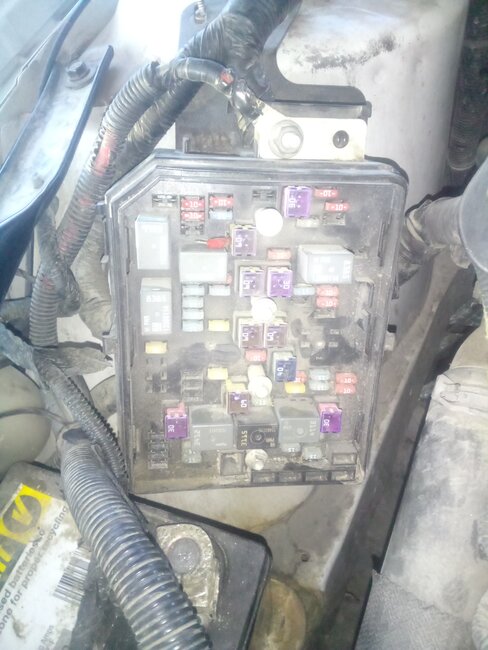
There are two things I can suggest. The first is to check the connection where I added the red arrow to your photo. That one commonly works loose on all car models. It supplies the current for all of the circuits in that fuse box. Everything today uses a computer, including the wipers, and computers are very intolerant of low or unstable supply voltages.

Next is to check the entire charging system. You can start those tests yourself with just the inexpensive digital voltmeter. First measure the battery's voltage with the engine off. If it's good and fully charged, it will measure very close to 12.6 volts. 12.4 volts indicates it is not fully charged, and 12.2 volts says it's good, but totally discharged. If you find it's less than fully charged, use a small portable charger to recharge the battery at a slow rate for a couple of hours. After recharging, turn the headlights on for about five to ten seconds, turn them off, then recheck the voltage.

If the battery's voltage is near 12.6 volts, measure it again with the engine running. Now it must be between 13.75 and 14.75 volts. If it is low, raise engine speed a little and see what happens. If this test passes, it means it is okay to do the rest of the tests we discussed already, but those require a professional load tester. Those tests take just a couple of minutes.

If the electrical system appears to be okay, this should be treated as a wiper problem. Start a new question for that topic so the other experts will see it and have a chance to reply. This could be as simple as a failing switch, frayed wires in the tilt-wheel steering column, or an intermittent computer problem. A scanner is usually needed to see what the computer is seeing and responding to.
Was this
answer
helpful?
Yes
No
Friday, January 10th, 2025 AT 4:14 PM
Tiny
DAVENOOB
  • MEMBER
  • 303 POSTS
The connection you marked with an arrow is clean, no corrosion, and tightly fastened. I just redid all that the other day. I'll do the other tests and check back. Thanks.
Would it be worth it to go to parts store and have them hook up CAD III tester to see if any codes pop? There isn't always a dummy light on, but it alternates from air bag to ABS to Stabil track when there is on, on? Thanks again.
Was this
answer
helpful?
Yes
No
Saturday, January 11th, 2025 AT 9:33 AM
Tiny
CARADIODOC
  • MECHANIC
  • 34,330 POSTS
Each of those systems is run by its own computer, and each of them store their own diagnostic fault codes. Full scanners will read codes in all of those computers. Simple code readers, especially older ones, only read codes in the Engine Computer. Newer ones can often read codes in multiple computers, but not always in all of them on the vehicle.
With safety system computers, fault codes remain in memory even after the warning light turns off, so having them read will give an idea of the type of problem or where to start the diagnosis.

The codes in these other computers could all be the result of something they have in common, which is commonly low system voltage, or it could be due to two or more individual problems, particularly when the lights turn on at different times. Once you know those code numbers, start a new question for one of them. Our questions get categorized by car model and by type of problem so others researching the same topic can find it. And read it. By adding it to this conversation, any solutions won't be seen. Also, this is a private conversation between us, so none of the other experts will see the new topic or have a chance to reply. You might miss out on the experience and wisdom of one of the other experts.

Having the codes read is something to pursue, especially if you can have it done for free at an auto parts store, but for now, I'm more interested in the charging system. If you have the hot bolt solved, I'd like to know the charging system is working properly. Until then, the other warning lights should take a back seat.
Was this
answer
helpful?
Yes
No
+1
Saturday, January 11th, 2025 AT 5:02 PM

Please login or register to post a reply.