Tires issue?

Tiny
BHAMDOC1973
  • MEMBER
  • 2013 TESLA MODEL S
  • 2WD
  • AUTOMATIC
  • 120,000 MILES
So car had no issues. Then I looked at the rear tires and they were pretty close to be done and needing replacement. Ordered 2 rear ones and had my son go to tire shop to install them. At that tome fronts had about 30% left. After the new ones on rear were installed I immediately noticed that I had some free play on steering as in, say it was so windy and you had to keep correcting the steering an inch or so, that's how it felt, felt dangerous even when changing lanes and going over those lane reflectors on the road, something was just isn't right. Took it to shop who installed tires they found nothing wrong with tires. I rebalanced them with my home balancer, same thing. Bought two new tires fir the front, didn't change still. Lastly just replaced the front wheels with rear ones going across, gotten much better. Now I cant tell whether the first 2 tires on the rear could be the reason why I had that issue or not. Not sure if they have a minor bump that is hard to be felt or what but why would putting them up front made things better.
Monday, August 18th, 2025 AT 3:46 PM

6 Replies

Tiny
CARADIODOC
  • MECHANIC
  • 34,409 POSTS
Balancing has to do with thumping or vibrating at highway speeds. What you're describing has more to do with the alignment. The first suspect is the new tires themselves. Look at the old tires to see if they have special ratings for vehicle weight. Battery-powered vehicles weigh close to twice as much as gas-powered vehicles, so they need tires with much stiffer sidewalls. They might also require higher than normal air pressures. Standard car tires have maximum pressure ratings of 35 psi or 44 psi. You'll find those in tiny letters on the sidewall. Compare that to the pressures listed on the door sticker. Some Tesla models call for 45 psi, so they can't use standard car tires.

Alignment issues can show up when replacing tires because with deeper tread, those blocks of rubber have more freedom to flex. Worn tires, while being more prone to hydro-planing, have less flex, so they respond less to cross winds and grooves and bumps in the road. A big unrecognized factor in alignments is chassis ride height. That must be correct to maintain the proper geometric relationship of the steering and suspension parts. With the extra battery weight, the springs can be expected to sag from age faster than normal. The lowered ride height can gradually change the alignment and how the car feels so slowly that you don't notice it until new tires are installed. It's like when we grow older and our feet change, but we don't notice it until we buy new shoes.

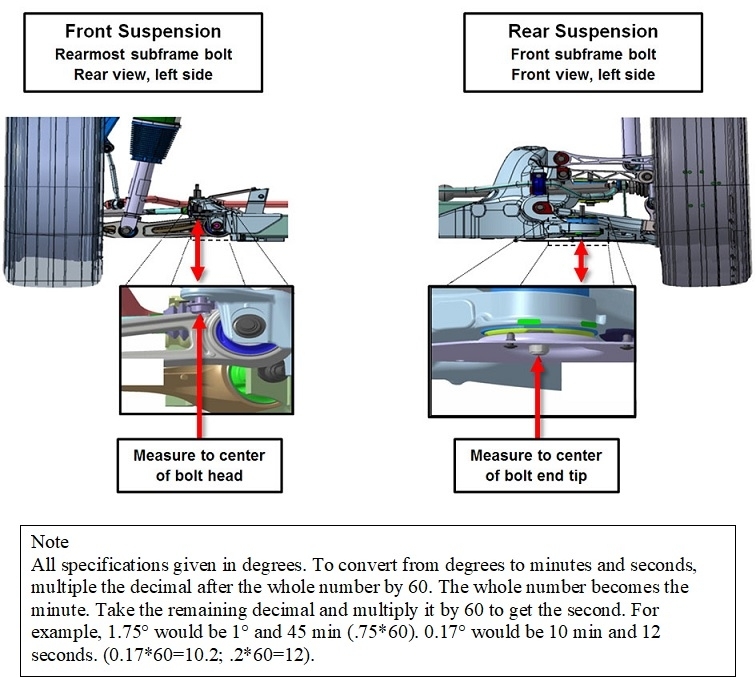
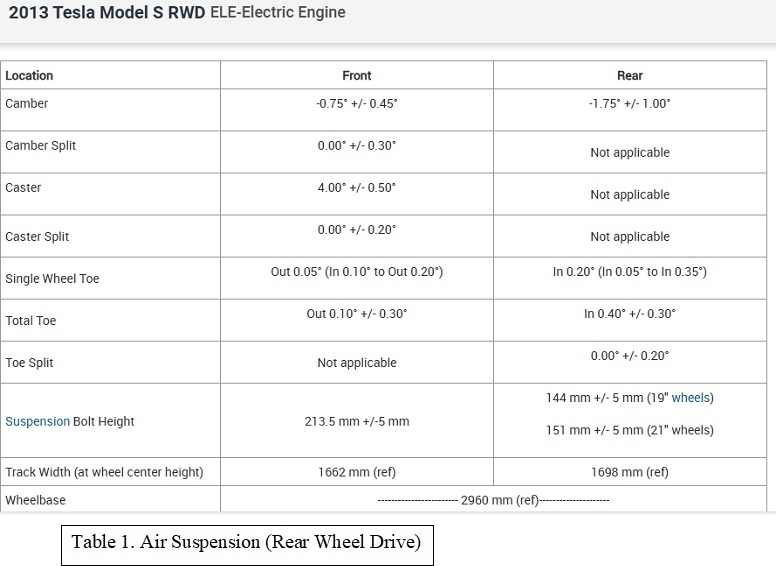
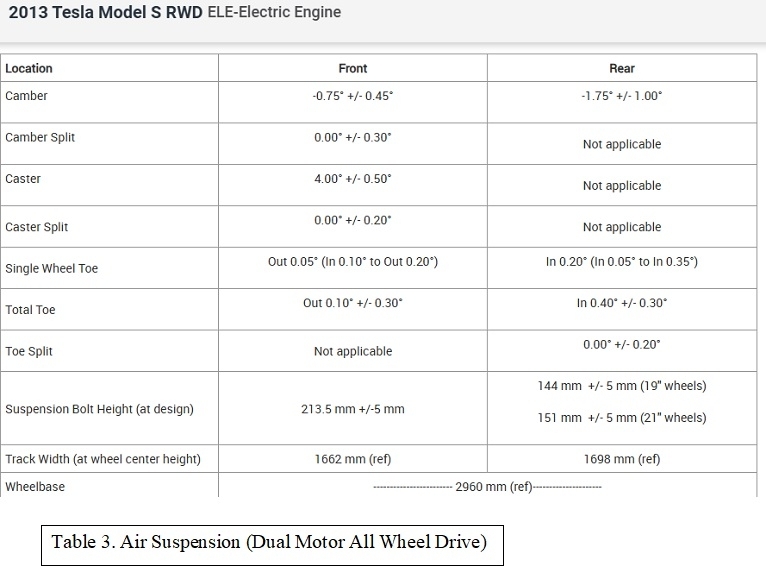
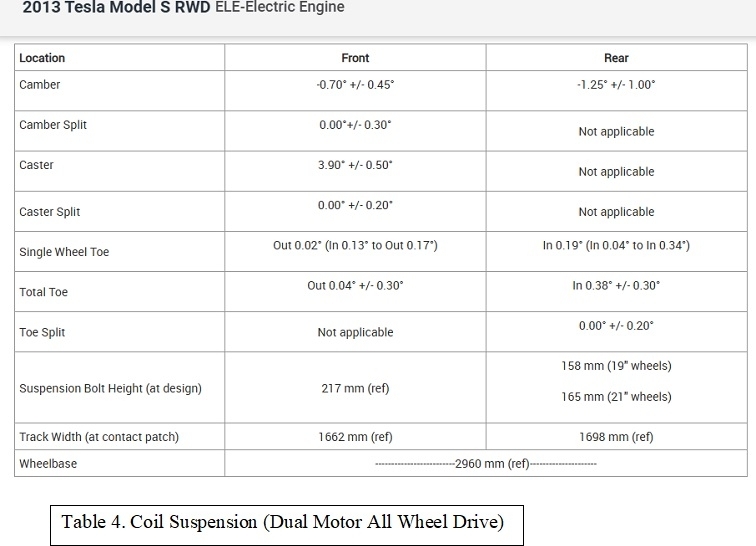
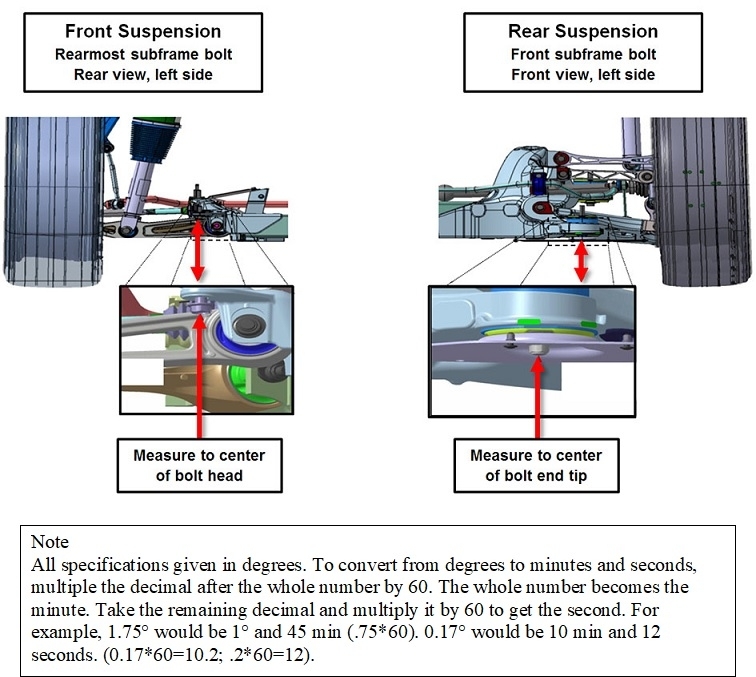
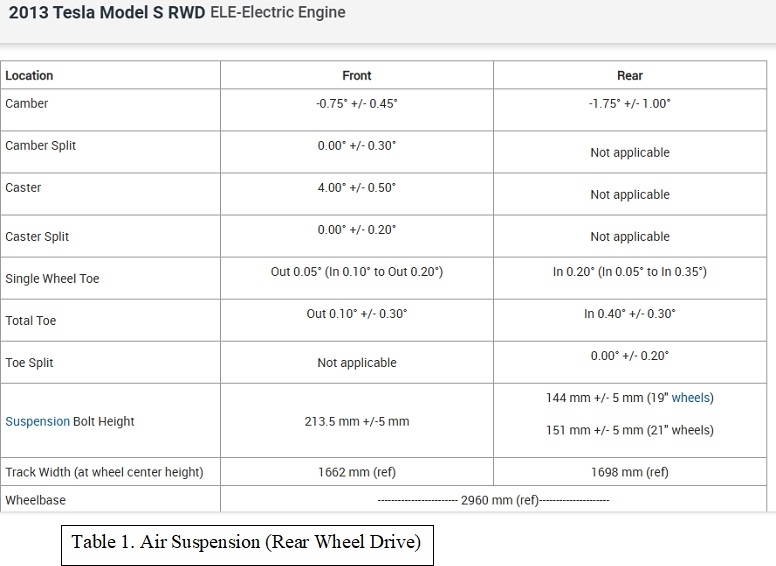
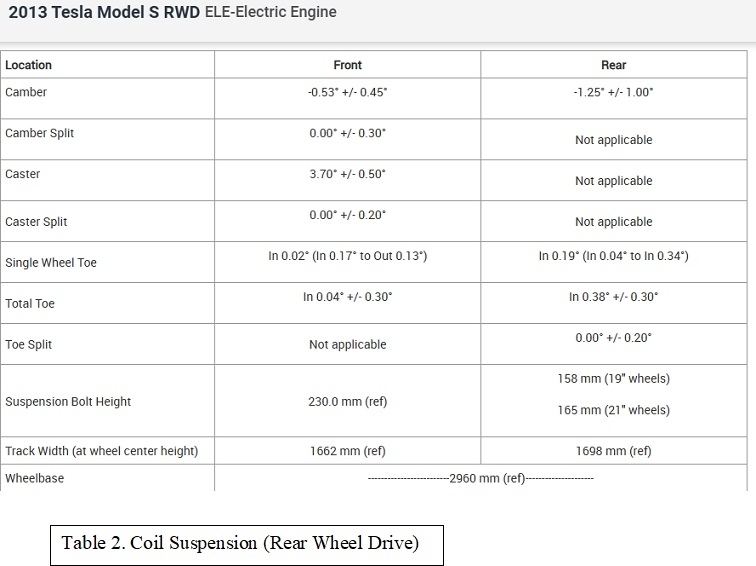
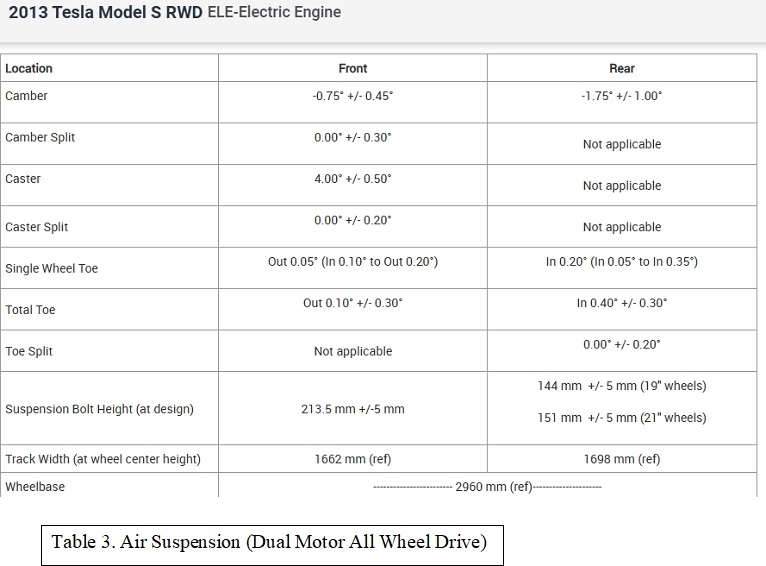
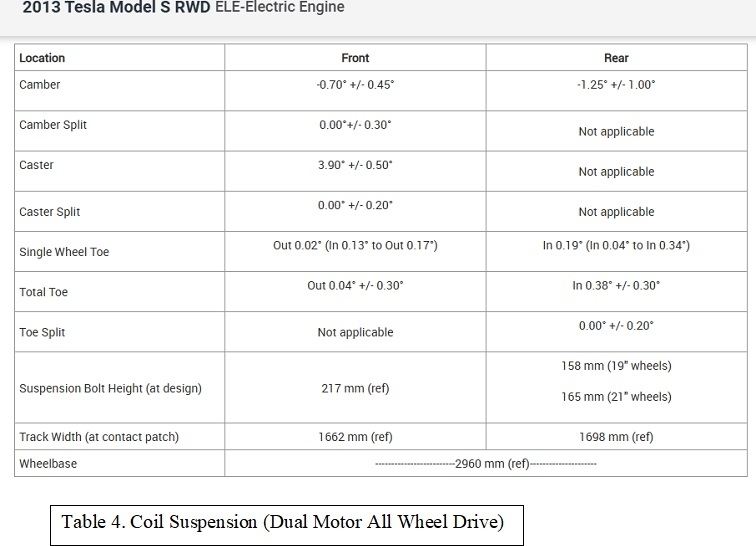
Where I would start is by measuring ride height. The specs are included in these images below. The ride height will take some work to interpret what they're looking for. You might instead consider visiting any tire and alignment shop for the height information. They all have small books that list every model and year, where to take the measurements, and what they should be. It looks to me like what they're asking you to do is the same as Chrysler's method where you take two readings per corner, then subtract one from the other to get the value. They do that indirect method because it eliminates the variable for different size tires. It's not important how high the car is off the ground. The readings we're after refer to the angle of the control arms, and the related geometric angles.

Measuring ride height is just the first preliminary step in the pre-alignment inspection. If chassis ride height is okay, it's okay to continue with the regular alignment check. All alignment computers have the capability of making printouts of the results. Sometimes you have to ask for that, but you must ask before the equipment is removed from the car, otherwise that data is lost. If you can get a copy that shows the "Before" and "After" readings, and post it in your reply, I can interpret the numbers for you.

Also keep in mind different tires react differently, and often by mixing two different brands or models, the front and rear of the vehicle react differently to road forces. You may find any unusual handling symptoms are gone when you have four matching tires
Was this
answer
helpful?
Yes
No
Monday, August 18th, 2025 AT 5:28 PM
Tiny
CARADIODOC
  • MECHANIC
  • 34,409 POSTS
Gotta start over. I overlooked one of the tables.
Was this
answer
helpful?
Yes
No
Monday, August 18th, 2025 AT 5:46 PM
Tiny
BHAMDOC1973
  • MEMBER
  • 2,018 POSTS
Unfortunately I forgot to look at the old tires and just went for size, big mistake. And yes they have a pressure of 44 psi on the door sticker and that Is what I kept them at. And yes I thought the same thing: That I didn't notice it until new tires came into play. I tried to align it but the guy said I don't have this tool or that tool when he first said yes I can do it. He said it has an electric power steering and I don't want to mess with it. Well, most newer cars do now It had a very minor alignment issue I noticed on the tires, nothing major, and no pulling or shaking with older or newer tires, and car never been in any accidents. And yes most of the time when I get alingnments on vehicles I get the before and after. This car has air ride suspension that I can adjust, I usually keep it on the standard but I tried it with the lower settings now and if am not mistaken it rides better. I may see about replacing the fronts with new ones to match the rear as the front ones are the ones I felt issue with so it could be the brand. Or I can try to see what Tesla recommends without breaking the bank.
Was this
answer
helpful?
Yes
No
Monday, August 18th, 2025 AT 5:52 PM
Tiny
CARADIODOC
  • MECHANIC
  • 34,409 POSTS
Generally the car manufacturer recommends to install what the car came with, probably more so because they have a supplier's agreement or relationship, but other tire manufacturers do a pretty good job of building a suitable replacement. Regardless what brand or model you go with, I wouldn't get too concerned until you have all four the same. That way all of them will react the same to any conditions the road surface can throw at them.

This reminds me of a problem a few years ago that shouldn't apply here, but it does emphasize the importance of having matching tires. This affected the Chevy Astro Van all-wheel-drive models, and some Jeep models. Those had a full-time four-wheel-drive transfer case that could not be shifted out of that mode. The problem was people were damaging the transfer cases by not having four matching tires. The different rotational speeds put unusually high stress on the transfer cases. This led to a lot of lawsuits against the tire stores. Turns out it could even be a problem if you bought two new tires last week, then two more new ones of the same size and model a week later. Some of them could have come from a different factory or been assembled by a different employee. Even that was enough to cause trouble. Your car is a two-wheel-drive model, and even if it was a four-wheel-drive, with electric motors, there's no such solid mechanical connection to put stress on anything. While outer circumference was the issue there, it points out how mismatched tires can cause unusual handling problems. Related to this, I can still remember when I had an early '70s Dodge Dart with bias ply tires. They caused the car to jump to one side when driving over a small drop-off, in my case, when moving onto a turn-off lane. Later, with a set of new radial tires, there was no such sideways movement in response to little drop-offs or grooves in the road. A lot of people made a really big deal when radial tires were the new thing that you must never have two of each type because of the drastically different handling front and rear.

Years later when I was the alignment specialist at a very nice new-car dealership, I got to test-drive a lot of the same models over and over, and I could tell which ones had Goodyear tires and which ones had Michelins. Neither felt better or worse. They just felt different.
Was this
answer
helpful?
Yes
No
Tuesday, August 19th, 2025 AT 9:00 PM
Tiny
BHAMDOC1973
  • MEMBER
  • 2,018 POSTS
Ya I have seen issues with transfer cases that were tire related and I couldnt believe it after I replaced the tires and the issue webnt away. Thanks for ypur help
Was this
answer
helpful?
Yes
No
Wednesday, August 20th, 2025 AT 4:46 AM
Tiny
CARADIODOC
  • MECHANIC
  • 34,409 POSTS
Please post an update when you make some progress.
Was this
answer
helpful?
Yes
No
Wednesday, August 20th, 2025 AT 11:59 AM

Please login or register to post a reply.