Logo Automobile Information Add Site to Favorites  
Auto Repair
Auto Repair Home
Auto Repair Manual Ask a Car Repair Question
Auto Repair Manual Car Questions by Manufacturer
Auto Repair Talk Auto Questions by Topic
Vehicle Repair Car Repair Forum
Auto Repair Talk Car Repair Troubleshooting
Vehicle Repair How to Repair or Service
Vehicle Repair Car Repair Video Series
Vehicle Repair How to Use Test Equipment
Auto Repair Manual Car Maintenance Information
Vehicle Repair Service Engine Soon Light
Vehicle Repair Car Parts and Equipment Store
Vehicle Repair How Does it Work?
Vehicle Repair Safety Inspection
Auto Repair Manual Online Car Repair Manual
Vehicle Repair Smog Test Preparation
Vehicle Repair Avoid Car Repair Rip Offs
Car Repair Search Search Our Website
Car Repair Questions Auto Term Abbreviations
 
Search Website
 
 
Recent Repair Topics


Auto Repair1994 Ford Escort Fuel C...
Auto Repair2001 Ford Taurus Over S...
Auto Repair1997 Nissan Truck Fuel ...
Auto Repair2000 Bmw 316 Loss Of Po...
Auto Repair2002 Gmc Safari Power W...
Auto Repair1998 Chevy Cavalier See...
Auto Repair2002 Dodge Ram Black Sm...
Auto RepairMore Repair Topics...
 
 
Latest Repair Videos


Auto Repair Motor Oil and Filter Video
Auto Repair Engine Air Filter Video
Auto Repair Air Cabin Filter Video


We are the Car Repair Experts!


Car Repair Question, Answers and Information

Welcome to 2Carpros.com your car repair information portal. Bob, Ken and their team of auto repair specialists have answered your Car Repair Questions online for since 1998. Our mission is to provide you with information that can help you solve your car problem quickly. Our online database contains thousands of previously answered car repair questions. Check Auto Repair Question by Topic (water pump, brakes, tune up, etc.) or Car Repair Question by Manufacturer (BMW, Chevrolet, Toyota etc.) To find information on a particular repair or service check our How Do I Repair My Car? section. If you have a repair problem you would like help troubleshooting visit, What's Wrong with My Car?. To ask your own car repair question, join our free Car Repair Forum, with over 208,000 members and over 310,000 Car Repair Questions.
  • Ask a Car Repair Question - To ask a car repair question complete our easy sign process it takes less than one minute and is 100% free. Your question will be posted in our repair forum were over 6,000 free auto repair questions are answered every month.
     
  • Auto Repair Questions by Topic - Check our database for previously answered questions by topic. Chances are someone has had the same problem as you, and your question has already been answered by one of our auto repair professionals. Use the search feature to look for the same or a similar problem you are experiencing. For example: water pump, engine misfire, brake pull etc.
     
  • Car Repair Questions by Manufacturer - Check our database for previously answered questions by manufacturer. For example: Chevy Tahoe, Toyota Camry etc.
     
  • How Do I Fix My Car? - "How to" repair or service your car. We've created step by step instruction tutorials that show you how repairs are performed.
     
  • What's Wrong with My Car? - Hear something strange when your car is running? Are your brakes making funny noises? Look here to find the first things to check.
     
  • Car Repair Forum - Our car question forum answers over 6,000 free auto repair questions every month. After you have completed our free signup you will able to ask a question and receive an answer from one of our many forum members. If you elect to donate any small amount of money we will assign one of our 2CarPros Certified Repair Technicians to answer your question.
     
  • How Does My Car Work? - Explanations on how the various systems in an automobile work, from air conditioning to suspension.
     
  • Car Maintenance Schedule - A complete maintenance schedule for your car.
     
  • How Do I Use Diagnostic Tools? - This section features a "How to Use" section feature a engine codes reader, how to use a compression gauge and more.
     
  • Car Repair Video Series - A car repair video series to help explain and guide you through popular car repairs and maintenance procedures.


Featured Car Repair Question:

Posted at Thu Jul 17, 2008 9:54 am By omegaeve,New to the forum

2003 Oldmobile Alero 4 cyl 61,000 miles: I bought this car two weeks ago from WY and traveled to MO. When I was driving, the car horn just went off and continued to until I hit the car horn (not hard I assure you) and then it stopped. The car horn went off again 12 hours later when the car had been inactive for several hours, was not on and had no key in it. It went off again four hours after that, all times of which I had to hit the car horn to get it to turn off. It must have went off again and I didn't hear it because in the morning it would not go off at all. I assume the car horn is burned out. We took out the fuse later to guarantee a peaceful night for my neighbors but was wondering what is wrong with it before I take it to a dealership.

Answer: Posted at Thu Jul 17, 2008 10:33 am By Docfixit, Tech level 6 Master A.S.E. Technician

Look at the relay/fuse box under hood see if you can locate the horn relay it maybe shorting .If not, there may be a short in the steering wheel or column.

Got a Car Repair Question you need an answer to?

Car Help Articles

Getting the Most from Your Gas?

It is no secret gas prices are up and putting a big pinch on our pocket books.  Car maintenance and driving habits significantly affect fuel economy.  Here are a few tips to help you get the most for your buck.  First, check the air pressure in your car's tires.  Most vehicle tire pressure recommendations are located on a sticker in the driver's door jam or on the side wall of the tire.  While tire and car manufacturers recommend a prescribed tire pressure, it has been shown that slightly more tire pressure is optimal for achieving higher fuel economy by reducing rolling resistance.  Some hybrid cars are manufactured with tires that can hold up to 55 P.S.I. as compared with the usual 32 P.S.I. For safety and better gas mileage always keep your tires properly inflated. Next, analyze your driving habits. Do you take off quickly from a stop? Try easing into the throttle and allow the vehicle to accelerate slowly.  Observe the traffic and signals in front of you. If a stop is imminent release the gas pedal and allow the car to coast the remainder of the distance before braking.  Proper maintenance of your car's engine is essential for optimum performance. If your engine is misfiring it will decrease mileage. If engine oil and filter changes have been neglected it will cause additional friction inside the engine and hinder performance and gas mileage.  Finally, remove all un-necessary objects from the car, added weight will decease mileage and inspect your engine service records and perform a tune up or oil change as recommended. Following these gas saving tips will increase your mileage and save you money.

Flat Tire on Freeway

A flat tire on the freeway or any other busy high can be very dangerous. There are mainly two kinds of flat tires, either the tire is very low on air or the tire is already flat and starting to fall apart. In the first condition (tire very low) you have a chance to get off the freeway and into a safe place to change the tire or wait for service. In the second case (flat and falling apart) is it best to not worry about saving the tire, your main objective is to get to a freeway off-ramp or other safe position to change the tire or wait for service. The car will have more rolling resistance but will still move with a flat tire, proceed very slowly and use caution. When pulling off the road to a safe place and make sure your car is as far off the road as possible. Most of the time when a tire is run very low on air it will breakdown the inner layers and renders the tire useless anyway. If there is no close off-ramp or safe place to stop, when you can safely do so, get out of the car and walk to a more protected area. Be conscientious about the tire worth because the safety of you and your family depend on it. To many times people try to save a sixty five dollar tire and get injured in the process.

Taking Your Car in for Repair?

Before taking your car in for repairs make a list needed repairs. The repair shop should inspect your car and estimate repairs before beginning work. The shop must provide a written or verbal estimate and the final bill cannot be more than 10% higher than the original estimate. Always ask to see the damaged or worn part. Get it returned to you in the box the new replacement part came in before signing the work order. After inspection have the repair garage dispose of parts as needed or retain for further inspection.

Always insist on factory OE parts (amazingly there are many car part manufacturers that produce substandard replacement parts) original manufacturer parts offer better usability and durability. If you are unsure of the reason the part must but replaced ask the technician to show you the specific damage and why the part has failed. Also, ask how long the repair shop will warranty the repair and if the warranty covers labor on the part if it fails prematurely. It never hurts to get a second opinion, once you have received the first estimate try checking around at a few shops and the dealer to make an informed choice.

Don't be Fooled by the "Low Ball Bid"

Some repair shops and dealers practice the low ball bid method of business to get you in the door, this is how it works, let's say you call in for a radiator replacement and you get a low bid, it sounds good but was is really happening on the other end of the phone is the service writer is planning on hitting you with job add-on's.

EXAMPLE:   The phone is ringing... Mrs. Johnson... I have bad news, your cooling system needs to be flushed, the thermostat is shot and your water pump is leaking... I'm sorry your car is already in pieces so I can't put it back together... The conversion goes on to include more problems not relevant to the issue you wanted fixed and you know the rest.

You can see the cheapest estimate is not always the best way to go. To safeguard yourself get several estimates for the same repair, if one is much lower there might be something wrong. Most garages know what it takes to stay in business and stay competitive. For the most part you are safer taking it to the middle to upper end repair shop.

At the Shop (Ken's Corner)

One of my customers called me today asking me if I could help him. It seems he was having a problem with his 2001 Toyota Avalon (V6 engine), the car had 76,000 miles. In the morning he would try to start the car, it would crank over and start but then just die, this happened three more times before he got it running again and now the check engine light was on. His office was right next door to a repair shop so he took it in for a diagnosis; they told him it needed an idle air control motor and an air mixture sensor to the tune of $1,100.00 dollars. He brought the car to me the next morning. I checked it out and recommended a simple solution. Some manufacturers use a magnetic field style idle air control motor that is very susceptible to carbon build up. I removed the idle air control unit, cleaned it, reassembled it and cleared the trouble codes from the PCM. This fixed the problem for the cost of a can of carburetor cleaner. The customer has never been happier with a car repair. With the right information you too can avoid costly auto repairs. All it takes is knowing the right information. "Knowledge is power".

Change your Oil!

I had a new customer come in with a 2002 Chevrolet Cavalier with 82,000 miles on it. She had never changed her oil, but always checked the oil level and added oil when needed. The engine now has a bad camshaft, cylinder head and two failed cam followers. The engine oil broke down and failed to lubricate the bearing surfaces on the valve train components. This repair is going to cost close to $1450.00 for a new cylinder head, camshaft, gaskets, cam followers and labor. That's a lot of oil changes! Just like my Dad (Bob) always says: "Change your oil, its cheap insurance".

Having Problems with your New Car?

A new car can be great, but sometimes a new car can have problems. The dealership may not be as helpful as they should be once you drive the car off the lot. If you have problems with a dealer that you can’t resolve you do have some recourse. Contact the manufacturer of the vehicle. All major manufacturers have a customer help line that will put you in contact with a company representative who can help you get your new car working properly. Most dealerships are independently owned and operated and sometimes they aren't always responsive. Your involvement with a manufacturer's representative will help you get the leverage you need to resolve the problem promptly.


Simple Car Repair Troubleshooting Guides

Change an Air Filter Changing an air, oil, fuel or air cabin filter is necessary to keep your car in top running condition. In most cases this service is easy to perform we show you how to replace all of your vehicles necessary filters and fluids. When a filter is left unchanged it can cause poor running, low power, engine misfire, poor mileage and more. Check your filters and service your car regularly to ensure proper operation of your car.
How to Change an Air Filter Video
   
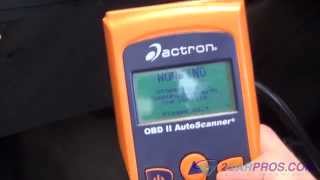
How to Use an Engine Scanner The engine code scanner has made automotive repair easier than ever. When the check engine light comes on while driving it means there is a system that is having a problem. With the trouble code scanner you are able to retrieve the trouble code stored in the vehicles computer. Once the system has been identified replace the shorted senor or other repair and clear the codes out of the vehicle's computer. Once the codes have been cleared the computer will go into relearn procedure and run any number of system monitors to determine if the trouble has been properly repaired.
How to Scan for Trouble Codes (Check Engine Light)
   
How to Replace Front Brake Pads All vehicles wear out brake brakes and rotors, learn the proper way to service your brakes by reading through our step by step instructions. Neglecting your brake system can lead to system failure, brake inspection is mandatory in some states, check your brake system regularly to ensure proper operation of your vehicles brake system.
How to Change Front Brake Pads and Rotors
   
How to Scan for Trouble Codes How to Replace a Multi Rib Belt All vehicles wear out brake multi rib belts as a normal service item and must be replaced for proper operation, replacing your car's multi rib belt is a relatively simple repair that can be done in a few minutes with minor tools in most cases. Always wear protective gloves and eyewear before you begin.
How to Change a Multi Drive Belt

Featured Car Repair - Engine Cranks But Will Not Start

Introduction

For an engine to run, you need three things to happen inside the engine, compression, fuel and ignition, without any one of these components the engine will not run. Follow the repair guide below:


Engine Configuration with Camshaft Operation

  • Compression - Engine compression caused by crankshaft rotation and a piston moving up and down inside the engine block. If the timing belt or timing chain fails it will cause the camshaft to become out of correlation with the crankshaft or allow the camshaft to stop rotating. Either of these conditions will cause the engine to lose compression and sometimes cause internal engine damage.

  • Fuel Delivery System - The fuel system includes: fuel pump, fuel injectors, pressure regulator, fuel filter and pressure lines. This system is used to supply fuel under pressure to the fuel injection system, the lack of fuel pressure or volume will cause the fuel delivery system to fail and the engine to stall or not start.

  • Ignition Spark Delivery System - The ignition system components include: spark plugs, spark plug wires, crankshaft angle sensor, camshaft angle sensor, ignition coil, ignition module, knock sensor and ECM (engine control module). The engine relies on the ignition spark to be delivered to the combustion camber at the correct time. If the ignition spark stops or is delivered at the wrong time the engine will not run or run poorly


If Your Engine Cranks but Does Not Start Follow this Troubleshooting Guide

Vehicles operate by the same principle, basic troubleshooting procedure applies to most cars.

WARNING! Always have the vehicle under inspection on level ground, in park with the emergency brake on. Always wear protective eyewear, gloves and necessary clothing before inspection or work begins. Never crank an engine over when anyone is near the battery or engine. Always have a operational fire extinguisher close by, obey all first aid instructions in the event of an accident. Never stand in front or behind a vehicle when cranked over or running. When engine is cranked over keep hands and clothing free from rotating components.

  • Step 1 - Anytime you have a problem with electronically controlled components such as an engine, transmission, ABS brake, or SRS (supplemental restraint system, Air Bag) inspect all fuses using a test light and check the under hood power distribution center and under dash fuse panels. If all fuses test ok continue to the next step.
     
  • Step 2 - To check for problems with electronically controlled components such as an engine, transmission, ABS brake, or SRS (supplemental restraint system, Air Bag) and the fuses test ok a trouble code scan is needed to identify any system trouble. Use a simple scanner tool to retrieve trouble codes and see if they relate to the specific problem, like a crank angle sensor failure code. If the trouble code present does not pertain to the immediate problem like a EVAP code ignore it until a later time, after the car is running. The reason we repair non-related codes after the engine is running is because sometime false codes can be triggered by the engine not running. Once the engine is running again the code present might cycle and turn itself off. You might say "if the engine doesn't run shouldn't it have a trouble code?" Sometimes conditions occur that will not be detected by the computer, example: if the fuel pump fails the computer can not detect the failure, so the engine doesn't start and the computer thinks everything is ok with no codes. If no trouble codes are present proceed to the next step.
     
  • Step 3 - Determine if the engine has compression, this can be done a number of ways but the most complete method is to perform a compression check. Remove the spark plugs and perform a compression test on one cylinder. If one cylinder has compression then the remaining cylinders usually will be close to the same. Crank the engine over about 5 seconds, normal compression readings should be between 125 psi and 160 psi on each cylinder. If no or little compression exists additional tests will be needed. The most popular reason for an engine to lose compression is a timing belt or timing chain fails. If low or no compression exists remove the oil fill cap and observe camshaft rotation when the engine is cranked over. If no rotation exists the timing belt or chain has failed. If your engine has a timing belt and you can not see the camshaft easily remove the upper bolts to the timing cover and gain visual access to the belt, recheck cam rotation by cranking the engine over. Sometimes a timing belt or chain can jump causing the camshaft to loose correlation with the crankshaft and therefore causing low compression. The best test for this condition is to remove the timing belt/chain cover and inspect timing marks. If the compression is ok proceed to next step.
     
  • Step 4 - Test the ignition system output, ignition systems can vary in configuration but operate on the same principal. Ignition systems can consist of a coil, pick up coil, crank angle sensor, cam angle sensor, spark plugs, spark plug wires, distributor cap, ignition rotor and a distributor and any variations of these components. An ignition coil is a voltage stepper coil that transforms a low voltage (12 volts) signal into tens of thousands of volts needed to jump the gap of the spark plug. This coil is activated by an ignition module triggered by using the camshaft/crankshaft angle sensor, timing is adjusted by the ECM (computer). This primary electrical signal is generated by the ECM which calculates spark timing by using a variety of sensors including coolant temperature, mass air flow, and oxygen sensors. To perform a basic ignition output test you must have a test light and follow this ignition system output test video.

    Some ignition systems have a coil for each spark plug. This is called Direct Ignition (DI) system, there are no plug wires in this system just individually controlled ignition coils. The amount of coils or spark plugs depend on the number of cylinders the engine is designed with, example: four cylinder, six cylinder etc. To perform a basic ignition output test you must have a test light follow this ignition system output test video and substitute the ignition coil for the plug wire (note: leave the coil trigger wires connected).

    Coil Over Spark Plug
    Coil Over Spark Plug

    If the ignition system test is weak or non-existent test the car fuses, both under hood power distribution center and the fuse panel under dash. This test is performed with a test light tool. The test light should illuminate on both sides of the fuse, if not the fuse has failed and needs to be replaced. If the fuses are ok a manufacturer specific repair procedure is required and an online auto repair manual is needed to continue. If the ignition system tests ok proceed to the next step.

  • Step 5 - Test fuel system pressure, test for proper fuel pressure with a test gauge on the fuel rail or in line somewhere in the system, most throttle body injection cars (TBI) are between 13 psi and 17 psi. and most (DPI) direct port inject systems are between 40 psi and 55 psi. If good fuel pressure is present continue to next step. If no or little fuel pressure is present check the fuel pump fuse and fuel pump control relay located in the fuse panel, you can find this fuse and relay by checking your owners manual, back of the fuse panel cover diagram, or an online auto repair manual, if the fuse or relay has failed replace it a new unit and re-test.

    Note: some Ford cars have an inertia switch designed to cut off the fuel pump in the event of an accident. Sometimes this switch can accidentally be triggered causing the engine to not start. If the car is exposed to a random bump either in the road or by another car this switch can be triggered. To check for this condition locate the inertia switch, if the cut off switch has been active it will have a white or red indicator at the top of the switch. Push this indicator down to disarm the cut off switch, if the indicator does not move down it is not activated and is not the problem.

    Have a helper crank over the engine while you place your fingers over the relay, does the relay click under your fingers? if so the relay could be working, there is a chance the relay has burned contacts inside causing the problem but we will get back to that. Next, access the fuel pump power feed wire, there are a few ways to do this, first you need a wiring schematic to find the color wire needed for testing, the best way to do this is with an online auto repair manual. Once you have found the color wire it should be located in the wiring harness near the fuel tank were the pump is located. Ground the test light and probe (pierce the wire's outer coating with the test light point) the wire, have a helper crank the engine over. If the test light illuminates and you have no fuel pressure the fuel pump had failed and needs to be replaced.  If the test light doesn't illuminate the fuel pump control relay has probably failed, replace it with a new unit and re-test, in most cases this relay is under thirty dollars. There is an outside chance the power feed to the relay has failed but it doesn't happen very often. If this is the case use an online auto repair manual to trace the power source to the relay.


  • Step 6 -Test fuel injector pulse and supply voltage output (test is used for most cars). This test will tell you if the computer system has operating voltage and injector trigger signal. Remove an electrical connector from a fuel injector (it doesn't matter which injector) probe both sides of the connector with a grounded test light (there are only two terminals). Have a helper turn the key to the "on" position without cranking the engine and observe the test light. The test light should illuminate one side of the connector only. Next, switch the test light lead to the positive side of the battery to test the system ground injector trigger, probe the side of the connector that did not light up, have a helper crank the engine over and observe the test light, it should blink on and off. If this test checks ok continue to next step. (note: if no injector pulse is present try disconnecting the remainder of injectors and re-test, if a fuel injector is shorted it can shut down the injector driver causing no injector pulse. If injector pulse returns plug injectors electrical connectors in one at a time until the pulse fails and replace that injector)
     
    If this test revealed that there was no pulse but system has power the ECM is not generating a fuel injector trigger. If there is no trigger to the fuel injector it will not allow fuel to enter into the engine. Some of the most popular reasons that can cause this condition include a shorted crankshaft angle sensor, shorted camshaft position sensor or shorted ECM/PCM. (when a system trouble code scan is performed it does not always catch a crankshaft angle sensor, camshaft position sensor failure).  Tip: try disconnecting all non-essential sensors, example: oxygen sensor, coolant sensor, throttle position sensor, air intake temperature sensor, mass air flow or map sensor and EGR valve pressure differential sensor. Crank the engine over, if the injector pulse returns, one of the sensors is shorted causing the system to not operate. Plug the sensors in one at a time until the injector pulse fails then replace that sensor and reassemble.

    Note: Most Ford cars have an EGR valve pressure differential sensor that when the catalytic converter becomes slightly plugged will melt the sensor causing the system to shut down. Inspect sensor for melting at the electrical connector then repair or replace as needed and recheck.
     
    If the test reveals that the connector has no power on either side at any time the system power has been disrupted. Some of the popular reasons for this is condition is main ECM/PCM fuse, main ECM/PCM power relay and main ECM/PCM power feed wire failure. (some vehicle ECM/PCM feed wires are located near the battery and corrosion can stop the voltage feed).  If all power sources check out the system ground needs to be checked, this is done by reversing the test light lead and installing it on the positive side of the battery. Now the the test light will illuminate when grounded. Use the test light to check main system grounds to the ECM/PCM, most system ground wires are black but to be sure you will need an online auto repair manual. If repairs have recently been made a system ground lead could have been left off of the engine causing the system not to power up, so double check all engine wiring harness grounds.
     
  • Step 7 - If the engine has compression, ignition and fuel injector pulse and the engine still doesn't run it could have a plugged exhaust system. Disconnect the exhaust system before the catalytic converter and crank over, if the engine starts the car has a plugged converter or exhaust system. Disassemble the exhaust system to inspect to replace the exhaust component that has failed and reassemble to recheck.

Latest Car Repair Videos

Popular Resources

Car Repair Forum - Join 2CarPros auto repair forum to get car repair information. Chances are someone else has had the same problem as you. The information could save you hundreds of dollars in car repairs

Safety Check - Before you take off on that long trip there are some basic checks and information you should know

Avoiding Repair Scams - Getting your car repaired can be very expensive. Unscrupulous auto mechanics can take you for a ride. Learn what questions to ask when getting your car repaired plus get tips on the warning signs you should look out for. All car repair businesses are not created equal

How to Scan for Diagnostic Trouble Codes - If you see a "check engine" or a "service engine soon" light in your instrument cluster your car has stored a diagnostic trouble code. This means the computer system has detected a problem with one of the various systems it controls.

How to Jump Start Your Car - The starter is designed to operate on a high amperage 12 volt system, when a starter is subjected to low voltage or amperage (flow) it will cause the starter to not operate. To jump start your car start a good quality jumper cable set is required, inexpensive cables do not work as well because a higher gauge wire (smaller diameter) is used in the construction restricting the current flow from battery to battery.

2CarPros.com - The Largest Automotive Question and Answer Database in the World


Popular Service Repairs
Test Fuses
Front Brake Pads
Tune Up
Transmission Service
Rear Brake Pads
Rear Brake Shoes
Replace Window Motor
Test Alternator
Test Battery

Replace Air Filter

Check Engine Light

More Service Repairs...
Advertisement

Car Repair Home l Help l Privacy Policy l User Agreement l About Us l Contact Us l Link to Us l Affiliate Program
  Copyright © 1998 - 2008 2CarPros.com - Professional Mechanics Online