INSUFFICIENT HEAT
Ensure cooling system is operating properly.
Check heater system hoses and core for coolant flow.
Check for loose or misaligned cable to temperature blend door.
FUNCTION SELECTOR VALVE
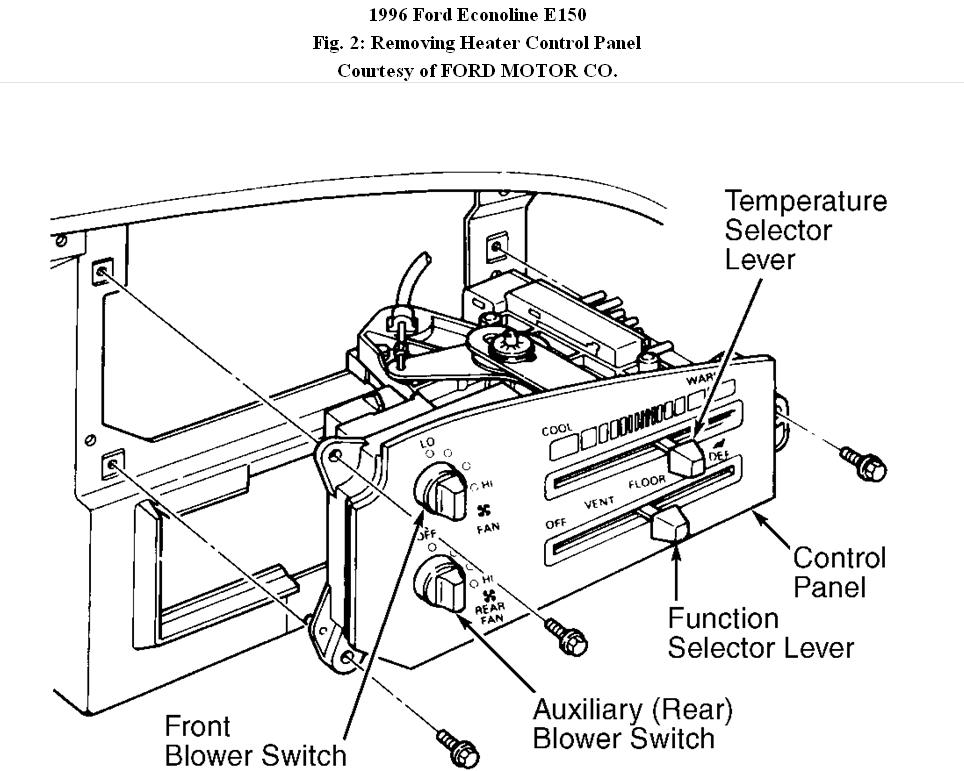
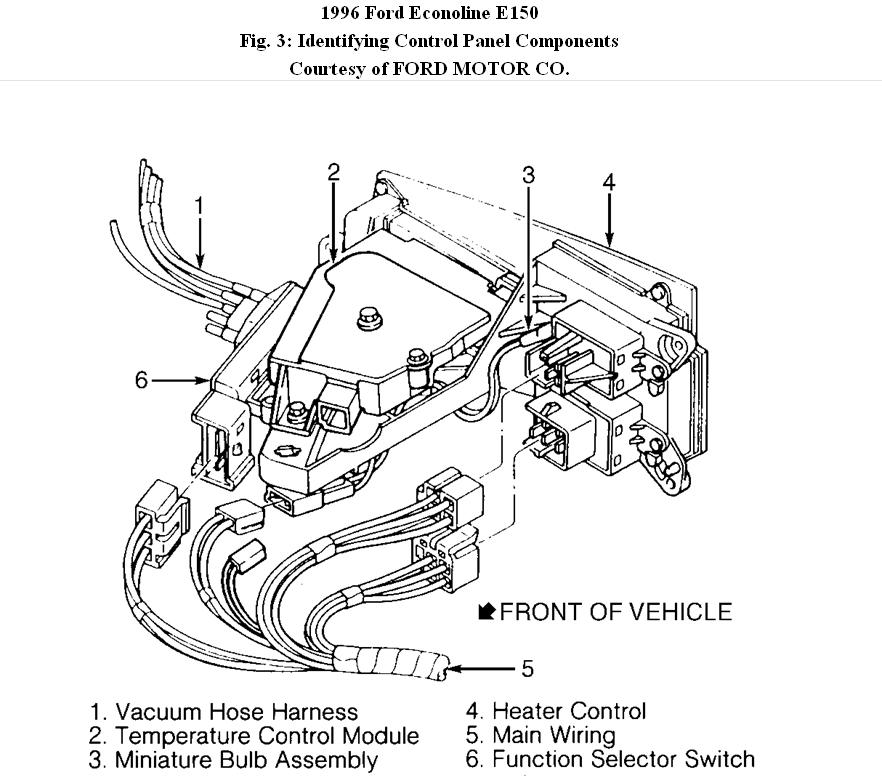
1. Start engine. Run at idle to maintain a constant vacuum supply. Slide function selector lever slowly from one position to another. A momentary hiss, indicating vacuum is supplied to function selector assembly, should be heard.
2. If hiss is not heard, check for kinked, pinched or broken vacuum hose. Inspect for faulty check valve between manifold and reservoir. A continuous hiss indicates a major leak in system, but does not necessarily indicate a leak at function selector assembly.
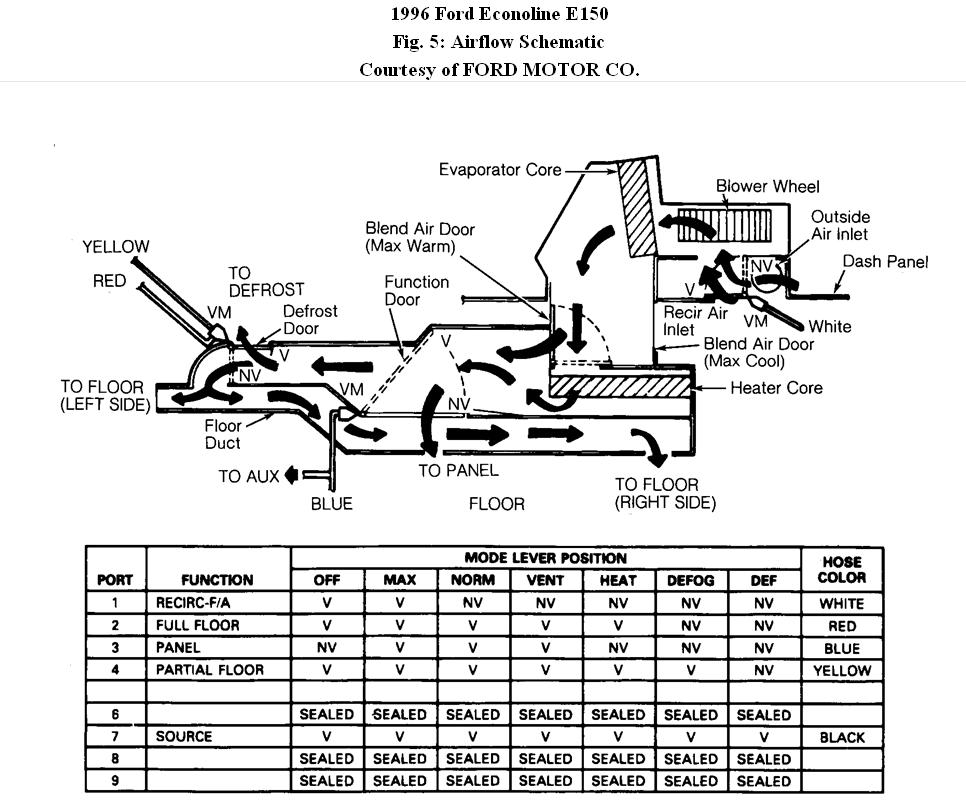
3. If constant hiss is heard, cycle function selector with blower motor on HI speed and check location of discharged air. Airflow schematic and vacuum control chart indicate which vacuum motors are operated for each function selector lever position. See Fig. 5 . If
discharge airflow does not agree with chart, repair or replace components.
4. Check and operate vacuum motors using hand-held vacuum pump. If motor operation is satisfactory, vacuum hoses are probably pinched, kinked, disconnected or punctured.
© 2008 Mitchell Repair Information Co., LLC.
Images (Click to enlarge)
Dec 25, 2010 at 10:27 AM