Hey guys. You're a step ahead of most people by recognizing you have a spark AND fuel problem. Too many people get hung up on the first thing they find missing.
Which engine do you have? Start by measuring the voltage to the ignition coil positive terminal, either small wire bolted to the back of the alternator, or the feed wire to any injector, (if you have multiple injectors). A test light is more accurate than a digital voltmeter because the voltmeter might not respond fast enough. You will see 12 volts there for just one second after turning on the ignition switch, then it will go back to 0 volts. You might hear the fuel pump hum for that one second. That voltage must come back during engine rotation, (cranking or running).
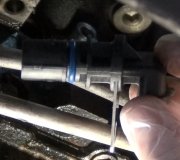
The least common symptom is you'll never see voltage there. Suspect a burned open fuse link wire. More commonly you'll see 12 volts for the first second but not during cranking. That voltage comes from the automatic shutdown (ASD) relay which the Engine Computer turns on when it gets pulses from the crankshaft position sensor and / or camshaft position sensor. That sensor is inside the distributor. It's called the "Hall Effect Switch" in the 2.2L and 2.5L engines and has a very high failure rate. Many people carry a spare in the glove box. It's real easy to replace in a couple of minutes with just a philips screwdriver. The sensor is under the rotor in the distributor. While you're in there be sure the rotor turns when cranking the engine. If it doesn't, suspect a broken timing belt. These were dandy little engines and not the interference design so no valves get damaged when the belt breaks. Typically that sensor fails by becoming heat-sensitive. The engine will stall after the engine warms up or it won't restart after being shut down for a short period of time. It will work again after the engine cools down for up to an hour.
The 3.0L V-6 also has the sensor in the distributor. It's an optical pickup assembly with an extremely low failure rate. A broken timing belt is more common. That is also a non-interference engine.
SPONSORED LINKS
Saturday, November 19th, 2011 AT 7:26 PM