Logo Automobile Information Add Site to Favorites  
Auto Repair
Auto Repair Home
Auto Repair Ask a Car Repair Question
Auto Repair Car Repair Question Archive
Auto Repair Repair Troubleshooting
Auto Repair How to Repair or Service
Auto Repair Car Repair Forum
Auto Repair Auto Repair Manuals
Auto Repair How to use Diagnostic Tools
Auto Repair Auto Term Abbreviations
Auto Repair Brake Replacement Guides
Auto Repair Service Engine Soon Light
 
Popular Site Links


Auto Repair Maintenance Schedule
Auto Repair How Does it Work?
Auto Repair Car Repair Video Series
Auto Repair Car Safety Inspection
Auto Repair Timing Belt Marks
Auto Repair Drive Belt Routing Diagrams
Auto Repair Trouble Code Table
Auto Repair Avoid Car Repair Rip Offs
Auto Repair Smog Test Preparation
Auto Repair Car Replacement Parts
Auto Repair Test Equipment Store
 
Search Website
 
 
Recent Repair Topics


Auto Repair1999 Ford F350 Powerstr...
Auto Repair1999 Chevy Blazer My Ca...
Auto Repair1993 Ford Escort
Auto Repair1992 Ford Ranger Powers...
Auto Repair1977 Jaguar Xj6 Tachomet...
Auto Repair2003 Chevy Silverado Lo...
Auto Repair1994 Other Nissan Models...
Auto Repair More Repair Topics...
 
Site Advertising


Auto Repair Advice by Professional Automotive Experts.


How Do I Repair My Car? / How Do I Jump Start My Car?

How Do I Jump Start My Car Using Jumper Cables?

WARNING! Always wear protective eyewear, gloves and necessary clothing before inspection or work begins. Never crank an engine over when you are near the battery or engine. A battery is filled with acid that produce explosive vapors that can ignite when extreme heat or a spark is present. A battery could have residual acid on the outside casing so use caution when handling a battery and the surrounding area. Apply baking soda to neutralize any suspected acid residue before work begins.


READ COMPLETELY BEFORE BEGINNING!

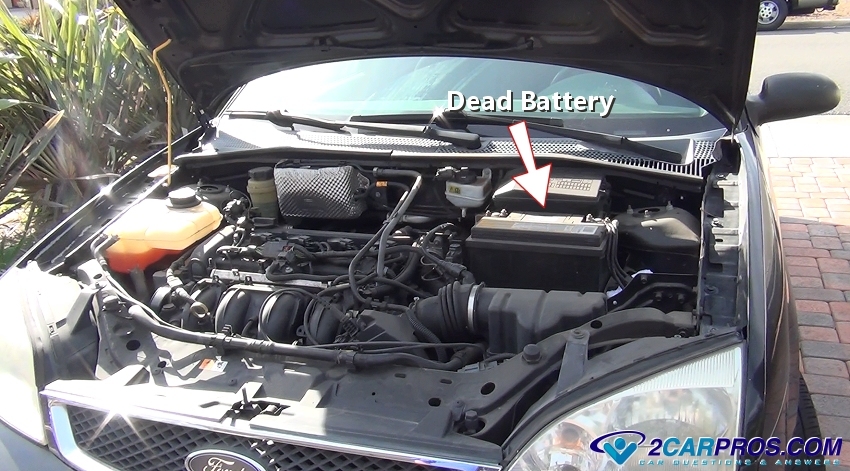
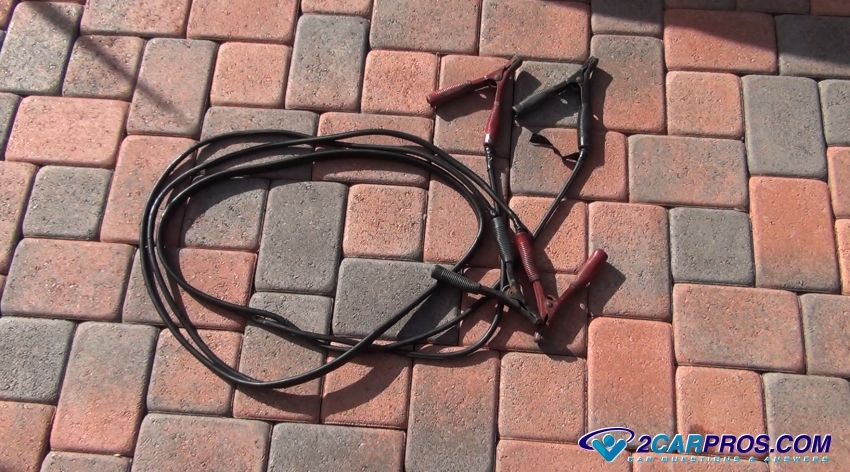
When a battery is dead a jump start is needed to troubleshoot the reason the battery went dead. A dead battery condition can range from a car door left open to the headlights being left on over night. Low battery voltage is a common car problem. As a battery ages it can lose the ability to store electricity resulting in an insufficient flow of electrical energy to the starter. The starter is designed to operate on a high amperage 12 volt system, when a starter is subjected to low voltage or amperage (flow) it will cause the starter to not operate. To jump start your car start a good quality jumper cable set is required, inexpensive cables do not work as well because a higher gauge wire (smaller diameter) is used in the construction restricting the current flow from battery to battery.

Battery Jumper Cables

Basic Battery Jumper Cable Instructions

  • Park the car that will be used as the jumper vehicle near enough for the jumper cables to reach to the front of the car that is going to be jumped, and shut off engine. (or were the battery is located, most vehicles are located in the front, under the hood)
     
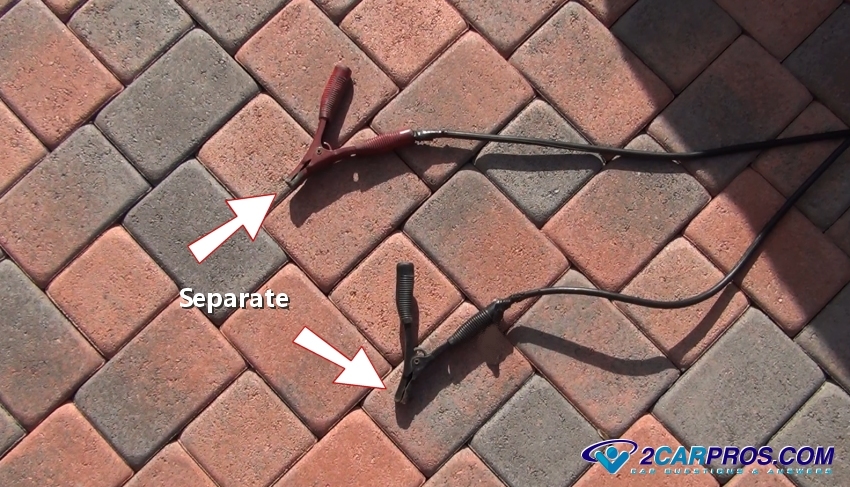
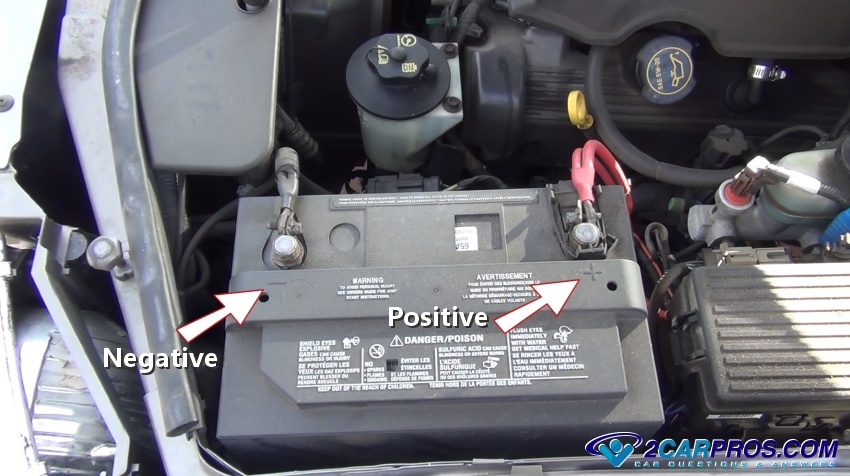
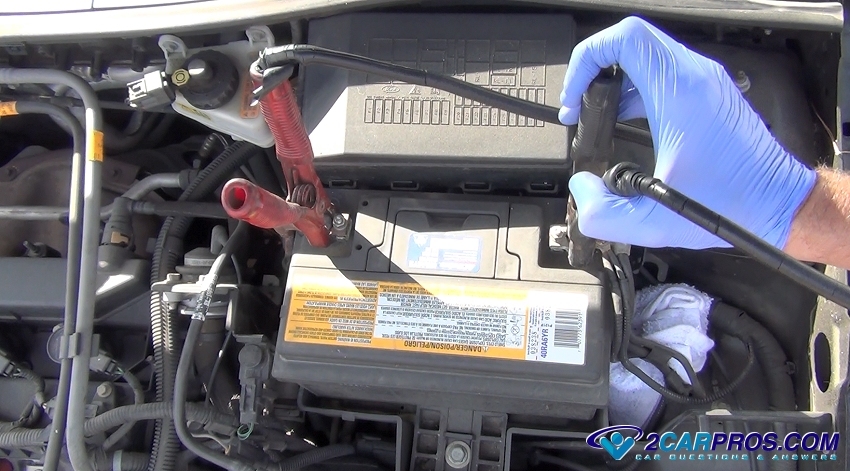
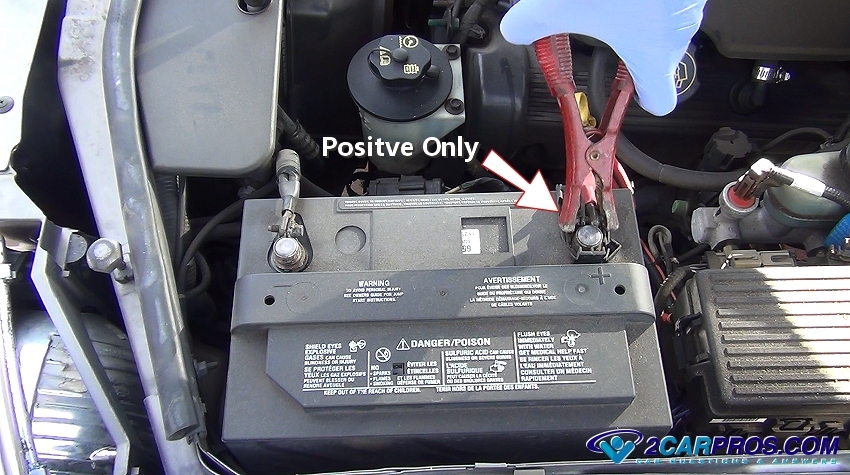
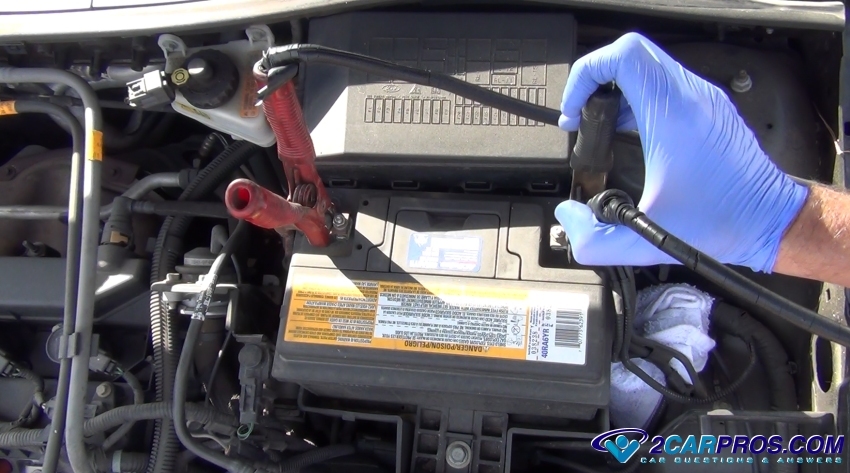
  • With the engine off open the hood on both cars and connect the red jumper cable connector on the positive (+ red) side of the battery of the car that has the dead battery. Once the jumper cable end is attached slightly wiggle the jumper connector back and forth to assure a good electrical connection. Next repeat this procedure to the battery in the jumper car so both red jumper cables are connected to their respective batteries.
     
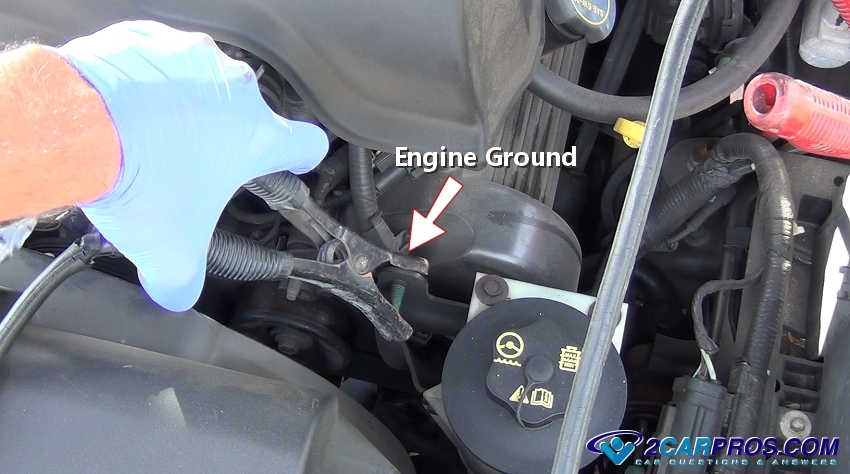
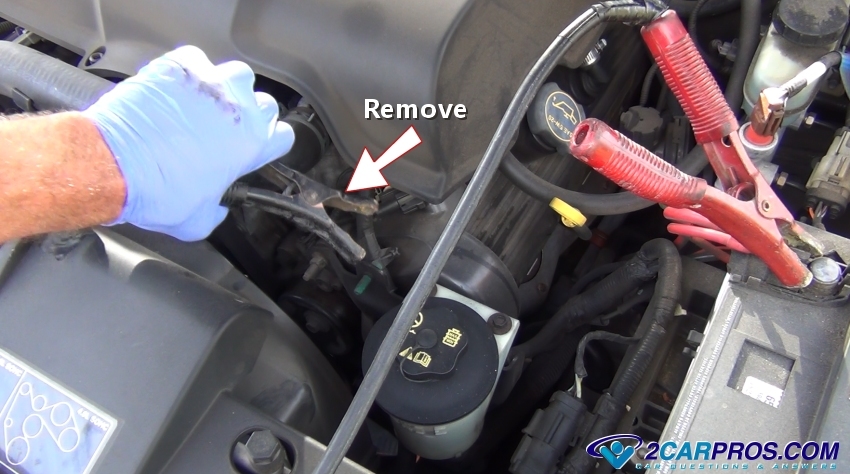
  • Then attach the black connector of the jumper cables to the negative (- black) terminal of the car with the dead battery. Next, attach the remaining black jumper cable connector to a engine accessory bracket such as an alternator or air conditioner compressor mount away from the engine belt system. The reason we do not connect the last connector at the negative battery terminal is to avoid sparks at the battery. Sparks on or near the battery can cause the battery to explode. While explosions are rare they will more likely occur to a battery that is low on charge or a battery that has just been charged this is why the final circuit connection is at an engine ground source.
     
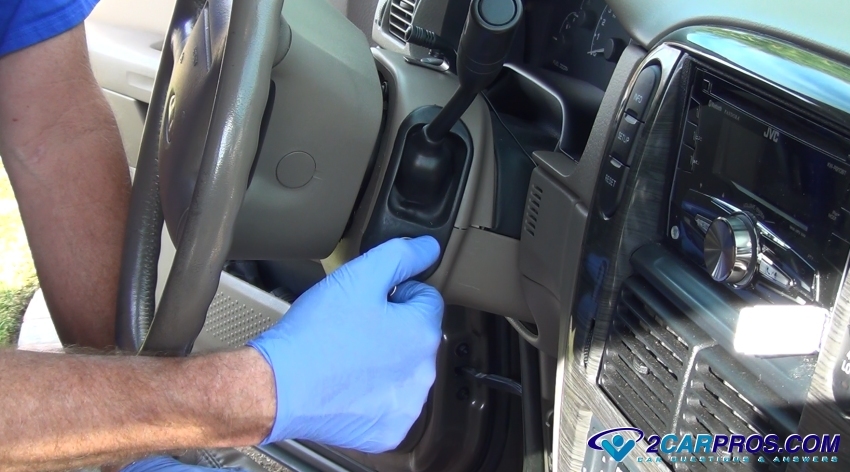
  • Now that all the battery jumper cable connectors are in their respective places double check all connections by wiggling the connectors. Next, step back from both hood areas of both vehicles. With all the accessories turned off and both cars gear selectors in park with the emergency brake on start the engine of the jumper car (car with good battery) and allow to idle for about 5 minutes. Then, manually increase the engine speed to a little faster then idle speed (about 1500 RPM) by holding the accelerator down slightly for about 10 minutes. You are creating a charging system for the dead battery by the alternator of the car that is running.
     
  • Next, crank over the car's engine with the dead battery, it should crank over and start. Once the engine has started manually increase the engine speed to about 1500 RPM and hold for about 10 minutes. While the car that had the dead battery is running shut off the engine of the jumper car, and remove the black jumper cable end. Then, carefully remove the back jumper cable connector from the now charging dead battery. Next, remove the red jumper cable connector from the jumper car and close the hood. Finally, remove the remaining jumper cable connector and close the hood.
     
  • While the dead battery car is running inspect the charge inductor light on the instrument cluster. If it is illuminated the charging system is having a problem and needs to be checked. If repeated jump starts are required and the charging system has check out ok the battery has failed to hold a charge or there is a electrical draw in the system.
     
  • If you have followed this procedure and the vehicle still has not started the battery may have failed (shorted) internally and can not be jump started or you have a failed battery connection and further troubleshooting is required.


Related Inspections

Check Battery Cable Corrosion - The battery cables are used to transfer electrical power from the battery to the starter. Battery acid causes corrosion inside the battery cable and will inhibiting electrical flow. To check for this condition look for bulges near the top of the cable, these bulges indicate corrosion expansion caused by the chemical reaction between the acid and copper wire. Remove the failed battery cable to replace with new unit, then check charging system to ensure proper operation.

Rapid Clicking Sound When Cranking - The starter is designed to operate on a high amperage 12 volt system, when a starter is subjected to low voltage or amperage (flow) it will cause the starter to engage and disengage rapidly producing the rapid clicking sound. To fix this problem a battery inspection or replacement is needed. There are two reasons that a battery will not perform as it should, either the alternator has failed allowing the batteries state of charge to become weak or the battery has failed and replacement is required. Unfortunately to check the alternator the engine must be running, so you must either jump start your car or replace the battery to check the charging system. If the alternator output test is ok then the battery is bad and must be replaced. If while driving the charge light indicator on the dash was not illuminated and the battery is more than three years old the battery has probably failed.

Inspect Battery for Bulging - The battery supplies electrical power to the vehicle, when a battery short circuits internally it can cause the car to loose power and regain it back again. Inspect the battery, if the sides are bulging it could have a warped plate that can short under certain conditions. The problem is to check for the condition the battery needs to be disassembled which is very difficult. This problem is rare but it does happen.

How Do I Repair My Car? / How Do I Jump Start My Car?

2Carpros.com Diagnostic Tool Store:

Actron CP7612 Battery Load Tester
Buy a Battery Load Tester
 
Actron CP7612 Battery Load Tester With full 100-amp load-testing capacity, this reliable and highly accurate tester works on both 6- and 12-volt batteries. The unit performs both a voltage test and 15-second battery-load testing. Results are displayed on a color-coded 0-16 volt scale. Rugged, precise 3” jeweled D’Arsonval meter with zero adjust Chrome-plated steel housing with rubber grip handle and side test clamp holders Heavy-duty, UL-listed, momentary test switch Manganese wire resistance element shunt grid Extra heavy 10 AWG 12” leads with strain relief and color-coded, insulated, copper plated steel battery post clamps 1 year warranty Determine a battery's state of charge, cranking and charging volts, and Good/Bad status in about 10 seconds 100 amp load capacity 0-16 volt range Test 6 and 12 Volt batteries Easy to read meter with zero adjust Chrome-plated steel housing with rubber grip handle and side test clamp holders Heavy duty 12" leads
Actron CP7665 AutoAnalyzer (DMM) This AutoAnalyzer™ performs all standard electrical tests for on-car and bench troubleshooting. Locate faulty wiring, test electrical components, engine sensors, ignition and fuel systems and starting/charging system voltage. Pinpoint problem area and determine which components need repair or replacement. Measures AC/DC voltage, DC current and resistance Tests diodes and batteries Tests fuses, switches, solenoids and relays 19 Ranges for more accurate measurements Backlit LCD is easy to read day or night Hold button retains display data Automatic polarity sensing to avoid reversed test lead hook-up Automatic zero adjustment for volts, amps and battery tests for accurate measurements Low battery indication for user convenience (9V battery not included) Fold-out stand for better viewing position Color coded detachable test leads Alligator clips included for hands-free test lead connections Comprehensive user manual with illustrated step-by-step automotive test procedures and examples in English, Spanish and French 1 year warranty Function RangeDC Voltage 200V to 500VAC Voltage200V to 500VDC Current 200μA to 10AOhms200 to 20M Diode check Battery Test 1.5V, 9V, 12V batteries
 

Additional "How to" Car Repair or Services

ASK A CAR OIL FILTER QUESTION - Join our question and answer forum where over 6,000 free auto repair questions are answered every month, after you have completed our free signup you will able to ask a question and receive an answer from one of our many forum members. If you elect to donate any small amount of money we will assign one of our 2CarPros Certified Repair Technicians to answer your question. Questions with donations are answered promptly and 100% of the donation is awarded to the technician helping you.

GET AN ONLINE CAR REPAIR MANUAL - Get instant access to your vehicles wiring diagrams, firing orders, component locator, vacuum diagrams, repair procedures, specific testing and diagnostics for trouble shooting, steering and suspension information, heating and air-conditioning problems, safety belt and airbag restraint repair, factory bulletins and general information and much more. We recommend that anyone needing technical repair information should have a quality auto repair manual for their car.

Popular Service Repairs
Test Fuses
Front Brake Pads
Tune Up
Transmission Service
Rear Brake Pads
Rear Brake Shoes
Replace Window Motor
Test Alternator
Test Battery

Replace Air Filter

Check Engine Light

More Service Repairs...
Advertisement

Car Repair Home l Help l Privacy Policy l User Agreement l About Us l Contact Us l Link to Us l Affiliate Program
  Copyright © 1998 - 2008 2CarPros.com - Professional Mechanics Online