Free Auto Repair Advice by Professional Mechanics.
Troubleshooting
/ Excessive Smoke
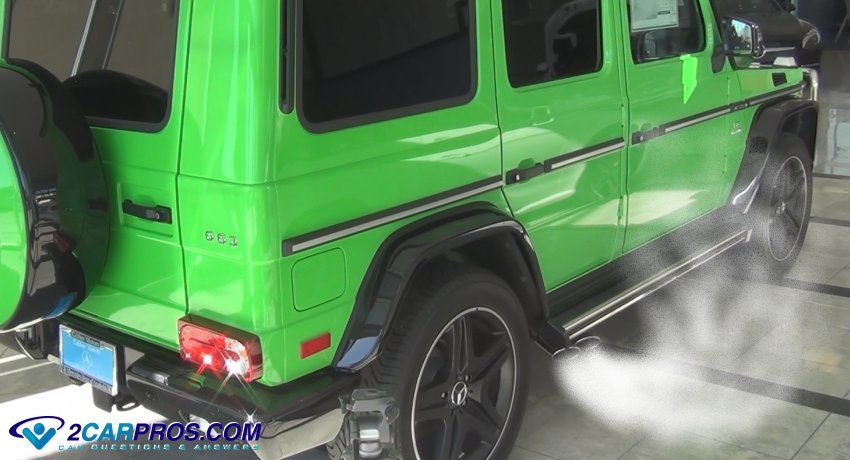
A small amount of smoke from the exhaust pipe of the car is normal.
Excessive smoke amounts are created by a malfunction. The smoke is cause by excessive
fuel or engine oil. If this condition is allowed to continue it can effect the exhaust
system. Failures can range from catalytic converter becoming plugged to engine overheating
and poor fuel economy. There can be reasons for this condition we have listed the
most popular below.
Troubleshooting Procedure
A. Testing for a Blown Fuel Pressure Regulator Diaphragm.
A fuel
pressure regulator is used in the fuel injection system. This component regulates
fuel system pressure by using a diaphragm and spring combination. When the fuel
pressure regulator diaphragm ruptures it allows raw fuel into the vacuum feed line
and then into the intake system of the engine. This condition creates a rich black
smoke from the tail pipe on start up and while running. To check for this condition
remove the vacuum line from the regulator, if fuel is present in the line the regulator
has failed. Some GM vehicles are designed with an internal intake regulator you
must remove the upper intake manifold to be inspected. Most fuel pressure regulators
are on the fuel rail on top of the engine in plain site. If you can not locate your
fuel pressure regulator consult a
repair manual.

Removing the Vacuum Feed Line
B. Testing Fuel Pressure Regulator.
The fuel pressure regulator adjusts fuel system pressure depending on the load of
the engine. Vacuum that is attached to the fuel pressure regulator to control system
pressure. When the fuel pressure regulator is not functioning properly it causes
the fuel pressure to be above normal operating pressure. This condition causes excess
fuel to be injected into the engine causing a rich mixture that produces black smoke.
To test for this condition (engine off) remove the protective cap and attach the
fuel pressure gauge.

Attach Fuel Pressure Gauge
Support the fuel pressure gauge for observation, then turn the key to the on
position. The fuel pressure gauge should jump up to your system pressure. If you
do not know your system fuel pressure consult a
repair manual. Actual
fuel
pressure will very slightly but should pretty close to specification.

Fuel Pressure Gauge
Then, start the engine, the fuel system pressure should stay the same. While watching
the gauge, snap the throttle, the fuel system pressure should jump up about 5 psi.
If the system fuel pressure does not respond the fuel pressure regulator has failed.
If the fuel pressure gauge falls the fuel filter is plugged or the fuel pump is
failing. When testing is complete, remove the fuel pressure gauge feed line and
replace the protective dust cap.
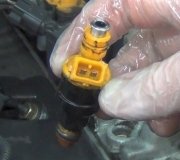
C. Check for Fuel Injector Malfunction.
When a
fuel injector malfunctions it will allow excessive fuel into the engine. The
fuel injector is manufactured with a control valve that allows fuel to flow at prescribed
amounts. If this valve sticks open it will flood the cylinder with fuel. This excess
fuel causes black smoke from the exhaust system. To test for this condition the
injector fuel rail must be removed. Confirm that all injectors are still connected
to the fail rail. Without cranking the engine over turn the ignition to the "on"
position. Without the engine running the fuel injectors must not have any fuel
exiting the injector nozzle. If fuel is present at any of the
fuel injectors they have failed and need to be replaced.

Fuel Injector
D. Check Air Intake Boot. An
air intake boot is designed to transfer air from the
mass air flow meter to the throttle bore. The
ECM monitors this air flow and corrects fuel input. When an air intake boot
fails it causes the
ECM to respond by inputting more fuel that is necessary. This condition causes
black smoke from the
exhaust system. To check for this problem remove air intake boot to inspect
for cracks or tears and replace if needed.
Troubleshooting
/
Excessive Smoke
Additional "How to" Car Repair or Services
1.How to Replace
Air Filter
2.How to Change
a Cabin filter
3.How to Change
Oil and Filter
4.How to Tune Up with
Throttle Bore Service
5.How to Replace
a Radiator
6.How to
Replace Fuel Filter
7.How to Read Trouble Codes
8.How Filters Work
9.How to Replace
Front Brake Pads
10.How to Replace Rear
Brake Pads
ASK A CAR REPAIR QUESTION
GET AN ONLINE
REPAIR MANUAL
FOR YOUR CAR - Get instant access to your vehicles drive belt routing, wiring
diagrams, trouble code information and other available updates and factory bulletins.
|