no other special tools needed ..
CLUTCH DISC, FLYWHEEL, PILOT BEARING & PRESSURE PLATE
NOTE:Replace clutch disc and pressure plate as an assembly. Replace pilot bearing only if it is damaged.
CAUTION:DO NOT use cleaners with a petroleum base or immerse pressure plate in solvent.
Removal
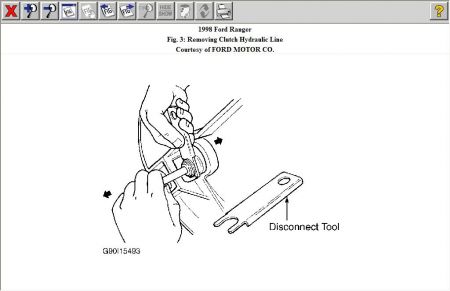
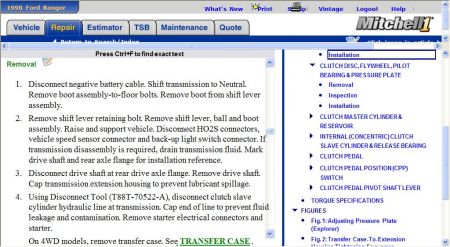
Disconnect negative battery cable. Disconnect clutch master cylinder push rod. Raise and support vehicle. Remove starter. Disconnect clutch slave cylinder hydraulic line by pressing White retainer bushing with Disconnect Tool (T88T-70522-A) while pulling on line. See Fig. 3 .
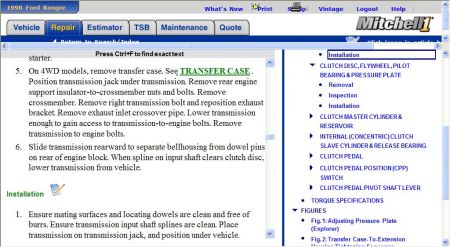
Remove transmission. See TRANSMISSION . On 4WD vehicles, remove transfer case. See TRANSFER CASE . Check pressure plate finger height variations before removing pressure plate. If finger height variations exist, replace pressure plate. Place reference mark on pressure plate and flywheel for reassembly reference. Loosen pressure plate-to-flywheel bolts evenly until springs are expanded. Remove pressure plate and clutch disc.
Remove all but 2 flywheel bolts. Loosen last 2 bolts. Install 2 flywheel bolts in threaded holes in flywheel. Using puller, remove flywheel and then pilot bearing.
Inspection
Inspect clutch pressure plate diaphragm fingers for wear. Inspect clutch plate for oil or grease saturation, worn or loose facings, warpage, loose rivets at hub and broken springs. Also inspect for wear or rust on splines.
Using a slide caliper, measure depth to rivet heads. Minimum rivet depth is 0.012" (0.3 mm). Using a dial indicator, check clutch plate runout. Maximum clutch plate runout is 0.0276" (0.700 mm). Inspect flywheel for cracks, heat damage, wear and scoring. Machine flywheel if scored or worn. Using a dial indicator, measure flywheel runout. Maximum flywheel runout is 0.003" (.13 mm) on Explorer, or 0.008" (0.2 mm) on Ranger.
Check crankshaft for misalignment and looseness. Check pilot bearing needle rollers for scoring, discoloration, wear, breakage and inadequate grease. Check rear main seal for leakage. Inspect pressure plate for burn marks, scores, flatness and ridges. Install NEW clutch plate on transmission input shaft and ensure clutch plate slides freely.
Installation
Clean pressure plate and flywheel surface with alcohol-based solvent. Pilot bearing is prelubed and does not require additional lubrication. Install pilot bearing with seal facing transmission. Using driver, install pilot bearing. Adjust pressure plate. Refer to CLUTCH PRESSURE PLATE ADJUSTMENT (OFF-VEHICLE) under ADJUSTMENTS.
Using Clutch Alignment Shaft (T74P-7137-K), position clutch disc on flywheel. Position pressure plate assembly on flywheel. Align pressure plate and clutch disc with reference mark, and install retaining bolts.
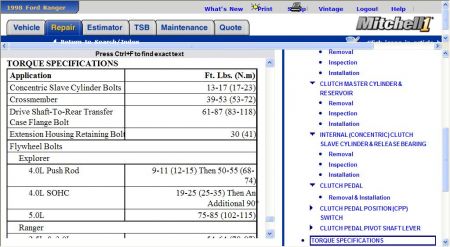
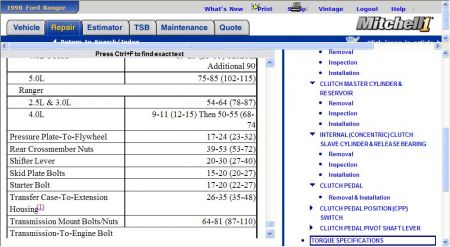
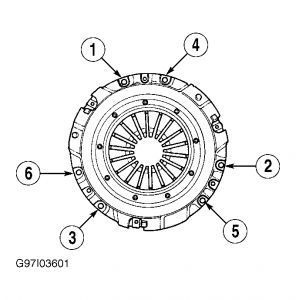
Apply Threadlock/Sealer (EOAZ-19554-AA) to flywheel bolt threads. Tighten bolts evenly in a crisscross sequence. See Fig. 4 Remove clutch input shaft or clutch aligner. To complete installation, reverse removal procedure. Tighten bolts to specification. See TORQUE SPECIFICATIONS table.
May 4, 2021 at 10:57 AM