Hello
The information you requested
I hope you and your family have a nice Thanksgiving.
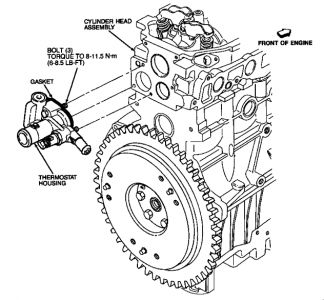
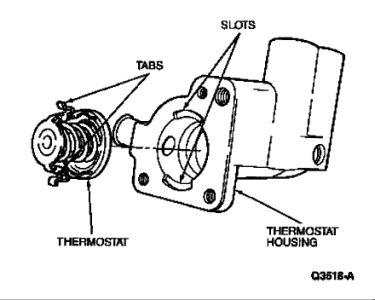
Disconnect battery cable and wiring connector from thermo switch in thermostat housing, if equipped.
Remove radiator cap, then attach a hose to drain tube and open draincock. Drain coolant level until its below water outlet connection. Close the draincock.
Loosen upper hose at radiator, then remove water outlet housing retaining bolts. Lift clear of engine and remove thermostat. Do not pry housing off.
Clean outlet housing and cylinder head mating surfaces.
Position thermostat and seat so it will compress gasket. Position outlet to cylinder head, using a new gasket and install retaining bolts.
Connect top hose to radiator and tighten clamp. Ensure that draincock is closed.
Fill cooling system with recommended coolant as follows:
Add 50 percent coolant, then add water until radiator is full. Allow coolant level to settle, then add more coolant until radiator remain full.
Install radiator cap to first notch, connect battery cable and wire connector to thermo switch. Start engine and let idle until upper hose is warm, then carefully remove radiator cap and top off coolant level.
Install cap securely and fill reservoir to FULL COLD mark with proper concentrate. Add water to FULL HOT mark. Check for leaks.
Nov 26, 2008 at 9:28 PM