Logo Automobile Information Add Site to Favorites  
Auto Repair
Auto Repair Home
Auto Repair Ask a Car Repair Question
Auto Repair Car Question Forum
Auto Repair Questions by Manufacturer
Auto Repair Questions by Topic
Auto Repair First Things to Check
Auto Repair How to Repair or Service
Auto Repair Car Repair Manuals
Auto Repair How Does it Work
Auto Repair Car Repair Video Series
Auto Repair Auto Maintenance
Auto Repair Car Sound Problems
Auto Repair Auto Term Abbreviations


Popular Site Links


Auto Repair Automobile Safety Inspection
Auto Repair Brake Replacement Guides
Auto Repair Service Engine Soon Light
Auto Repair Belt Routing Diagrams
Auto Repair Avoid Car Repair Rip Offs
Auto Repair Trouble Code Table
Auto Repair How to use Diagnostic Tools
Auto Repair Smog Test Preparation
Auto Repair Hybrid Car Information
Auto Repair Test Equipment Store
Auto Repair Auto Parts
 
Search Website
 
 
Recent Repair Topics


Auto Repair1988 Jeep Cherokee Engi...
Auto Repair1995 Chevy S-10 Stalling
Auto Repair2002 Ford Taurus Heater...
Auto Repair1986 Gmc C1500 No Back ...
Auto Repair1997 Chevy Astro Runs B...
Auto Repair2005 Chevy Aveo Won't S...
Auto Repair2002 Honda Odyssey Windows
Auto Repair More Repair Topics...


Free Auto Repair Advice by Certified ASE Technicians


First Things / No Taillights

No Taillights (Exterior, Running Lights) Taillights Out

Introduction:

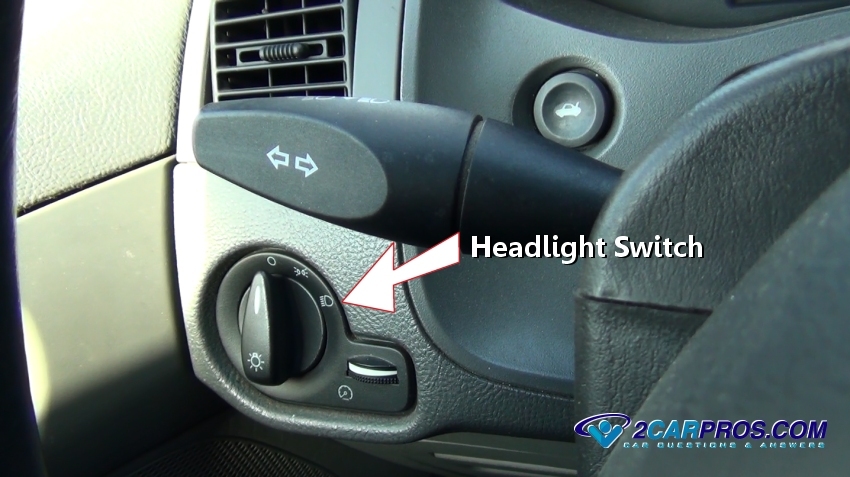
Tail lights, exterior or running lights are lights that are positioned on each corner of your car. These lights are used to make the car more noticeable at night by staying illuminated while the headlights are on. The taillights can also be controlled separately from the headlights if desired. Taillights can be used at dusk or in the early morning to increase safety by helping other drivers to see your car more easily. In some states it is required to switch on taillights in foul weather including fog and rainy conditions.  All headlight switches have the option to turn the running lights on separately. When the tail lights are activated the dash lights will also come on to alert the driver the taillights have been activated. The brightness of the dash lights can be adjusted by turning the rheostat connected to the headlight switch. This is done by turning either the pull-out activation knob or the thumb wheel located above or below the headlight switch bezel. Some manufacturers have located the dash light illumination control remotely from the headlight switch, usually somewhere near the instrument cluster itself. The running light circuit can be controlled electrically through a BCM (body control module) or a LCM (lighting control module). These computer controllers are designed to warn you that a bulb has failed by illuminating a bulb failure warning light on the dash. If your car is not equipped with either of these controllers the headlight switch will perform the actual connection to complete the flow of electricity and illuminate the running lights.

Tail Lights
Tail Lights

The interior and exterior lamps are protected by separate fuses. Some cars have a control relay to help shoulder the electrical load. Vehicles are either designed to have the running light bulbs separate from the directional signals while other manufacturers have integrated the running light circuit into the directional bulbs. Much like the brake light systems in American cars the running lights are integrated into the blinker bulbs, while Japanese and European cars have separate lighting systems. Unlike the American and Japanese/European car manufacturers brake light systems we will be able to test the running light systems in all models in a similar manner. Vehicles that have towing capabilities will have a separate wiring system to power trailer lights that are protected by additional fuses located in the fuse panel or the under hood power distribution panel. The rear license plate of the car is illuminated by a small bulb which activates when the running lights are on. It is unlawful to operate a car with any lights not working properly and must be corrected in a reasonable amount of time. Some running light systems are equipped with a self controlling timer that will allow the running lights to stay on for a predetermined amount of time after the user has exited the vehicle. This safety device can be disabled in most cases if this option is not desired. In this section we will go over the common failures for the running light control circuits and the simple repairs they will require to fix. Theses malfunctions can range from one or all lights not functioning and we also will cover dimly lit or flickering bulbs.

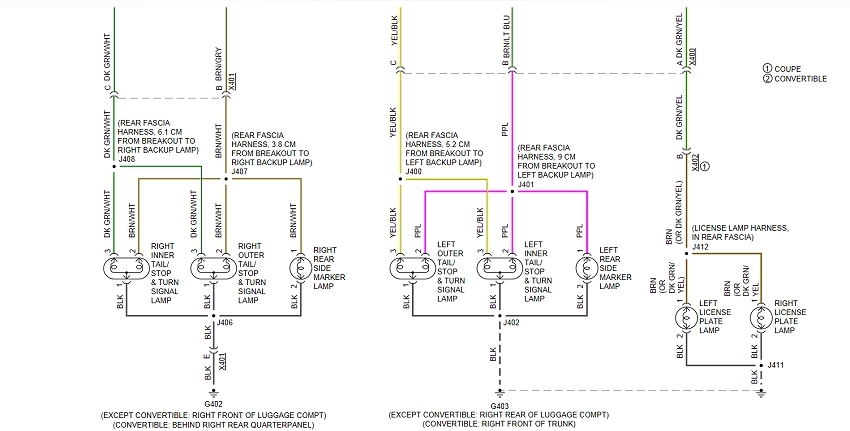
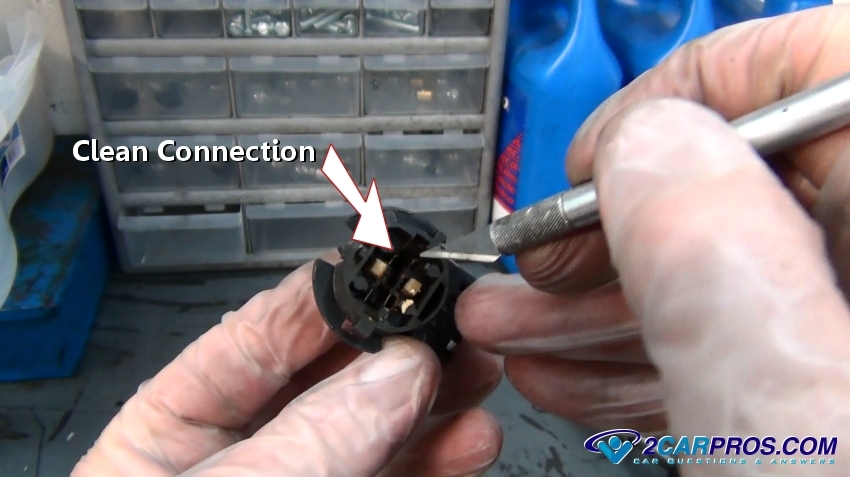
Before We Begin: Depending on the running light malfunction you will need a new bulb and test light with a possible wiring diagram which can be found in a car repair manual. Also to aid connection problems a small piece of abrasive paper (sand paper) can be helpful. When performing test wear protective gloves and eyewear.  (Note: Never connect power wires or terminals to ground, fuse damage can occur)

Troubleshooting Procedures - Read Completely Before Beginning

All Taillights Not Working

  • Step 1: Tail Light System Fuse Inspection - A fuse protects the taillight circuit from damage. If the fuse fails it does not allow electrical current to flow to the taillights. To inspect the fuse, locate the taillight fuse that protects the circuit in the fuse panel. This panel could be located under the hood in the power distribution center or dash on the drivers side in most cases. Connect a test light clamp to a ground source like an engine accessory mount or dash bracket and move the ignition key to the "on" position. Now with the test light, probe both terminals of the fuse. If one terminal of the fuse illuminates the test light the fuse has failed and replacement is required. If the new fuse blows as soon as it is replaced or when the taillight/headlight switch is activated the taillight circuit is shorted to ground and requires troubleshooting to repair the damaged circuit. A system short can occur, but rarely. If no power is detected at the fuse panel (either side of the fuse) use a wiring schematic to trace the power source (wire) and repair as needed. You will find usually when this condition occurs there is a main power relay or fusible link that has failed. To find a wiring diagram a car repair manual is required. When the test light illuminates on both terminals the fuse is "ok" continue to the next procedure.
     
  • Step 2: Test for Power at Headlight/Taillight Switch - Once the taillight wiring has been located and the fuse condition has been confirmed as ok, use a grounded test light and test for a twelve volt power source at the rear of the headlight switch on one or two of the terminals. (Note: sometimes a headlight switch wiring loom will be the test point because the terminals are not exposed.) The reason for this is to test for power present and available to be connected to the taillight bulbs. The switch must have power to be able to supply power. If no power is confirmed repair the fuse holder or the power feed wire from the fuse panel to the taillight/headlight switch. If power is confirmed at the rear of the switch turn the switch to the "on" position and test the remaining terminals (or wires), power should be present at the remaining terminals if not, the switch has most likely failed and requires replacement. If the headlight switch tests ok continue to the next step.
     
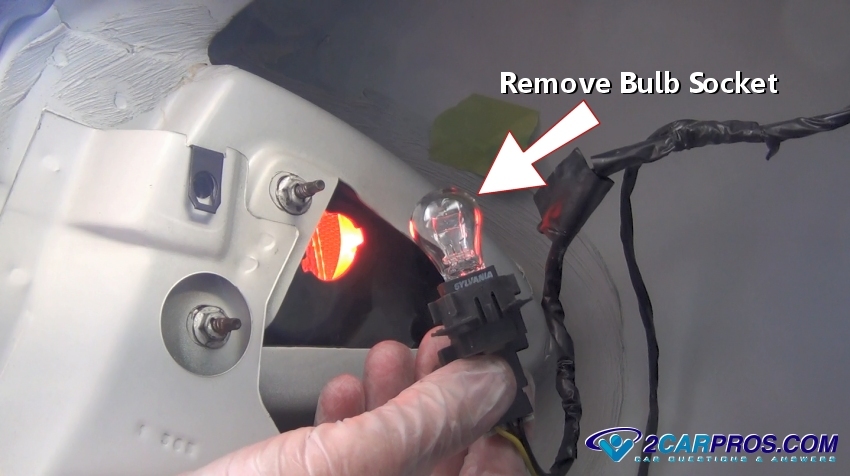
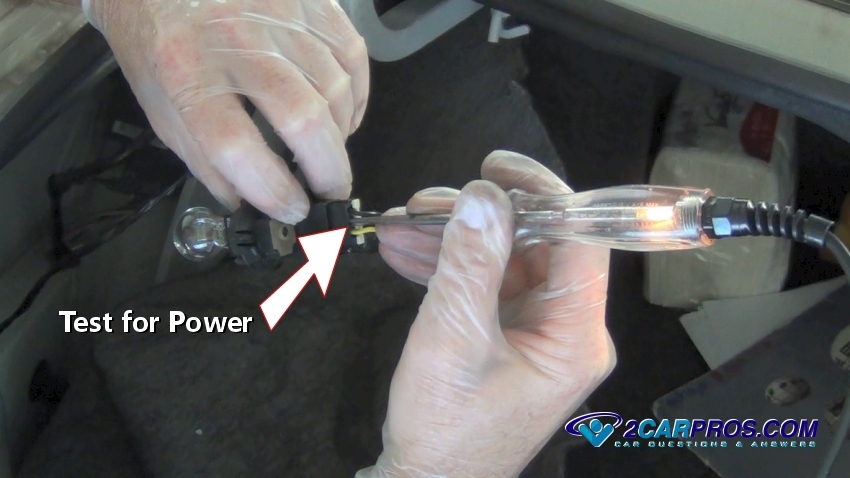
  • Step 3: Non-Relay Controlled Taillight Systems Only - This test is for vehicles that are not relay controlled lighting systems (use no taillight relay). Remove to expose one or all of the taillight bulb sockets. Using a grounded test light test for power inside the bulb socket. Use caution to not contact the side of the bulb socket with the test light probe, this could cause a fuse to fail. If the test light does not illuminate/power is not present on any of the socket terminals the wiring circuit to the headlight/taillight has failed and requires repair. For this a wiring schematic is required. Trace and test the wiring and recheck system.
     
  • Step 4: Relay Controlled Taillight System Test - Sometimes manufacturers can design a taillight control relay to help shoulder the electrical draw many bulbs can cause on a single circuit or to control the circuit remotely like a BCM (body control module) for example; when the alarm is activated the taillights will activate for a couple of seconds to inform the user the alarm has been activated. When this wiring system is implemented the headlight/taillight switch is used a the "trigger" circuit and a taillight relay acts as the actual activation switch. To perform a test locate the taillight control relay, usually a diagram is located on the under side relay lid. Most relay control centers are located under the dash or hood of the car. If you cannot locate the relay a car repair manual can be used. If your car is not designed with a control relay refer back to step 3. After the relay is located remove the relay from the relay block or connector. With the key in the "on" position use a test light to probe all connector terminals. Two of the terminals should have power, and the remaining two or should be dead. If power is not present at two of the terminals repair the fuse or power feed circuit as needed. If power is present, remove the ground lead from the test light and connect it to a power source for example the positive side of the battery. Next, probe the remaining two terminals in the relay connector while turning the headlight/taillight switch from "on" to "off" and repeat. On one of the terminals that is tested should blink on and off with the headlight/taillight switch. If one of the terminals blinks the relay has probably failed and replacement is required. If no terminals blinks the control switch (headlight/taillight) has most likely failed or the ground circuit connected to it.

One Taillight Bulb is Out

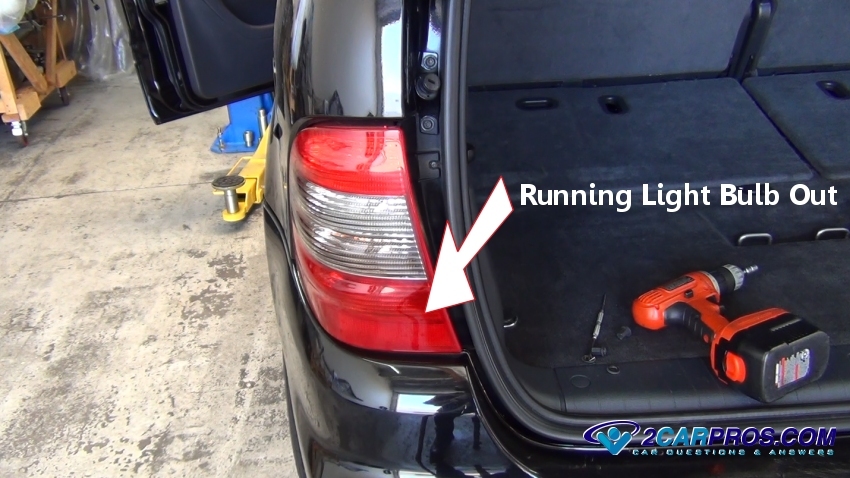
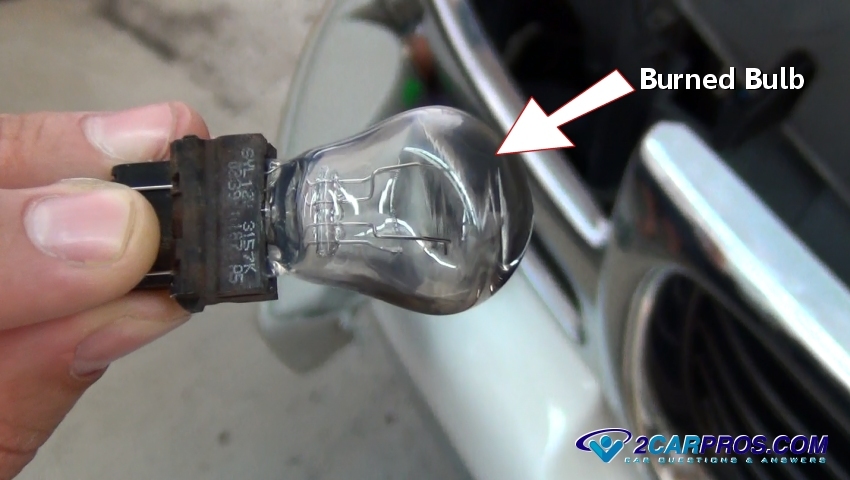
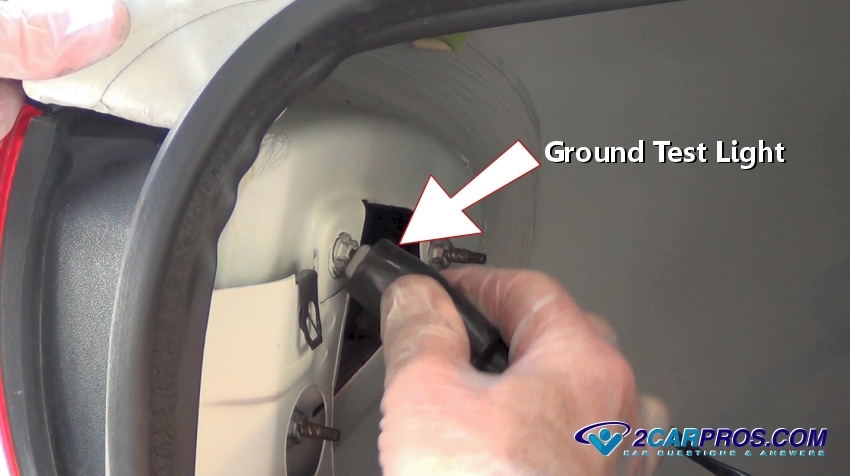
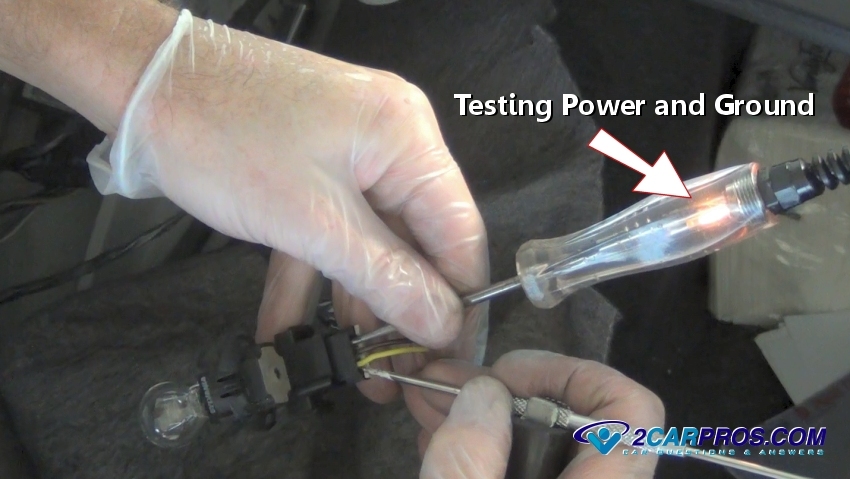
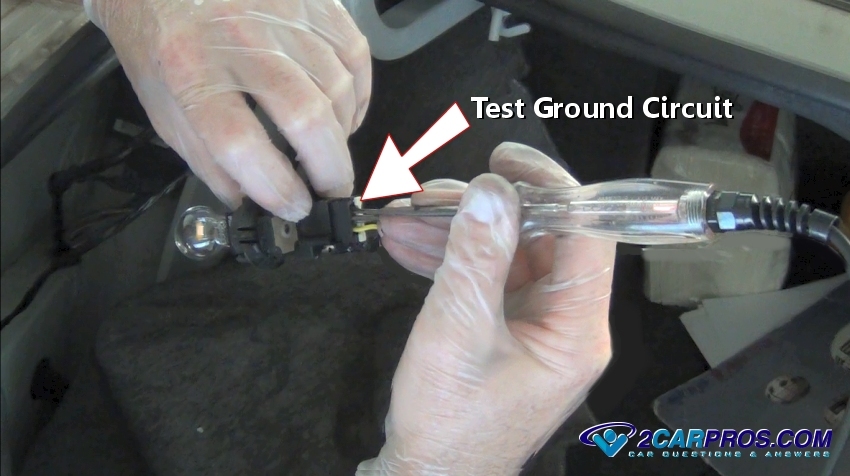
  • Step 1: If one of the taillight bulbs has failed the problem is probably the bulb itself. Remove the bulb and inspect, check for any burned color or white with blue smoke inside the bulb and replace with new if this condition is detected. If you have replaced the bulb with a new unit and the bulb still doesn't operate remove the bulb. With the bulb removed use a grounded test light to test the inner contacts of the bulb socket. Be carful not to touch the test light lead to the outer socket ring for this could cause a fuse failure. If power is detected connect the test light to a 12 volt power source such as a positive battery terminal. Use an extender wire if the test light lead is not long enough. Connect the test light to the bulb socket it should light up. If not the bulb socket ground had failed and repair is required. Note: it is common for bulb sockets to fail due to the heat they are exposed too.

Dull Tail Lights

  • Repairing Dull Taillights: Dull or dim taillights are a dangerous to other drivers because it hinders the ability to see your car when daylight is at a minimum. Because the taillight bulb is working, just not correctly it can be a mystery for most people to comprehend why this condition is occurring. The fist step is to remove the bulb and confirm the correct bulb is installed. Then, turn the ignition key to the "on" position and activate the headlight/taillight switch. While the taillight bulb is installed touch a grounded test light to the outer ring of the bulb socket. If the bulb brightness increases the bulb socket ground has corrosion that must be cleaned or in some cases the bulb socket will need to be replaced.

How to Repair Flickering Tail Lights

  • Taillight Bulb Repair Guide: A running light that flickers can be distracting to other drivers. Flickering lights occur because the power or ground source is being disconnected momentarily. Common causes for this condition is a loose fitting bulb inside the bulb socket. To test for this condition expose the taillight bulb in question. Next, switch the taillight on and move the taillight bulb around slightly in the bulb socket. If the bulb flickers repair the bulb socket or replace the bulb to regain proper taillight bulb operation. If the taillight circuit flickers (all bulbs flicker) wiggle the taillight fuse and associated wiring at the taillight socket, headlight/taillight switch.

High Amperage Failure

  • Testing for Amperage Draw Failure: Most taillights operate at car system voltage. Because the taillight system have many light bulbs it will draw amperage. If the headlight/taillights have been on for a while they could flicker or go out completely. After the circuit has cooled the lights might start working again this could mean the main connection inside the switch is failing when it the contacts get hot. Heat is produced from amperage being drawn through a switch and resistance has risen due to the age of the switch. If this condition is occurring the switch should be replaced. Even when the contacts are cleaned the same problem will return in a short amount of time.

Preferred Procedure: Replace front and rear taillight bulbs with manufacturers replacement bulb specification's. If you need to find the correct replacement bulb part numbers an Auto Part Store can help.

Common Problems

  • Taillight bulbs can be replaced with incorrect bulbs causing dim or no brake light operation.
  • If taillights stay on continuously the headlight/taillights switch has failed and replacement is required.

Check Manufacturer Specific Taillight Questions

Additional "How to" Car Repair or Services


Popular Service Repairs
Test Fuses
Replace Front Brake Pads
Check Engine Light
Rear Brake Shoes
Rear Brake Pads
Test Alternator
Replace Air Filter
Test Battery
Tune Up
More Service Repairs...
Advertisement
Car Questions
Acura
Alfa Romeo
American Motors
Audi
BMW
Buick
Cadillac
Chevy
Chrysler
Citron
Daewoo
Daihatsu
Dodge
Eagle
Ferrari
Fiat
Ford
Geo
GMC
Honda
Holden
Hummer
Hyundai
Infiniti
International
Isuzu
Jaguar
Jeep
Kia
Land Rover
Lexus
Lincoln
Mazda
Mercedes Benz
MG
Mercury
Mini
Mitsubishi
Nissan
Oldsmobile
Opel
Peugeot
Plymouth
Pontiac
Porsche
Renault
Rolls Royce
Rover
Saab
Saturn
Scion
Seat
Skoda
Subaru
Suzuki
Toyota
Vauxhall
Volkswagen
Volvo

Home l Help l Privacy Policy l User Agreement l About Us l Computer Repair Question l Contact Us l Link to Us l We're Hiring l Affiliate Program
  Copyright © 1999 - 2009 2CarPros.com - Professional Mechanics Online