2006 Chevrolet Impala Repair Question
Mileage: No information provided.
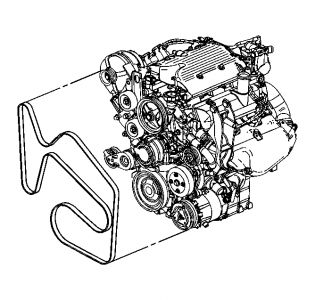
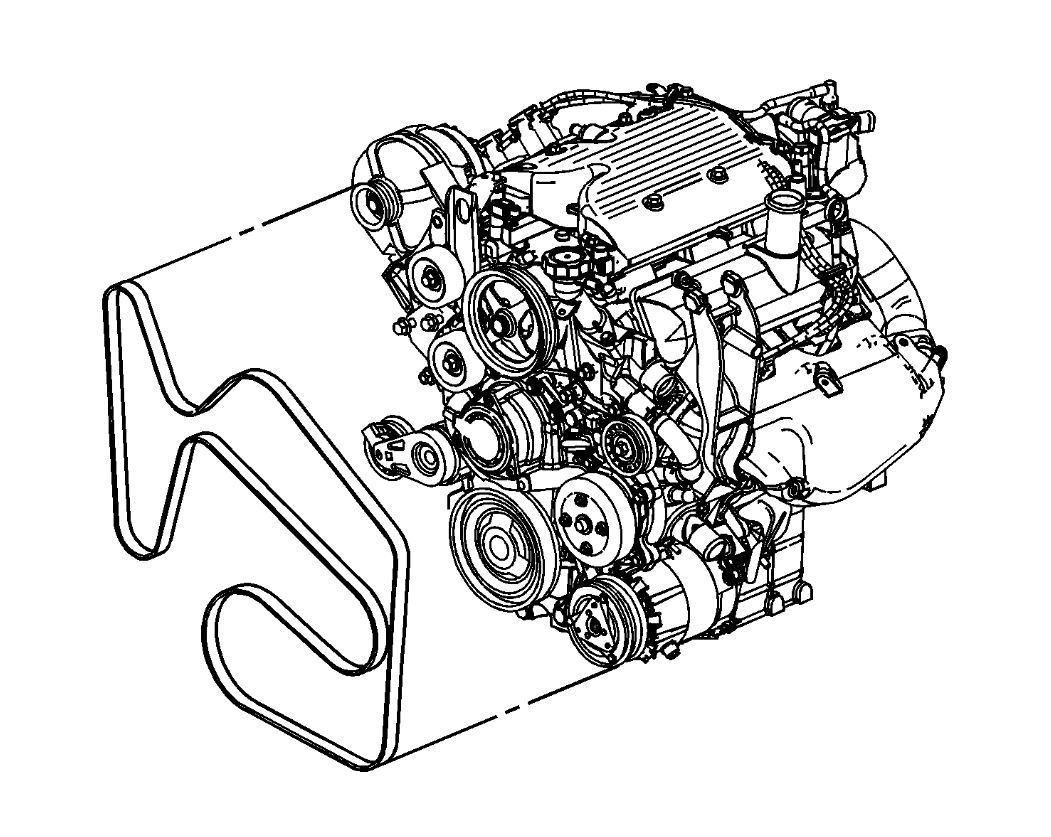
2006 Chevy Impala belt diagram
2006 Chevy Impala 6 cyl Two Wheel Drive Automatic 69,000 miles
I paid for help last night (twice). Can I get a diagram to put the belt back on.
Answer
Hello and thanks for donating
Is this for the 3.5L, 3.9L or 5.3L engine?
Thanks for that. Here is the belt route. Let me know if you need further assistance..

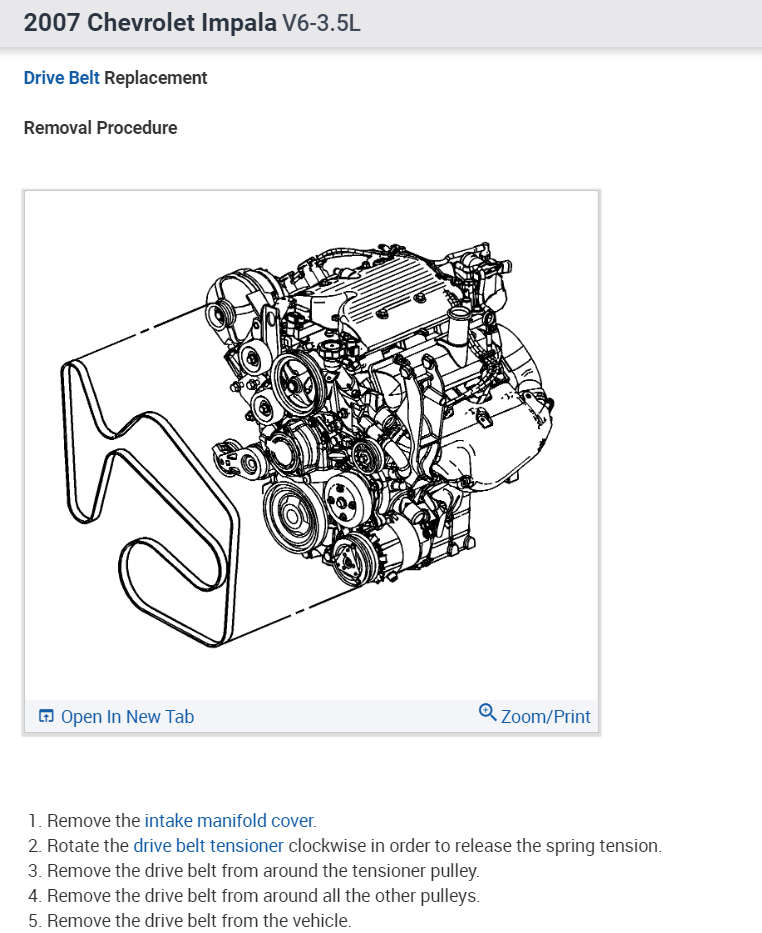
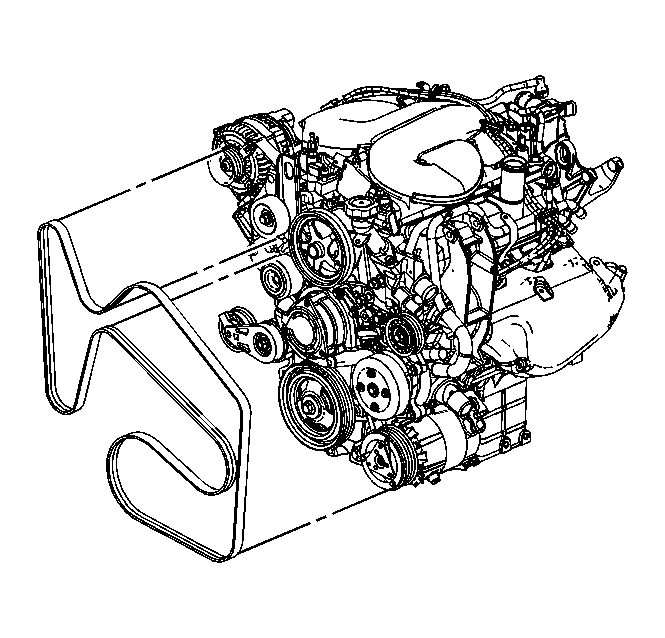
I was looking at both 3.5L and 3.9L and looks to me like they are the same? Here is diagram for a 3.5L

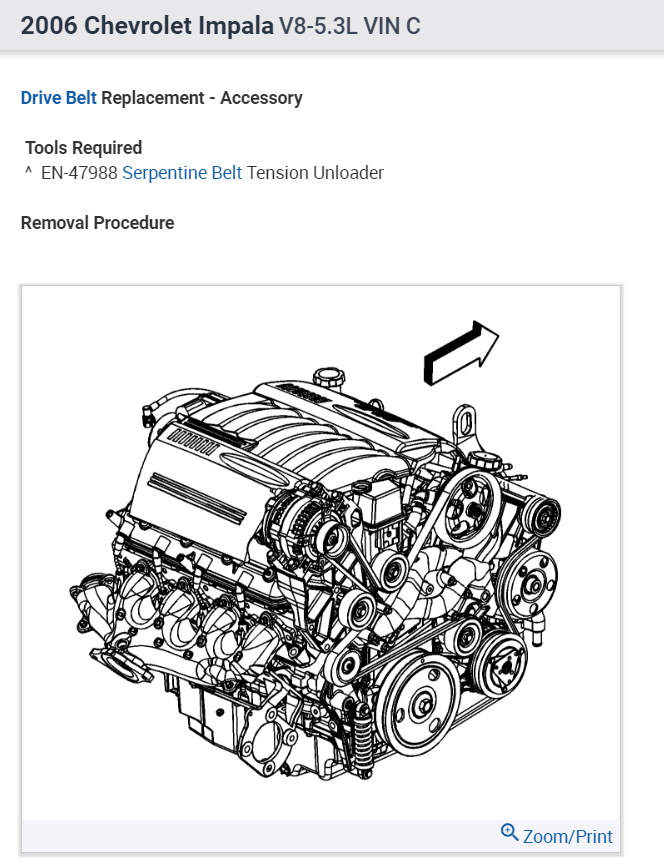
an this one is 3.9L

Hope this helps you?
Thanks for your help. got it all back together but still have same problem. pump makes noise and builds up persure. very hard to steer. got any ideas?
You may need to bleed the power steering system. The only problem is you may need the special tools from GM? Here is the bulletin.
TECHNICAL
Bulletin No.: 08-02-32-004B
Date: October 06, 2008
Subject:
EI08118 - Power Steering Whine/Growl Noise (Bleed Power Steering System)
Models:
2006-2009 Chevrolet Impala, Malibu
2006-2009 Pontiac G6
2007-2009 Saturn AURA
Supercede:
This bulletin is being revised to end the need for engineering information and to provide field fix information. Please discard Corporate Bulletin Number 08-02-32-004A (Section 02 - Steering).
Condition
Some customers may comment on a whine or growl noise coming from the power steering.
Correction
DO NOT REPLACE THE POWER STEERING PUMP OR RACK/GEAR.
Fill and bleed the power steering system using the following procedure:
Power Steering System Bleed Procedure Using J 42485 (MityVac) (or equivalent)
Important: Maintain the fluid level throughout the bleed procedure.
1. Fill the fluid reservoir to the FULL COLD level. Leave the cap off.
2. Raise the front wheel off the ground.

3. Attach the J 43485 (Adapter) to the J 23738 (Mityvac), or equivalent. Place the J 43485 on/in the pump reservoir filler neck (refer to graphic). Apply a vacuum of 20 in Hg MAXIMUM.
Note: If the J 43485 (adapter) is not available, an equivalent can be made using a rubber seal/stopper and brass fitting.
Important: An assistant is needed for the next step.
4. Apply vacuum while turning the steering wheel lock to lock. Maintain 20 in Hg while turning. Using a clear line will allow you to see bubbles evacuating system. Stop when no more bubbles are seen.
5. Wait five minutes. Typically vacuum drop is 2-3 in Hg. Verify the fluid level. If the fluid level is low, fill to the full line.
6. Reinstall the cap. Start and idle the engine.
7. Turn the engine off. Verify the fluid level. If the fluid level drops, add fluid. Repeat Steps 4 and 5 until the fluid level stabilizes.
8. Start and idle the engine. Turn the steering wheel 180 °- 180 °in both directions five times. DO NOT TURN TO LOCK.
9. Switch the ignition off. Verify the fluid level.
10. Install the cap. The bleed procedure is complete.