

1996 Dodge Ram wont start

1996 DODGE RAM
224,000 MILES • V8 • 2WD • AUTOMATIC
Avatar
JAYWALK01
  • MEMBER
  • 1 POST
I have a 1996 Dodge ram with a 5.2L v8 auto. And it wouldnt start earlier this week. I have since tested the battery (Good), tested the Alternator (Good), was told the starter was no good, so I replaced it, twice, because the first re manufactured one had a bad solenoid. I have tested (with a multi-meter) all of my fuses and relays. I have tested the positive wire going to the starter, I have tested the truck for grounds, I have replaced the ignition switch, and when I turn the key, all I hear is the fuel pump engage and an audible "CLICK!" from the solenoid. No turning from the starter motor at all. I DID test the starter before I put it in (I hooked it straight up to a battery, it engaged and spun.) I AM LOST! Help please. Asap.
Jun 26, 2011 at 4:16 PM
Advertisement
Avatar
RASMATAZ
  • CAR REPAIR CONTRIBUTOR
  • 75,992 POSTS
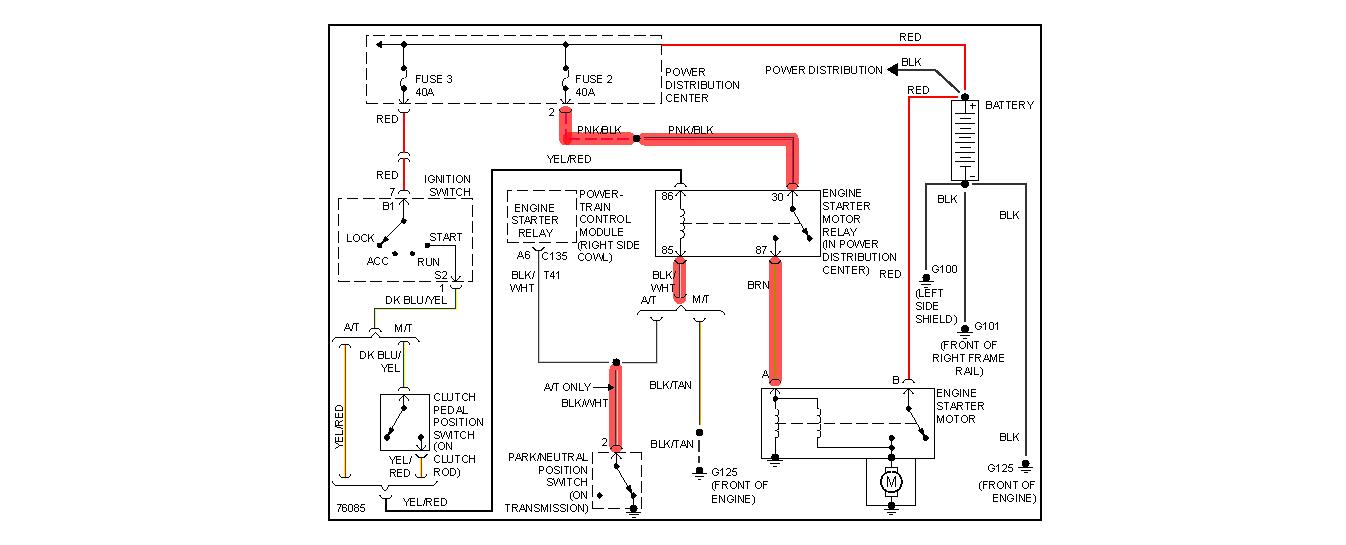
Check and test fuse no.2,the starter motor relay and park and neutral switch

Oct 4, 2018 at 10:34 AM
Avatar
CARADIODOC
  • CAR REPAIR CONTRIBUTOR
  • 34,309 POSTS
Sounds like you have a bad connection on the positive cable or the cable itself is corroded. If that click you're hearing is loud, not like the little tick of a relay, you can prove the cable is the problem by measuring the voltage right on the large stud on the starter, (not the smaller solenoid terminal). Put the probe on the stud, not the terminal on the end of the cable. You'll find full battery voltage there. See what happens to that voltage when a helper tries to crank the engine. If it stays above 9.6 volts, the solenoid contacts are bad. If it drops real low, measure again right between the battery cable clamps, or even faster, watch what happens to the brightness of the head lights. If they go out, one of the cable clamps is loose or dirty.
Oct 4, 2018 at 10:34 AM
Repair Safety Notice: This information is for general instructional purposes only. Vehicle repair can be dangerous. Verify all information, follow manufacturer service procedures, use proper tools and safety equipment, and consult a qualified repair shop when needed.