We are a team of ASE certified mechanics that have created this guide to show you why your brake master cylinder is not working and what you can replace it.
How Does it work?
The brake master cylinder is the hydraulic pressure part of the brake system which holds brake fluid in a reservoir. When you push the brake pedal down the plunger inside the brake master cylinder housing is forced forward which transfers pressurized fluid to the brake calipers or wheel cylinders which then actuates the brake system to slow the car down. The master cylinder is divided into two separate sections, a primary and secondary pressure system. This safety system was created inside the master cylinder so if one half of the brake system fails the car will still have the remaining half to help slow the vehicle. This safety is divided into front or rear brakes.
What Goes Wrong?
The master cylinder is constructed with rubber seals which in time can go bad and allow the brake fluid to bypass internally or leak out from the rear of the master. When the brake master goes bad the brake pedal will sink and the brake warning light will come on. This condition will greatly decrease the stopping ability of the car. Inspect for brake fluid leakage around the master cylinder and check the fluid level regularly. If leakage is present replace master cylinder immediately. If the master cylinder actuator rod is adjusted to far out it will not allow the brake master plunger to fully return creating residual brake pressure which causes the brakes to lock up and not allow the car to roll. There must be 1/16 of an inch or 1.5 mm clearance between the master cylinder and the brake booster or pedal rod.
SPONSORED LINKS
How Much Does It Cost?
If you are having the job done at a repair garage or a dealership you can expect to pay between $270.00 and $380.00 dollars (US). There are two kinds of replacement master cylinder's, rebuild and new. We recommend a new unit simply because the brake system is a vital part of your car's safety. A new master cylinder will cost between $35.00 and $75.00 dollars (US) at Amazon or your local parts store. Brake fluid will cost about $4.00 and the bleeder kit about $8.00 (US).
How Long Do Brake Master Cylinders Last?
Because the brake master has rubber seals which are used every time you hit the brakes this part is a normal wear item which will last between 70,000 and 110,000 miles depending on driving habits and conditions such as hard braking along with stop and go traffic.
Getting Started
Park the car on level ground with the engine off and the emergency brake set. You will be dealing with brake fluid so wear eye protection and gloves. Brake fluid is corrosive to paint so if you get any on the cars finish quickly wash it with soap and water. Only use brake fluid from a seal container to avoid moisture contamination which can damage the brake system.
Tool and Supplies Needed
- New brake master cylinder
- Brake fluid
- Line wrench
- Show towels
- Socket set
- Protective gloves and eye wear
- Soap and water
Step 1
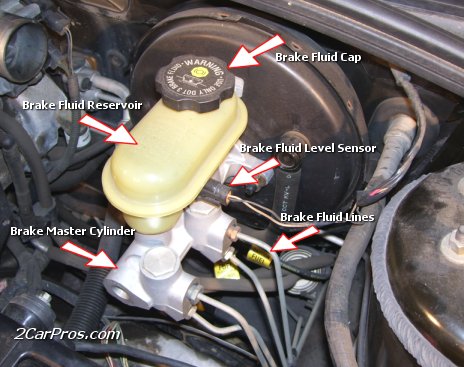
Raise the hood to identify the master cylinder location which is usually on the fire wall on the driver's side. There will be two or four brake lines connected the main body of the master and a small wiring connector attached to the brake fluid reservoir.
SPONSORED LINKS
Step 2
Remove the Master Cylinder: You will want to remove as much of the old brake fluid as possible to avoid spillage during the removal. Begin by removing fluid reservoir cap and insert a turkey baster to remove the fluid and then reinstall cap.

Release the safety clip of the electrical connector and gently pull it from the fluid level sensor in the reservoir.
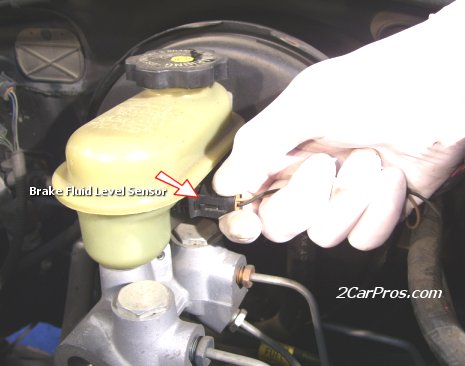
Use a line wrench and firmly secure it on the brake fluid lines to remove them. These line wrench sizes are usually 13mm, 14mm, 15mm or 16mm. Apply force to the wrench in a counterclockwise motion to loosen and remove the line fitting. Repeat the operation until all fluid lines are removed. These lines can be fairly tight so be ready. As you loosen the lines brake fluid will start to leak out. You can install a shop towel below the master to catch the fluid and then discard the towel once the job is completed.
SPONSORED LINKS

Once all of the lines have been removed use a wrench or socket to loosen and remove the master cylinder mounting bolts. These nut sizes are usually 14mm or 15mm. After all mounting bolts are removed push the master forward and then lift it off the mounting studs and then out of the engine compartment. Have a shop towel ready for the removal to stop dripping brake fluid from potentially getting on the car's paint.

Step 3
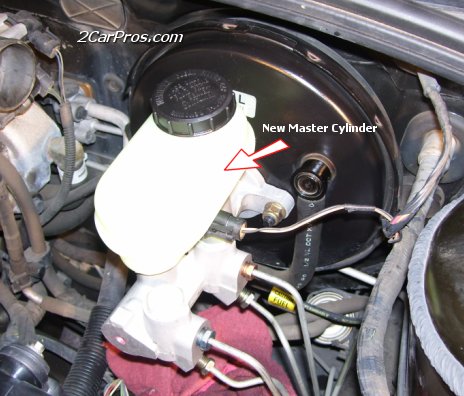
Reinstall the New Master Cylinder: Before the new master cylinder can be installed it must be bench bled. Hold the master cylinder in a vise so it doesn't move. Then remove the fluid lid of the reservoir. Remove the dust caps that cover the line holes of the master. Then install the master cylinder bleeder kit which is two or four plastic fittings and rubber hoses which will be connected to the fittings and then routed back into the fluid reservoir. Make sure the lines are far enough into the reservoir as to not suck in air. Fill the master reservoir with brake fluid. Use a large Phillips screw driver and place it at the rear of the master and into the plunger. Now start pushing the plunger into the master. Air bubbles will start to come out of the rubber lines inside the reservoir as you press inward. Once the plunger is completely in release the screwdriver (slowly) which will draw fluid into the master as you watch the brake fluid level go down in the reservoir. Continue this operation until no air bubbles are present. Refill the reservoir as needed to retain the fluid level. Once completed remove the bleeder kit and reinstall the reservoir cap. A small amount of fluid will start to leak out. Use a shop towel to help guard against paint damage as you reinstall the brake master back into the car. Slide the master back over the booster studs and reinstall the mounting nuts finger tight. While the master is still a little loose reinstall the brake lines, this will help in the line installation. Use a regular wrench to snug up the lines to stop the master from leaking additional fluid. Never allow the brake fluid to drain completely out of the master. If the fluid runs completely out of the master it will need to be re-bled. Once the mounting bolts have been fully tightened use a line wrench to put the final tighten on the brake lines. The torque spec on the master cylinder's mounting bolts is usually between 35 and 45 foot pounds. Reconnect the fluid level sensor and refill the master cylinder with fluid and reinstall the cap.
Step 4
Once the job is complete bleed the remainder of the brake system to remove any air from the system.
SPONSORED LINKS
Watch the Video!
Do not drive the vehicle if normal brake pedal operation is not present.
Questions?
If you have any brake master cylinder questions please visit our forum. If you need car repair advice, please ask our community of mechanics is happy to help you and it is always 100% free.
Article published 2022-03-13
SPONSORED LINKS
Bleed your ABS Brake System Correctly Video